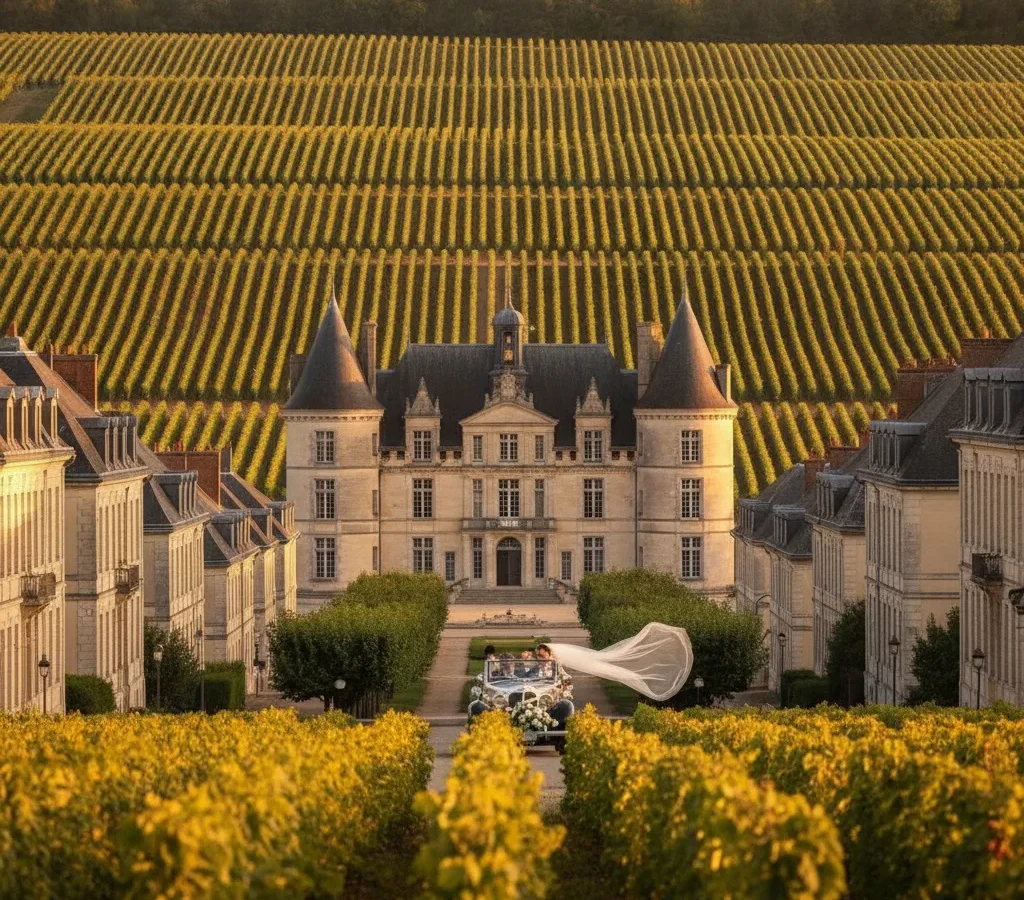
The Champagne region of France holds a rare distinction: it is one of the few places in the world where the landscape itself tells a story of celebration, making it a quintessential backdrop for a Champagne region wedding. Rolling UNESCO-listed vineyards, grand heritage châteaux, and the legendary Avenue de Champagne in Épernay create a setting that feels both timeless and effortlessly cinematic.
For American couples dreaming of a destination wedding in Europe, this corner of Grand Est offers something that Tuscany and Provence cannot quite replicate: the intimacy of a northern French countryside paired with the prestige of one of the most iconic wine cultures on earth. Whether you are drawn to the architectural grandeur of a Reims-area château or the vine-row symmetry of a Marne valley estate, a Champagne region wedding promises imagery and memories that endure far beyond the day itself.
Champagne Region Wedding Guide for US Couples
Reading time: ~11 min
- Quick summary
- Why the Champagne Region Is One of Europe’s Most Compelling Wedding Destinations
- Champagne Region Wedding Venues: Styles, Scales, and What to Expect
- Legal Essentials for American Couples Planning a Wedding in France
- The Best Time of Year for a Champagne Region Wedding
- Why a Local Champagne Wedding Photographer Makes a Defining Difference
- Iconic Photography Locations in the Champagne Wine Region
- Planning Your Champagne Wedding Photo Timeline
- Bringing Your Champagne Wedding Vision to Life
- Frequently asked questions
Quick summary
- The Champagne region offers a unique combination of UNESCO vineyards, heritage châteaux, and proximity to Paris that makes it an exceptional destination wedding choice.
- Venue hire in Champagne ranges from approximately €3,000 to over €60,000 depending on scale and prestige, with a wide range of styles to suit different visions.
- American couples most commonly opt for a symbolic ceremony in France paired with a civil ceremony completed at home, which simplifies logistics considerably.
- The best seasons for a Champagne wedding are late spring and early autumn, with harvest season adding a particularly evocative atmosphere.
- A photographer with genuine local expertise in Champagne brings irreplaceable knowledge of light, iconic locations, and venue logistics.
- Planning your photo timeline carefully around golden hour and key cultural moments such as champagne sabrage elevates the entire visual narrative.
Why the Champagne Region Is One of Europe’s Most Compelling Wedding Destinations
The appeal of a Champagne region wedding goes well beyond the obvious associations with luxury and celebration. The region sits approximately 90 minutes from Paris by TGV, making it genuinely accessible for international guests flying into Charles de Gaulle. Unlike more remote French destinations, Champagne offers the logistical convenience of easy rail connections from Paris combined with a countryside atmosphere that feels worlds away from the city. This balance between accessibility and seclusion is one of the reasons the region has become a serious destination wedding hub for couples based in the United States.
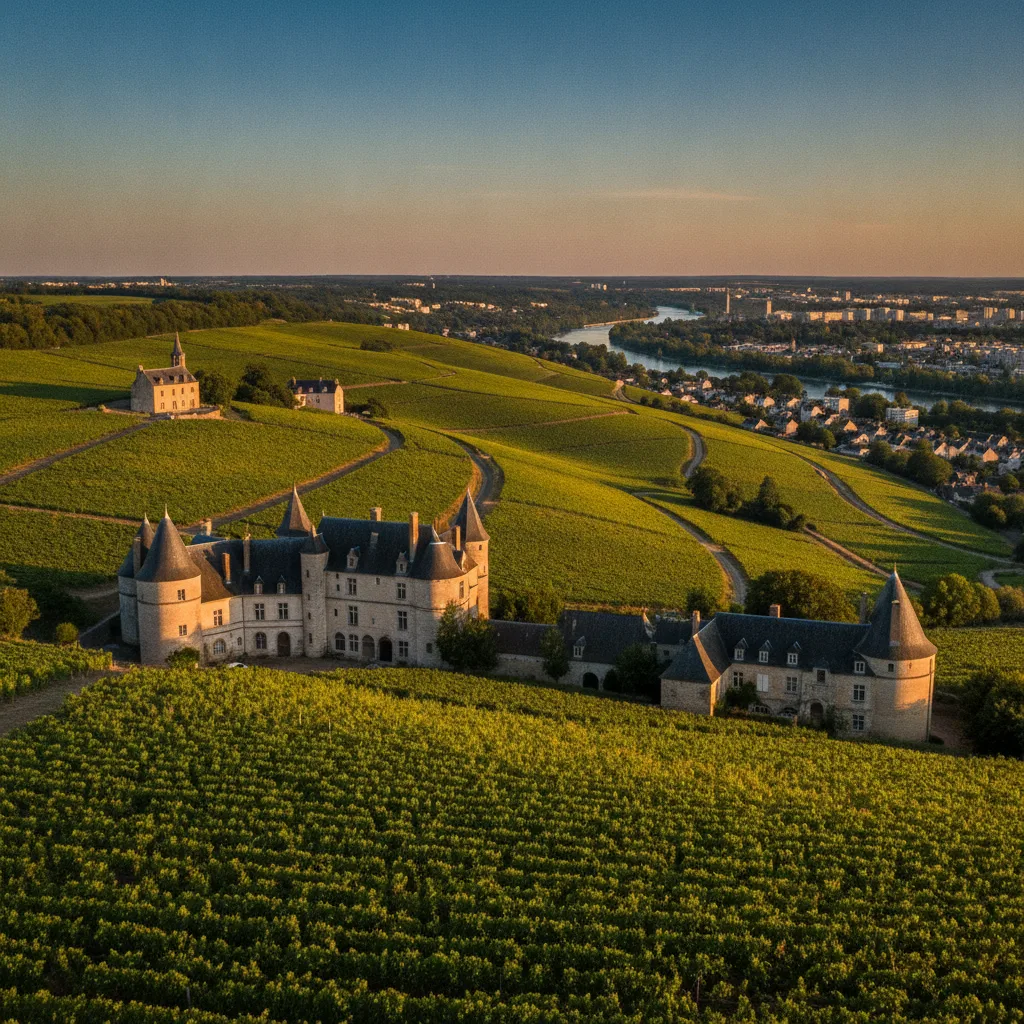
Visually, the Champagne landscape is extraordinary in its specificity. The chalky soils that give the region’s wines their distinctive character also create a luminous, pale-toned terrain that reflects light in a way that is genuinely unlike any other French region. Vineyard rows stretch in precise lines across gently undulating hills, offering natural geometry that translates beautifully into editorial wedding photography. Add to this the grandeur of Reims Cathedral, the Art Deco elegance of properties like Château de Vitry-la-Ville, and the storied façades of the Avenue de Champagne, and you have a region that offers extraordinary visual variety within a relatively compact area.
The UNESCO World Heritage status of the Champagne Hillsides, Houses, and Cellars, awarded in 2015, adds a layer of cultural significance that resonates strongly with couples who want their wedding to feel rooted in something meaningful. Marrying within sight of vineyards that have been cultivated for centuries is a genuinely moving experience, and that emotion translates directly into photographs.
Champagne Region Wedding Venues: Styles, Scales, and What to Expect
The venue landscape in Champagne is more varied than many couples initially expect. While heritage châteaux dominate the conversation, the region also offers vineyard estates, converted farmhouses, and even a former Dominican monastery, each offering a distinct aesthetic and atmosphere. Understanding the differences between these venue types is essential to choosing the right setting for your vision.
Typical Champagne wedding venue categories
Châteaux remain the most sought-after category. Properties such as Château de Cormicy, with its 4.9-star rating and capacity for up to 50 guests, offer an intimate and highly curated experience. Château de Vitry-la-Ville, a rare Art Deco property built between 1928 and 1930 and classified as a historical monument, sits within 30 hectares of landscaped parkland and accommodates up to 200 guests with on-site sleeping for 35. Vineyard-focused estates such as Château Comtesse Lafond can welcome up to 300 guests and offer the immersive experience of celebrating literally within the vines.
The following table gives an overview of the typical venue categories and what couples can expect in terms of investment and capacity:
| Venue type | Typical hire range | Guest capacity | Key visual strength |
|---|---|---|---|
| Intimate heritage château | €7,500 and above | Up to 50 guests | Refined interiors, parkland portraits |
| Grand château estate | €15,000 to €60,000+ | 100 to 300+ guests | Architectural grandeur, formal gardens |
| Vineyard domaine | €4,000 to €12,000 | Up to 300 guests | UNESCO vine rows, golden hour light |
| Converted farmhouse or inn | €3,000 to €8,000 | Up to 120 guests | Rustic authenticity, warm interiors |
When selecting your venue, consider not only the aesthetic but also the practical photography implications. A venue with strong indoor spaces, such as historic salons or champagne cellar caves, provides essential backup for unpredictable northern French weather. Properties near Reims or Épernay also allow for portrait excursions to iconic locations such as the Avenue de Champagne without adding significant travel time to an already full wedding day.
Bon à savoir — Many Champagne venues offer exclusive hire for a full weekend, which is ideal for multi-day celebrations. This allows your photographer to document the welcome dinner, wedding day, and farewell brunch with full visual consistency across the entire event.
Legal Essentials for American Couples Planning a Wedding in France
One of the most common questions from US-based couples is whether they can legally marry in the Champagne region of France. The honest answer is that a fully legal French civil marriage requires meeting specific residency and administrative conditions, including submitting paperwork in French and attending a ceremony at a local town hall (mairie). For most international couples, these requirements make a fully legal French wedding logistically complex.
Symbolic versus legal Champagne wedding ceremonies
The practical solution that the vast majority of destination wedding couples choose is a symbolic ceremony in France, combined with a legal civil ceremony completed in their home country either before or after the celebration abroad. This approach is widely understood and fully supported by experienced destination wedding planners and venues across Champagne. It allows couples to design a ceremony that is entirely personal, conducted in English, and staged in the most photogenic setting imaginable, without the administrative burden of French civil requirements.
If a fully legal French marriage is important to you, it is absolutely possible, but it requires engaging a local planner early in the process, ideally 12 to 18 months before the wedding date, to manage the documentation requirements. Either way, working with a planner who has established relationships with Champagne venues and local authorities is essential.
The Best Time of Year for a Champagne Region Wedding
Champagne’s continental climate means that the wedding season is relatively concentrated. Late spring, specifically May and June, offers mild temperatures, long days, and vineyards that are beginning to show their full green foliage. This is one of the most visually lush periods in the region and tends to be popular with couples seeking a fresh, bright aesthetic.
Champagne wedding seasons and atmosphere
Summer, from July through August, brings warmer temperatures and the longest golden hours, which are invaluable for the kind of cinematic vineyard portraiture that defines editorial wedding photography. The light in Champagne during late July and August is particularly remarkable: the chalky soils amplify the warmth of the setting sun, creating a glow that is almost impossible to replicate artificially.
Early autumn, particularly September and the first weeks of October, coincides with the Champagne harvest season. This is arguably the most atmospheric time of year to marry in the region. The vines turn golden and amber, harvest activity creates a sense of living tradition, and the quality of light shifts to something richer and more painterly. Venues and planners in Champagne note that harvest season weddings carry an energy and authenticity that is genuinely special, though availability can be tighter as the region is at its most active.
Winter weddings are rare but not impossible. Champagne in December and January offers a stripped-back, monochromatic beauty, and the champagne cellar caves provide consistently dramatic indoor settings regardless of the weather above ground.
À retenir — If you are planning a harvest season wedding in September or October, book your venue and photographer at least 18 months in advance. This period fills extremely quickly, particularly for châteaux with limited accommodation.
Why a Local Champagne Wedding Photographer Makes a Defining Difference
Choosing a photographer who genuinely knows the Champagne region is one of the most consequential decisions you will make in your entire wedding planning process. The difference between a photographer who has worked extensively in the region and one who is visiting for the first time is not merely logistical: it is visual, emotional, and narrative.
Advantages of hiring a local Champagne wedding photographer
A photographer with deep local expertise understands how the light behaves across different vineyard orientations at different times of day. They know which side of a château catches the last warm light of the evening, which cellar at a Maison de Champagne offers the most dramatic architectural depth, and how to time a golden hour portrait session in the vine rows to avoid the harsh midday contrast that can flatten an otherwise beautiful scene. This knowledge cannot be acquired from a research session the night before a wedding.
There is also the question of access. Iconic locations such as the Avenue de Champagne façades, the caves of Moët and Chandon, and the Mercier cellars all have specific access conditions and timing constraints that an experienced local photographer has already navigated. Arriving at these locations with a clear plan, the right permissions, and a precise understanding of how to shoot them efficiently is only possible through genuine familiarity.
For US couples specifically, there is an additional dimension of value. A photographer who works regularly with American clients, communicates fluently in English, and understands the expectations of a high-end destination wedding from a US perspective brings a cultural fluency that reduces friction at every stage of the process. From the initial Zoom consultation to the delivery of fine-art heirloom albums crafted in France, the entire experience should feel seamless and sophisticated.
At Lino Ludovic, we work specifically with couples and wedding planners who expect that level of craftsmanship and cultural attunement. Our approach combines the editorial elegance of a fashion shoot with the genuine emotional storytelling that makes a wedding gallery feel alive years after the day itself. You can explore our approach and portfolio, including a real château wedding gallery for a sense of the visual range possible in a heritage setting.
Iconic Photography Locations in the Champagne Wine Region
The Champagne region offers a remarkably diverse range of photography settings within a compact geographic area. Planning your photo timeline with these locations in mind allows your photographer to build a cohesive visual narrative across the full wedding day.
The UNESCO-listed vineyard hillsides around Épernay and Reims are the defining landscape of the region. Vine rows create natural leading lines that draw the eye through a frame, and the scale of the landscape provides a sense of grandeur that is genuinely cinematic. A couple portrait session in these vineyards at golden hour is one of the most powerful images a Champagne wedding can produce.
The Avenue de Champagne in Épernay is one of the most recognizable streets in the wine world, lined with the grand façades of the most prestigious Maisons de Champagne. The architecture is imposing and elegant, offering a formal backdrop that works beautifully for bridal portraits and couple sessions alike.
Champagne cellar caves, where the region’s wines are aged in chalk-carved tunnels that extend for kilometres beneath the surface, offer a completely different visual register: cool, shadowed, and deeply atmospheric. These spaces require a photographer who understands how to work with limited and directional light, but the results can be extraordinary.
Within château venues themselves, the variety of settings available across a single property is often underestimated. Historic salons with Art Deco detailing, formal gardens, parkland allées, and stone staircases all offer distinct visual contexts that allow a skilled photographer to build a gallery of genuine range and depth.
The following moments are particularly worth building into your wedding day timeline:
- A couple portrait session in the vineyard rows during the 45 minutes before sunset, when the light is at its warmest and most directional.
- A champagne sabrage sequence, ideally captured in the late afternoon light, which combines authentic regional tradition with genuine visual energy.
- Detail photography of tablescapes, floral installations, and architectural elements in the early evening light before guests are seated.
Planning Your Champagne Wedding Photo Timeline
A well-constructed photo timeline is one of the most important planning documents for a destination wedding. In Champagne, several factors make timeline planning particularly important.
First, the distances between ceremony venues, portrait locations, and reception spaces can vary significantly depending on your venue and the iconic spots you want to include. Building in realistic transfer time prevents the rushed feeling that can compromise both the photography and the couple’s enjoyment of their own day.
Second, the quality of light in northern France changes rapidly in the late afternoon, particularly in summer. Identifying the precise golden hour window for your wedding date and reserving that time exclusively for couple portraits is not optional: it is the difference between good images and genuinely extraordinary ones.
Third, multi-day celebrations, which are increasingly common among US destination wedding couples in Champagne, require a photographer with the stamina and organizational discipline to maintain visual consistency across a welcome dinner, a full wedding day, and a farewell brunch. The narrative thread connecting these three events is one of the most valuable things a skilled photographer brings to a complex destination wedding.
For couples working with a US-based luxury wedding planner, coordinating the photo timeline with the broader event production schedule is essential. At Lino Ludovic, we work as a seamless partner within the wider vendor team, providing fast turnaround sneak peeks for PR and social media needs while maintaining the depth and craft of the full gallery delivery. Learn more about our approach to destination wedding coverage.
Bringing Your Champagne Wedding Vision to Life
A Champagne region wedding offers something genuinely rare: a setting of world-class visual beauty, deep cultural significance, and logistical accessibility that makes it a realistic and extraordinary choice for American couples planning a destination celebration in Europe. From the UNESCO-listed vineyard hillsides to the grand heritage châteaux of the Marne valley, every element of this region speaks to the kind of elevated, emotionally resonant experience that a destination wedding should be.
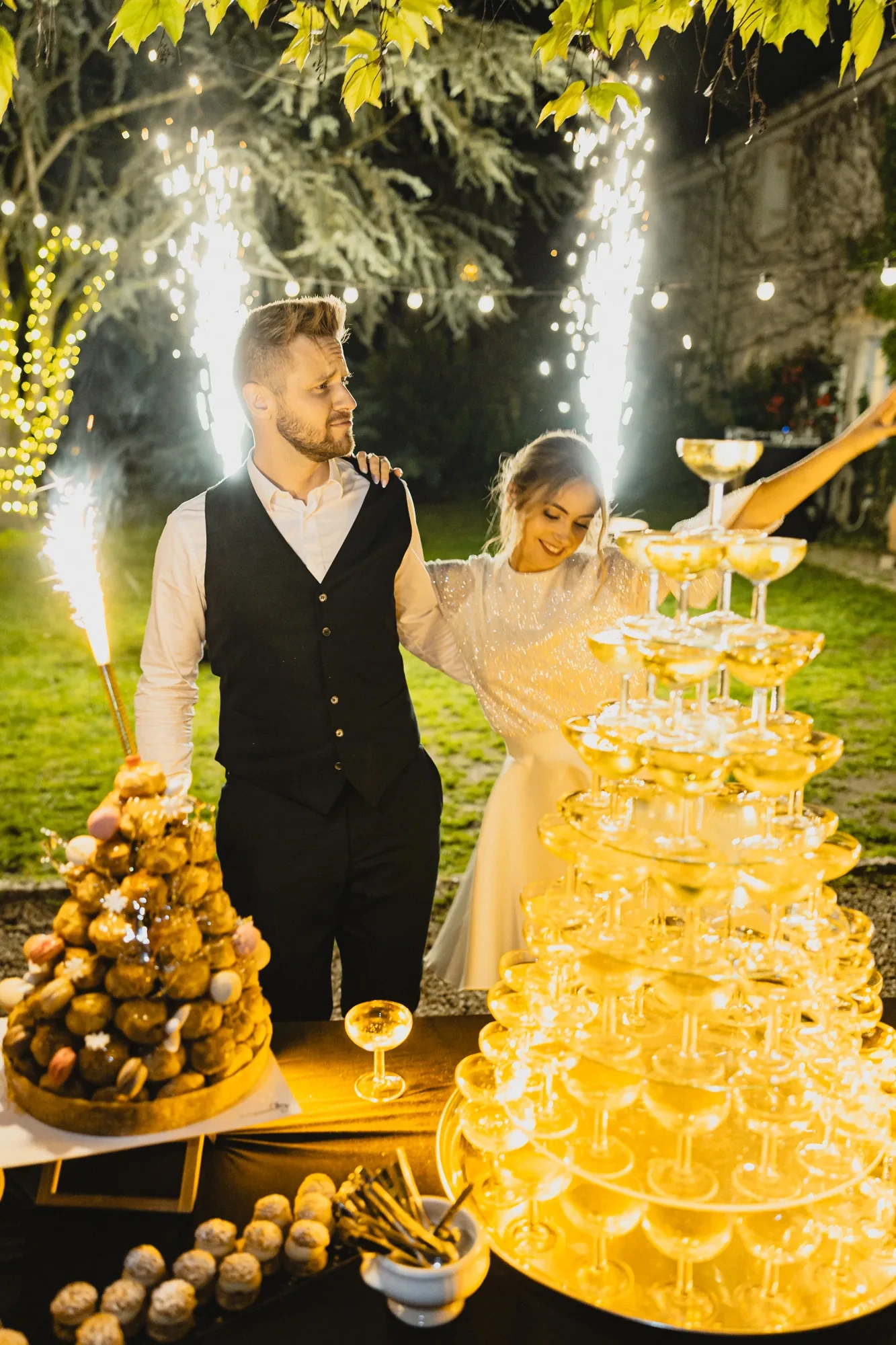
The key to translating that experience into images that endure is working with a photographer who knows this landscape intimately, understands the expectations of international luxury clients, and brings both artistic vision and operational precision to every moment of the day. If you are beginning to plan your Champagne wedding and would like to discuss how we can document it, we would be delighted to hear from you.
Frequently asked questions
How far in advance should we book a wedding photographer for a Champagne region wedding?
For peak season dates in June, July, August, and September, we recommend securing your photographer at least 18 months in advance. Harvest season weekends in September and October fill particularly quickly, as both venues and vendors are in high demand during this period.
Can we combine a couple engagement session in Champagne with our wedding booking?
Absolutely, and we strongly recommend it. A pre-wedding session in the vineyards around Épernay or in Reims city centre allows you to become comfortable in front of the camera before the wedding day, and it produces a set of images that work beautifully for save-the-dates and wedding websites.
Do we need special permits to photograph at iconic Champagne locations like the Avenue de Champagne or champagne house cellars?
Access to private Maison de Champagne properties and their caves requires prior arrangement and is subject to each house’s specific policies. A photographer with established local relationships in the region will already understand these requirements and can advise on what is realistically achievable within your timeline.
What is the difference between a symbolic ceremony and a legal ceremony in France?
A legal French civil ceremony requires meeting residency and administrative conditions set by French law, including submitting documentation in French to a local town hall. A symbolic ceremony has no legal standing in France but is entirely personal and can be conducted in any language, in any setting, with any officiant you choose. Most destination wedding couples in Champagne complete their legal marriage at home and hold a symbolic celebration in France.
Is wedding videography available alongside photography for Champagne destination weddings?
Yes. Combining photography and videography for a multi-day Champagne celebration creates a complete and complementary record of the event. You can learn more about our videography services.
What should we look for when reviewing a photographer’s portfolio for a Champagne vineyard wedding?
Look specifically for evidence of experience with outdoor vineyard light, interior château settings, and low-light environments such as cellar caves or candlelit receptions. A portfolio that demonstrates range across these different conditions, combined with a consistent editorial aesthetic, is the strongest indicator that a photographer will perform at the level a Champagne destination wedding demands.