Two families, two liturgies, two sets of expectations, and one single afternoon inside a French chateau or an Italian villa. An interfaith wedding ceremony in Europe is one of the most moving celebrations we photograph, and also one of the most technically demanding for couples searching for ‘interfaith wedding ceremony Europe’ as they plan.
It asks for cultural literacy, advance negotiation with religious authorities, and a photographic approach built on restraint rather than direction. This guide explains the formats available, the legal landscape, the permissions involved, and the way we work inside sacred spaces so that nothing sacred is disturbed and nothing meaningful is missed.
Interfaith Wedding Ceremony Europe – Planning Guide
Reading time: ~10 min
- What an Interfaith Wedding Ceremony in Europe Actually Involves
- Is an Interreligious Wedding Ceremony Legally Recognised in Europe?
- The Four Main Ceremony Formats
- Religious Permissions, Officiants and Timelines
- Choosing an Interfaith Wedding Venue in Europe
- Multifaith Wedding Ceremony Ideas and Vow Personalization
- How to Photograph an Interfaith Wedding Without Disturbing It
- A Realistic Planning Rhythm for Transatlantic Couples
- Bringing Both Traditions Home with Equal Dignity
- Frequently Asked Questions
What an Interfaith Wedding Ceremony in Europe Actually Involves
An interfaith ceremony unites two people who belong to different religious traditions, for example a Jewish Christian wedding ceremony in Europe, a Muslim Christian wedding ceremony in Europe, or a Hindu Christian wedding ceremony in Europe. It can also describe a union between a practising partner and a partner with no religious affiliation, often called a secular interfaith wedding.
The term is distinct from an interdenominational ceremony, which brings together two currents of the same religion, such as Catholic and Protestant, and from a multicultural wedding ceremony in Europe, where the cultural distance matters more than the theological one.
Research on interrituality published through the VU Amsterdam Research Portal, in particular the work on ritualizing interreligious encounters, describes these celebrations as genuine meetings between ritual systems rather than a simple juxtaposition of two complete rites. That distinction matters enormously in practice.
A successful blended religious wedding ceremony rarely stacks one full liturgy on top of another. It builds a shared sequence that respects the internal limits of each tradition, which is exactly why the ceremony run sheet becomes the single most important document of the weekend for your planner, your officiants and for us.
Is an Interreligious Wedding Ceremony Legally Recognised in Europe?
There is no single European rule. A comparative study of marriage law published by Oxford University Press distinguishes several national models. Some states allow certain religious ceremonies to produce civil effects when strict statutory conditions are met. Others treat the civil marriage as indispensable, with the religious celebration positioned as a complement. A third group permits religious ceremonies that carry no legal recognition at all unless the union is registered with the competent authority. The Oxford Research Encyclopedia of Religion reaches a comparable conclusion in its comparative analysis of interreligious marriage and European policy.
The practical consequence for American couples is straightforward. Religious permission and legal recognition of religious marriage are two separate questions. An institution may bless your union while the state still requires a civil registry formality. In France, for instance, the civil ceremony at the town hall precedes any religious celebration, and most of our Californian clients complete their legal paperwork at home before travelling.
Academic work on religious marriage in the Mediterranean also shows that a theoretical possibility, such as certain forms of Islamic marriage in Italy, does not guarantee a simple administrative path or automatic registration. Interfaith marriage legal requirements in Europe must always be verified with the local civil registry, the consulate and the religious institution itself.
Important
Nothing in this article constitutes legal advice. European civil registry systems differ by country, by municipality and sometimes by the nationality of each spouse, so confirm every requirement with the competent authority before booking.
The Four Main Ceremony Formats
Most couples we work with end up choosing between four structures. Each one carries different approval requirements, different timeline implications and different photographic constraints, which is why we discuss the format during our very first call rather than during the final planning meeting.
| Format | Legal standing | Approvals needed | Photography implications |
|---|---|---|---|
| Civil marriage followed by an interfaith ceremony | Legal status secured by the civil act | Civil registry, plus optional officiant agreement | Usually the most permissive, two distinct coverage moments |
| Single religious ceremony blending two traditions | Varies by country, often not binding alone | Religious institution approval for both traditions | Restricted photography zones and flash photography prohibition likely |
| Two separate religious ceremonies | Depends on national recognition rules | Each institution separately, sometimes regional authority | Two sets of rules, longer day, two family portrait sessions |
| Symbolic ceremony with an independent officiant | No legal effect without civil registration | Venue only | Full creative freedom, no sacred space restrictions |
Couples planning a multi day celebration often combine formats across the weekend. A welcome party on Friday, a religious celebration on Saturday morning in one tradition, a symbolic ceremony at sunset, then a farewell brunch on Sunday. That rhythm is familiar territory for us, and the full weekend approach is detailed in our coverage packages.
Religious Permissions, Officiants and Timelines
Can two officiants from different religions co celebrate the same ceremony? Sometimes, and only with the explicit agreement of both institutions. In many cases each officiant is given a distinct segment rather than joint leadership of the same rite, for example one leading the blessing of the rings and the other leading the final prayer. Historical scholarship on marriages between Christian confessions shows that even when such unions are permitted in principle, a specific written permission from a religious authority is frequently required. In several traditions that authorisation sits with a regional body rather than with the celebrant you have met.
How far in advance should a couple contact religious authorities for an interfaith wedding ceremony in Europe? Our honest answer is twelve to eighteen months. Premarital counselling, documentary requirements, baptismal or community membership questions, decisions regarding future children, and the approval of readings all take time, and they take longer when correspondence crosses an ocean and a time zone.
What happens if one religion does not officially recognise interfaith marriages? The usual solution is a civil marriage followed by a symbolic ceremony, a non denominational blessing, or two complementary celebrations so that each family sees its tradition honoured.
Here are the points an interfaith wedding officiant in Europe will typically need clarified before confirming a date.
- Whether the institution accepts interreligious unions at all, and under which written conditions.
- Whether premarital counselling or a community sponsor is mandatory.
- Which readings, prayers and sacred objects are permitted, and which are excluded.
- Whether a second officiant may be present, speak, or bless.
- The venue dress code and the sacred object etiquette expected from guests.
- The exact photography and video policy, including flash and movement restrictions.
Choosing an Interfaith Wedding Venue in Europe
Places of worship
A place of worship brings liturgical depth and architectural grandeur, along with real constraints. Expect precise time slots, limited floral installation, specific dress requirements and clearly defined restricted photography zones. A study published in the MDPI journal Religions on the architecture of interreligious ceremonial spaces describes rooms designed to host several forms of prayer and ritual celebration, which is a genuinely useful option when neither family wants to feel like a guest in the other tradition.
Private estates and villas
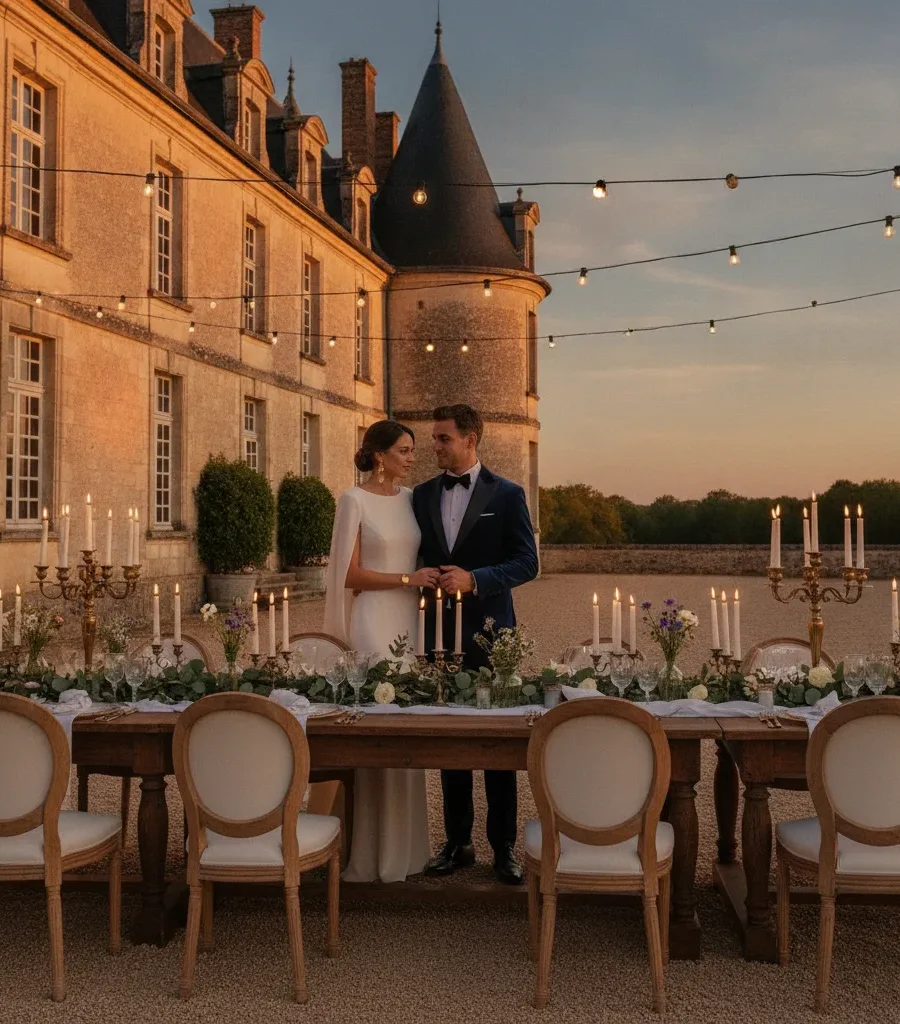
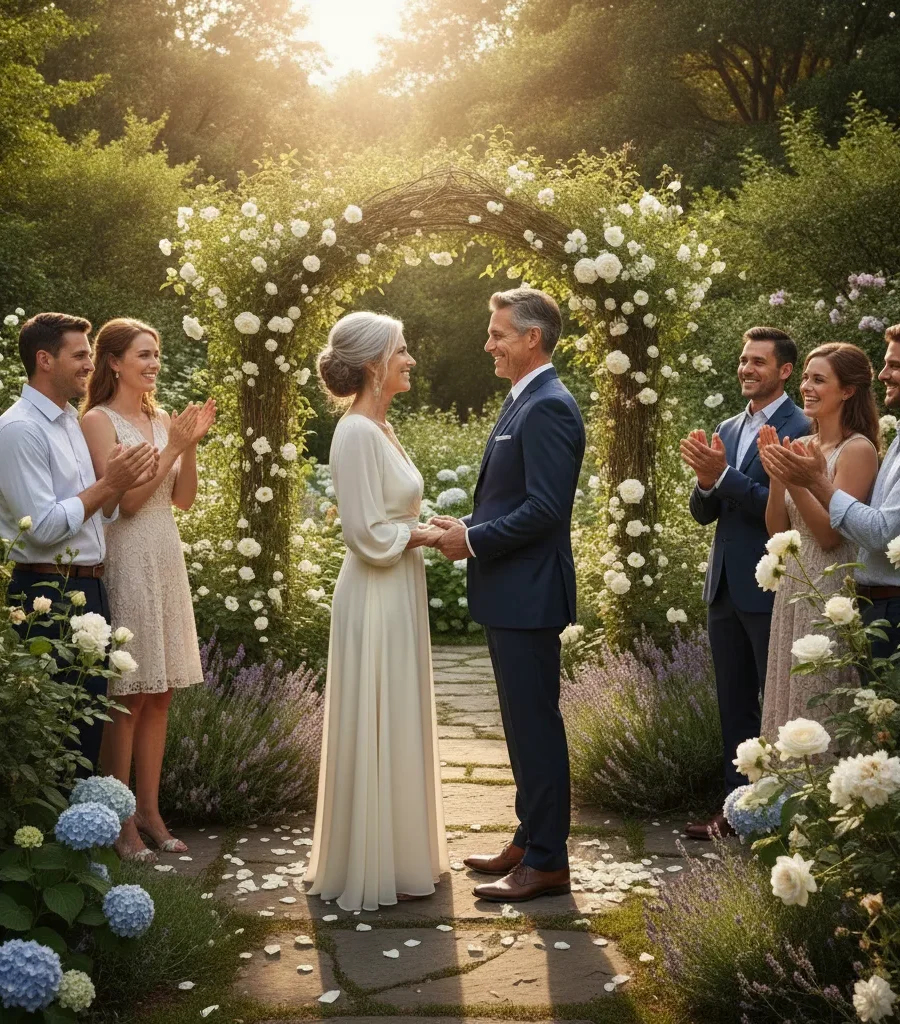
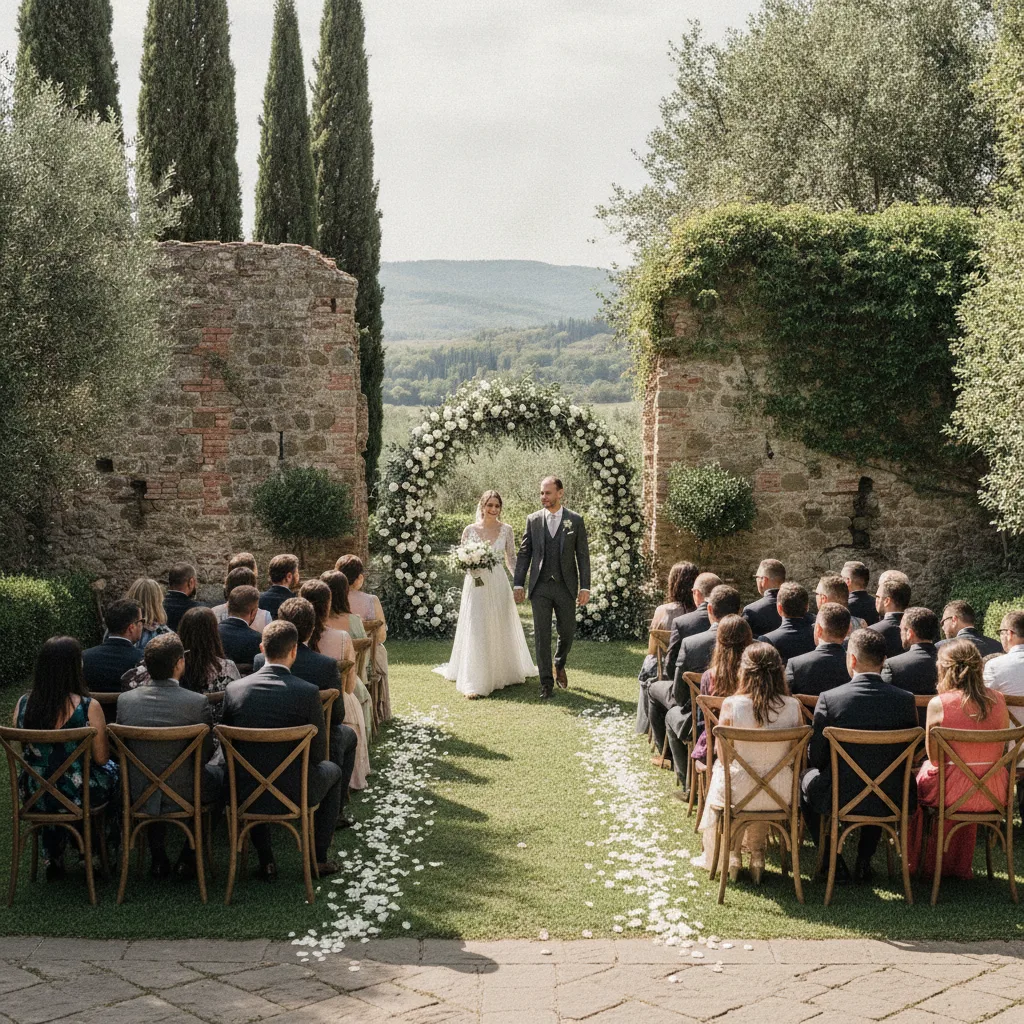
Private estates, chateaux, Riviera villas and Italian lakeside properties remain the most flexible choice for an interfaith wedding venue in Europe. They allow a neutral setting, free seating arrangements, unrestricted music and a ceremony structure designed around the couple rather than around a liturgical calendar. We often see two sculptural wooden arches dressed with contrasting floral palettes used to represent both heritages in a single visual frame, which photographs beautifully and avoids placing one tradition symbolically above the other. Our portfolio of French venues showcases how this balance plays out in real celebrations.
Multifaith Wedding Ceremony Ideas and Vow Personalization
The strongest multifaith wedding ceremony ideas are the ones that both families recognise without feeling that their rite has been diluted. A unity candle ceremony where two flames meet, a bilingual wedding program explaining each gesture before it happens, a blessing of the rings delivered in two languages, a shared circle of family members, a moment of silence held jointly, or the breaking of bread. Vow personalization is where interreligious dialogue becomes most tangible, because the couple writes the only text in the ceremony that belongs entirely to them, often alternating between English and a heritage language.
One principle deserves emphasis. A symbol is never interchangeable. A gesture that is decorative in one tradition may be sacramental in another, and borrowing it casually can offend the very guests you intended to honour. We encourage couples to ask both officiants to review the full symbolic sequence rather than assuming that a beautiful ritual travels well.
How to Photograph an Interfaith Wedding Without Disturbing It
Photographing a wedding inside a religious venue with strict rules starts long before the day. We request the detailed run sheet, the list of moments that cannot be photographed, the areas we may not enter, the flash policy, the positions permitted during prayer, and the etiquette around consecrated persons and sacred objects. What permissions do you need to photograph inside a European place of worship? In practice, explicit approval from the institution and from each officiant, ideally confirmed in writing by the planner, because the photography policy is decided locally and never by the couple alone.
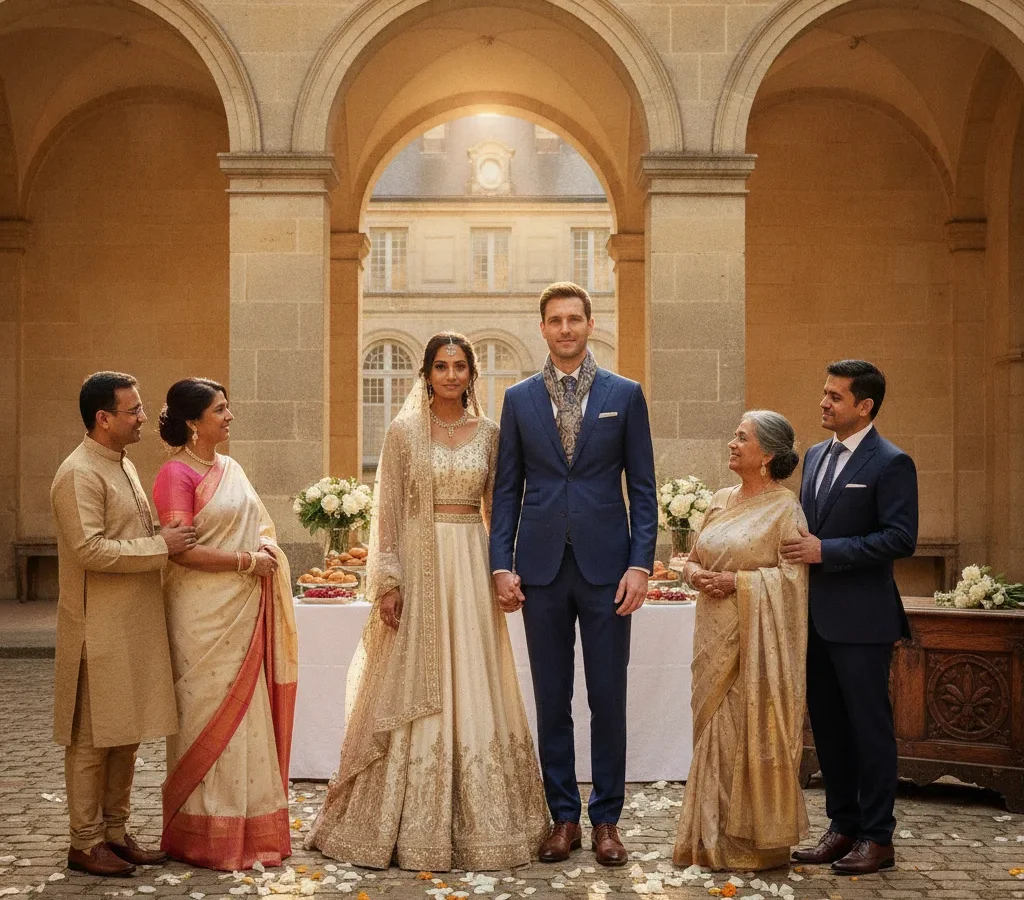
During the ceremony our method is deliberately invisible. Silent shutter technique, no flash in prayer spaces, a long lens documentary approach from the rear of the nave or the hall, no movement during a blessing, and no close framing during the most sacred passages. This is also where a second shooter becomes essential, since static positions on both sides allow full coverage without a single step taken at the wrong moment. Afterwards, family portrait logistics are organised so that each side receives equal attention and equal time, with portraits of both officiants together whenever they consent.
Good to know
For planners submitting to editorial publications, we shoot the design narrative in parallel with the ceremony, covering tablescapes, floral installations and architecture without ever stepping into a restricted zone.
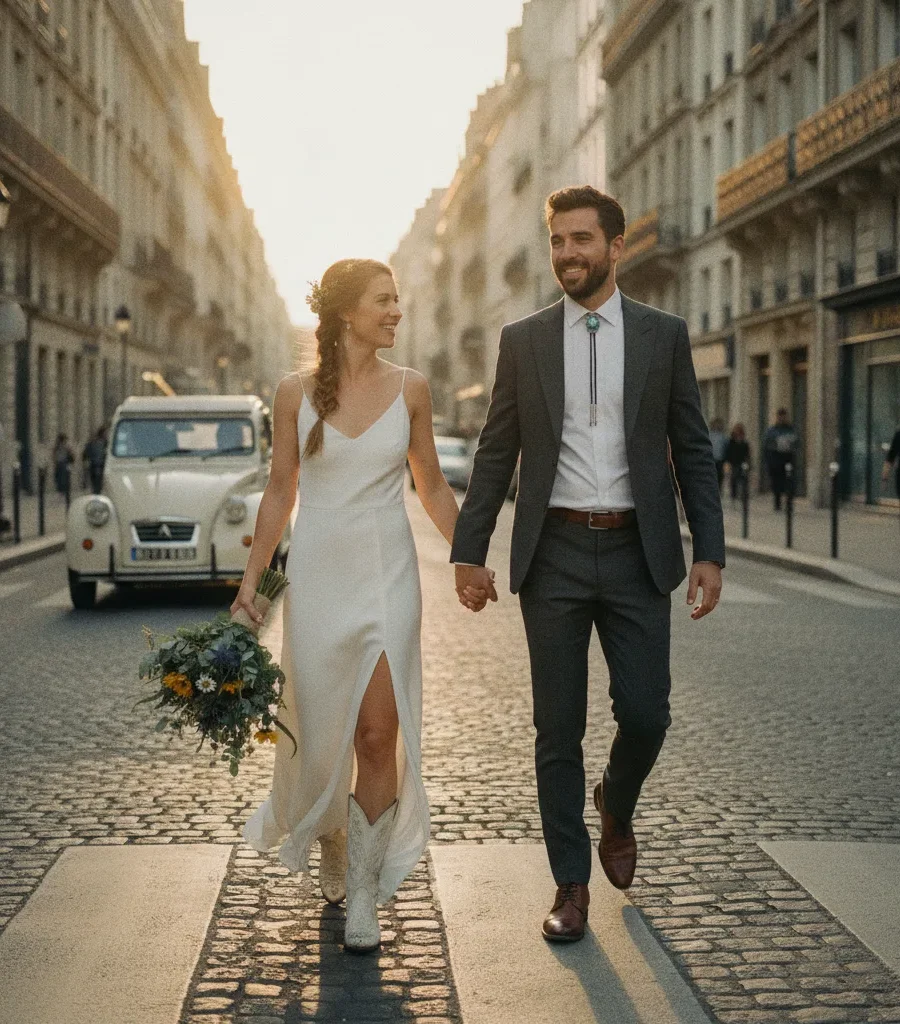
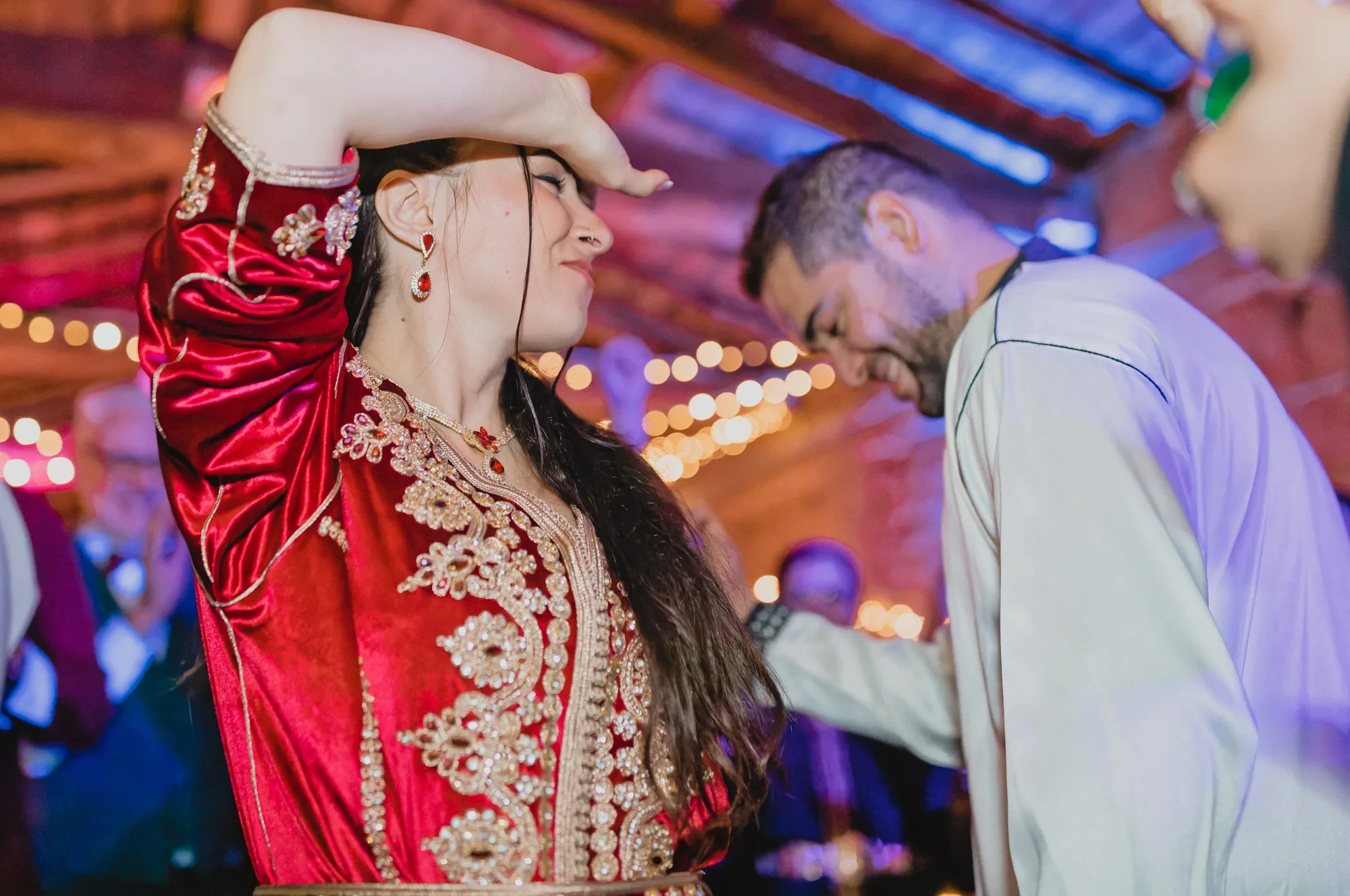
Visual balance is the final discipline. If one tradition occupies the ceremony space and the other occupies the reception, the gallery can unintentionally suggest a hierarchy. We correct this by giving comparable editorial weight to both, including attire details from each heritage, from a satin evening gown photographed against gilded Art Deco panelling to an embroidered velvet caftan caught mid dance under festoon lighting. Those images are often the ones families frame.
A Realistic Planning Rhythm for Transatlantic Couples
Between twelve and eighteen months out, choose the country and city, verify the legal conditions, decide whether the civil marriage happens before departure, and open the conversation with every religious authority involved.
Between nine and twelve months out, lock the format, secure religious permissions, book your photographer and confirm the shooting rules with the venue.
In the final three months, rehearse the run sheet, distribute the bilingual program, and brief every vendor on the restrictions. Americans planning from Los Angeles, San Francisco or Napa can start that conversation with us whenever they are ready.
Bringing Both Traditions Home with Equal Dignity
An interfaith celebration is not a logistical problem to be solved. It is two histories choosing each other in public, in front of people who flew across an ocean to witness it. Our role is to understand the protocol well enough to disappear inside it, then to return a gallery where both families recognise themselves with equal dignity. That combination of cultural attentiveness and editorial craft is what we bring to every French and Italian celebration we document.
FAQ
Can we hold the civil and religious wedding on the same day in Europe?
Often yes, provided local scheduling rules allow it. Build generous transfer time between the civil registry appointment, the religious celebration and the reception, and confirm the town hall slot months ahead, since municipal availability in high season is limited.
Should we provide a translator for an interreligious wedding ceremony in Europe?
A bilingual wedding program usually suffices for guests, but a live translator is worth considering when one officiant celebrates in a language most attendees do not speak. A short spoken explanation before each ritual also helps guests participate respectfully.
Do religious venues in France and Italy allow video as well as photography?
Policies for video are frequently stricter than for stills, with limits on tripods, external audio and operator movement. We clarify both policies together, which is why our photography and videography services are coordinated as a single production.
What should guests wear for a ceremony held in a place of worship?
Venue dress codes commonly require covered shoulders, head coverings, or removal of shoes depending on the tradition. Include these instructions in the invitation suite rather than on the day itself, so nobody is turned away at the door.
Can the same photographer cover two separate religious ceremonies in one weekend?
Yes, and it is usually preferable. A single artistic direction across both celebrations guarantees visual consistency, which matters greatly when the final heirloom album must tell one coherent story rather than two unrelated ones.