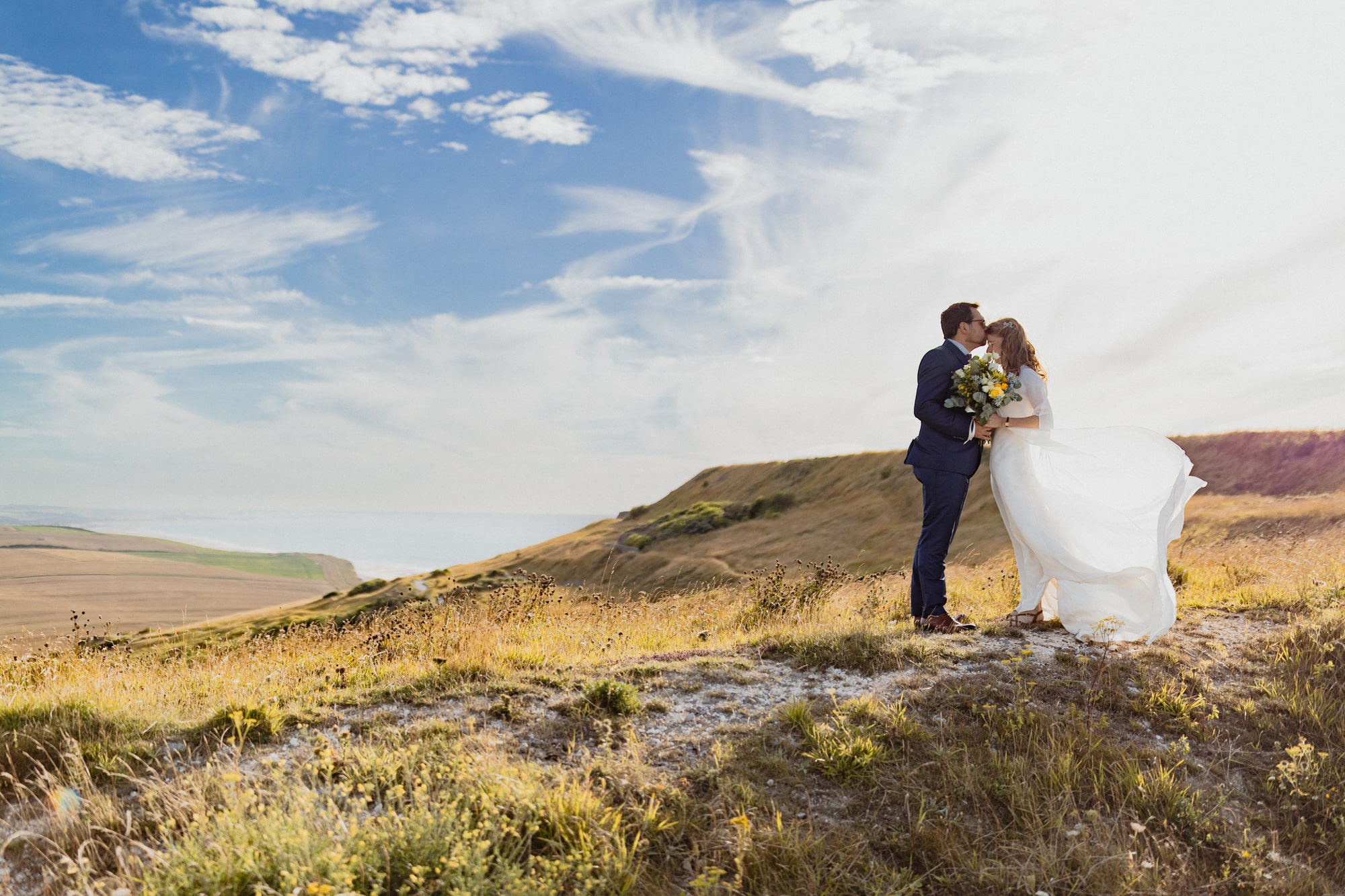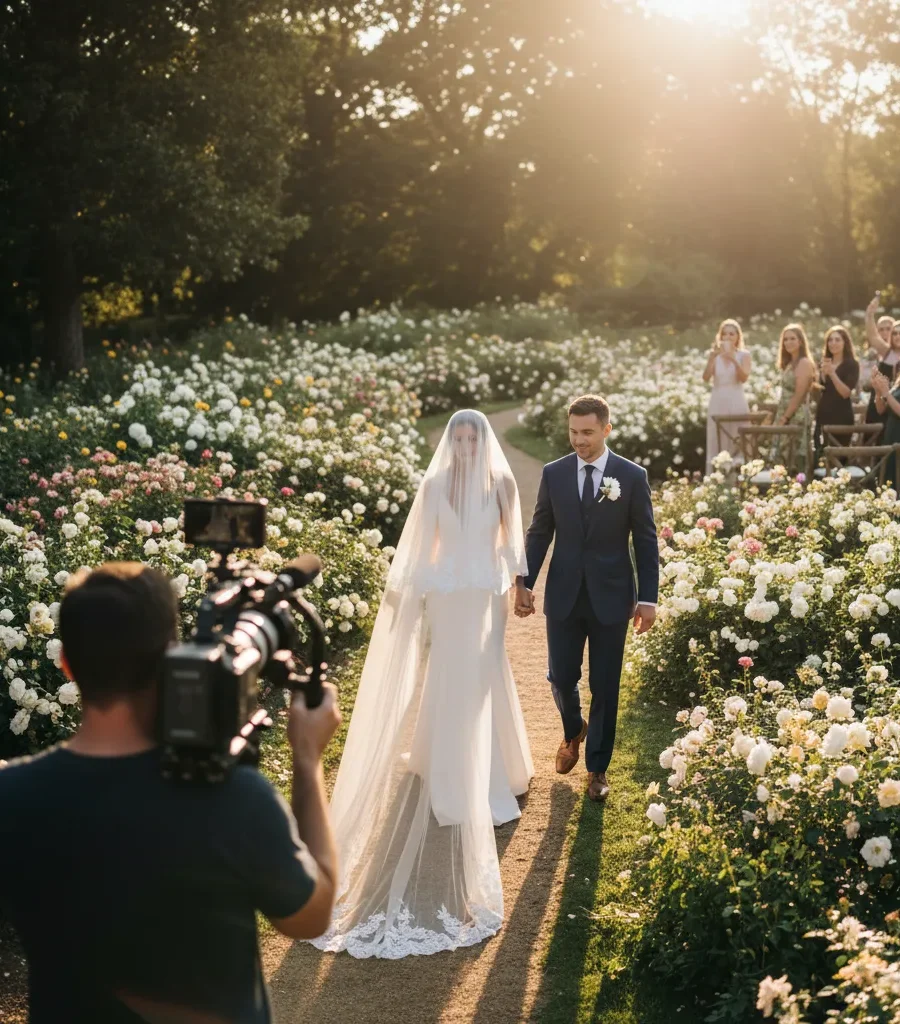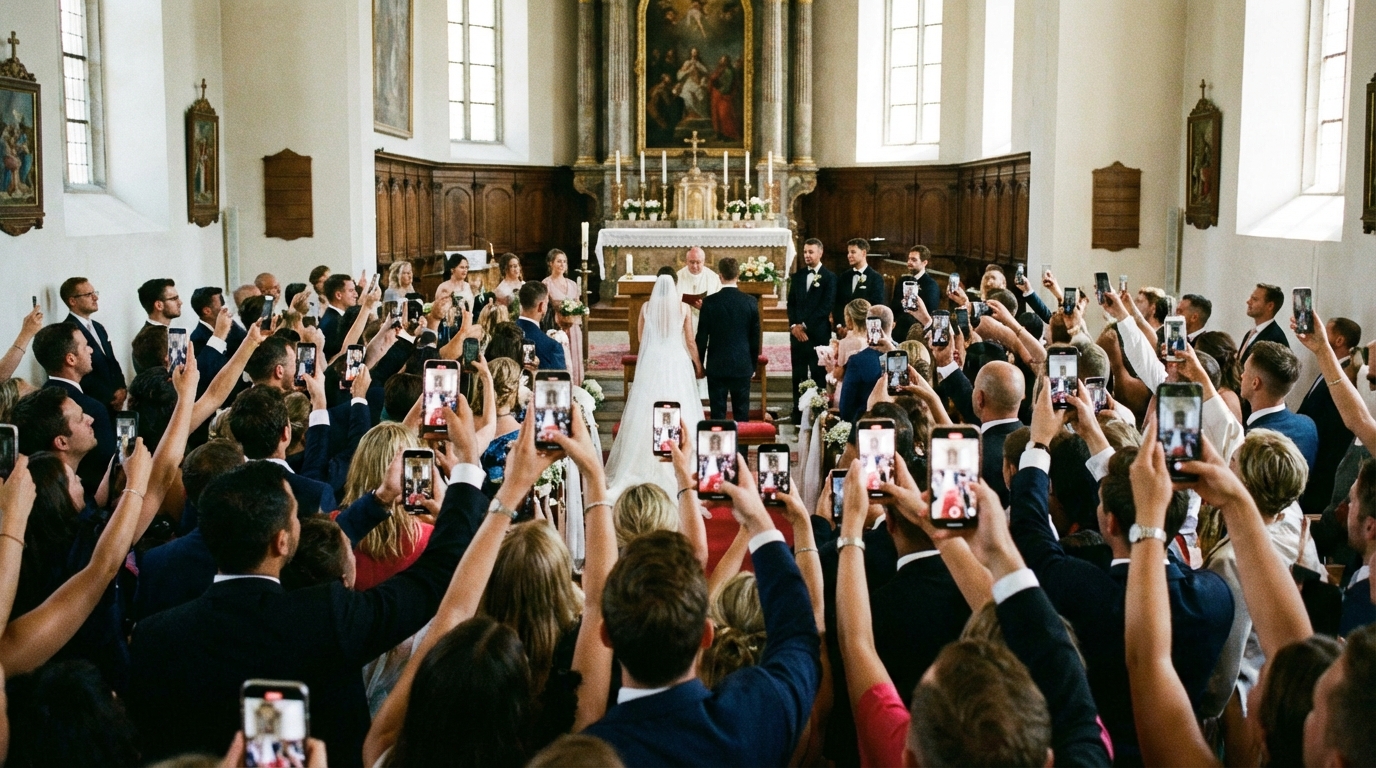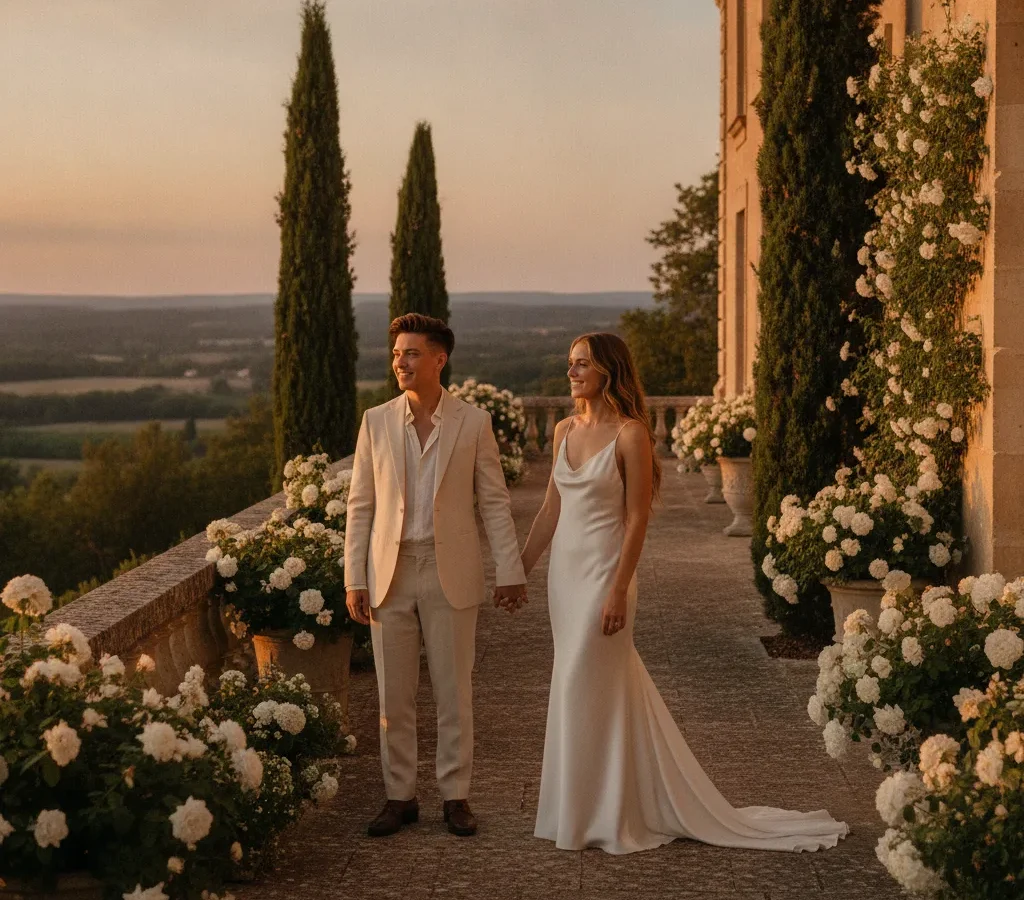
Choosing where to say yes in Europe is rarely only an aesthetic decision. For same-sex and queer couples travelling from the United States, the search for an LGBTQ wedding photographer in France Italy is also a search for ease, for discretion when it matters, and for someone who understands how two grooms, two brides or a non-binary couple want to be seen.
We photograph weddings across French châteaux, Provençal estates, Riviera villas and Italian lakes, and the standard never changes. The same editorial eye, the same calm presence, the same craftsmanship. This guide covers the legal context, the destinations, the coverage structure and the questions worth asking before you book.
LGBTQ Wedding Photographer France Italy, 2026 Guide
Reading time: ~8 min
- Why couples look for an LGBTQ wedding photographer in France Italy
- Same-sex marriage legality in France and Italy
- Destinations we cover across France and Italy
- Multi-day coverage, from welcome dinner to farewell brunch
- Privacy, consent and the images you control
- Investment, travel and professional safeguards
- A final word before you enquire
- Frequently asked questions
Why couples look for an LGBTQ wedding photographer in France Italy
Choosing a photographer with real LGBTQ wedding experience
Most couples who contact us have already secured a venue and a planner. What they are missing is the visual author of the weekend, someone whose portfolio proves experience rather than simply displaying a welcome statement. That distinction matters. An inclusive destination wedding photographer in Europe should be able to show complete galleries of same-sex celebrations, explain how group portraits and family dynamics are handled, and speak fluent English with your American vendor team.
One photographer for France and Italy
There is also a practical reason to look for one artist covering both countries. Many couples host a pre-wedding portrait session in Paris or Florence, then celebrate in Tuscany or on the Côte d’Azur. A single photographer already based in Europe removes a second set of flights, a second contract and a second creative language. The result is visual consistency from the welcome dinner coverage to the farewell brunch, which is exactly what international couple photography should deliver.
Inclusive posing for same-sex and non-binary couples
What we hear most often from couples is a fear of being directed into stiff, heteronormative poses. Inclusive posing starts with a simple question asked during the first video call. Who leads, who leans, who wears what, and what traditions are you keeping or rewriting. From there, natural light photography and a documentary approach do the rest.
Same-sex marriage legality in France and Italy
France: same-sex marriage framework
The legal frameworks in the two countries are not identical, and confusing them is the most common planning mistake we see. France legalised same-sex marriage in 2013, and civil marriage is the only ceremony with legal standing there. Religious or symbolic ceremonies do not replace the civil ceremony at the town hall. Destination guides also note that at least one partner generally needs a qualifying connection to the relevant municipality, including a residence period before the ceremony, and that requirements vary by nationality and personal circumstances. The town hall is always the authority to confirm with.
Italy: civil unions and symbolic ceremonies
Italy introduced civil unions for same-sex couples in 2016. European Union guidance explains that Italy does not recognise a same-sex marriage for rights granted under Italian law, while registered partnerships and civil unions can provide comparable rights in certain areas. Italian wedding specialists therefore describe same-sex celebrations as civil unions or symbolic ceremonies depending on the couple’s legal situation and the chosen venue. A symbolic ceremony in an olive grove, a cloister or a lakeside terrace is beautiful and entirely valid emotionally, but it is not a legal marriage.
| Criteria | France | Italy |
|---|---|---|
| Legal framework | Same-sex marriage since 2013 | Civil unions since 2016 |
| Legally binding option | Civil marriage at the town hall | Civil union ceremony |
| Residency or connection | Generally required for at least one partner, confirm with the municipality | Varies by comune and nationality |
| Popular alternative | Symbolic ceremony after a legal ceremony at home | Symbolic ceremony or vow renewal |
| Typical settings | Châteaux, Provençal mas, Riviera villas, Paris townhouses | Tuscan estates, Lake Como villas, Amalfi Coast terraces |
Many American couples solve this elegantly by completing the legal paperwork at home, then celebrating in Europe with a symbolic ceremony designed entirely around them. It removes administrative pressure from the weekend and leaves the focus on the celebration itself.
Important
Legal requirements change according to nationality, residence, municipality and ceremony type. Confirm current rules directly with the relevant town hall, consulate or a qualified legal adviser before booking flights or vendors.
Destinations we cover across France and Italy
French LGBTQ wedding destinations
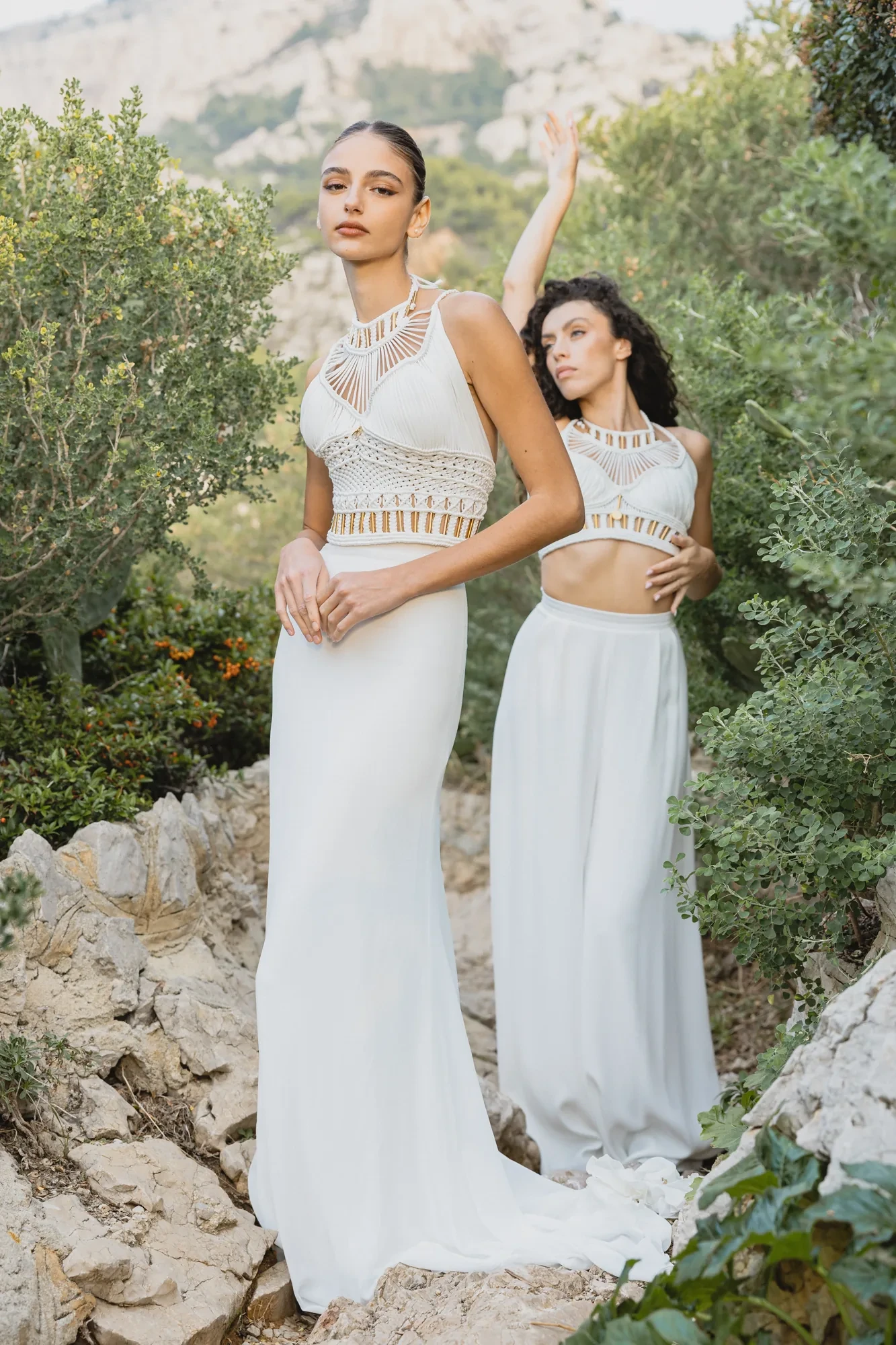
France offers extraordinary range within a few hours of driving. In the capital, a gay wedding photographer in Paris works with a particular kind of light, early morning on the Seine, late afternoon on limestone façades, blue hour in a private courtyard. Further south, a lesbian wedding photographer in Provence deals with a completely different palette, dry stone, cypress, lavender fields and that long golden hour that flatters everyone. On the coast, a queer wedding photographer on the French Riviera is photographing sea reflections, pine shadows and villa architecture. Inland, an LGBTQ château wedding photographer in France spends the day negotiating grand interiors, painted ceilings and tall windows that demand technical precision. Our portfolio includes celebrations in Savoie, Provence and the Loire region, and you can see several of them.
Italian LGBTQ wedding destinations
Italy brings its own grammar. As an LGBTQ wedding photographer in Tuscany, we work with hill light, terracotta and long dinner tables under vines. In the city, an LGBTQ wedding photographer in Florence can move from a Renaissance loggia to a rooftop aperitivo in twenty minutes. On the lakes, an LGBTQ elopement photographer in Lake Como photographs boat arrivals and water light that changes every ten minutes. A same-sex wedding photographer on the Amalfi Coast contends with vertical geography, white stairways and that famous haze over the sea. And as a same-sex civil union photographer in Italy, we document the signing with the same attention we give to the first dance.
An LGBTQ-friendly venue is not only a place that accepts your booking. It is a place where staff use your correct names and pronouns, where the ceremony script is adapted without negotiation, and where your guests feel welcome in the bar at midnight. Your planner will know these properties, and so do we. Shared vendor intelligence is part of what a destination wedding photographer for LGBTQ couples should bring to the table.
Multi-day coverage, from welcome dinner to farewell brunch
A European celebration is rarely a single day. The pattern we photograph most often spans a welcome party, a rehearsal dinner, the wedding day and a farewell brunch. Each one has a distinct visual identity, and the ceremony timeline for the main day needs to be built with light in mind rather than around it. We review the timeline with your planner weeks in advance, flagging where portrait windows should sit and where a second photographer is genuinely useful, typically during parallel preparations or a large cocktail hour.
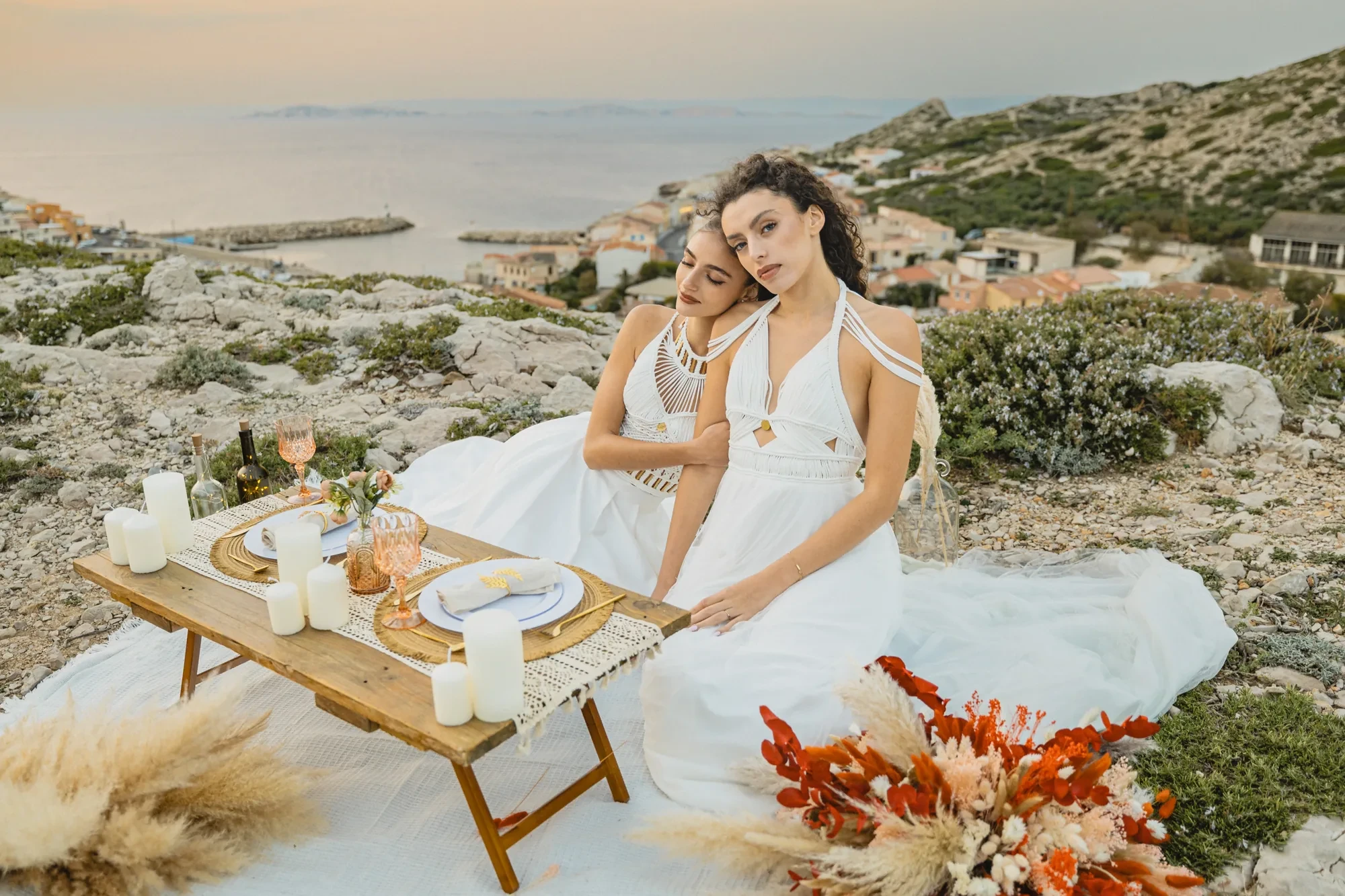
Multi-day wedding coverage also means stamina and consistency. The images from Friday night, with guitars under the trees and a wooden ceremony arch still being built, should feel like they belong in the same book as Saturday’s formal portraits in front of a gilded mirror and Sunday’s barefoot brunch. That coherence is what turns a gallery into a story, and later into a fine-art wedding album handcrafted in France.
Before the wedding weekend, many couples add an engagement session or a pre-wedding portrait session. It is the best possible rehearsal. You learn how we work, we learn how you move together, and the awkwardness disappears long before the ceremony.
Privacy, consent and the images you control
Privacy and image consent deserve a real conversation, not a line buried in a contract. Some couples want their wedding on magazine pages. Others are not publicly out, or have family in countries where visibility carries risk. Both choices are respected. Our contracts set out image licensing clearly, including whether photographs may be used for our portfolio, whether vendors receive access, and how the private gallery is protected. You can request that nothing is published online, and that request is binding on us.
Good to know
If you want a published feature, tell us early. Prestigious editorial submissions require specific detail shots of tablescapes, florals and stationery, which we plan into the timeline rather than improvise.
Investment, travel and professional safeguards
Pricing for destination coverage depends on the number of days, the number of locations, travel and accommodation, whether a second photographer is included, and which albums or prints you choose. As a published benchmark, one European destination photographer lists full-day coverage from around 4,800 euros for up to ten hours, with additional events such as a welcome dinner from around 900 euros for three hours. That is one studio’s public pricing rather than a market average, but it gives a realistic order of magnitude for the segment.
Beyond price, the questions that reveal a serious professional are the unglamorous ones. These are the points worth raising on your first call with any photographer.
- How is the travel fee structure calculated between France and Italy, and what is included.
- What is the retainer and booking contract schedule, and what happens if you postpone.
- What is the backup photographer contingency in case of illness or travel disruption.
- How does image delivery and gallery access work, and when do sneak peeks arrive for your planner’s communication needs.
- How many edited images are delivered, and are high resolution files and print rights included.
For planners, our commitment is simple. We integrate into your vendor team, dress appropriately for black tie, respect the production schedule, and never behave like the main character. Building a genuine topical authority in wedding photography across two countries means being reliable first and artistic second, even when the artistry is the reason you called.
A final word before you enquire
The best brief we receive is an honest one. Tell us who you are, how you want to be photographed, what your families understand and what they do not, and what the weekend means to you both. Whether you are planning a civil union ceremony in Tuscany, a château weekend in Burgundy, a vow renewal on the Riviera or an LGBTQ elopement across France and Italy, our work starts with listening. If the dates are open, you can reach us and we will reply with availability and a tailored proposal.
FAQ – Frequently asked questions
Can a foreign same-sex couple marry legally in France?
France has recognised same-sex marriage since 2013, and civil marriage is the only legally binding ceremony. Eligibility depends on nationality, documentation and a connection to the municipality, including a residence period in many cases, so confirm your specific situation with the town hall or your consulate.
What is the difference between a civil union and a symbolic ceremony in Italy?
A civil union is registered with Italian authorities and carries legal effects under Italian law. A symbolic ceremony has no legal status and can be held anywhere, with any celebrant and any script, which is why many couples complete the paperwork at home first.
Do you offer elopement coverage in Europe?
Yes. Elopement coverage is typically shorter and built around the ceremony, portraits and a location session, and it can include travel between two destinations when the couple wants both a city session and a landscape ceremony.
How do we find one photographer covering both countries?
Look for complete galleries in each country rather than single images, ask how travel between destinations is handled contractually, and check that the photographer holds professional insurance and equipment backups in both territories. Vetted inclusive directories can also be a useful starting point.
What should we ask before signing?
Ask how often the photographer works with same-sex and non-binary couples, how they approach posing and family group photographs, which languages they speak with vendors, and how they would handle a request to keep your images entirely private.