Reading time / Temps de lecture: 9 minutes
Every couple planning a destination wedding eventually faces the same question: should the photographer step back and observe, or step in and guide? The debate around natural vs posed wedding photography is often framed as a choice between authenticity and polish. In practice, the best galleries rarely choose one side.
For couples flying guests across the Atlantic to a French château or an Italian villa, the real question is how much direction you want, and at which moments of the weekend. Here is how we approach that balance, and how you can decide what suits you.
Natural vs Posed Wedding Photography, Finding the Balance
- What natural and posed wedding photography actually mean
- Natural vs posed wedding photography, the key differences
- The case for candid wedding photography
- The case for posed wedding portraits
- Our philosophy, documentary first, gentle artistic direction where it counts
- How to look natural in posed wedding photos
- How much time to allow for portraits
- How to choose a wedding photography style
- Questions to ask your wedding photographer
- Bringing both approaches together
- FAQ
What natural and posed wedding photography actually mean
Before comparing wedding photography styles, it helps to define the terms clearly, because they are often used loosely.
Candid and documentary wedding photography
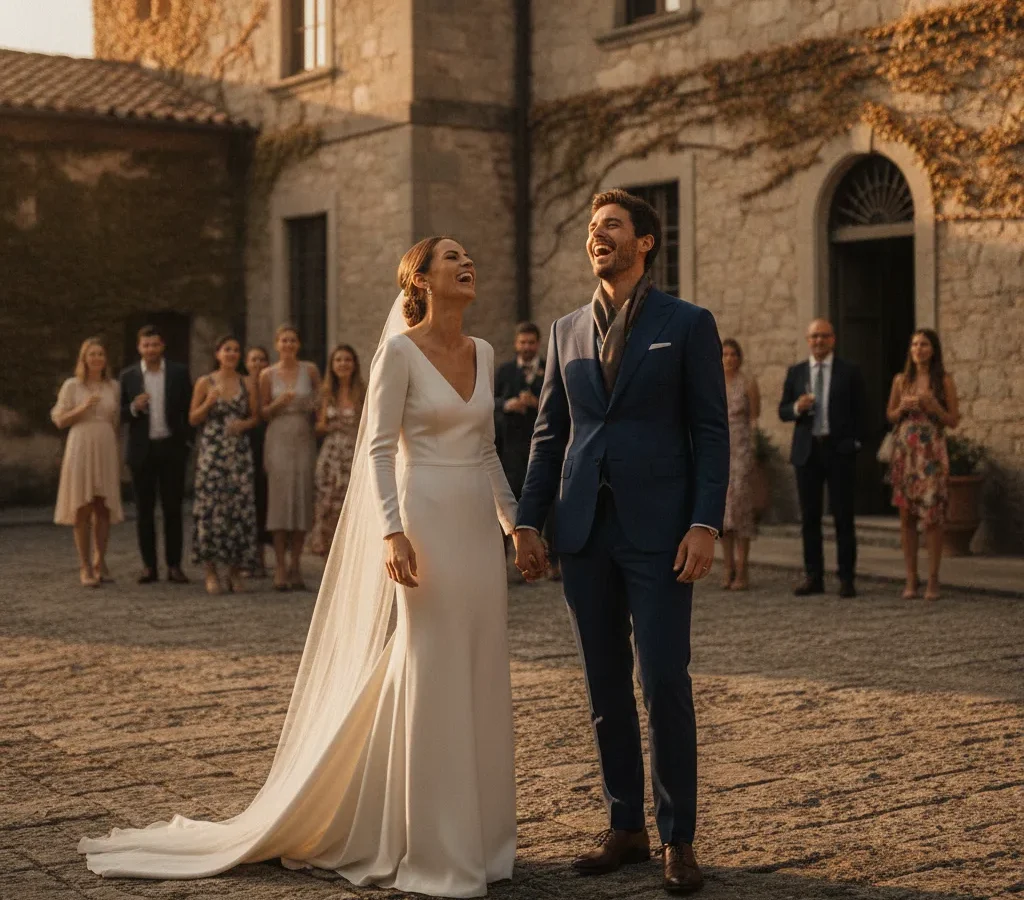
Candid photography describes images made without asking anyone to perform a pose. Think of a father wiping a tear during the vows, two cousins laughing at the bar, or a guest in a red velvet caftan lost in the music on the dance floor. Adobe’s guide to candid photography notes that unexpected moments are often the most memorable, while stressing that the photographer must stay constantly ready and attentive to catch them.
Documentary wedding photography, sometimes called photojournalistic wedding photography, goes further. It describes an entire approach to the day in which the photographer primarily observes and records events rather than directing them. This approach borrows its discipline from photojournalism: anticipate, position yourself, and let the story unfold.
Posed and editorial wedding portraits
Posed wedding portraits, by contrast, involve arranging people, giving instructions, or setting up a specific image. This includes family formals, wedding party portraits, and directed couple portraits. Traditional wedding photography relied heavily on these pre-arranged images. Editorial-style wedding photography also uses direction, but with a different intent. The Knot describes editorial work as placing greater emphasis on lighting and posing, while documentary work focuses on candid moments.
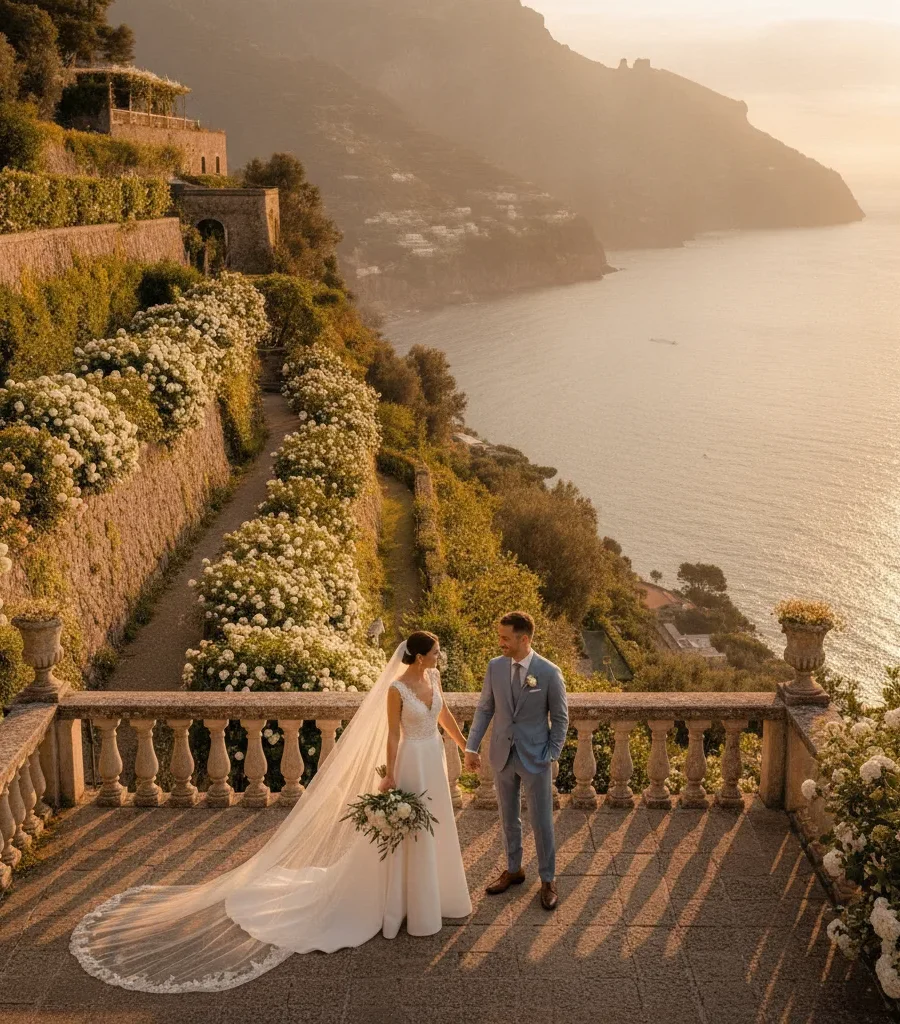
One nuance matters more than any definition: natural does not mean completely unprompted. A photographer can offer light guidance, such as asking you to walk together along a terrace or to stand a little closer, and still leave room for genuine interaction. Brides’ expert advice recommends communicating your preferences and allowing natural movement rather than over-rehearsing expressions.
Natural vs posed wedding photography, the key differences
The clearest way to understand candid vs posed wedding photos is to look at what changes in the photographer’s role, in your experience, and in the final images.
| Consideration | Natural, candid, documentary | Posed, directed, editorial |
|---|---|---|
| Photographer’s role | Observes, anticipates, adjusts position and timing | Arranges people, composition and sometimes lighting |
| What it captures | Candid reactions, movement, unscripted moments | Planned portraits, specific groupings, composed images |
| Your experience | Fewer interruptions during the day | More active participation during portrait sessions |
| Main strength | Conveys atmosphere, relationships and the sequence of events | Ensures key people are photographed with polished, consistent results |
| Main trade-off | Desired groupings can be missed if not planned | Takes time and can feel stiff if direction is excessive |
These are tendencies, not guarantees. A documentary photographer still makes constant decisions about composition and framing, where to stand, and when to press the shutter. A posed photograph can still feel relaxed and personal. Canon’s professional wedding photography advice captures this well: observe interactions and look for unexpected moments, but secure the essential image first, then explore alternative angles or what happens immediately afterward.
The case for candid wedding photography
Why candid coverage matters
The strength of a documentary approach lies in what cannot be recreated. Your grandmother’s face when she first sees you in your gown. The in-between moments when your best friend straightens your bow tie. The energy of a welcome dinner where guests from Los Angeles, San Francisco and Paris meet for the first time. These candid reactions tell the story of the weekend in a way no instruction ever could.
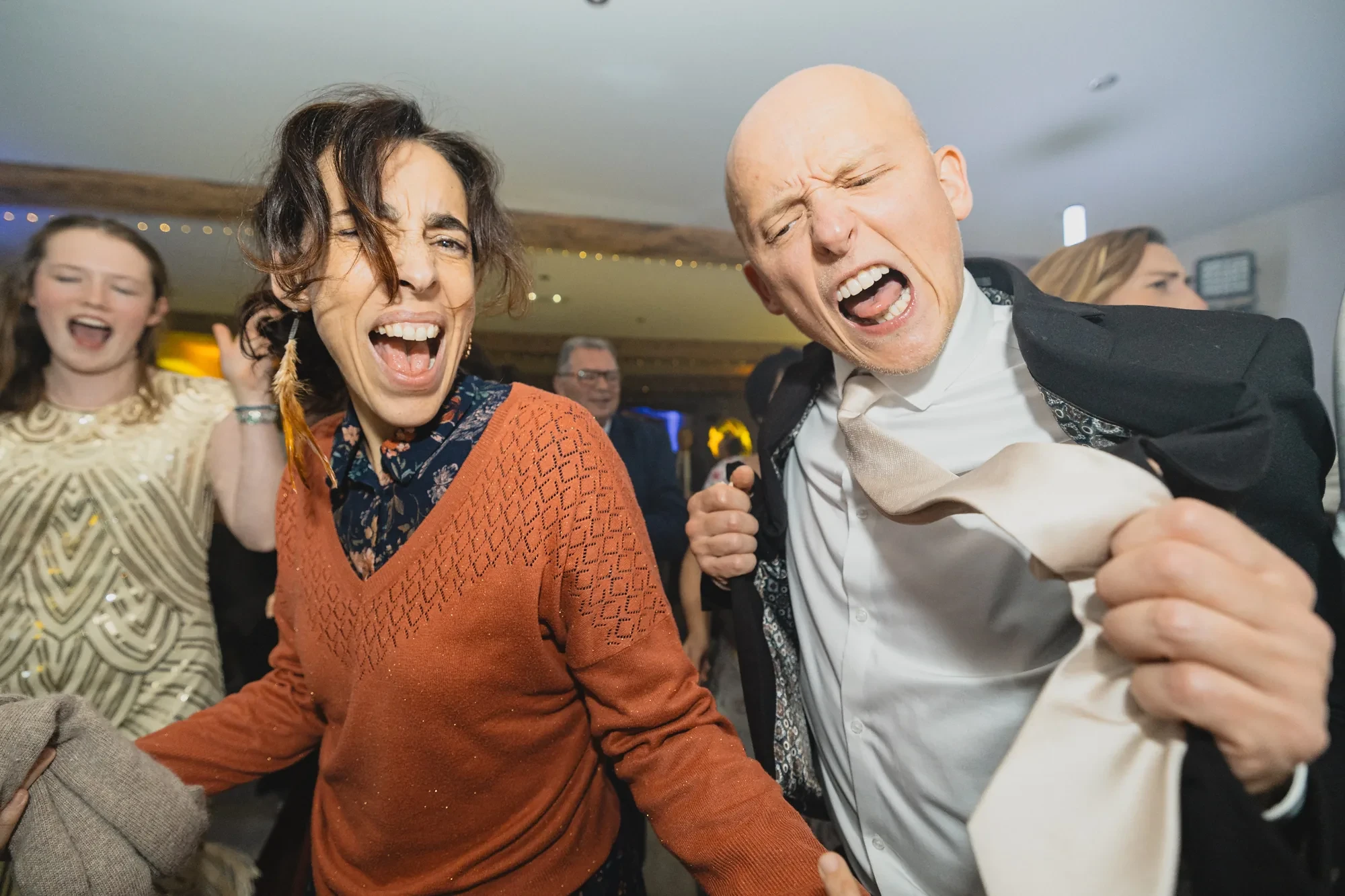
This approach also suits couples who want to spend their time with family and friends rather than in front of the camera. For a multi-day celebration, that matters. Your guests crossed an ocean for you, and you want to be present with them.
The limitation is equally real. A purely candid approach does not guarantee that every family grouping you care about will be photographed. Light changes, people move, and access is not always ideal. If you want a specific portrait or a complete list of family combinations, those needs must be planned.
The case for posed wedding portraits
Why direction still matters
Direction exists for good reasons. Wedding family portraits are the clearest example. If you want a photograph of your parents, both sets of grandparents, and your siblings together on the steps of the château, someone has to gather them, arrange them in the best light, and make sure nobody’s eyes are closed. That is direction, and it is a service.
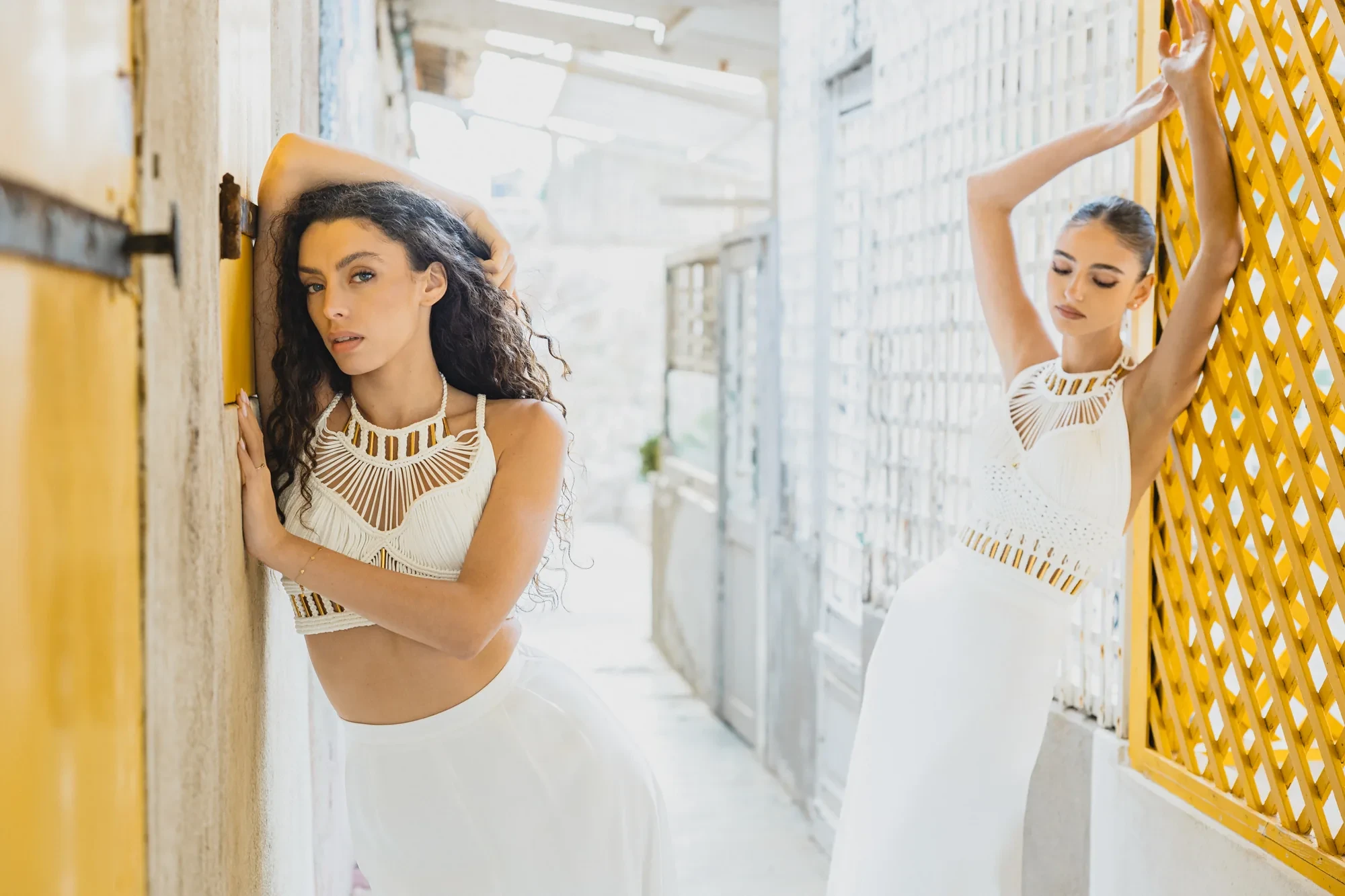
Directed couple portraits also allow a level of craft that pure observation cannot always reach. Lighting and posing work together to create the cinematic, editorial images many of our clients associate with Vogue Weddings or Over The Moon. A bride in an ivory gown with puffed sleeves, photographed beside a gilded mirror against Art Deco wallpaper, is a composed image. It is meant to be. Professional advice in Popular Photography notes that posed and semi-posed portraits remain important parts of a wedding album, alongside candid images.
The risk is excess. A long, rigid portrait schedule takes time away from guests, and heavy instructions can produce self-conscious expressions, especially for camera-shy couples.
Our philosophy, documentary first, gentle artistic direction where it counts
At Lino Ludovic, we work with a hybrid approach that we refine wedding after wedding. Most of the day, we act as discreet observers. During preparations, the ceremony and the reception, we document what unfolds without interrupting it. Then, at specific moments, we become artistic directors.
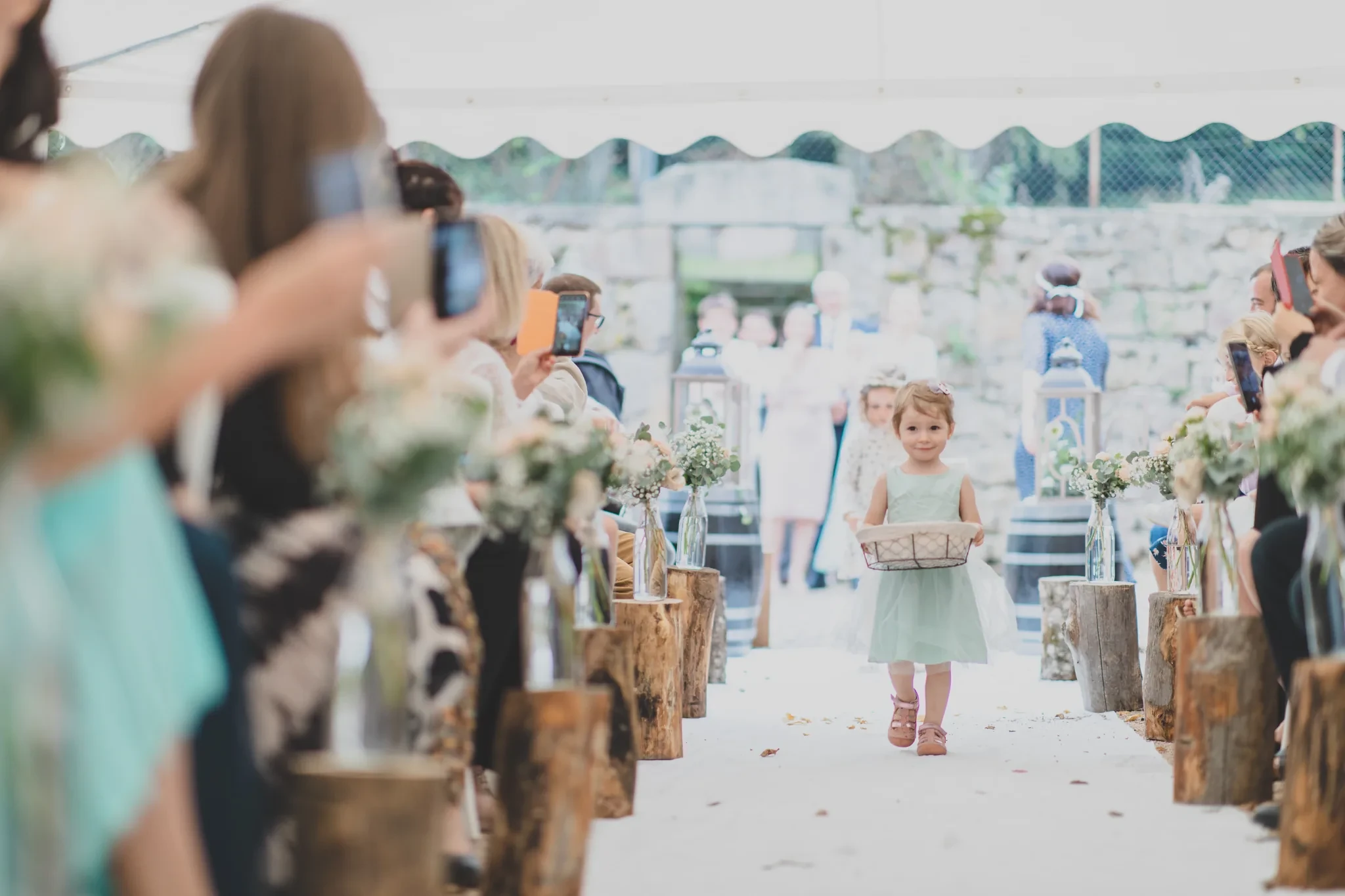
In practice, our structure across a destination weekend looks like this:
- Welcome party and rehearsal dinner: almost entirely documentary, capturing the atmosphere, the arrivals and the first toasts.
- Getting ready: observation, with a few directed images of the gown, accessories and design details.
- Ceremony: pure storytelling coverage, never interrupting.
- Family formals: efficient, organized and directed, based on a shot list agreed in advance.
- Couple portrait session: semi-posed portraits built on posing prompts and movement, timed with the best light.
- Reception and farewell brunch: documentary, with occasional light guidance for key moments.
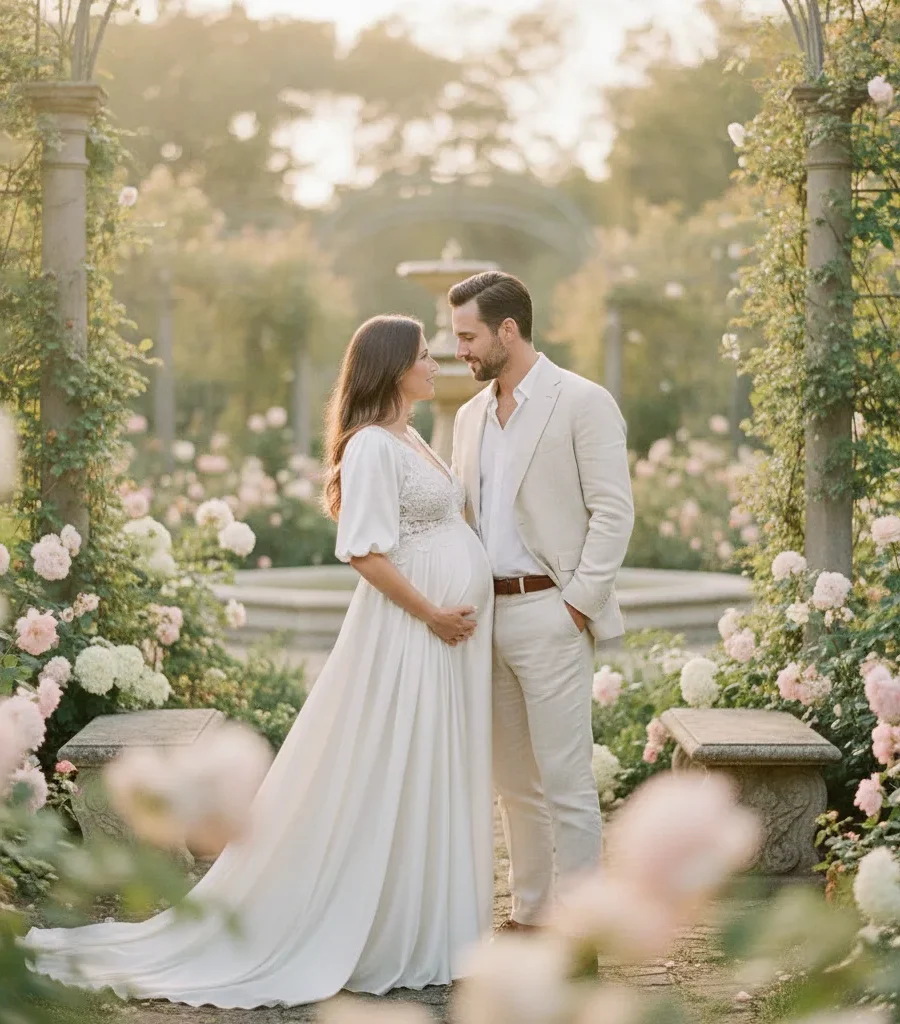
The direction we use during couple portraits is deliberately soft. Rather than placing hands and chins, we give prompts: walk toward the olive grove, whisper something to each other, turn back toward the lake. The pose sets the frame, and the emotion fills it. That is what semi-posed wedding photos mean to us.
For the US wedding planners and event designers we work with, this structure has another benefit. Design elements such as tablescapes, floral installations and ceremony structures, like a pair of wooden A-frame arches dressed in colorful blooms, are photographed with intention before guests arrive. Those detail images are composed carefully because they will represent a year of conceptual work in a portfolio or magazine submission.
Good to know
In a finished fine art album, the two approaches complement each other naturally. A directed portrait often opens a chapter, and the candid images that follow give it life and rhythm.
How to look natural in posed wedding photos
Building comfort in front of the camera
Most couples who fear posing are not afraid of the camera. They are afraid of looking stiff. The solution is less about technique and more about rapport and trust with the photographer. Popular Photography describes trust and rapport as essential to capturing intimate moments comfortably, and Brides advises against overthinking or over-practicing expressions.
An editorial-style engagement session before the wedding helps enormously. It lets you discover how we direct, how prompts feel, and how quickly the awkwardness disappears. On the wedding day itself, focus on each other rather than on the lens. Movement helps more than stillness. And if something feels uncomfortable, say so. Good photographer direction adapts to the couple, never the reverse.
How much time to allow for portraits
There is no universal number, because portrait time depends on how many family groupings you want, the size of your wedding party, and the layout of the venue. A short list of essential combinations moves quickly. A long list with extended family requires more time and more organization.
Our recommendation is to plan portraits directly into the wedding day timeline rather than squeezing them in. A first look can free up time before the ceremony, and a short portrait window near golden hour often produces the most flattering light. Your planner and we will build these windows together so they never compete with cocktail hour.
Important
Share your list of must-have family groupings at least a few weeks before the wedding, with names and relationships, and designate a family member who knows everyone to help gather people quickly.
How to choose a wedding photography style
Choosing between editorial vs documentary wedding photography is less about picking a label and more about understanding your own priorities. Ask yourselves whether you want the photographer to stay mostly in the background or to guide you frequently. Consider how comfortable you feel being photographed, and whether gentle prompts would help. Think about which moments and people matter most.
Then look at the work. A photographer’s portfolio review should go beyond curated highlights. Ask to see a full wedding gallery so you can judge how candid coverage and portraits sit together across an entire day. Our portfolio includes complete celebrations at Château de Matel, in Entrevaux in Provence, and around Lake Annecy, which show how both approaches coexist in a single story.
Questions to ask your wedding photographer
When you meet a photographer, these are the questions to ask your wedding photographer about candid and posed coverage:
- What percentage of your work is observed versus directed, and how does it vary across the day?
- How do you handle family formals, and do you work from a shot list?
- What kind of prompts do you use during couple portraits?
- How do you work with camera-shy couples or self-conscious guests?
- Can we see full galleries, not just highlights?
- How do you coordinate with our planner on the timeline and design details?
The answers will reveal not only a style but a working method, and whether that method fits the experience you want.
Bringing both approaches together
The candid vs traditional wedding photography debate rests on a false choice. Documentary storytelling preserves the emotion and atmosphere that make your celebration unique, while thoughtful direction ensures the people and portraits you cherish are never left to chance. The most meaningful galleries weave both together. Our role is to know when to disappear and when to guide, so you can enjoy your weekend fully while we create images worthy of a heirloom album handcrafted in France.
If you are planning a destination wedding in France or Italy and want to discuss how we would approach your celebration, we would be delighted to start that conversation on a first call.
FAQ
Does documentary wedding photography include family portraits?
In most cases, yes. Even photographers who work primarily in a documentary style usually schedule a dedicated window for formal group portraits, because essential combinations cannot be left to chance. Confirm this explicitly when you book.
Can wedding photos be both natural and posed?
Absolutely. Semi-posed portraits are the clearest example: the photographer sets the location, light and framing, then gives prompts that lead to genuine interaction. The result has the polish of a composed image and the warmth of a real moment.
What is the difference between posed vs unposed wedding photos in an album?
Posed images tend to anchor the narrative with strong, structured portraits, while unposed images carry the emotional thread between them. A well designed album alternates the two to create rhythm, much like the pacing of a film.
Should our videographer follow the same approach?
Ideally, yes. When photography and film share a similar philosophy, the coverage feels coherent and the team moves through the day without competing for the same moments. We coordinate closely with videographers to protect that consistency.
Is an engagement session worth it if we are traveling from the US?
For many couples, it is one of the most valuable parts of the experience. It builds trust before the wedding, removes the anxiety around posing, and can be scheduled during a venue visit or the days preceding the celebration.