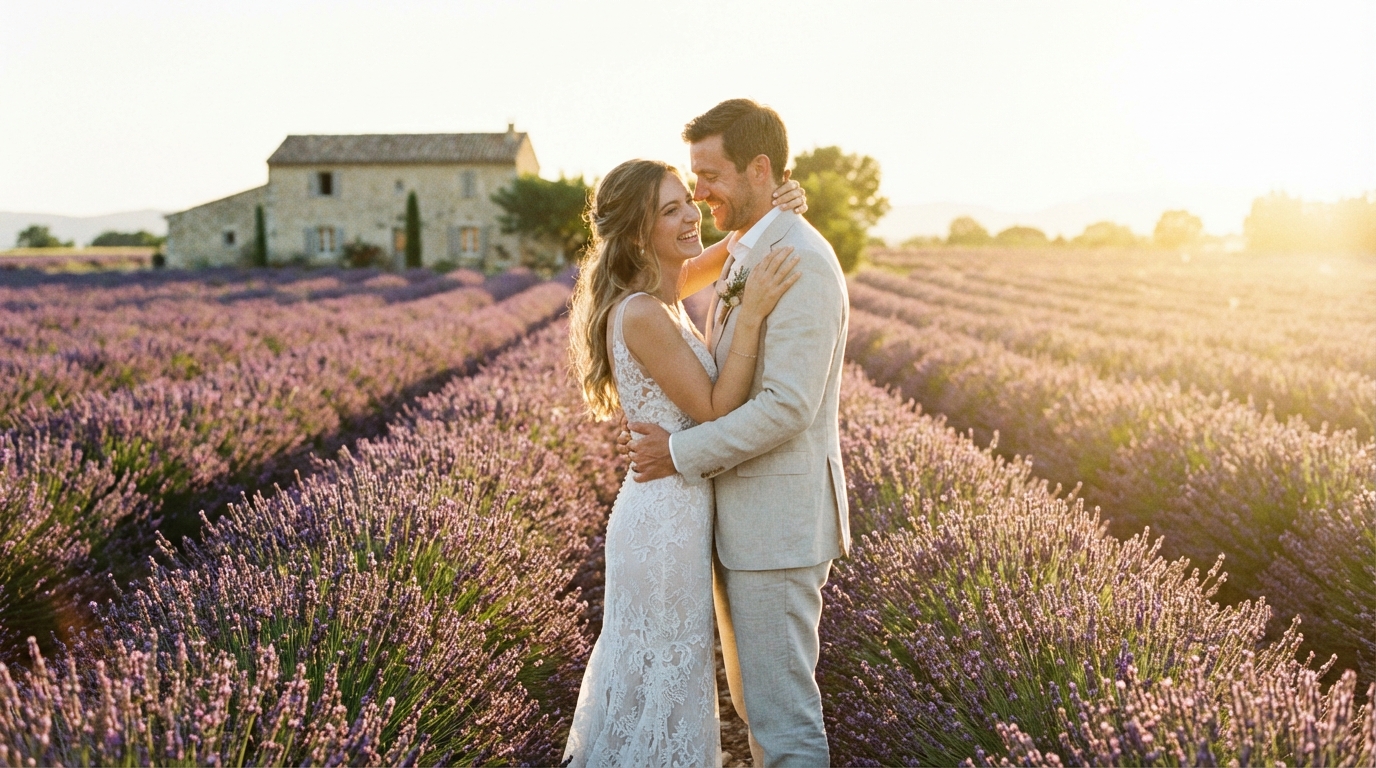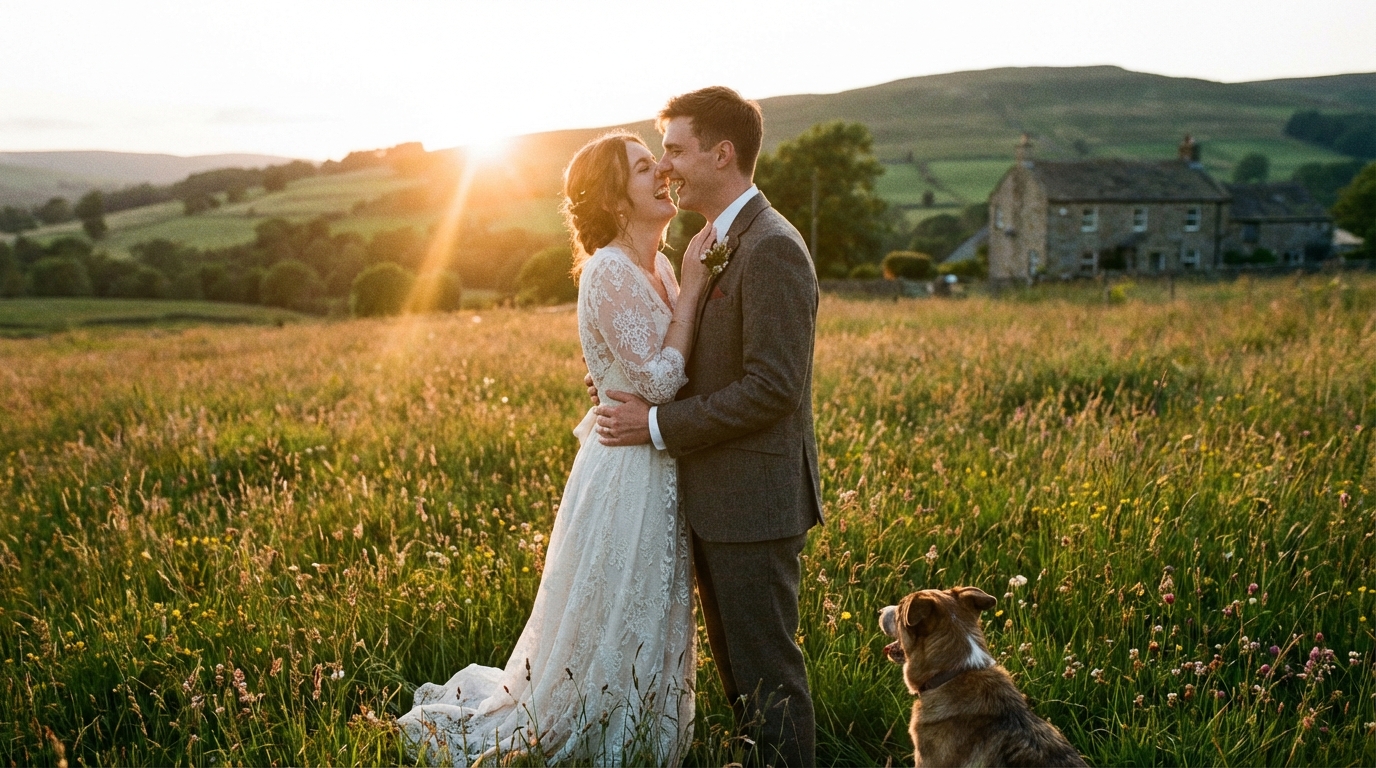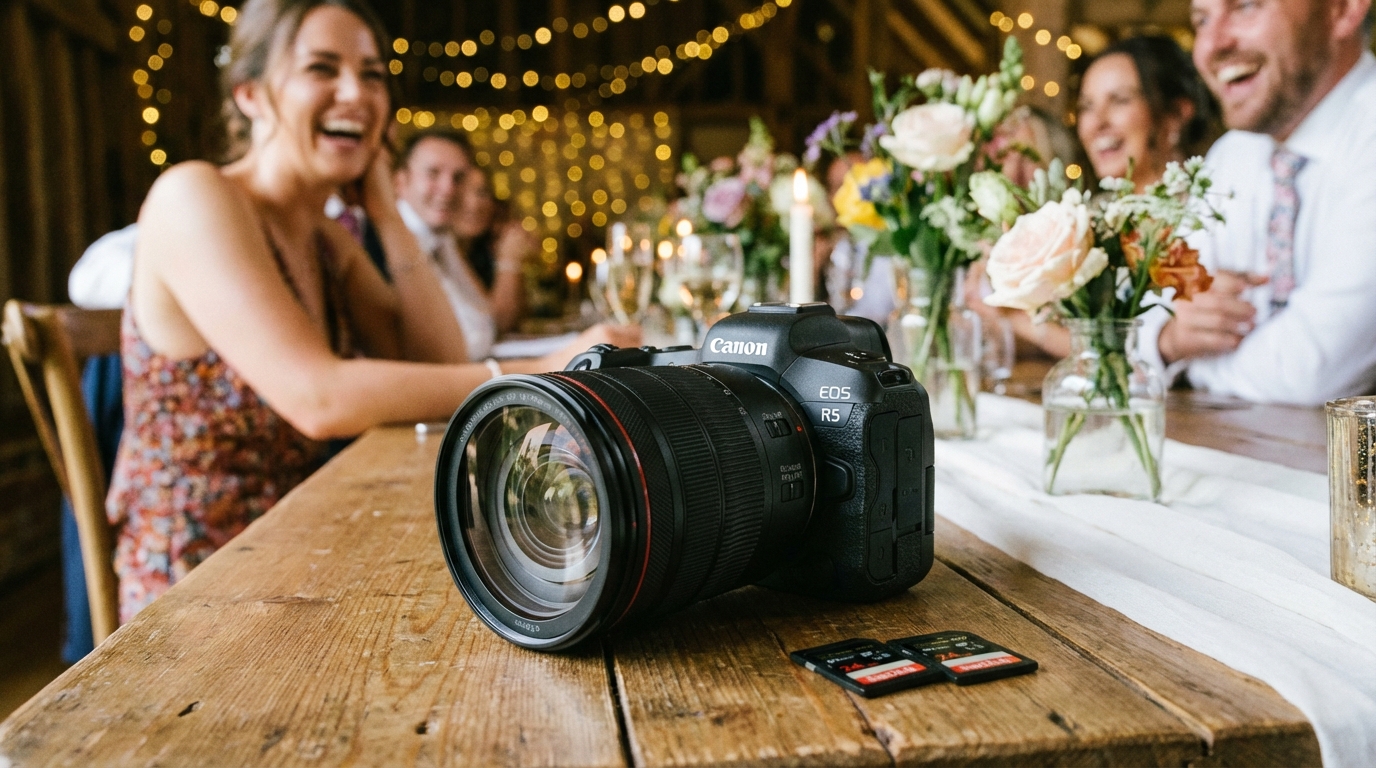
When you invest in a wedding experience in Paris, Provence, Lake Como or Santorini, you expect more than beautiful images. You expect certainty. Our wedding photo backup strategy is designed to protect your memories with the same care your planner brings to your timeline and guest experience.
From the first click during your welcome dinner to the final frame of your brunch, every file follows a precise, redundant path. We apply a professional triple backup strategy that anticipates technical failure, travel risks and even extreme events such as theft, fire or flood.
In this article, we walk you through how we secure your images on site, once we return to the studio and in the cloud. You will see exactly what happens to your photos, why the process is so robust and how it supports the level of excellence you and your wedding planner expect.
For additional inspiration and behind-the-scenes details, feel free to browse our wedding photography blog.
Photographer's Secret: My Triple Wedding Photo Backup Strategy to Ensure Your Wedding Photos Are Safe
Reading time: ~10 min
- Why a solid wedding photo backup strategy matters
- The three two one triple backup framework
- Step one – On-site protection on your wedding day
- Step two – Local backups once we return to the studio
- Step three – Off-site and cloud backups
- Long-term archiving and fine art albums
- Advantages and limits of a triple backup strategy
- FAQ about keeping your wedding photos safe
Why a solid wedding photo backup strategy matters
A wedding is a one-time event. There are no retakes for your vows at the mairie, your sunset ceremony on the Amalfi Coast or your first dance in a Parisian hôtel particulier. At this level of event, losing the images is simply not an option.
Modern cameras are reliable, yet they are still small computers. Cards can fail. Laptops can be stolen while travelling. Hard drives can stop working without warning. For destination weddings, we also add the constraints of international travel, airport checks and multiple locations over several days.
This is why professional photographers who work in the wedding industry follow what is known as the three two one rule. We keep three copies of your images, on two different types of storage, with at least one copy stored away from our studio. This triple backup approach means that no single incident can make your photos disappear.
For you and your planner, this translates into peace of mind. You know that the same rigour you put into the seating plan or logistics is applied to the digital protection of your memories.
The three two one triple backup framework
Before we look at the concrete steps on your wedding day, it helps to see the overall structure of this three-layer system.
| Layer | What it is | Where it lives | When we create it |
|---|---|---|---|
| Copy one | Primary working files | Main computer or main external drive | Immediately after the wedding |
| Copy two | Local backup on a different device | Second drive, network storage or similar | Before any editing begins |
| Copy three | Off-site or cloud backup | Secure online service or remote drive | As soon as internet access allows |
This structure is inspired by professional photo backup workflows that have been tested by many photographers over years of work. It protects against the most common risks.
Copy one protects you if a memory card fails. Copy two protects you if the main drive stops working. Copy three protects you if something serious happens to our physical space, such as fire, theft or water damage.
In practice, our own wedding photo backup strategy goes even further, because we already create redundancy during the day itself.
Step one – On-site protection on your wedding day
Redundancy in camera gear and memory cards
Security begins before we even arrive at your venue. For high-end and destination weddings, we always bring backup cameras, lenses and multiple sets of batteries and cards. If one body fails during your ceremony at Lake Como or your reception in Lyon, we continue working seamlessly.
Our cameras record to two cards at once. For example, we often save the full-resolution RAW file on one card and a second version on another card. This means that if a card becomes corrupted during the day, we still have a parallel copy.
We also avoid filling cards completely. Instead, we rotate them during the day, for example between your preparations, the ceremony and the evening. This limits the risk exposure, because no single card contains the entire story of your wedding.
All of this happens without you noticing anything. Our role is to blend into your guest experience and work in close coordination with your wedding planner, while quietly building in layers of safety.
First backup during the day or the very same night
Whenever the schedule allows, such as during dinner or a break between events, we begin transferring files to a portable drive or laptop. For celebrations that stretch over two or three days, we prefer to already have a copy of day one before day two begins.
Back at the hotel, villa or our home base, we immediately duplicate all cards to a working drive. We copy rather than move the original files, so that the memory cards still hold a full set as a temporary extra backup.
This means that already within hours of your party ending, your images exist on at least two independent devices.
Step two – Local backups once we return to the studio
The primary working copy
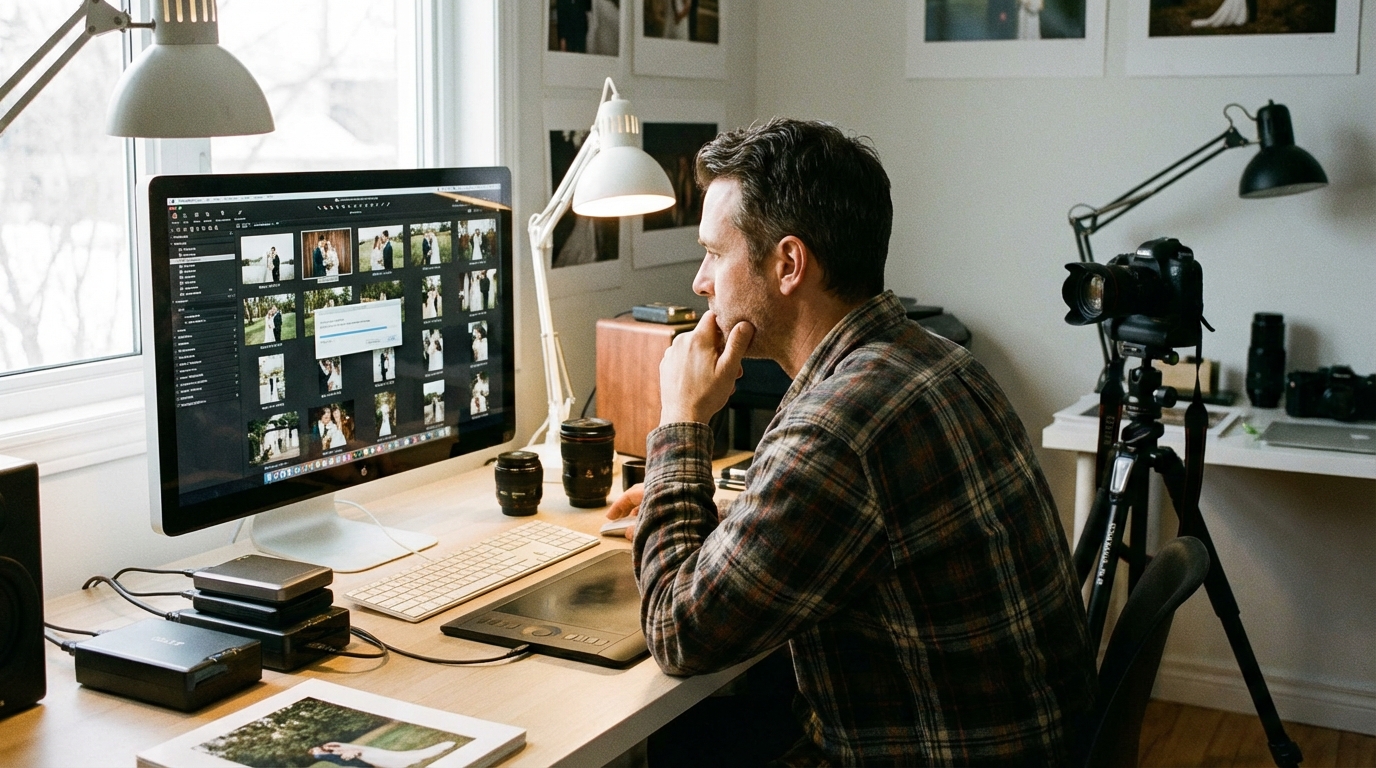
First, we import all RAW files to our main computer or primary external drive. The files are organised into a precise structure that includes the date, location and your names. For example, a folder structure might look like:
Event date → Wedding → City → Couple names
Inside, each image receives a consistent file name that helps us trace it easily in the future. This discipline is essential when we cover several events per season in Paris, Provence, the Amalfi Coast and beyond.
This primary copy is the one we use for culling, editing and creating your final gallery and album.
The second local copy on a different device
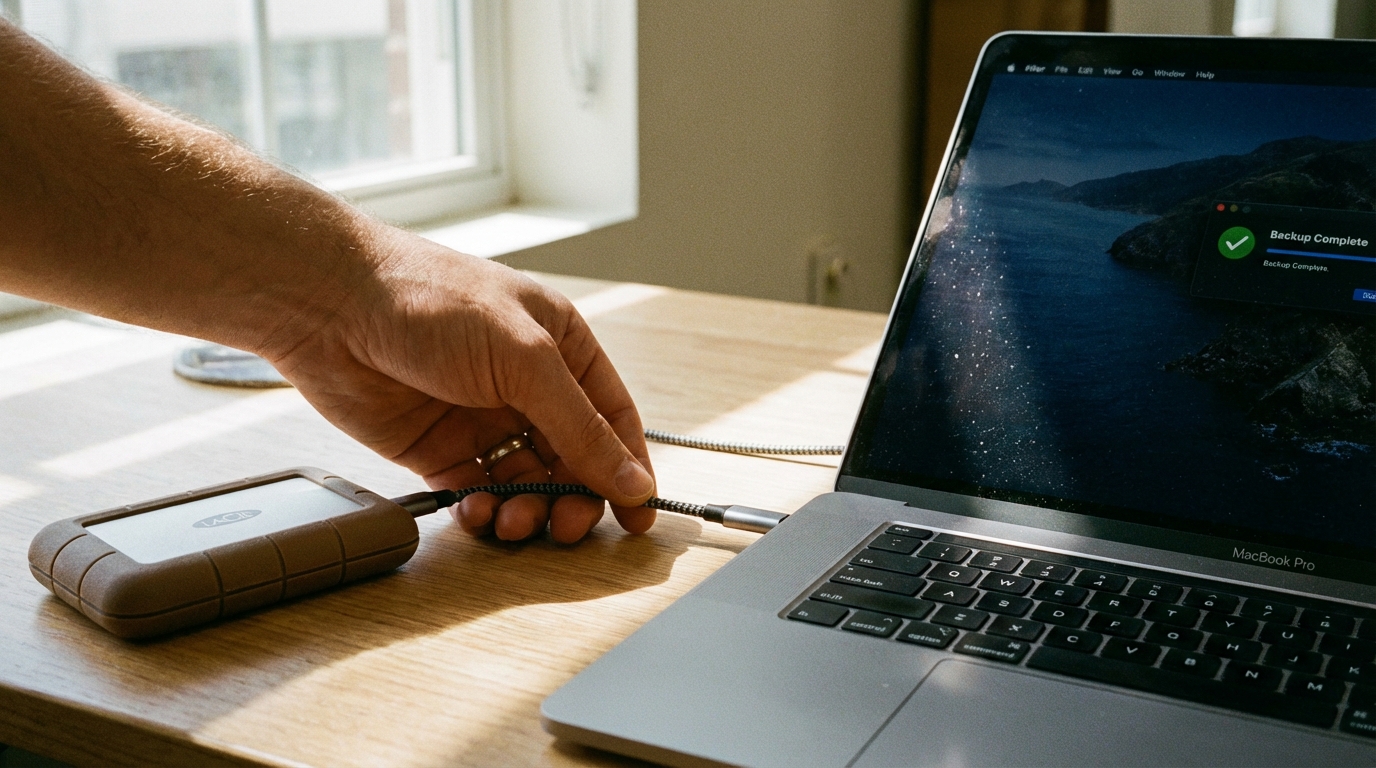
Before any editing begins, we create an exact clone of that primary folder on a second device. This can be a separate external solid-state drive, or a special system that uses multiple disks with mirrored redundancy.
The key is that this second copy lives on different hardware from the first. If the main drive ever fails, we can switch to this backup with no data loss.
To keep things reliable over time, we replace drives periodically rather than waiting for them to fail. We also disconnect them safely after each backup, to avoid file corruption. This routine may seem invisible from the outside, yet it is one of the reasons many planners and couples choose to work with a professional photographer rather than a friend with a good camera.
Step three – Off-site and cloud backups
Cloud backup as a safety net
Local backups protect you against most everyday incidents. To cover more extreme scenarios such as theft or major damage to the studio, we also create a third copy stored away from our usual workspace.
We use a reputable cloud backup provider whose only task is to copy our files in the background, continuously and securely. Once your wedding is uploaded, it sits encrypted on servers in a professional data centre.
Because uploads can take time, especially for multi-day destination weddings, we prioritise your final edited selection along with the essential RAW files that correspond to those images. We always verify that the cloud backup is complete and we protect access with two-factor authentication.
For added safety and faster access in Europe, we may also keep an extra physical drive with the most important weddings in a separate location, such as a trusted family home or a secured space. This gives us two independent off-site paths.
Long-term archiving and fine art albums
Digital security is essential, yet it is not the only way we protect your memories. For our couples, the story does not end with a gallery link.
Once your images are delivered, we keep your full gallery online for a defined period, usually several years, so you and your families can download and share them easily. This also serves as a convenient extra copy.
Beyond that horizon, we recommend transforming your favourite images into a tangible object. We design albums with French artisans who use archival papers and inks. When stored away from direct sunlight and humidity, these albums can outlive any hard drive. If you wish to explore how a complete visual narrative can enhance your wedding memories, you can read more about our approach to high-end wedding photography here Photographe mariage haut de gamme.
In this way, your story is preserved both as carefully backed-up files and as an object you can hold and pass on.
Advantages and limits of a triple backup strategy
- It dramatically reduces the risk of data loss from technical failure, human error or physical damage.
- It allows us to work with confidence, which means we can stay focused on emotion, light and composition during your day.
- It reassures planners and venues who are used to collaborating with teams that take risk management seriously.
There are limits as well. No system is perfect. Cloud services depend on internet access. Physical drives can still fail if they are not maintained. Extreme situations, such as long-term legal disputes, might require additional copies and documentation beyond our standard workflow.
However, when combined with regular testing of backups and a clear contract that defines how long we store your files, this approach reflects the current best practices in the professional wedding industry.

FAQ about keeping your wedding photos safe
Do you keep our wedding photos forever?
We keep multiple copies of your files for several years, which already goes beyond the minimum many providers offer. In our contract, we clearly state the guaranteed duration of storage. After that period, we may archive or rotate older RAW material, while your album and your personal downloads remain your permanent keepsakes.
Can we rely only on your backups?
We strongly advise against relying only on us. As soon as you receive your gallery, you should download the high-resolution files and save them in at least two different places, for example your own external drive and your own cloud account. This way, both you and we have independent security nets.
Is this level of backup really necessary for every wedding?
When you plan a refined celebration with guests travelling from different countries and several events across a weekend, the emotional and financial investment is significant. In that context, a robust backup strategy is not a luxury. It is simply consistent with the standard of the rest of your wedding.
If you are currently exploring how to prepare every aspect of your celebration with the same level of care, you may enjoy this guide for couples planning a destination wedding in France Destination wedding France guide.
In summary, a professional wedding photo backup strategy is much more than storing files on a single hard drive. From dual card cameras on your wedding day, through structured local backups in the studio, to encrypted cloud storage and artisanal albums, each step is designed to preserve the emotional and aesthetic truth of your celebration. If you wish to work with a photographer who treats your images with this level of rigour and sensitivity, we invite you to explore our articles and discover how we approach each wedding as a unique, carefully safeguarded story Blog mariage et photographie.