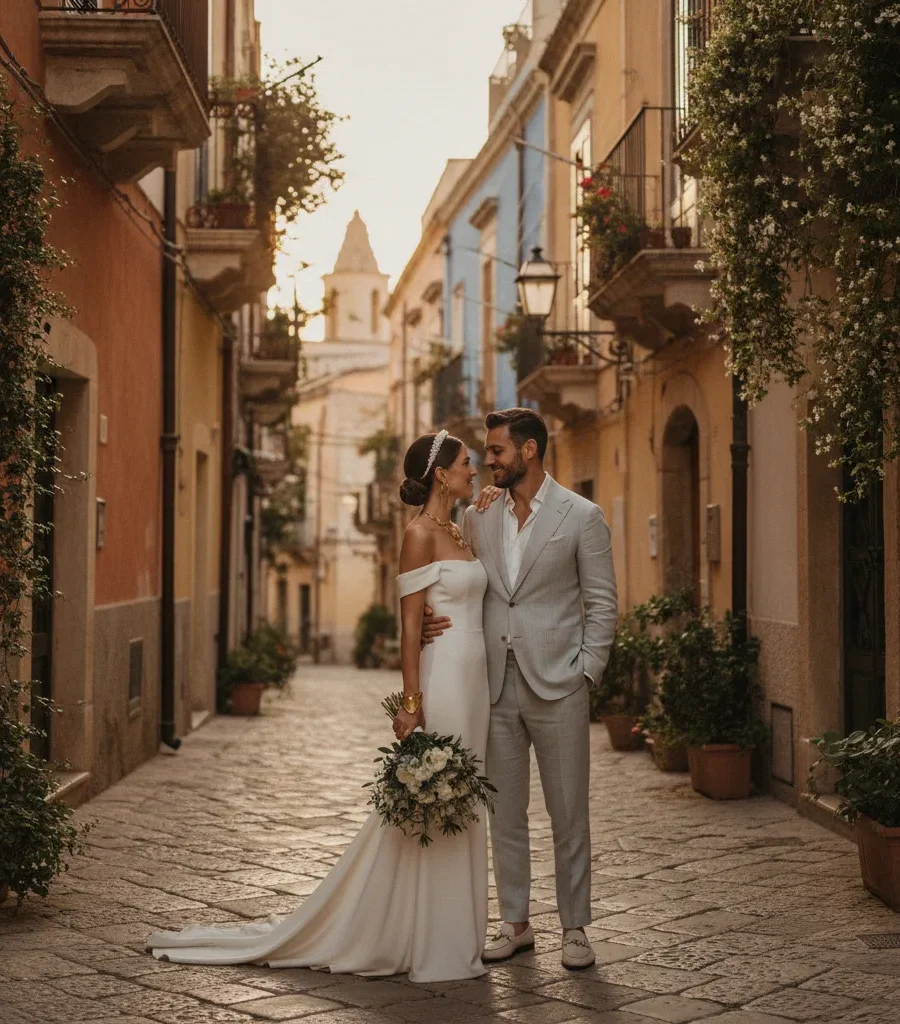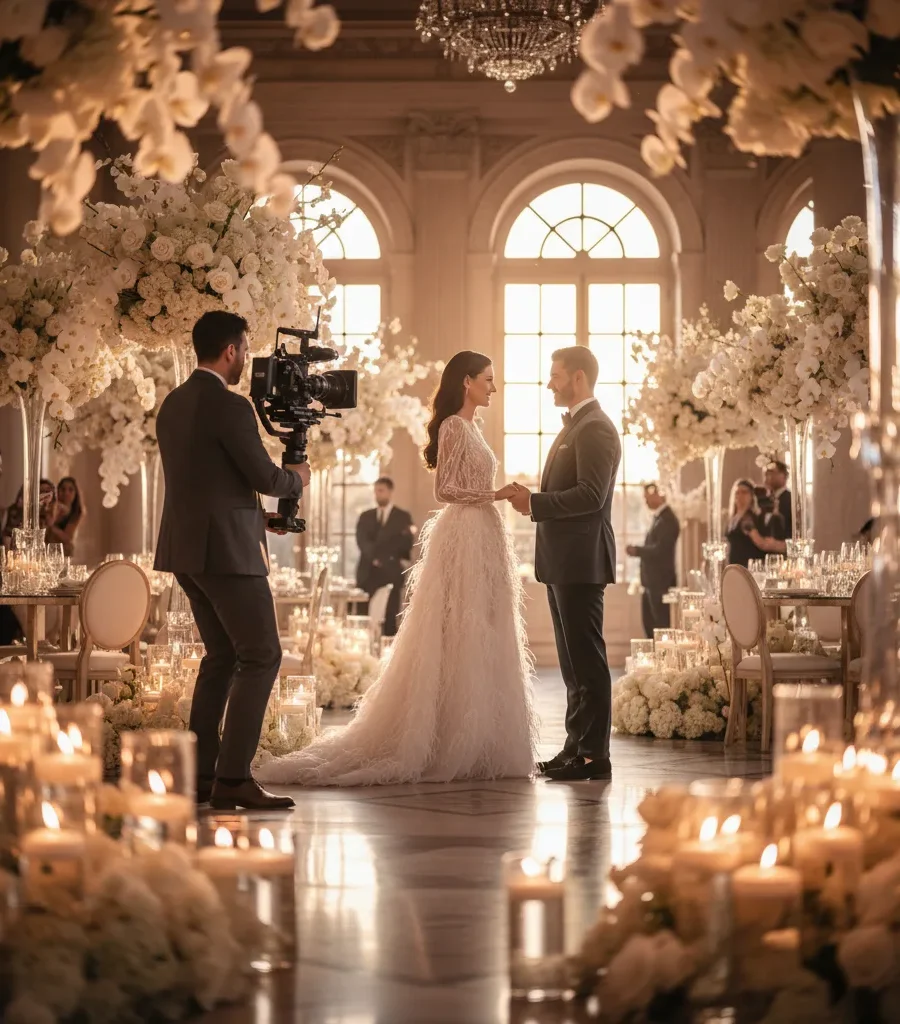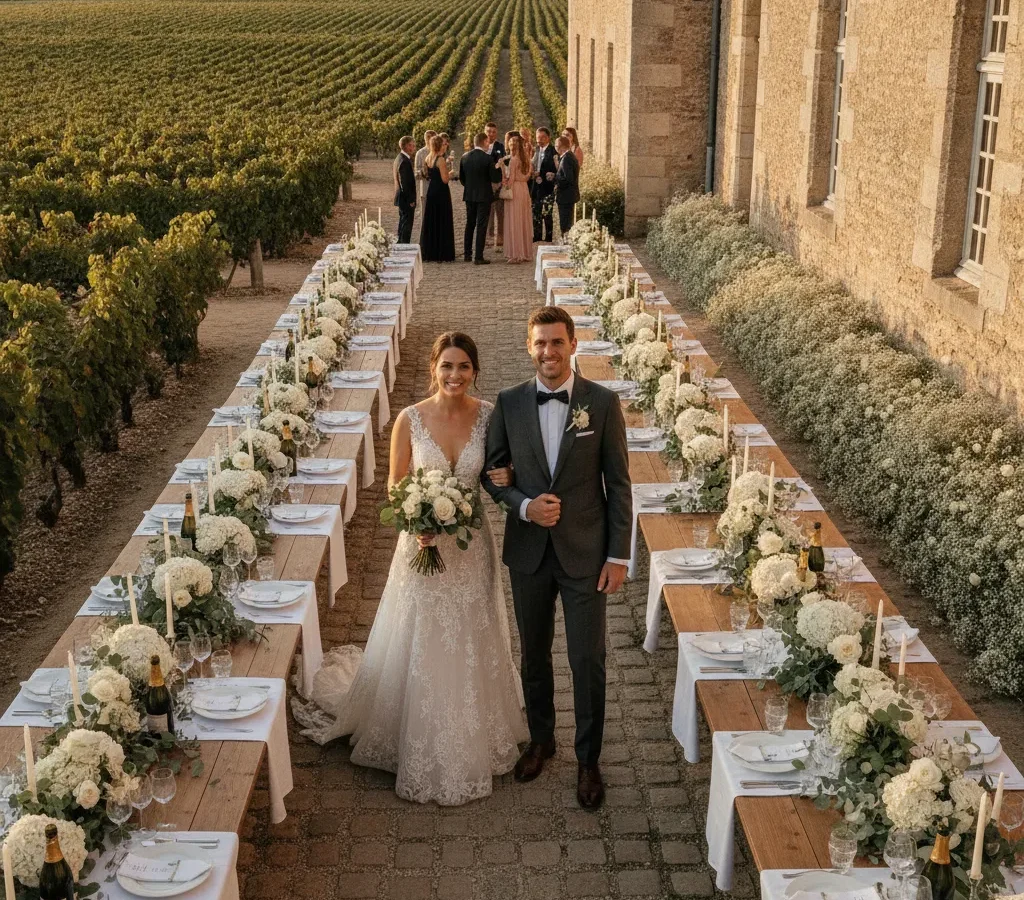
Planning a destination wedding in France and choosing French wedding traditions to incorporate into your destination wedding means stepping into a centuries-old culture of celebration, where food, wine, and conviviality are treated as sacred art forms. For American couples dreaming of a château in Burgundy or a sun-drenched estate in Provence, understanding French wedding traditions is not just a nice-to-have — it is the key to creating a day that feels genuinely rooted in its setting rather than simply transplanted there.
7 French Wedding Traditions to Incorporate into Your Destination Wedding
Temps de lecture : ~8 min
Table of contents
- What Makes French Weddings Genuinely Different for American Couples
- The 7 French Wedding Traditions Worth Incorporating
- The Civil Ceremony at La Mairie
- The Vin d’Honneur
- The Croquembouche
- Champagne Rituals — Sabrage and the Pyramide
- Dragées as Wedding Favors
- The Late-Night Onion Soup
- La Jarretière — The Garter Tradition
- What to Do and What to Avoid When Incorporating French Traditions
- FAQ
- Choosing French Wedding Traditions That Truly Fit Your Day
What Makes French Weddings Genuinely Different for American Couples
The philosophy behind French wedding traditions
Before diving into specific traditions, it helps to understand the underlying philosophy. French weddings are built around conviviality rather than choreography. Where American celebrations often follow a tight, scripted sequence of events, a French wedding is more instinctive and organic — centered on long shared meals, unhurried conversation, and dancing that stretches well past midnight. The atmosphere is warm and inclusive, with the emphasis placed firmly on the collective experience rather than a series of performative moments.
One structural difference that surprises many American couples is the absence of a traditional wedding party. Rather than bridesmaids and groomsmen, French law requires each partner to choose one or two witnesses (témoins) who sign the official register. Children often play the role of flower girls or ring bearers during the ceremony, which adds a genuinely touching visual element, but the concept of a full matching bridal party simply does not exist in the French tradition.
Another important distinction is the timeline. French weddings are famously long. It is entirely normal for a celebration to run from a late afternoon ceremony through to five or seven o’clock in the morning, with onion soup served at dawn as a final act of hospitality. For your photographer, this means planning for coverage across dramatically different lighting conditions — golden afternoon light, candlelit dinner, sparkler-lit dancing, and the soft grey of early morning.
The 7 French Wedding Traditions Worth Incorporating
Choosing French wedding traditions to incorporate
Whether you are planning a fully immersive French celebration or looking to weave a few Gallic touches into your own stateside event, these traditions are the ones that matter most, both for their cultural meaning and for the photographs they create.
The Civil Ceremony at La Mairie
Understanding the French civil ceremony
In France, the only legally recognized marriage is the civil ceremony performed at the town hall (la mairie) by the mayor or a deputy. It is brief — often under fifteen minutes — and involves a formal reading of selected articles from the French Civil Code, the exchange of consent, and the signing of the register. At the close of the ceremony, the couple receives a livret de famille, an official family record book that marks the beginning of their legal union.
For American couples who are not French residents, completing the legal marriage at home and holding a symbolic ceremony in France is often the most practical path, given the administrative requirements around residency, publication of banns, and proof of single status. But even as a symbolic gesture, incorporating a mairie-style moment — a simple, intimate exchange of vows in a historic civic building — adds an authenticity that no château lawn can replicate.
From a photographic standpoint, many French town halls are housed in genuinely beautiful historic buildings. The ornate rooms, stone staircases, and official registers create a visual richness that is entirely different from a church or outdoor setting.
The Vin d’Honneur
Exploring the vin d’honneur tradition
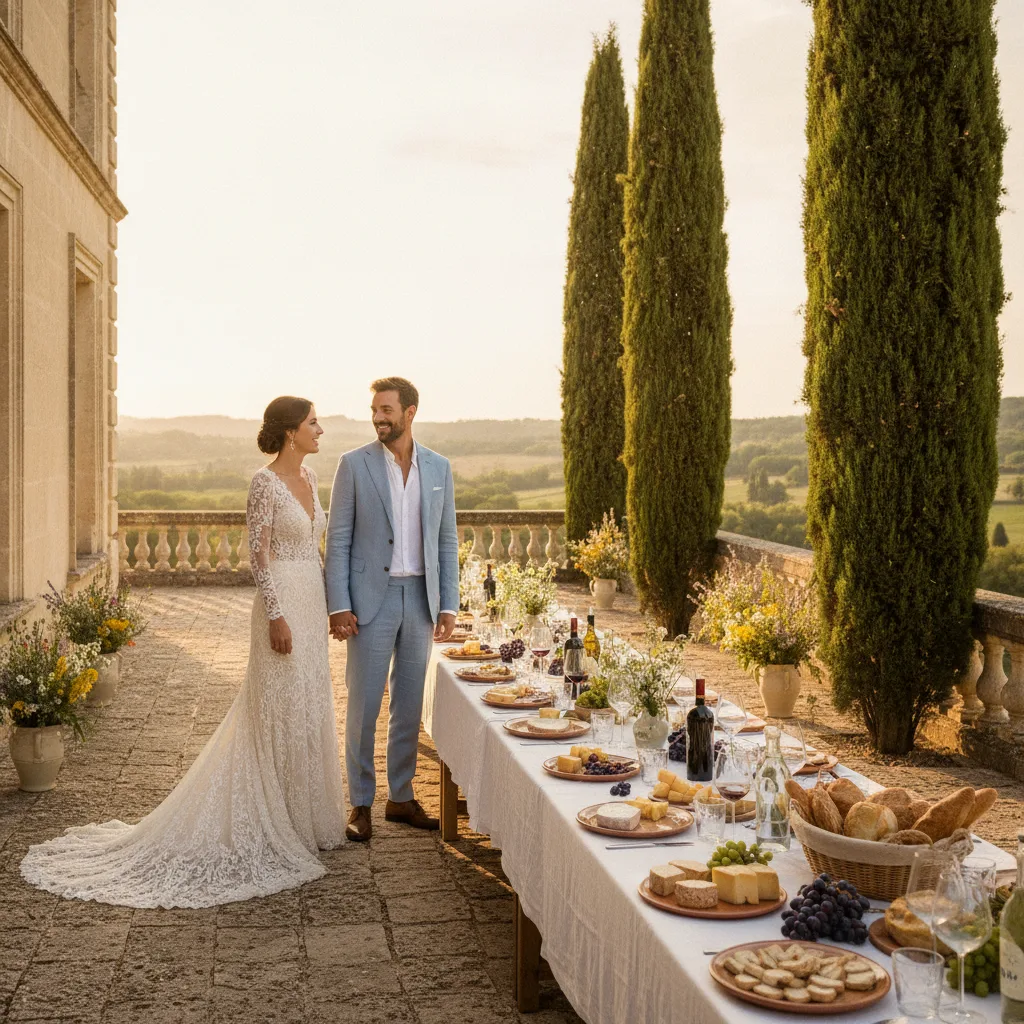
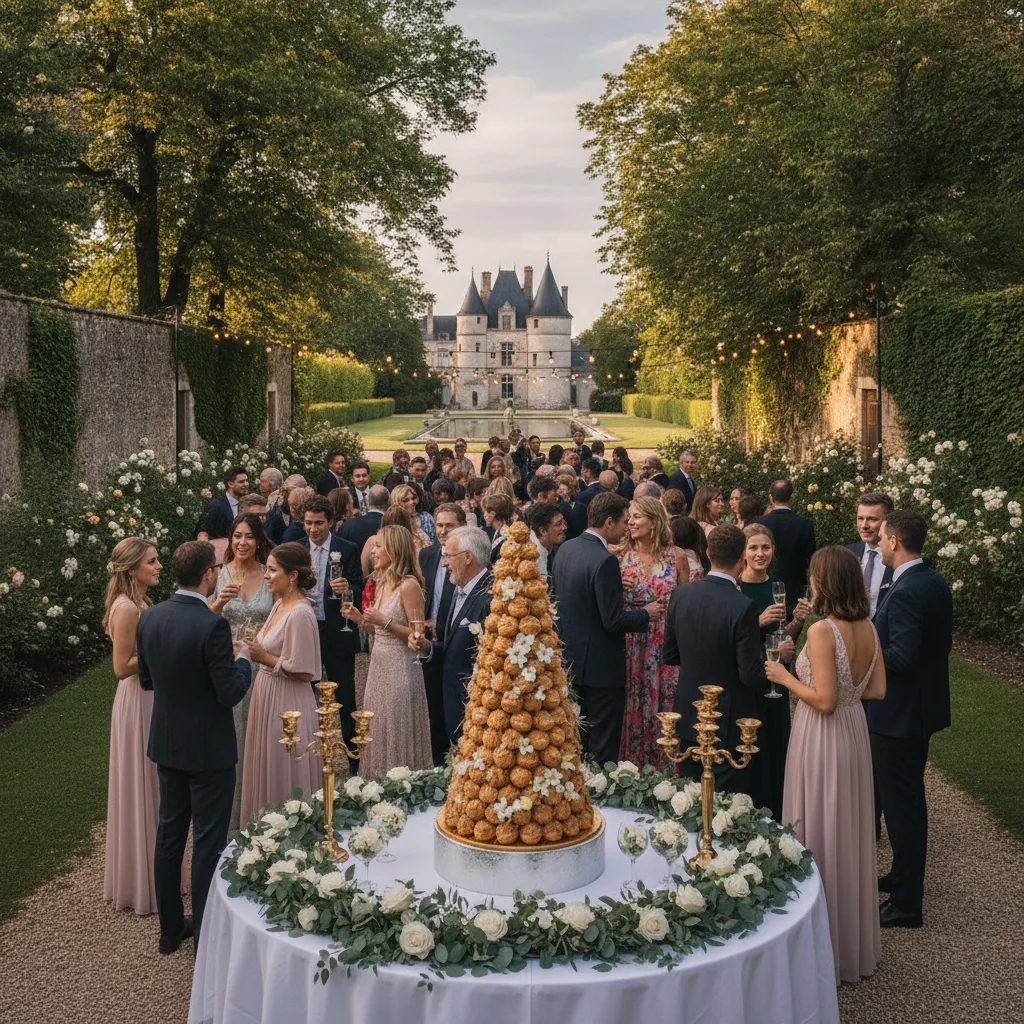
Immediately following the ceremony, French weddings transition into the vin d’honneur — a generous, unhurried cocktail hour featuring Champagne, wine, and elegant canapés. This is not a rushed pre-dinner gap filler. It is a deliberate social ritual where guests mingle freely, often outdoors, and the couple moves through the crowd greeting everyone who traveled to be with them.
One particularly elegant French custom is to invite a broader circle of friends and colleagues to the vin d’honneur only, while reserving the seated dinner for a more intimate group. The distinction is made clear on the invitation itself. For American couples accustomed to all-or-nothing guest lists, this tiered approach can be a genuinely useful tool for managing both budget and intimacy.
Photographically, the vin d’honneur is often the richest hour of the day. Natural light is usually at its most flattering, guests are relaxed and genuinely happy, and the setting — whether a château terrace or a Provençal garden — is at its most beautiful.
The Croquembouche
The iconic French wedding croquembouche
Forget the multi-tiered fondant cake. The traditional French wedding dessert is the croquembouche (also called pièce montée) — a dramatic tower of choux pastry puffs filled with vanilla cream, bound together with caramel, and often decorated with spun sugar or edible flowers. It is a confection that belongs to the world of French pastry craftsmanship, and it arrives at the reception like a piece of architecture.
Modern French couples sometimes opt for a macaron tower or a combination of croquembouche and a more American-style cutting cake. Either way, the entrance of the dessert — often accompanied by sparklers and a darkened room — is one of the most photographically dramatic moments of the entire evening. The texture of the caramel, the glow of the sparklers, and the reaction of guests who have never seen one before make for genuinely compelling images.
Champagne Rituals — Sabrage and the Pyramide
Two Champagne traditions stand out as both visually spectacular and deeply French. The first is sabrage — the act of opening a Champagne bottle with a sabre, a custom dating back to the Napoleonic era. When performed by a skilled sommelier or a confident groom, it is one of those moments that stops a room completely.
The second is the pyramide de champagne — a tower of stacked glasses into which Champagne is poured from the top, cascading down through every level. It is theatrical, celebratory, and entirely photogenic. Both traditions work beautifully as reception highlights and give your photographer a clear, high-energy moment to capture with intention.
Dragées as Wedding Favors
One of the most understated and elegant French wedding traditions is the offering of dragées — sugar-coated almonds — to each guest. By custom, five almonds are given per person, each one symbolizing a wish for the couple: health, wealth, happiness, longevity, and fertility. They are typically presented in small fabric pouches or monogrammed boxes, often tied with ribbon in the wedding colors.
For American couples who want a favor that feels meaningful rather than decorative, dragées offer a beautiful solution. They are simple, refined, and carry genuine cultural weight. As a detail photograph, a flat-lay of dragée boxes alongside calligraphy place cards and floral elements is exactly the kind of image that elevates a wedding editorial.
The Late-Night Onion Soup
Perhaps the most unexpectedly charming French wedding tradition is the soupe à l’oignon served in the early hours of the morning — typically between three and five o’clock — to revive guests after hours of dancing. It is a deeply practical gesture dressed up as a ritual, and it speaks to everything that makes French hospitality distinctive: no one is rushed out the door, and comfort is provided right through to the very end.
For storytelling photography, this moment is extraordinary. Guests in formal evening wear, hair slightly undone, seated around steaming bowls of soup as the first light of dawn begins to appear — it is the kind of image that captures the full emotional arc of a celebration in a single frame.

La Jarretière — The Garter Tradition
While optional and not universally practiced, la jarretière is worth knowing about. It is a playful auction in which guests bid (in increasingly theatrical fashion) to see the bride’s garter raised higher, with the proceeds going toward the couple’s honeymoon. It is lighthearted, a little irreverent, and very French in its willingness to mix formality with humor.
For American couples who want their celebration to feel genuinely festive rather than overly polished, incorporating a version of this tradition — or simply a playful game between dinner courses — can shift the energy of the evening in a wonderfully unexpected way.
What to Do and What to Avoid When Incorporating French Traditions
| What to do | What to avoid |
|---|---|
| Work with a local planner who understands French timing and vendor culture | Assuming French vendors operate on American schedules and response times |
| Plan for a long day and night — brief your photographer accordingly | Booking photography coverage that ends at midnight |
| Embrace the croquembouche or macaron tower as a genuine focal point | Treating the dessert as an afterthought with no dedicated moment |
| Use the vin d’honneur as intentional portrait time in natural light | Rushing through cocktail hour to get to dinner |
| Offer dragées in thoughtfully designed packaging that matches your aesthetic | Choosing favors that feel generic or disconnected from the French setting |
FAQ
Do we need bridesmaids and groomsmen for a French wedding?
No. French tradition does not include a formal wedding party in the American sense. Each partner chooses one or two witnesses (témoins) who sign the official register, and children often serve as flower girls or ring bearers. This can actually simplify logistics considerably and creates a more intimate visual dynamic in your photographs.
Can we legally get married in France as American citizens?
It is possible but administratively complex. French law requires at least one partner to have established residency in France prior to the ceremony, along with the publication of banns and a specific set of documents. Many American couples choose to complete their legal marriage at home and hold a symbolic ceremony in France, which carries no legal restrictions and allows full creative freedom in terms of venue and format.
How long does a French wedding day typically last?
A traditional French wedding runs from a late afternoon ceremony through to five or seven o’clock the following morning. The structure generally moves from the ceremony to the vin d’honneur, then a long seated dinner with multiple courses, followed by dancing, and finally the late-night onion soup. When briefing your photographer, plan for coverage that reflects this full arc rather than ending the evening prematurely.
Is there usually an open bar at a French wedding?
Generally not in the American sense. French weddings typically offer wine and Champagne throughout the evening, with a more limited selection of spirits if any. The focus is on quality rather than volume, and the Champagne rituals — sabrage, the pyramide — serve as the celebratory focal points rather than a fully stocked bar.
Choosing French Wedding Traditions That Truly Fit Your Day
French wedding traditions are not simply aesthetic choices — they are expressions of a culture that takes pleasure, hospitality, and beauty seriously. For American couples planning a destination celebration in France, understanding these rituals means being able to make intentional decisions about which ones to embrace fully, which to adapt, and which to weave subtly into an event that already reflects who you are.
A photographer who knows these moments — who anticipates the croquembouche entrance, positions for the sabrage, and stays through the onion soup — is not just documenting your day. They are helping you honor the place you chose to celebrate it. If you are beginning to plan your European celebration and want to work with someone who understands both the French context and the American vision, explore the work and approach at Lino Ludovic.