When a couple books a destination wedding in France or Italy, they are not simply hiring individual vendors; they are stepping into the world of European wedding vendor coordination. They are assembling a cross-border production team that must perform in perfect synchrony on one of the most emotionally charged days of their lives.
At the center of that team sits the wedding photographer, a role that goes far beyond capturing beautiful images. This article breaks down the mechanics of European wedding vendor coordination, the challenges that arise across borders, and what a seamlessly integrated photographer brings to the entire experience.
European Wedding Vendor Coordination Explained
Reading time: ~11 min
- Why European Wedding Vendor Coordination Is More Complex Than It Looks
- The Photographer as a Coordination Node Within the Vendor Team
- How a Photographer Builds the Shot Timeline with Other Vendors
- Bridging the Language Gap in European Vendor Coordination
- Day-of Coordination Versus Full-Service Planning: What Changes for the Photographer
- What US Planners and Couples Should Look for When Hiring a Photographer for a European Vendor Team
- The Trusted Partner Model: How Lino Ludovic Approaches Vendor Collaboration
- Building a Photography Partnership Rooted in Coordination
- Frequently asked questions
Why European Wedding Vendor Coordination Is More Complex Than It Looks
Orchestrating a destination wedding in Europe involves a layered web of suppliers who rarely share a common language, a common timezone with the couple, or a common understanding of American luxury standards. A planner based in New York coordinating a wedding at a French château or a Tuscan villa must align florists, caterers, lighting designers, musicians, hair and makeup teams, and photographers, each operating under different local business customs, VAT structures, and communication styles.
Logistical challenges across European vendors
The logistical challenges multiply quickly. Vendors in France, Italy, and Spain often communicate primarily in their native language. Local venues have their own internal coordinators who hold authority over setup windows and vendor access times. Transport logistics for equipment, second shooters, and creative teams must be planned weeks in advance. When any single link in this chain breaks, the ripple effect reaches every other supplier, and the photography timeline is almost always the first casualty.
This is precisely why top-tier US wedding planners increasingly prioritize working with a Europe-based photographer who is fluent in both the local language and in the operational language of American luxury event production. The value is not simply creative. It is structural.
The Photographer as a Coordination Node Within the Vendor Team
A common misconception is that the wedding photographer shows up, shoots, and leaves. In a well-coordinated European destination wedding, the photographer functions as an active node in the vendor ecosystem from weeks before the event to the final farewell brunch.
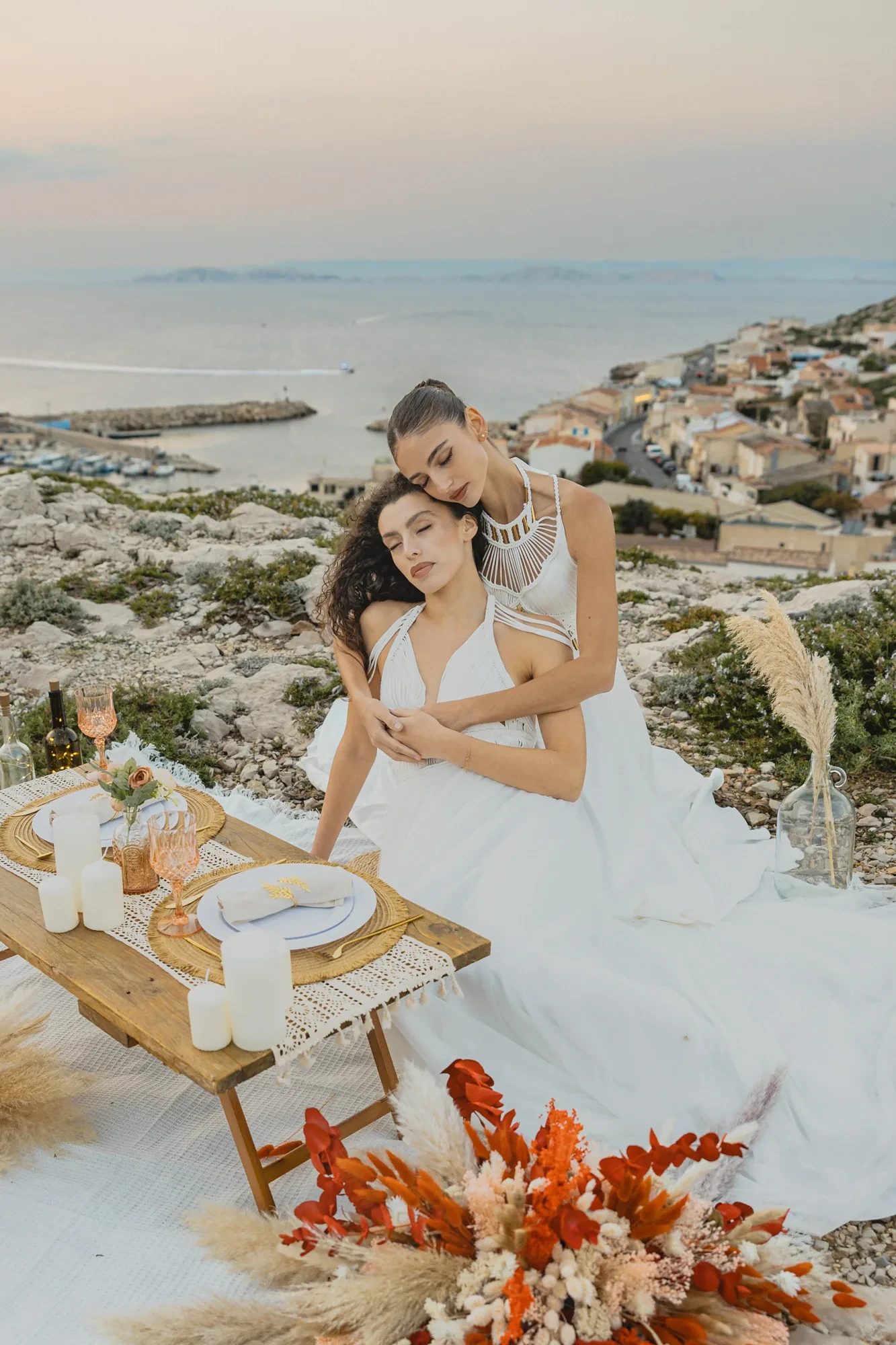
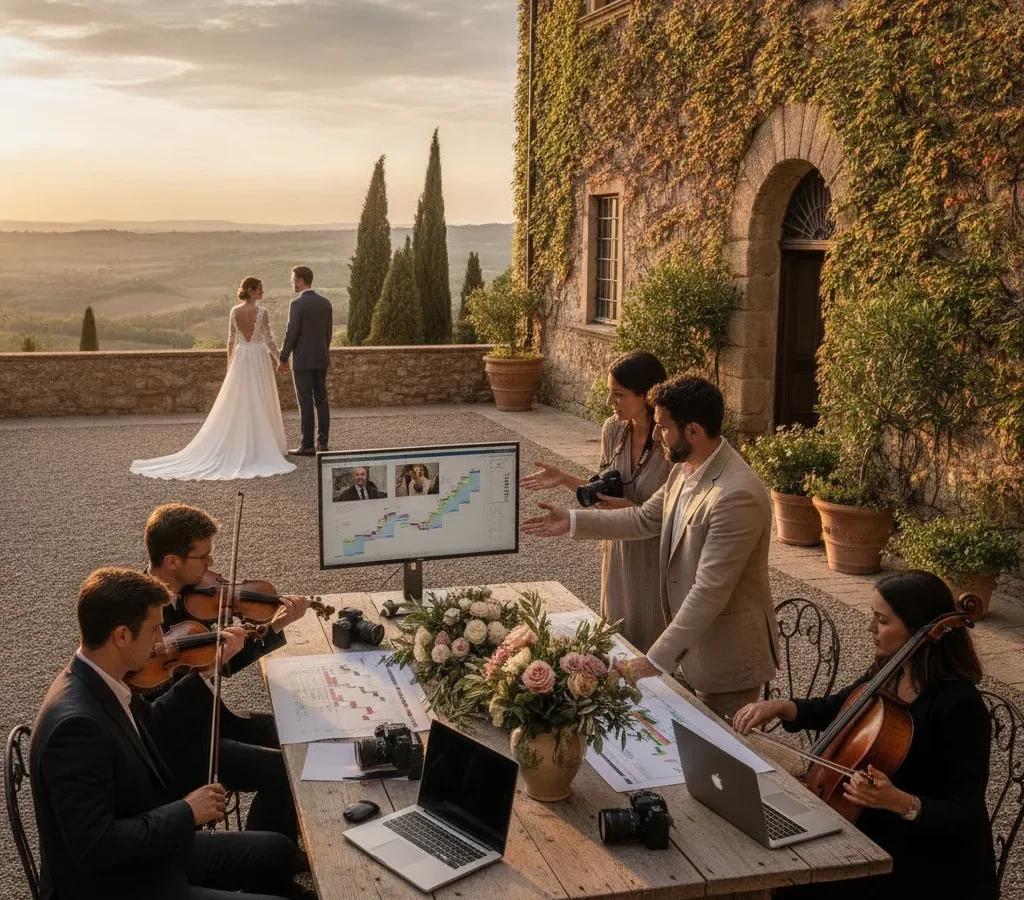
Before the wedding day, the photographer engages directly with the planner to build a detailed photography timeline that maps onto the broader event schedule. This means understanding the florist’s installation window, the caterer’s service flow, the ceremony officiant’s timing requirements, and the lighting designer’s cue sheet. A watertight timeline is not built by the photographer alone. It is co-authored with the planner and then shared with every relevant supplier so that each team knows exactly when to expect the camera in their space.
On the day itself, the photographer’s role in vendor coordination becomes even more active. When the bridal suite team runs fifteen minutes behind schedule, the photographer is the first to know and the first to communicate that shift to the planner so the ceremony timeline can be adjusted without panic. When the florist finishes the tablescape installation, the photographer needs to be alerted immediately to capture the detail shots before guests enter the room. These micro-coordination moments happen dozens of times throughout a wedding day, and they require a photographer who communicates proactively, reads the room, and operates with calm authority.
At Lino Ludovic, this approach is built into every engagement. Working across iconic French wedding venues and Italian settings, the ability to speak directly with local venue coordinators, florists, and caterers in French or Italian, and then relay that information clearly in English to the US planner, eliminates one of the most persistent sources of friction in cross-border event production.
How a Photographer Builds the Shot Timeline with Other Vendors
The shot list and the event timeline are not two separate documents. They are two expressions of the same production logic, and aligning them is one of the most technically demanding aspects of European wedding vendor coordination.
Creative brief alignment with the vendor team
A strong photographer begins this process with a detailed creative production brief shared with the planner. This document outlines the key moments that require dedicated time, the architectural and design elements that need to be photographed before guests arrive, the lighting conditions at different points in the day, and the specific sequences that will define the final gallery. This brief becomes the foundation for the ceremony-to-reception handoff, a critical transition point where timing errors are most likely to occur.
For multi-day celebrations, which are increasingly common among high-net-worth couples planning welcome parties, rehearsal dinners, wedding days, and farewell brunches across a full weekend, the coordination demands multiply significantly. Each event has its own vendor team, its own venue logistics, and its own photographic requirements. Visual consistency across all four events requires not only a clear shot list for each moment but also a shared aesthetic brief that every vendor, from the florist to the lighting designer, understands and respects.
Platforms such as Style Me Pretty’s European vendor guide, THE WED, and Perfect Venue have recognized this complexity by listing photographers who specialize in multi-day destination wedding coverage as a distinct category, separate from single-day wedding photographers. This distinction matters because the stamina, organizational capacity, and vendor communication skills required for a full weekend of coverage are substantially different from those needed for a single ceremony and reception.
Bridging the Language Gap in European Vendor Coordination
Language is one of the most underestimated risks in European destination wedding planning. A US couple and their American planner may communicate fluently with their photographer, but if that photographer cannot speak directly with the local venue’s technical team, the florist’s installation crew, or the maître d’ managing the reception flow, critical information gets lost or delayed.
Planners listed on platforms such as Carats and Cake’s directory of European wedding planners have highlighted bilingual capability as a key differentiator when selecting European vendors, noting that a photographer who speaks fluent French and English, for example, removes an entire layer of coordination friction. This is not simply a convenience. In high-pressure moments on a wedding day, the ability to resolve a setup conflict or negotiate a timeline adjustment directly with a local vendor in their own language can mean the difference between a missed shot and a gallery that exceeds every expectation.
At Lino Ludovic, bilingual coordination is a core operational capability, not an afterthought. Communicating in French and Italian with on-site teams while reporting in English to the US planner ensures that nothing is lost in translation at any point in the production chain. Learn more about this approach to wedding photography.
Day-of Coordination Versus Full-Service Planning: What Changes for the Photographer
The photographer’s coordination role shifts depending on the type of planning structure the couple has chosen. Understanding this distinction helps both planners and couples set the right expectations from the start.
Planning models and photographer integration
The table below summarizes the key differences between day-of coordination and full-service planning, and what each model means for how the photographer integrates into the vendor team.
| Planning model | Planner involvement before the day | Timeline ownership | Photographer coordination load | Typical use case |
|---|---|---|---|---|
| Day-of coordination | Takes over in the final weeks, confirms all suppliers | Planner builds and owns the detailed timeline | Lower, planner manages vendor cues | Couples who have planned most logistics themselves |
| Full-service planning | Involved from venue sourcing through vendor curation and design direction | Planner co-builds timeline with all vendors including photographer | Higher integration, photographer part of creative brief from early stages | Complex multi-day destination weddings with six-to-seven-figure budgets |
In a full-service planning context, agencies such as Moda Mariage and MoreLess Events embed the photographer into the broader creative production from an early stage. The photographer attends planning calls, contributes to the creative direction brief, and aligns their shot list with the design vision the planner has been developing for months. This level of integration produces significantly stronger results because the visual storytelling and the event design are conceived together rather than assembled separately.
In a day-of coordination model, the photographer takes on more independent responsibility for anticipating vendor movements and communicating proactively with the on-site team. This requires a higher degree of experience and situational awareness, qualities that distinguish a seasoned destination wedding photographer from one who is simply technically skilled.
What US Planners and Couples Should Look for When Hiring a Photographer for a European Vendor Team
Selecting a photographer for a European destination wedding is not only an aesthetic decision. It is a vendor vetting exercise that should evaluate operational reliability as rigorously as creative portfolio.
Here are the key criteria that experienced US planners and discerning couples consistently prioritize when building a coordinated European vendor team:
- Proven experience with multi-day destination weddings in France, Italy, or other European destinations, with a portfolio that demonstrates visual consistency across a full weekend of events rather than a single ceremony.
- Fluency in the local language of the destination, enabling direct communication with venue coordinators, florists, and caterers without relying on the planner as an interpreter.
- A documented process for timeline building and shot list alignment, including a willingness to share a creative production brief with the full vendor team before the wedding day.
- A professional demeanor that integrates seamlessly into a luxury event environment, including appropriate attire for black-tie occasions and the discretion to work without disrupting the guest experience.
- A track record of delivering sneak peeks within a timeframe that supports the planner’s PR and social media strategy, without compromising the quality of the final gallery.
Directories such as THE WED’s European vendor listings, Style Me Pretty, and Perfect Venue offer curated lists of European photographers with destination wedding experience, and they serve as useful starting points for vendor shortlisting. However, the most reliable referrals continue to come from trusted planner networks and from photographers who already have an established reputation within the luxury European wedding ecosystem.
The Trusted Partner Model: How Lino Ludovic Approaches Vendor Collaboration
The highest-performing European destination weddings are not produced by a collection of individual vendors working in parallel. They are produced by a team that has agreed on a shared vision, a shared timeline, and a shared standard of excellence. The photographer’s role in that team is not peripheral. It is central.
At Lino Ludovic, every engagement begins with a commitment to seamless integration into the planner’s vendor ecosystem. This means attending pre-wedding planning calls, contributing to the creative production brief, building the photography timeline in direct collaboration with the planner and venue coordinator, and communicating proactively with every relevant supplier throughout the wedding weekend. The goal is never simply to capture beautiful images. It is to ensure that the visual record of the celebration reflects the full depth of investment, emotion, and craft that every vendor on the team has brought to the production.
For US planners orchestrating complex European celebrations, and for couples who have traveled across the world to marry in an iconic French or Italian setting, that level of integration is not a luxury. It is the baseline.
To explore how this approach translates into real wedding coverage, you can browse the full portfolio or learn more about the wedding photography experience. For couples and planners ready to discuss an upcoming European celebration, the first step is always a conversation.
Building a Photography Partnership Rooted in Coordination
European wedding vendor coordination is a discipline that demands far more than logistical competence. It demands cultural fluency, proactive communication, and a deep understanding of how a photography timeline intersects with every other layer of a complex, multi-vendor production. When a photographer operates as a true team player within that ecosystem, the results are visible not only in the final gallery but in the experience of every couple, every guest, and every planner who was part of the day. That is the standard worth holding.
Good to know
When evaluating a European photographer for your vendor team, ask specifically how they handle timeline conflicts on the day. A confident, detailed answer to that question reveals more about their coordination experience than any portfolio image.
FAQ
Do European wedding photographers typically attend pre-wedding planning calls with the planner and other vendors?
The most experienced destination wedding photographers will actively participate in pre-wedding planning calls, particularly for multi-day celebrations. These calls allow the photographer to align their shot list with the event design, understand the planner’s priorities for magazine or blog submissions, and flag any potential timeline conflicts before the wedding day.
How far in advance should a photographer receive the final vendor timeline for a European destination wedding?
Most high-end planners share a detailed vendor timeline at least two to three weeks before the wedding day. This allows the photographer to review it against their own photography timeline, identify any gaps or conflicts, and communicate adjustments before the day-of coordination begins.
What happens when a local European vendor does not speak English on the wedding day?
This is one of the most common friction points in destination wedding production. A photographer who speaks the local language, whether French, Italian, or Spanish, can communicate directly with venue staff, florists, and caterers in real time, resolving issues without routing every conversation through the planner. This capability significantly reduces the risk of miscommunication during critical moments such as the ceremony-to-reception handoff.
Is it common for a European wedding photographer to also coordinate a second shooter or videographer?
Yes, particularly for full-day or multi-day coverage. A lead photographer working at the luxury destination wedding level will typically manage their own second shooter, briefing them on the shot list, assigning coverage zones for the ceremony and reception, and ensuring visual consistency across the full team. Coordination with the wedding videographer is equally important to avoid conflicts during key moments such as the first dance or the ceremony processional.
How does a photographer support a planner’s PR and social media strategy after the wedding?
Many luxury planners require a selection of high-resolution sneak peek images within a specific number of days after the wedding, to support their editorial submissions to publications such as Style Me Pretty or Carats and Cake, and their own social media presence. A photographer who understands this need will prioritize the editing sequence accordingly, delivering a curated selection of detail shots and key moments that showcase both the couple’s experience and the planner’s design work.
Can a photographer help with vendor referrals for a European destination wedding?
An experienced Europe-based photographer who works regularly across France and Italy will have an established network of trusted local vendors, including florists, hair and makeup artists, and videographers. These referrals are often more reliable than directory searches because they are based on direct on-site collaboration rather than online listings alone.