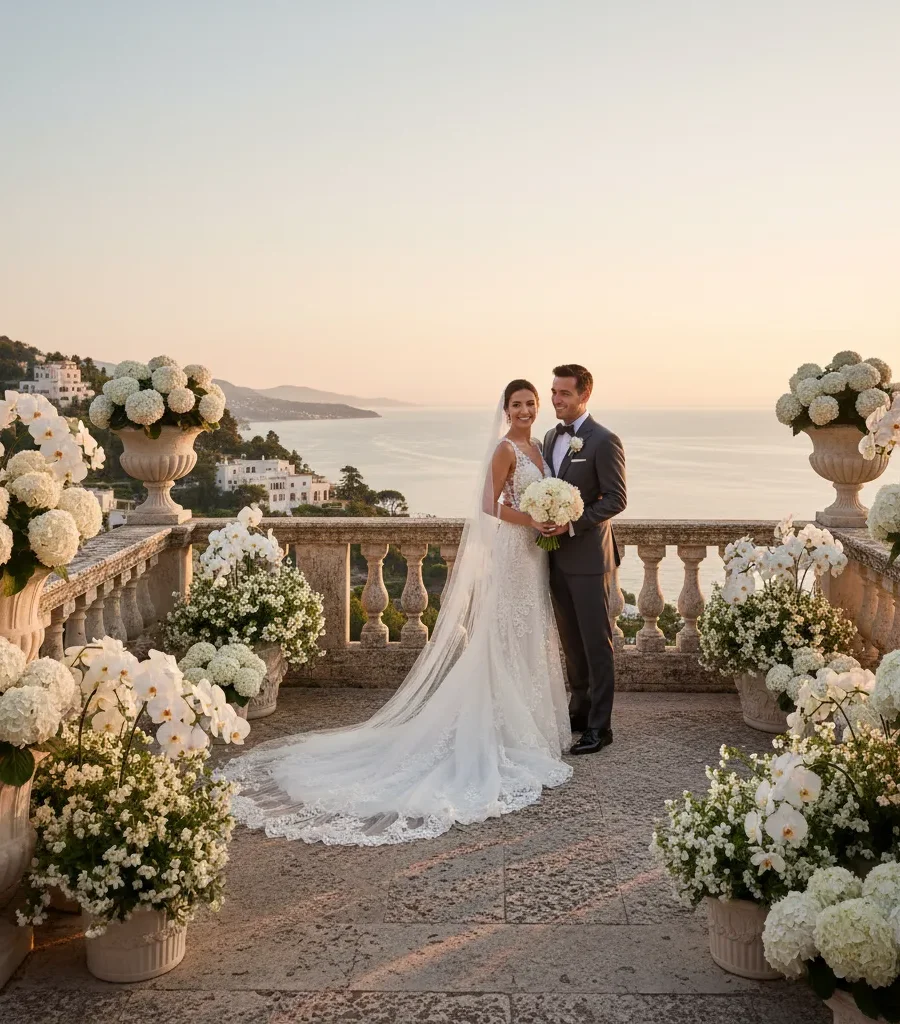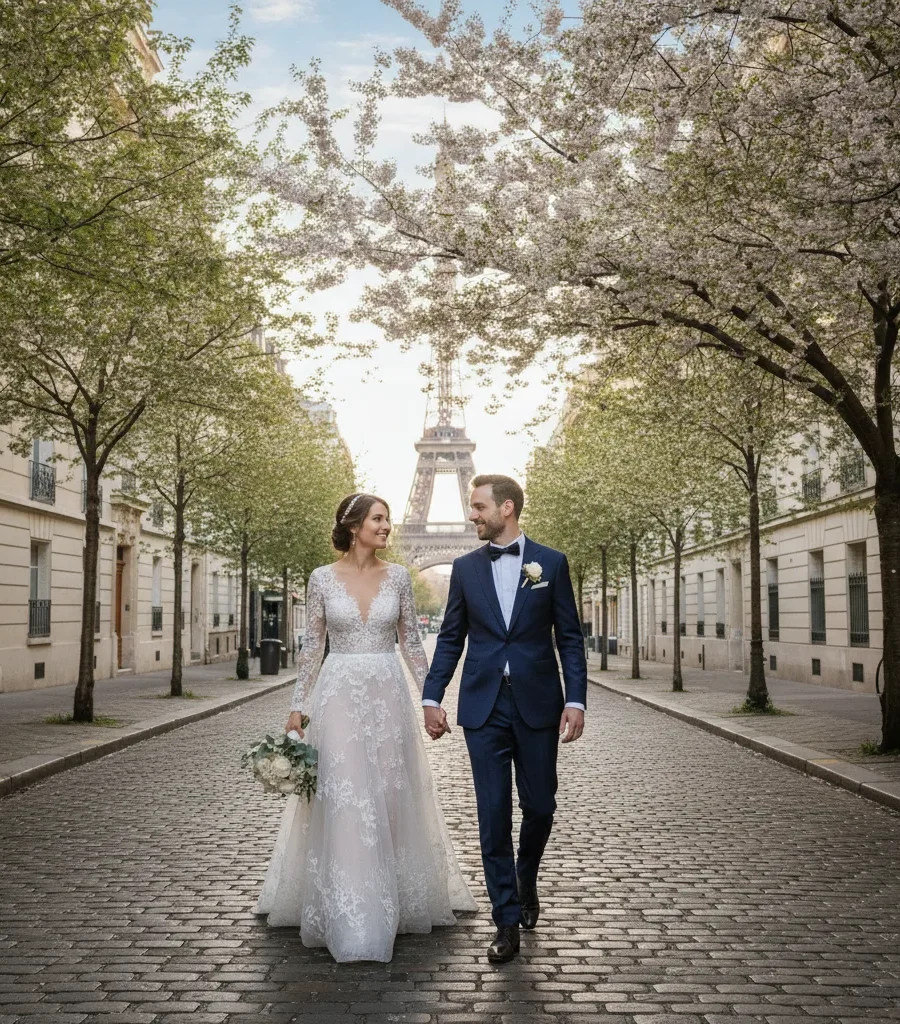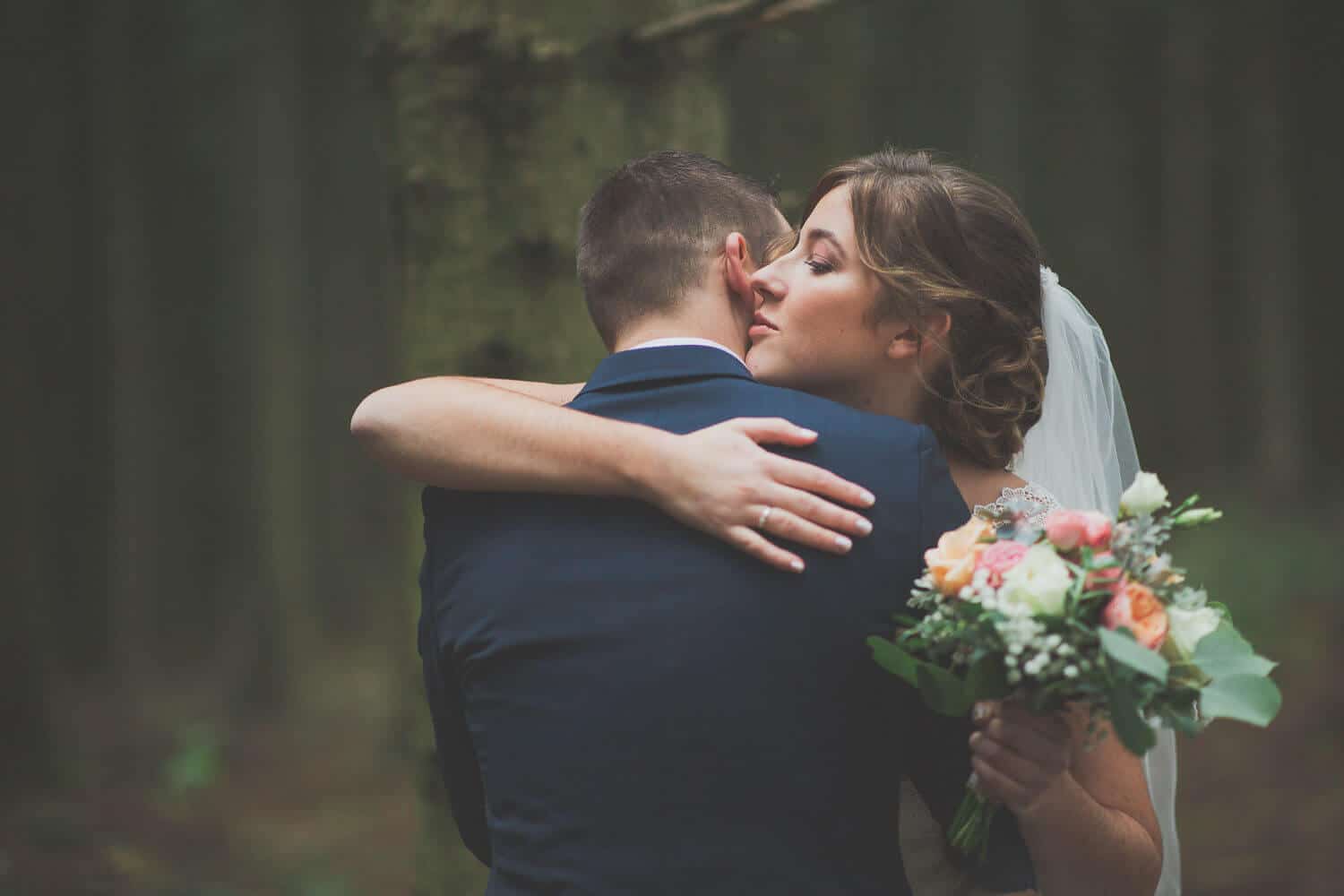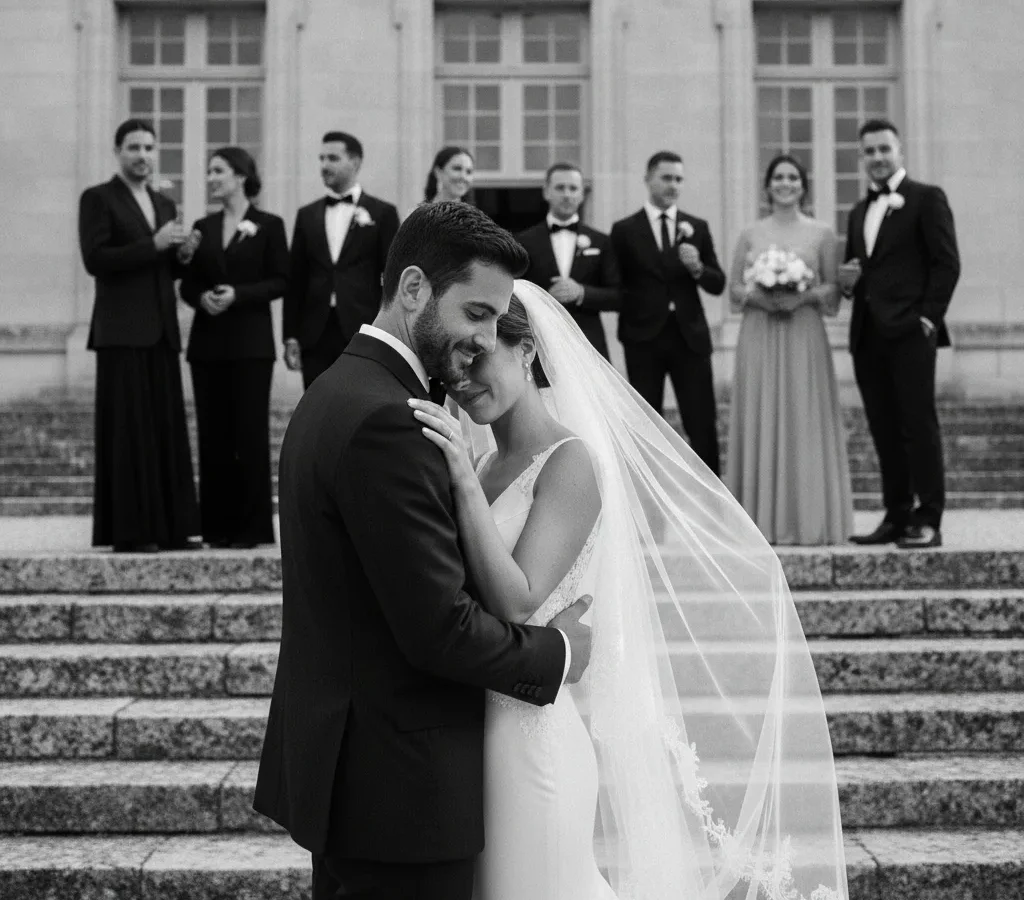
A three day celebration in a French château is a riot of color, from peonies flown in for the welcome dinner to the burgundy satin of a mother’s gown catching candlelight. Yet the images couples choose to print, frame and hand down are so often the monochrome black and white wedding photography ones.
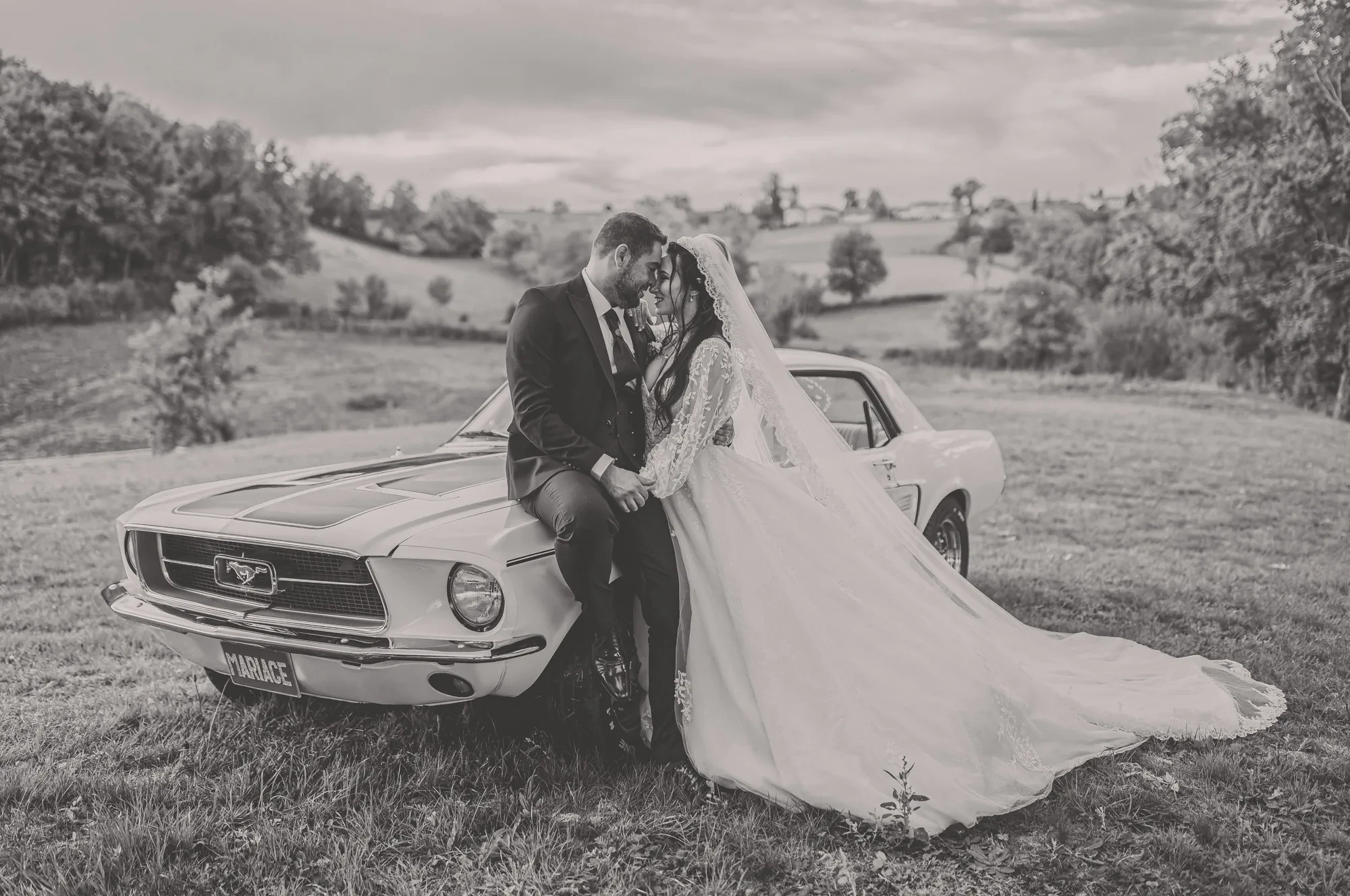
Black and white wedding photography removes the noise of palette and trend, leaving expression, gesture and light. For American couples marrying in Provence, on the Riviera or beside Lake Como, it is the treatment that makes a foreign, once in a lifetime weekend feel intimate and permanent. This guide explains how we use monochrome, which moments deserve it, and what to ask before you book.
Black and White Wedding Photography – A Timeless Art
Reading time: ~10 min
- What Black and White Wedding Photography Actually Is
- Why Monochrome Intensifies Emotion Across a Multi-Day Celebration
- The Moments That Deserve Monochrome
- Black and White vs Color Wedding Photos
- Film or Digital for Black and White Wedding Pictures
- The Editing Workflow Behind Fine Art Black and White Wedding Photography
- Does Black and White Hide Bad Lighting
- Should Your Entire Gallery Be Black and White
- Questions to Ask Before Booking
- A Final Word on Monochrome
- Frequently Asked Questions
What Black and White Wedding Photography Actually Is
Technical definition
Monochrome is not a color photograph with the saturation pulled to zero. A successful black and white image is built on tonal contrast, on the relationship between highlight and shadow detail, and on the way skin tone rendering sits within the overall tonal range. Photography publications such as Amateur Photographer consistently advise looking for strong light, clear shapes, contrast and texture before committing a scene to monochrome, because those are the only elements left once color is gone.
In practice, almost every serious black and white wedding photographer today shoots in color and converts selected frames afterwards. Canon’s own guidance on monochrome work recommends RAW file capture rather than JPEG, precisely because RAW retains far more information for later tonal adjustment. Adobe makes the same point, advising photographers to keep the original color RAW file even when the camera is previewing in monochrome. That single technical decision is what allows us to deliver both a color and a black and white version of the same frame, which is exactly what most of our couples want.
Why Monochrome Intensifies Emotion Across a Multi-Day Celebration
Emotional impact across a weekend
A destination wedding weekend has a rhythm. The welcome party is loose and loud, the rehearsal dinner is warm and conversational, the wedding day is formal and charged, the farewell brunch is soft and slightly exhausted. Color describes those moments. Black and white interprets them.
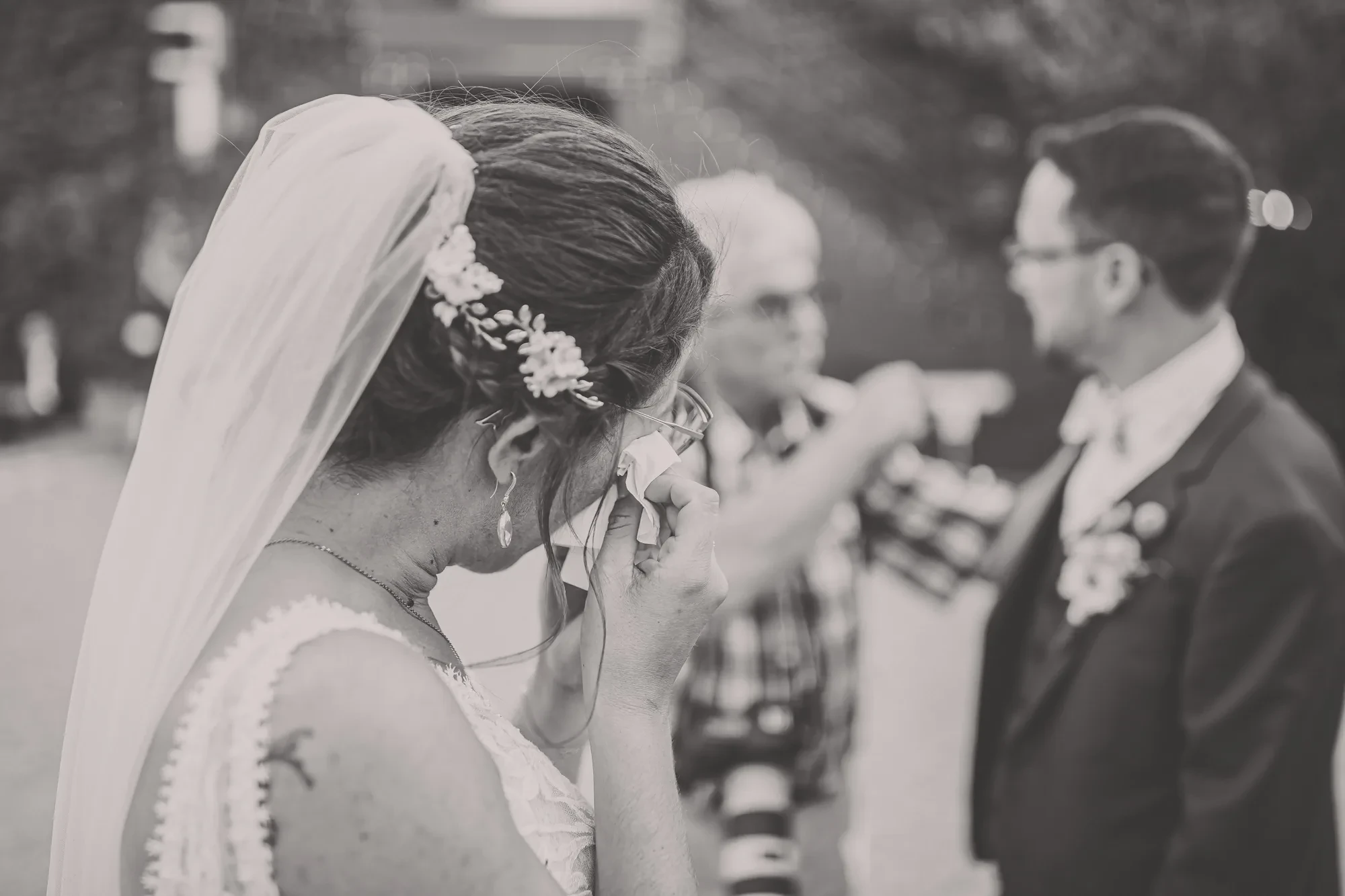
Without color, the eye goes straight to a father’s hand on a shoulder, to a bridesmaid wiping her eyes behind the aisle, to the blur of a guest in an embroidered velvet caftan spinning under festoon lights. Documentary wedding photography in black and white works because it isolates behavior. Candid photography benefits enormously from the treatment, since a distracting exit sign, a stray plastic cup or a clashing tablecloth simply dissolves into the tonal range. The image becomes about the moment, not the room.
There is also a practical advantage across a long weekend. Venues change constantly, from a sunlit terrace lunch to a dark stone chapel to a reception lit with amber uplighting. Color temperature shifts wildly. Monochrome conversion gives visual consistency across a three day story that would otherwise look like three different weddings.
The Moments That Deserve Monochrome
We never convert an entire day by reflex. Wedding gallery curation is an editorial decision, and it starts during image culling. Certain moments, however, almost always earn their black and white treatment.
Here are the sequences where we most often move to monochrome:
- Preparation moments with window light, where side lighting sculpts the face and the texture of lace, ruffles or a gilded mirror frame becomes graphic rather than decorative.
- Ceremony reactions and readings, where expression carries everything and color adds nothing except distraction.
- Backlit portraits at the end of the day, where a silhouette against a château facade or a cypress line becomes pure shape and negative space.
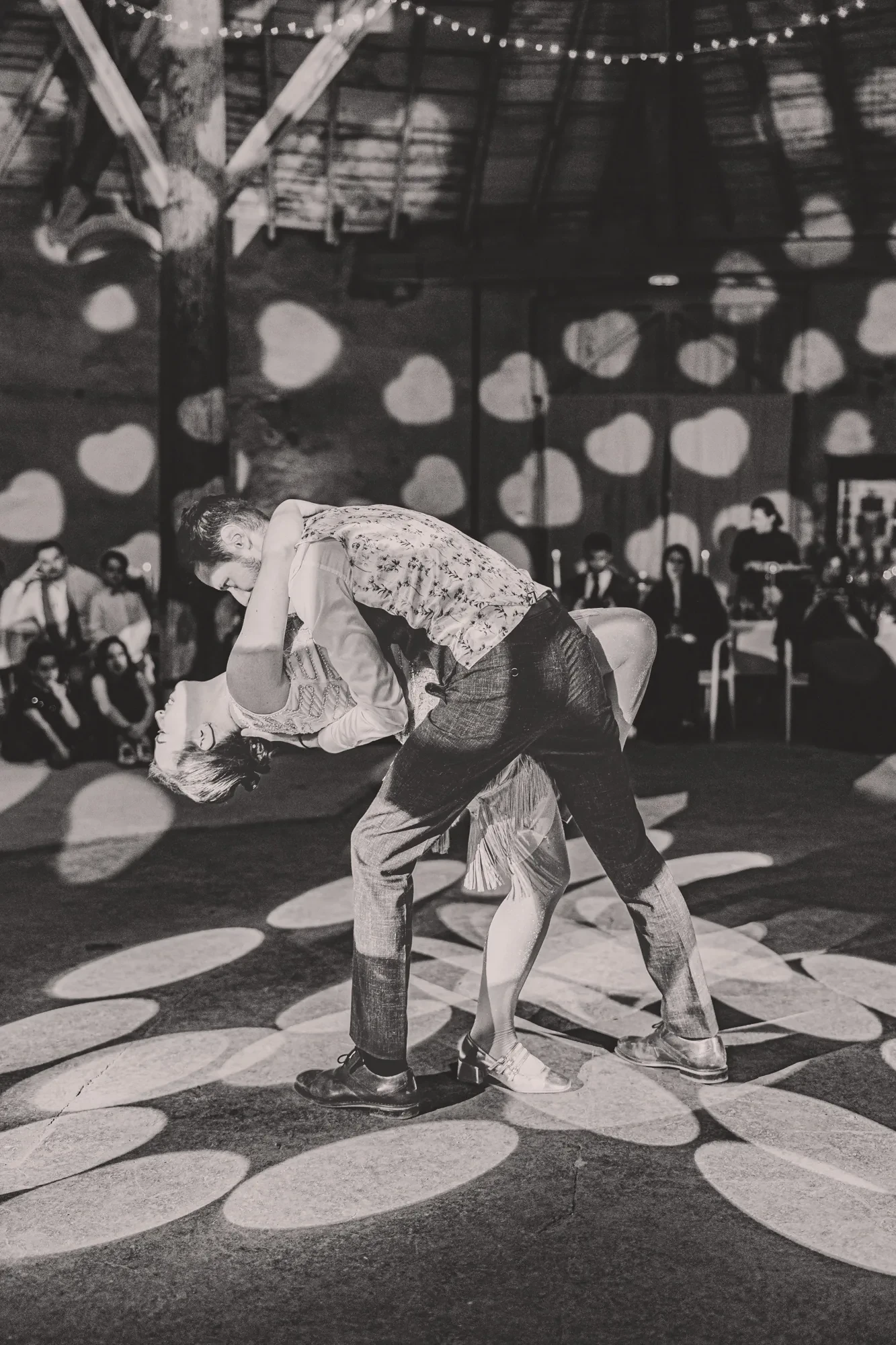
- The dance floor, where flash, movement and grain produce an energy that color often makes chaotic.
- Quiet in between moments, a grandmother’s hands, a bouquet set down on a stone step, a guitar left beside a wooden ceremony arch after the guests have gone.
Conversely, we keep color where color is the subject. A floral installation a designer spent a year conceptualizing, a cultural garment, the specific blush of a tablescape or the last light on the Mediterranean deserves its palette. This matters especially to our planner partners, whose portfolios and magazine submissions depend on design details being rendered faithfully.
Black and White vs Color Wedding Photos
The useful question is not whether to choose one or the other. It is how the two treatments will be combined within a single, coherent gallery.
| Criterion | Black and white | Color |
|---|---|---|
| Emotional emphasis | Expression, gesture, atmosphere | Palette, season, time of day |
| Décor and florals | Design intent is partly lost | Preserves the designer’s full scheme |
| Skin tones | Depend on conversion and lighting control | Direct representation of complexion |
| Visual consistency | Very high across mixed venues | Varies with light sources |
| Best use cases | Ceremony, portraits, candids, dancing | Tablescapes, flowers, garments, landscapes |
| Album design | Cohesive, editorial, graphic | Greater variety and narrative context |
Good to know
Because we shoot and archive in RAW, any image delivered in monochrome can be revisited in color at your request, and any color frame can be converted later for a print or an album spread.
Film or Digital for Black and White Wedding Pictures
Film wedding photography in black and white has a genuine character. Emulsions such as Kodak Tri X produce organic grain and tonal transitions that are difficult to imitate convincingly, and the slower shooting process changes how a photographer sees. A black and white film wedding photographer works with limited exposures, no exposure feedback and real development costs.
Digital, and specifically a modern mirrorless camera workflow, offers latitude that a complex destination weekend demands. Dark chapels, black tie receptions, candlelit dinners and unpredictable weather all require immediate confirmation of exposure and a file with enough depth to recover highlight and shadow detail. Neither approach is objectively superior. Film is chosen for its analog aesthetic and its discipline. Digital RAW is chosen for flexibility, redundancy and the ability to deliver both color and monochrome versions of every meaningful frame. A hybrid approach, digital as the backbone with selected film frames, is increasingly common at the high end.
The Editing Workflow Behind Fine Art Black and White Wedding Photography
Black and white wedding photography editing is where the style is actually made. The process is non destructive from start to finish, which means the original file is never altered.
After culling, we assess each candidate frame for tonal structure by reading the histogram, watching for clipped highlights in an ivory gown and blocked shadows in a black dinner jacket. Conversion then happens through the Lightroom black and white treatment, or through a dedicated grayscale adjustment in Photoshop when a frame needs more surgical work. The crucial step is the color channel sliders. Even after conversion, the original color data controls how bright each area appears, so the red and orange channels govern skin tone rendering, the greens govern foliage, the blues govern skies and shaded stone.
Over brightening the red channel makes skin look waxy and plastic. Under brightening it exaggerates texture and shadow in a way that flatters almost no one. Once tones are balanced, localized dodge and burn refines the face, the dress and the background separately. Grain is applied sparingly, since excessive grain degrades detail in a printed fine art album and looks artificial on a high resolution screen. Finally we review the gallery as a sequence rather than image by image, checking that every transition between color and monochrome feels deliberate. Resources such as Expert Photography cover these Lightroom and Photoshop mechanics in detail, but the judgment behind them comes from experience, not presets.
Does Black and White Hide Bad Lighting
No, and this is one of the most persistent myths in wedding photography. Monochrome removes color casts, which is genuinely useful under mixed tungsten and LED lighting. It does not fix harsh midday shadows, underexposure or a poorly lit reception. If anything, it makes those flaws more visible, because contrast is now the only structure the image has.
The lighting that suits black and white wedding portraits is directional and intentional. Soft window light and open shade give flattering gradation. Side lighting adds dimension and reveals the texture of embroidery, ruffles and lace. Backlighting produces luminous veils and clean silhouettes. Hard directional light, used deliberately, creates the graphic editorial wedding photography look that works beautifully against château architecture and Italian villa colonnades. At receptions, off camera flash combined with a slower shutter keeps ambient movement alive while freezing the subject.
Should Your Entire Gallery Be Black and White
Rarely. A fully monochrome gallery is a strong artistic statement, and some couples want exactly that. Most do not, once they realize the sunset light over the vineyard, the specific green of Tuscan hills and the design work they commissioned would disappear. The approach we recommend is a primarily color gallery with a curated monochrome selection of the emotionally significant frames, agreed in advance.
What is genuinely timeless is not the absence of color but consistency of craft. Classic wedding photography endures because composition, light and printing are sound. Monochrome helps because it removes elements that date fastest, namely editing fashions and trend driven palettes, which is why the archives held by institutions such as the International Center of Photography still read as contemporary decades later.
Key takeaway
Ask to see a complete wedding gallery, not a portfolio selection. A curated highlight reel can conceal inconsistent monochrome conversion, uneven contrast and gaps in coverage across a long day.
Questions to Ask Before Booking
Before you sign, a short list of precise questions will tell you more than any moodboard. Ask whether the photographer shoots digital, film or both, whether original color files are retained when images are converted, whether black and white versions are included as standard, and how low light ceremonies and receptions are handled. Ask to see printed monochrome work, since screen and paper behave very differently. For planners, add the questions that matter to production, namely timeline management, attire for black tie events, communication across time zones and how design details are covered for editorial submission.
A Final Word on Monochrome
At Lino Ludovic, we photograph luxury destination weddings across France and Italy for couples based in California and for the American planners who build these weekends. Our fine art albums are handcrafted in France, and monochrome spreads are designed with printing in mind from the moment of capture. You can see how we balance color and black and white across full celebrations in our portfolio, or start a conversation about your dates.
Black and white is not a filter applied at the end. It is a way of seeing that begins at the moment of capture, with attention to light direction, texture and shape, and it continues through careful conversion and gallery curation. Used selectively, it gives a multi day European celebration the quality couples ask for most often without quite knowing how to name it, a sense that these images already belong to the family archive rather than to a particular year.
FAQ
Can I request color versions of images delivered in black and white?
Yes, provided your photographer archives the original RAW files. We retain full color captures for every frame, so a monochrome image can be re delivered in color for a print, an album spread or a family request.
Does black and white photography work for multicultural or highly colorful ceremonies?
It works for the emotion and the movement, but we deliberately keep color for garments, textiles and ritual details where the palette carries cultural meaning. The two treatments coexist within the same gallery.
How long does monochrome editing add to delivery?
Careful conversion is slower than applying a preset, because each frame receives individual channel and contrast work. This is factored into our standard delivery schedule rather than treated as an extra step.
Do black and white images print differently from color?
Yes. Monochrome is far less forgiving on paper, so paper stock, black point and grain are chosen specifically for the album. We proof monochrome spreads separately during album design.
Should we brief our photographer on black and white preferences before the wedding?
Absolutely. Telling us during the planning stage which moments matter most, and whether you lean toward a predominantly monochrome album, shapes how we light and compose on the day, not just how we edit afterwards.