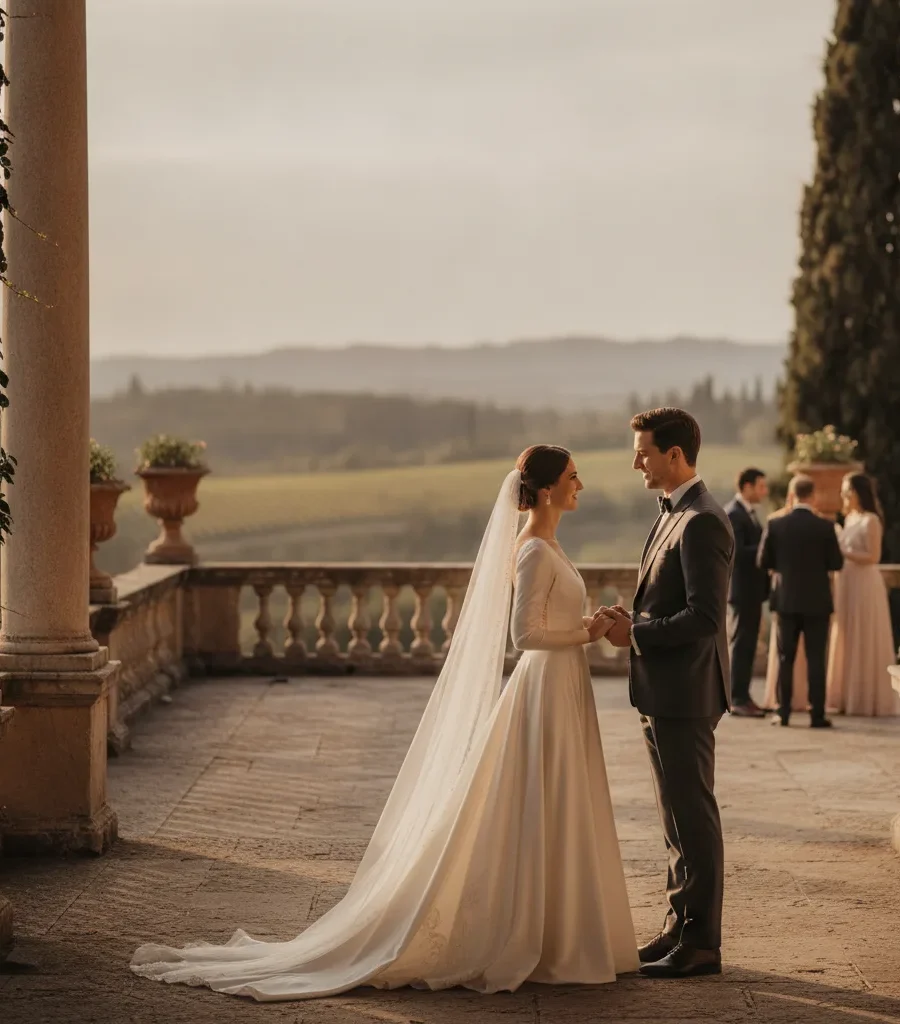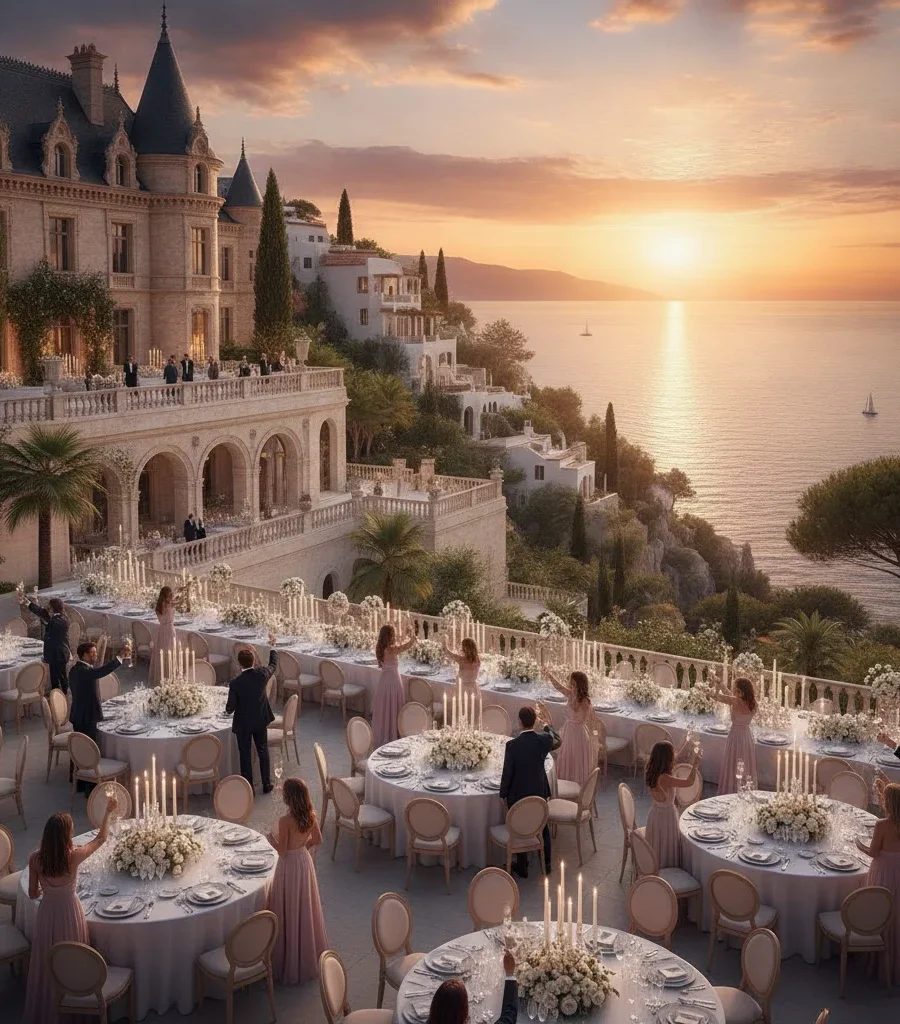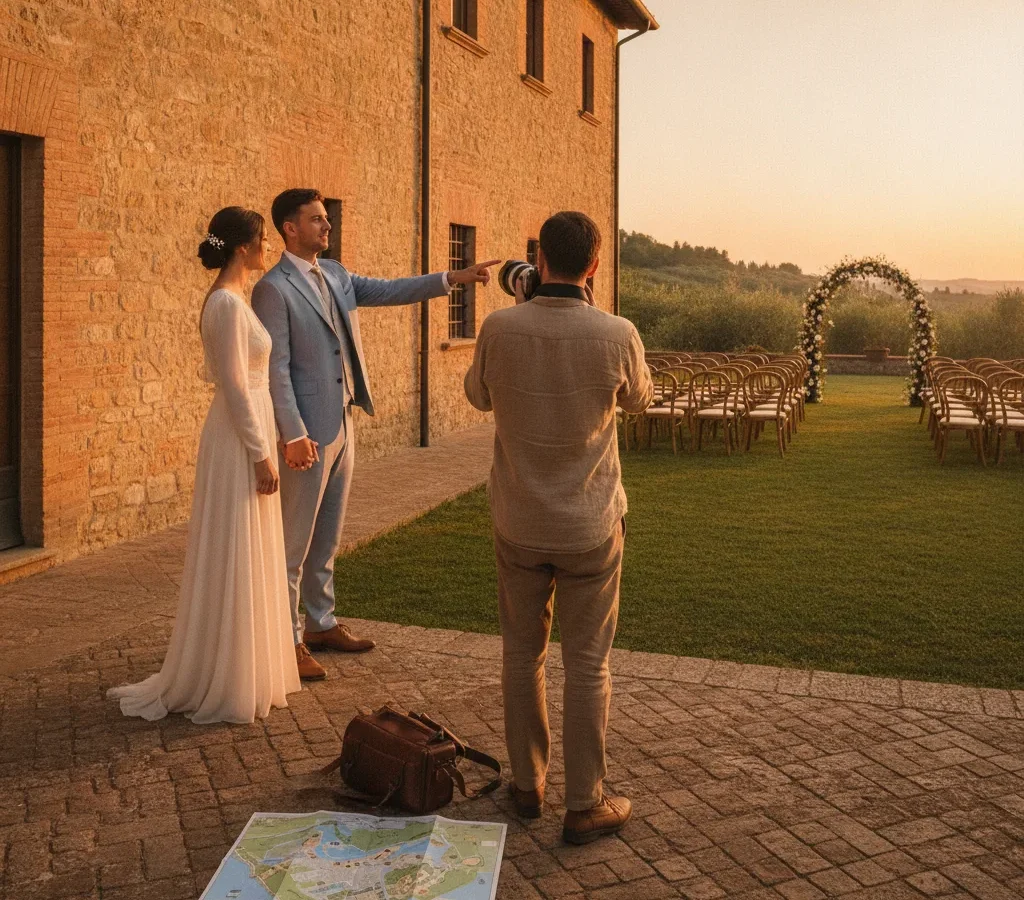
Booking a château in Provence or a historic villa in Tuscany from Los Angeles or San Francisco is a leap of faith when you start looking for European venue site visit tips photographer teams can trust from afar. Glossy brochures rarely show where the light falls at 6 pm, how long guests walk between the ceremony lawn and the cocktail terrace, or whether flash is allowed in the grand salon.
This guide gathers our European venue site visit tips from a photographer’s perspective, and explains how we act as your eyes on the ground when you or your planner cannot fly over for every prospect.
Temps de lecture : 10 min
European Venue Site Visit Tips From a Photographer in 2026
- Why a photographer makes a strong virtual venue scout
- Should a wedding photographer visit the venue before the wedding?
- European venue site visit tips photographer teams should follow before travelling
- What a photographer checks during a wedding venue walkthrough
- Is flash allowed in historic European wedding venues?
- Are drones and tripods allowed at European castles and villas?
- Technical checks for châteaux, villas and rural estates
- Can a virtual venue site visit replace an in person visit?
- Our virtual venue scout process and deliverables
- How to plan wedding portraits and a rain backup at a European venue
- What a photographer brings to a venue site visit
- Next steps for your European venue site visit
- FAQ
Why a photographer makes a strong virtual venue scout
A US wedding planner orchestrating several destination weddings in Europe cannot cross the Atlantic for every venue a client is considering. Venue coordinators send beautiful photos, but those images are made to sell the property, not to plan a photography timeline.
A photographer sees a venue differently. We look at the direction of the sun, the depth of a courtyard, the height of a ceiling, the color of the walls and the distance between spaces, because every one of these details shapes the final images.
This is the logic behind our virtual venue site visit service. Based in France, we travel to the venue, carry out a structured walkthrough, and deliver a scouting package that helps the planner and the couple make decisions with confidence. Location scouting done this way protects two things at once: the visual quality of the full wedding gallery and the smooth flow of a multi-day celebration, from the welcome dinner to the farewell brunch.
Should a wedding photographer visit the venue before the wedding?
In our experience, yes, especially for a destination wedding in Europe. A site visit lets the photographer assess lighting, angles, space constraints, access routes and restrictions, then plan suitable equipment and backup locations. For historic properties, the benefit is even greater, because old interiors often combine low light, high ceilings, narrow corridors and reflective surfaces.
Visiting at a similar time of day to the planned ceremony is particularly useful. It reveals the likely natural light conditions for the vows, the cocktail hour and the golden hour portraits. A south facing terrace that looks perfect at noon can be in harsh backlighting at 5 pm, while a shaded allée of plane trees may become the most flattering spot of the day.
European venue site visit tips photographer teams should follow before travelling
Request up-to-date venue documents
Preparation starts long before we set foot on the property. We ask the planner or venue coordinator for the current floor plan and venue layout, the event configuration, and the list of spaces included in the booking. It is worth checking when the floor plan was last updated, since recent renovations can change room shapes and access.
We also request the access hours, vendor load in times, staff only areas, prohibited spaces and the rules applying to external suppliers. Alongside the provisional timeline, this lets us prepare a draft shot list that covers exteriors, interiors, ceremony and reception angles, design details, portraits and candid moments. Finally, we check the seasonal weather patterns so the visit can anticipate the conditions of the wedding weekend.
What a photographer checks during a wedding venue walkthrough
Assessing light and reflections
On site, the walkthrough follows a precise method. Natural light assessment comes first: we observe windows, shaded zones, backlighting, mixed color temperatures and low light interiors such as chapels, wine cellars and historic salons. These observations drive the choice of wide angle and prime lenses, off camera flash and settings on the day.
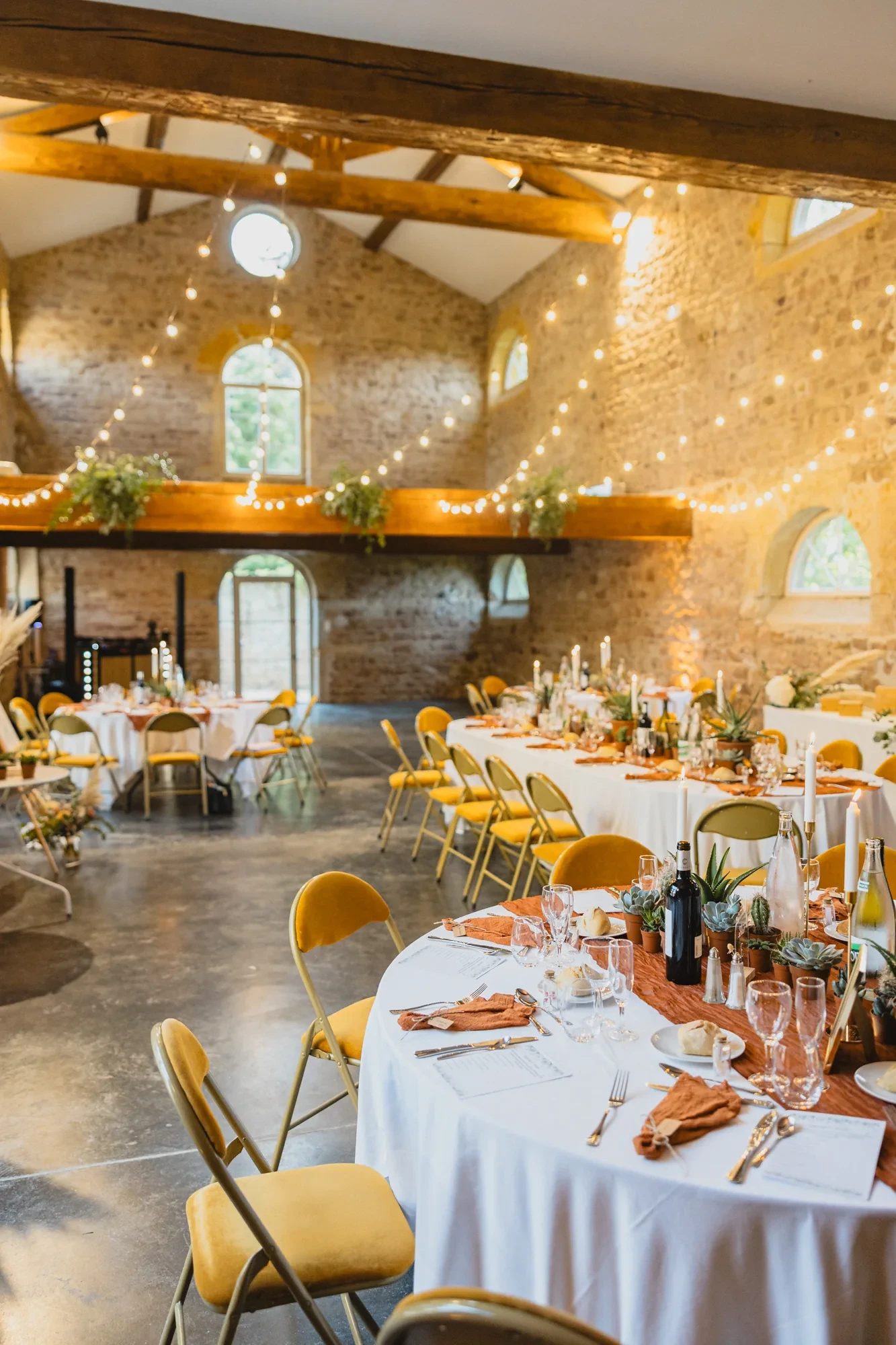
Reflective surfaces deserve special attention. Gilded mirrors, Art Deco wallpaper, polished floors, glazing and lacquered woodwork can create unwanted reflections as soon as artificial light enters the scene. A bride in a white mermaid gown or a guest in burgundy satin standing before a gold framed mirror can look breathtaking, provided the photographer has already worked out where the light will bounce.
Mapping movement and logistics
Here is what our wedding photographer site visit checklist covers once we are on the property:
- The best angles for the ceremony, the reception and the architecture, noted and photographed.
- At least two portrait locations, one outdoors and one indoor, covered or courtyard alternative.
- Dark zones, backlit areas and windows that will shape the ceremony light.
- Doorways, staircases and room dimensions, measured or carefully estimated.
- Timed routes between ceremony, cocktail and reception, filmed at normal walking pace.
- Power outlets and discreet spots for off camera flash, batteries and bags.
- Access restrictions, closed gardens and private wings.
- Rain backup options when spaces are separated by courtyards or outdoor paths.
Travel time between spaces is often underestimated. A château may require a four minute walk on gravel between the chapel and the orangery, which matters for guests in heels, for elderly relatives and for moving equipment. Recording these routes allows the planner to build realistic transitions into the photography timeline.
Good to know
Wedding photography venue scouting is not only about pretty corners. Timed routes, power supply and vendor access windows are what keep a black tie production on schedule.
Is flash allowed in historic European wedding venues?
Typical flash restrictions in historic venues
It depends entirely on the property. Historic venues in France and Italy may restrict flash, tripods, wall fixings and access to certain rooms or gardens, often to protect frescoes, tapestries, painted ceilings or antique furniture. Some churches also have their own rules, separate from the reception venue.
This is why our site visit includes a dedicated conversation with the venue coordinator about photography restrictions at historic wedding venues. When flash is limited, we plan accordingly with fast prime lenses, carefully placed continuous light where permitted, or portraits scheduled in brighter rooms. The key is knowing before the wedding, never discovering it during the first dance.
Are drones and tripods allowed at European castles and villas?
Clarifying drone and tripod policies in advance
Drone permissions are among the most sensitive questions. Rules may involve the property owner, local authorities and airspace regulations, and rural or historic estates in Europe can be subject to municipal authorizations or event licences. Tripods are sometimes forbidden in delicate interiors or crowded areas for safety reasons.
We always ask for written confirmation of venue rules covering flash, tripods, drones, filming in historic spaces and access to gardens or private buildings. Having these rules in writing avoids misunderstandings on the wedding day and gives the planner a clear document to share with the full vendor team, including the videographer.
Important
During a scouting visit, we never photograph or film private spaces, other guests or sensitive areas without explicit permission from the venue.
Technical checks for châteaux, villas and rural estates
Power, access and safety considerations
European castle wedding photography tips often focus on light, but technical constraints matter just as much. We check room dimensions, ceiling heights, passageways and power outlets, as well as cable routes and sight lines that could create obstacles for the photographer or the guests.
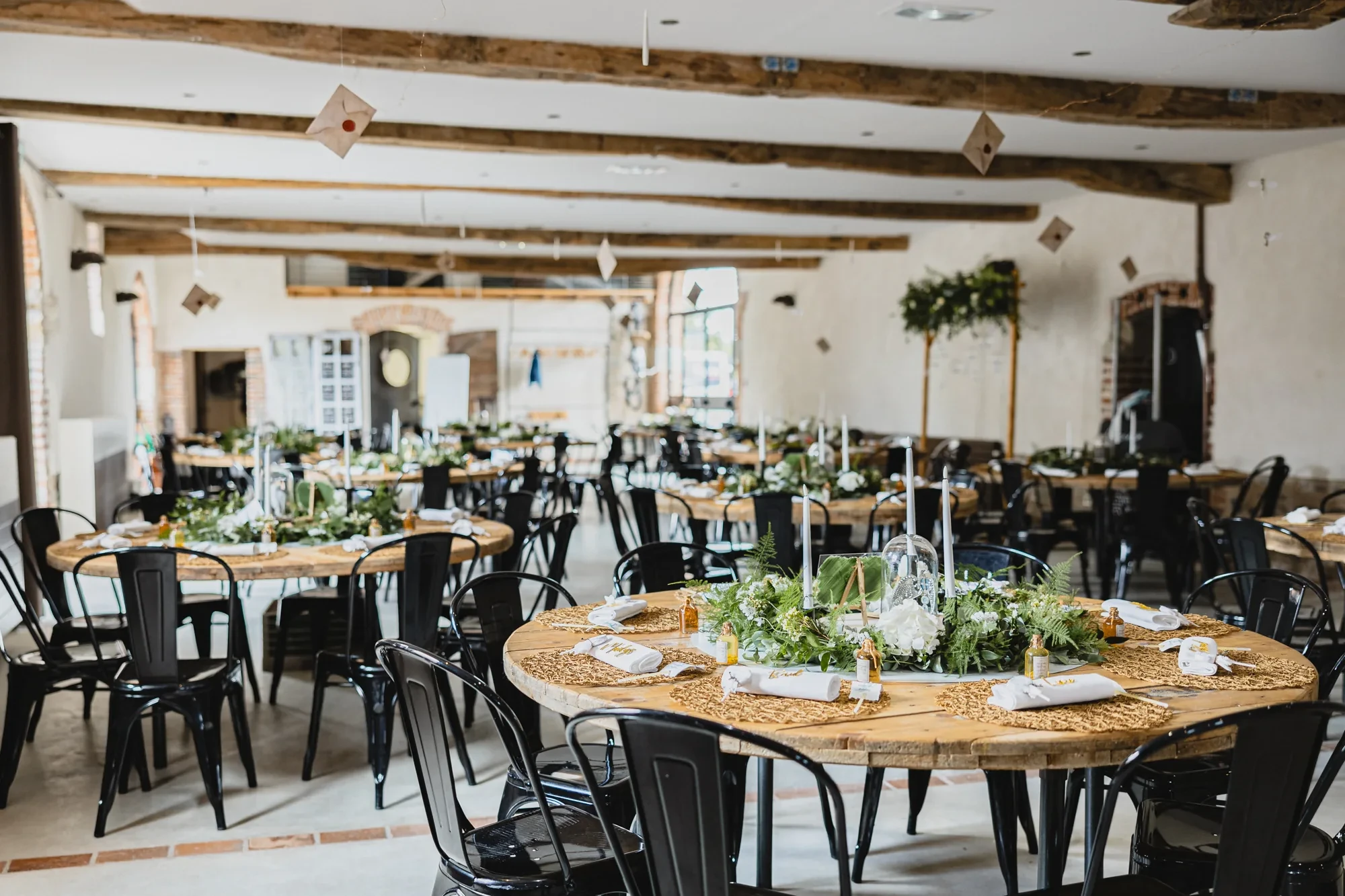
When the event includes professional lighting, sound, a DJ or a live band, available electrical power becomes critical. Rural venues may need three phase electricity or a generator. We flag these points in our report so the planner can coordinate with the lighting designer and the venue well ahead of time.
For rural estates in Provence or Tuscany, we also review the last stretch of road, parking areas, gravel paths and vehicle access for guests and vendors. These details influence arrival times, shuttle planning and the moment we can begin photographing the welcome party or the rehearsal dinner.
Can a virtual venue site visit replace an in person visit?
A virtual visit can help when travel is impractical, provided it shows the real entrances, the changes in level, the corridors, the routes, the room dimensions, the lighting conditions and the restricted areas. A generic video tour from the venue is rarely enough. That is precisely the gap our service fills: we are physically present, and the planner or couple can follow remotely.
The comparison below summarizes the main options available to US planners and couples.
| Criteria | Venue marketing video | Live video call with venue staff | Photographer scouting visit |
|---|---|---|---|
| Light observed at ceremony time | Rarely | Depends on scheduling | Yes, planned around the timeline |
| Timed routes between spaces | No | Partial | Yes, filmed at walking pace |
| Flash, tripod and drone rules | No | Verbal only | Requested in writing |
| Portrait locations and Plan B | No | Limited | Mapped and photographed |
| Usable for client presentation | Sales oriented | Not recorded by default | Curated scouting gallery |
Our virtual venue scout process and deliverables
Our service is designed for planners who manage several prospects at once and need reliable information before committing their clients. It begins with a briefing call across time zones, where we review the couple’s vision, the planned events of the weekend and the questions the planner wants answered.
We then gather documents remotely, carry out the on site walkthrough at the hour that matters most for the wedding, and can open a live video call so the planner or couple walks the venue with us from California. After the visit, the planner receives a structured package: a curated scouting gallery of key spaces and angles, an annotated floor plan with suggested portrait locations and ceremony angles, short videos of routes filmed at normal pace with timings, a light assessment for each key moment, a summary of the venue rules to confirm in writing, and a rain backup plan for portraits.
For the planner, this package becomes a presentation tool. It shows the end client that the venue has been assessed by someone who understands both American luxury standards and the realities of European heritage properties. For the couple, it turns an abstract booking into a concrete picture of their weekend.
How to plan wedding portraits and a rain backup at a European venue
Portraits are where scouting pays off most visibly. We identify golden hour spots according to the season and orientation, then build at least one sheltered alternative: a covered loggia, an inner courtyard, a library with tall windows or an arched gallery. This Plan B keeps the session alive despite rain, overly harsh light or a garden closed at the last minute.
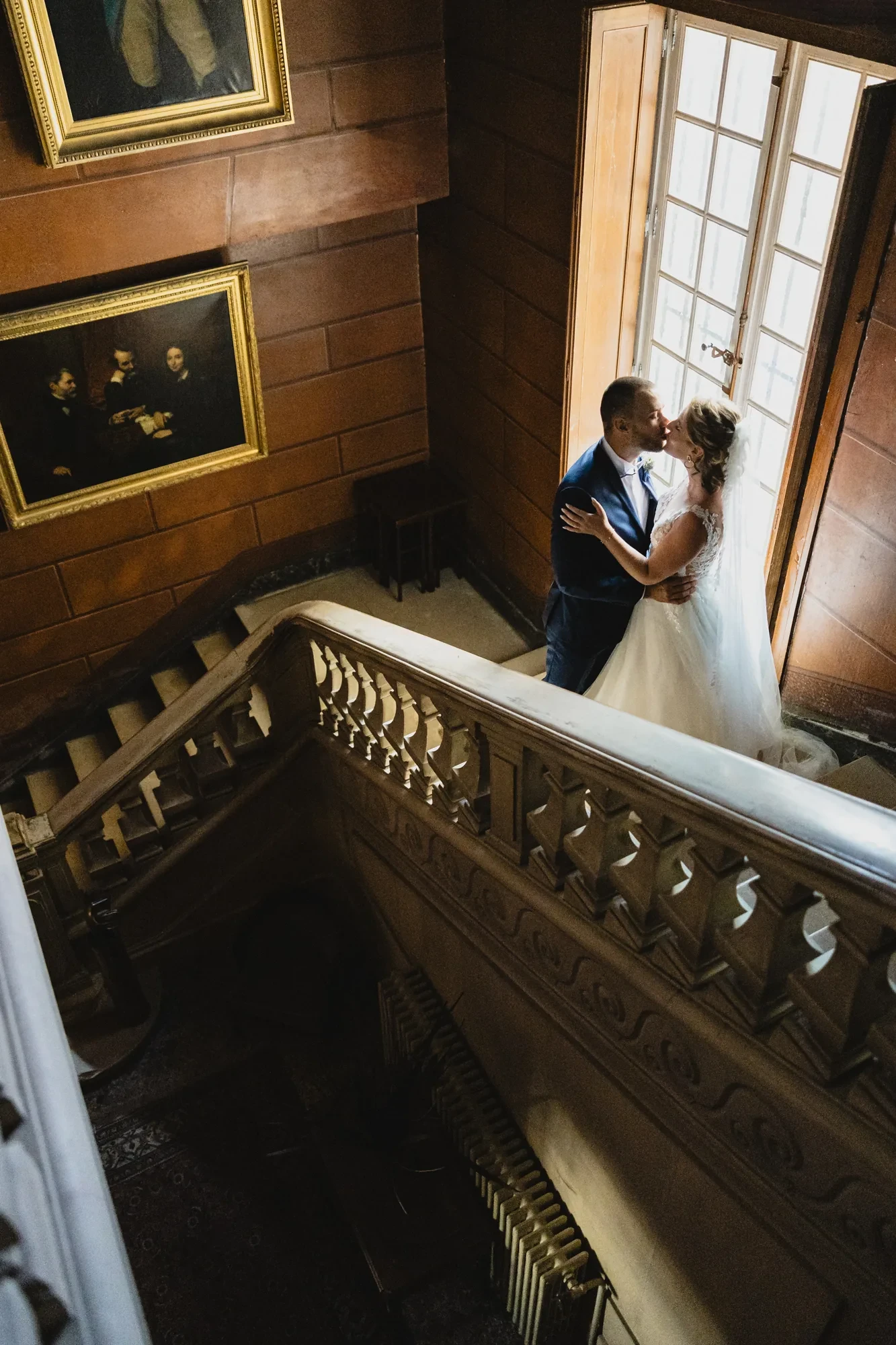
After the visit, we update the photography timeline, add travel times to the run of show, prepare the equipment list and share everything with the wedding planner and the couple. Plans, scouting images and technical notes are archived so that every member of the team works from the same reference throughout the weekend.
What a photographer brings to a venue site visit
Our scouting kit stays light but precise: a camera with a wide angle and a standard prime lens to test framing, a phone for quick notes and video, a flashlight for dark cellars and chapels, a tape measure, spare batteries and memory cards, a portable charger, a notebook and shoes suited to gravel and uneven terrain. The goal is to record light, dimensions and routes accurately, not to produce a full shoot.
Next steps for your European venue site visit
A site visit transforms a beautiful venue into a well prepared stage. By assessing light, mapping portrait locations, timing routes and securing written confirmation of the rules, a photographer reduces technical risk and gives the couple a calmer, more confident wedding weekend. For US planners, our virtual venue scout service brings that expertise to every prospect without requiring a transatlantic flight.
You can explore our work in French châteaux and heritage settings, such as Château de Matel or Domaine des Saints Pères, learn more about our wedding photography approach, and share your venue project with us.
Final thoughts on your European venue site visit
A thoughtfully planned site visit, in person or virtual, connects the creative vision, the logistics and the realities of a European property so that everyone arrives on the wedding weekend already oriented and prepared.
FAQ
What questions should I ask a photographer about scouting a destination wedding venue?
Ask how they use site visits to choose angles, prepare lighting, anticipate weather and organize movement between spaces. Ask whether they work alone or with a team on large estates, and request a full wedding gallery from a venue with similar light, season and scale rather than a portfolio selection.
Can the scouting visit also benefit the videographer?
Yes. Timed routes, power outlets, sight lines and drone or tripod rules are just as important for film. When photo and video are coordinated, as with our wedding videographer service, both teams plan positions that never compete with each other.
Should the scouting visit include every event of the weekend?
Ideally, yes. The welcome dinner, rehearsal dinner and farewell brunch often take place in different rooms or terraces, each with its own light and constraints. Scouting all of them ensures visual consistency across the multi day celebration.
Do venue recommended photographers know the property better?
Venues sometimes recommend photographers they have worked with before. This can help you compare vendors, but it should never replace reviewing a complete gallery and understanding how the photographer adapts to a new location instead of repeating the same poses at every event.
Is a scouting visit useful if the photographer already knows the region?
Knowing Provence or the Alps is valuable, but each venue has its own orientation, rules and layout. Even familiar regions call for a specific walkthrough, because a single closed garden or a flash restriction can change the entire portrait plan.