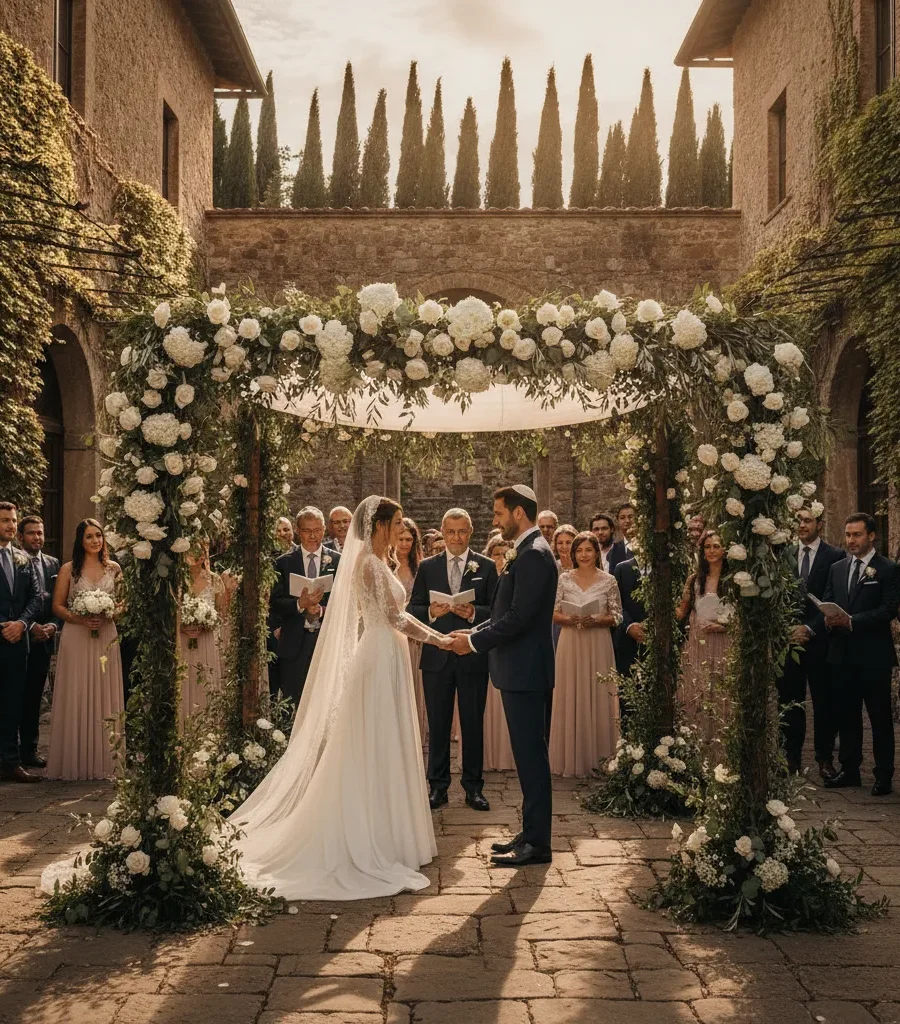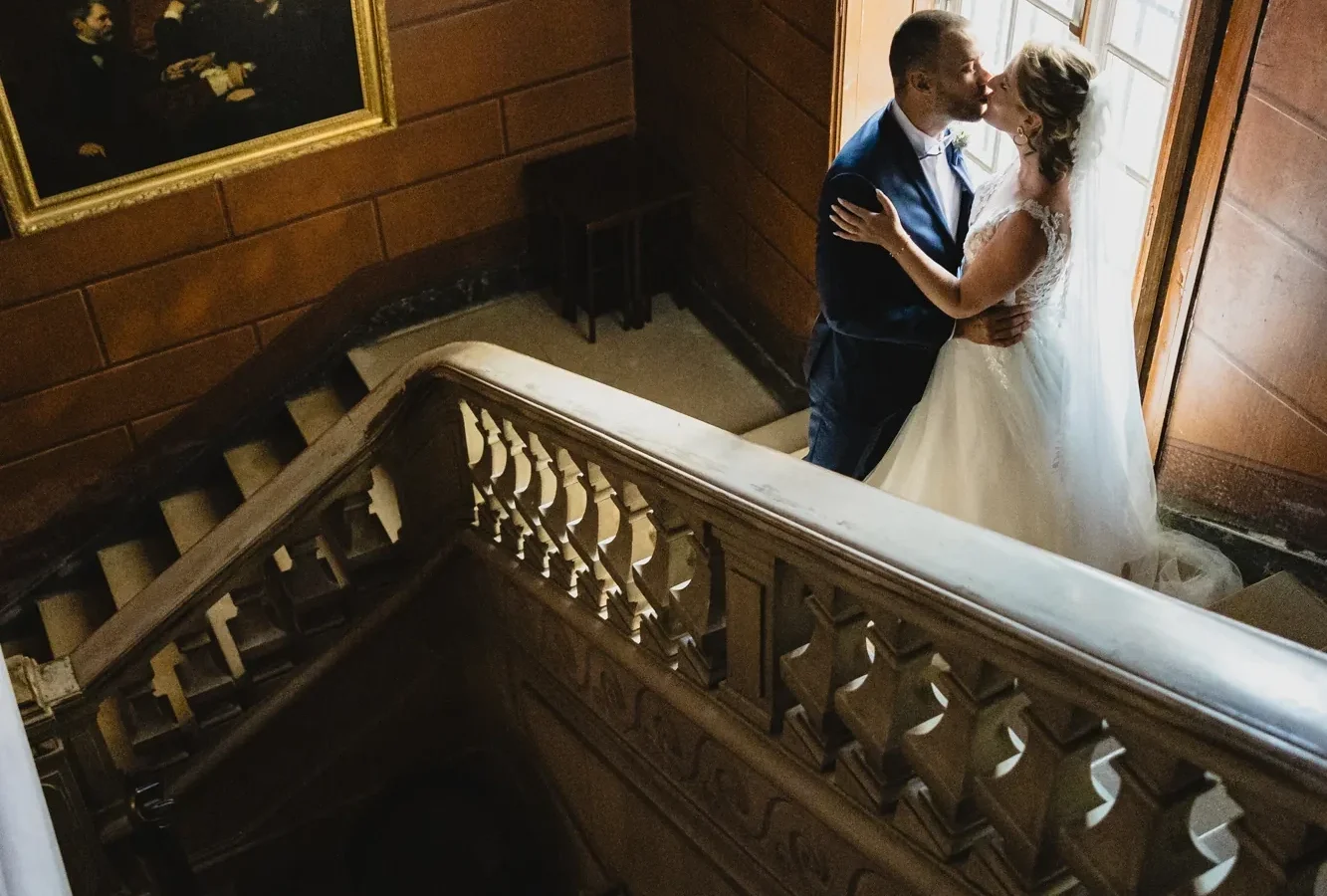
Managing client expectations in destination wedding photography can be challenging when your couple arrives at the first planning call with a Pinterest board of several hundred images, taken by dozens of photographers, in different seasons, on different continents. The venue is a historic French château, the ceremony is scheduled for midday in July, and the board is full of sunset glow and candlelit editorial portraits.
Managing client expectations in destination wedding photography means closing that distance early and calmly, before it turns into disappointment. This guide shares the approach we use with the US planners we partner with in France and Italy.
Temps de lecture : 9 min
Managing Client Expectations Destination Wedding Photography
- Understanding the Pinterest gap
- Why managing client expectations in destination wedding photography starts with the planner
- Natural light versus artificial light, the conversation couples rarely expect
- Historic venues and their constraints
- Show full galleries, not highlight reels
- What a destination wedding photography contract should spell out
- Travel fees, who pays and how to present them
- Image count and delivery timeline
- Building the photography timeline across a multiday weekend
- The shot list and the client questionnaire
- Planning the wedding photography weather backup plan
- A destination wedding photography checklist for planners
- Final takeaway
- FAQ
Understanding the Pinterest gap
From inspiration images to real wedding conditions
The Pinterest gap is the distance between inspiration images and real results. A saved pin is a single frame, usually the strongest image from a full wedding. It was shaped by its own light, weather, venue, styling and editing choices.
Couples rarely see those conditions. They see a mood, and they assume it can be reproduced anywhere, at any hour.
Instagram widens the gap even further. Feeds are curated and often filtered. The couple may not notice that a favorite photographer works mainly in golden hour light, or that a moody reception image was lit with off camera flash.
When inspiration comes from many sources, the board also mixes incompatible styles. Light and airy, true to color and dark and moody editing cannot all coexist in one gallery.
None of this means the board is useless. It is a valuable tool for understanding what moves the couple emotionally. The goal is to translate it into a realistic visual brief.
Why managing client expectations in destination wedding photography starts with the planner
The planner’s role in setting expectations
The destination wedding planner is often the first professional to see the couple’s visual references, sometimes months before the photographer is hired. That gives you a unique opportunity. When you frame expectations early, the photographer inherits a couple who already understands how light, timing and location shape images.
Strong destination wedding photographer client communication works best as a shared effort. The planner explains how the schedule affects the photographs, and the photographer explains how their style responds to those conditions.
When we join a project, we usually ask the planner for the mood board, the draft timeline and any venue rules in the same conversation. Those three documents tell us almost everything about where expectations may drift.
Natural light versus artificial light, the conversation couples rarely expect
Planning around natural light
Most of the images couples save were shot in soft, directional natural light. Golden hour, the period shortly before sunset, produces warm tones and flattering shadows that are very hard to replicate at noon.
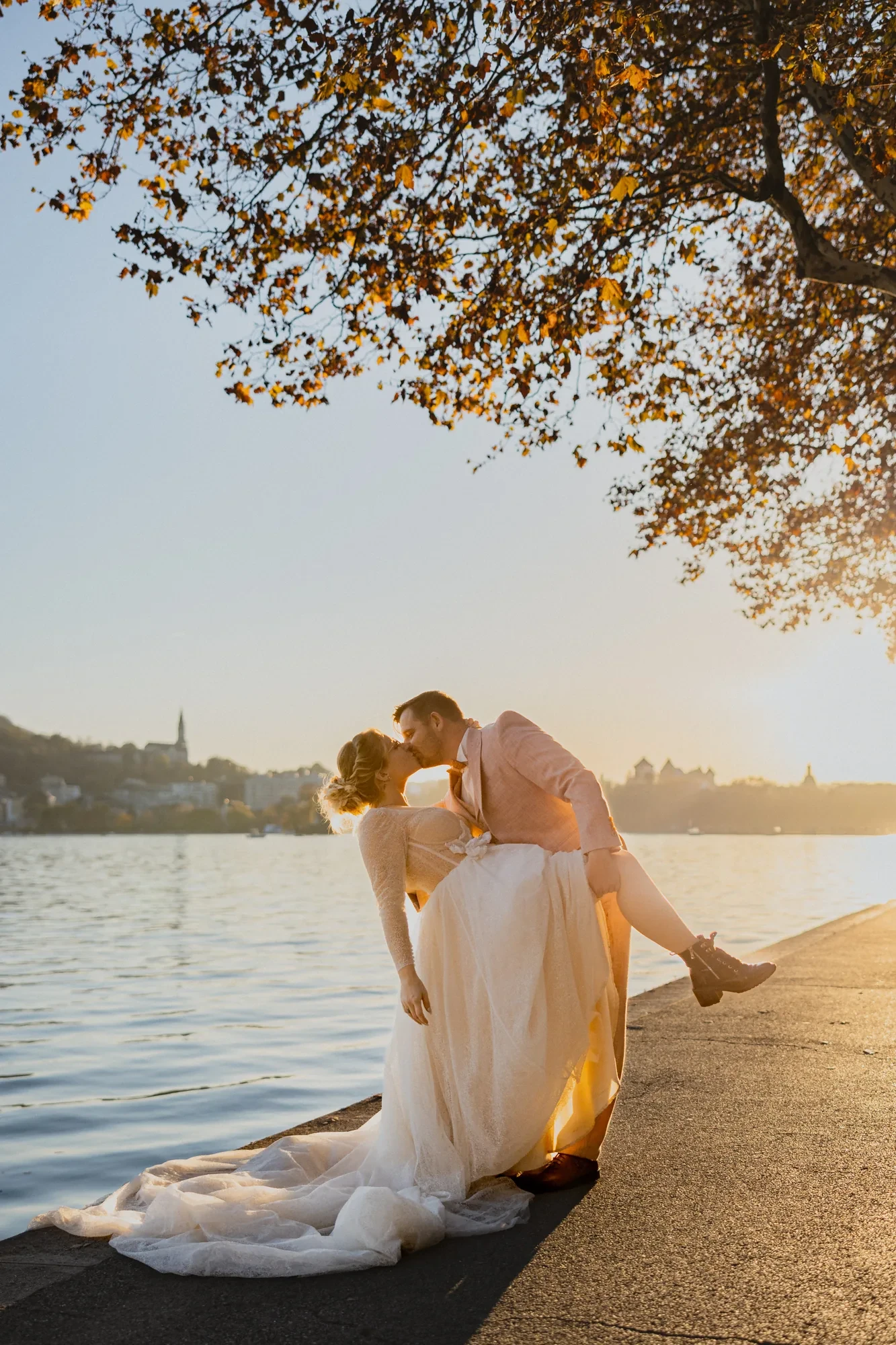
If the ceremony takes place under a midday Provençal sun, the photographs will show stronger contrast, brighter highlights and deeper shadows. A skilled photographer will look for open shade, use architecture to filter light and position guests carefully, but the result will never look like a sunset portrait.
This is why we encourage planners to protect a portrait window around sunset whenever the schedule allows. Even twenty minutes away from the cocktail hour can deliver the editorial images couples remember most. In summer, sunset in Southern France or on Lake Como often falls during dinner, so the timeline needs to anticipate it rather than react to it.
Working with interiors and artificial light
Interiors raise the opposite challenge. Reception rooms in châteaux and villas can be dark, with wood paneling, gilded mirrors and Art Deco wallpaper. A burgundy satin gown photographed against a gilded mirror can look extraordinary, but only if the photographer has the right tools and permission to use them.
Couples should know that evening images will be lit, at least partially, with artificial light, and that this changes their character.
Good to know
A ceremony time is often chosen for guest comfort or venue rules, not for light. Discussing the light before the ceremony time is locked gives the photographer far more creative options.
Historic venues and their constraints
Iconic European venues are the reason many US couples choose France or Italy, yet they come with rules that rarely appear in inspiration images. Some chapels and listed buildings forbid flash during ceremonies. Some estates restrict access to certain rooms, gardens or rooftops.
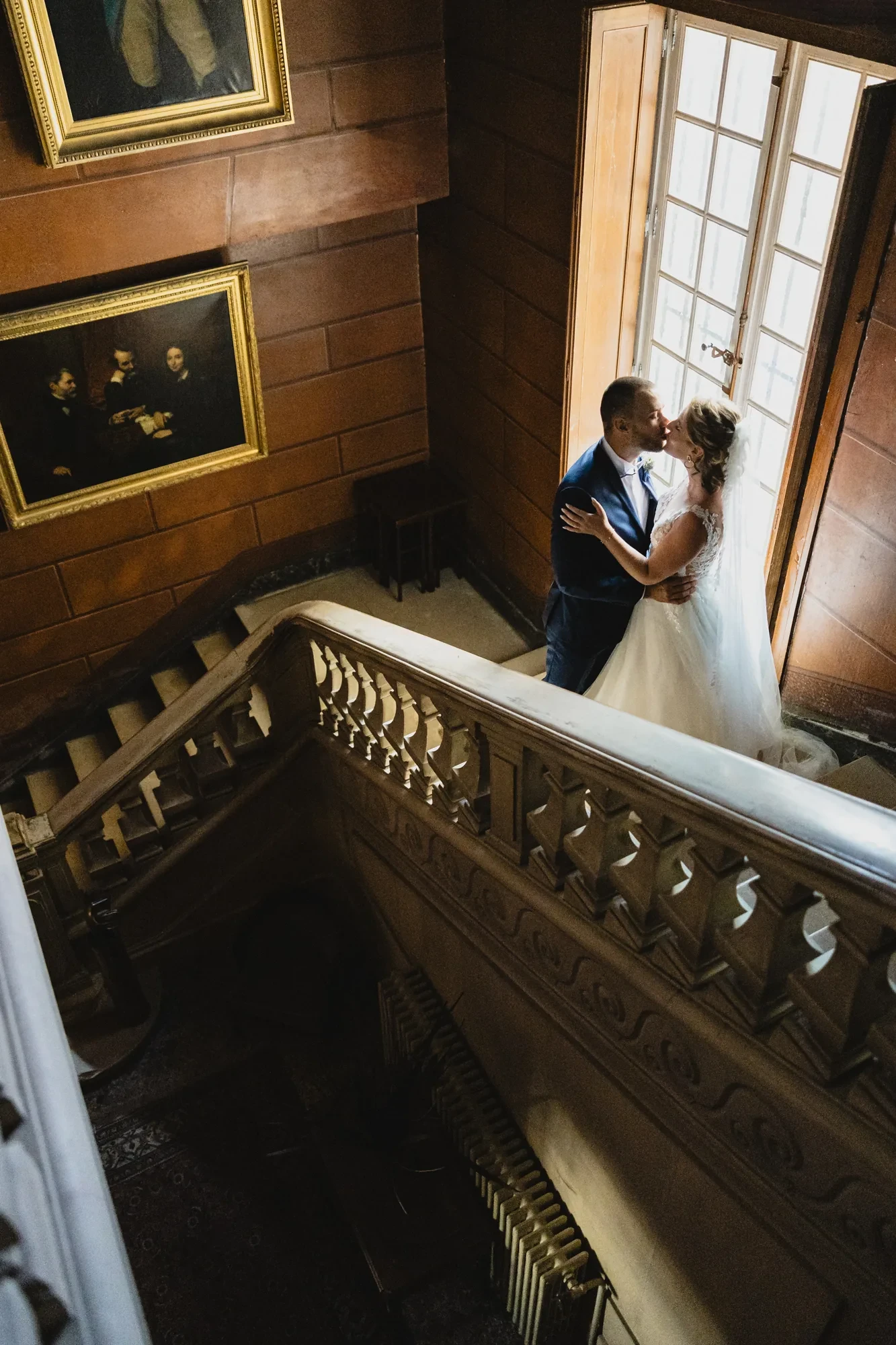
Drone flights may be prohibited near historic monuments or require specific authorization. Couples familiar with drone regulations such as FAA Part 107 in the United States are often surprised that European airspace follows entirely different rules.
Location scouting and venue permits should be confirmed well before the wedding. We ask planners to share the venue’s photography rules as soon as they are available, so we can explain to the couple what will and will not be possible.
A couple who knows in advance that the chapel ceremony will be photographed without flash, from fixed positions, will judge those images fairly.
Show full galleries, not highlight reels
The most effective way to align expectations is to show complete wedding galleries rather than a curated portfolio. A full gallery reveals how a photographer handles harsh light, dark interiors, rain, family formals and dance floors. It answers the question of what to expect from a destination wedding photographer far better than any description.
We share full galleries from weddings comparable to the couple’s plans, for example celebrations at Château de Matel, Domaine des Saints Pères or in the hills of Entrevaux in Provence.
The photographer should also explain their wedding photography editing style in plain language and clarify retouching limitations. Standard color correction and creative editing are usually included, while extensive object removal or body retouching is not. Saying this clearly avoids requests that surface only after delivery.
What a destination wedding photography contract should spell out
Essential clauses for destination wedding photography contracts
A detailed destination wedding photography contract turns verbal promises into precise written terms. Vague wording such as « full day coverage » or « travel included » is the root of many disputes. Here are the wedding photographer contract clauses we consider essential for international celebrations:
| Scope of work, including coverage hours, coverage dates and every event included, from the welcome party to the farewell brunch |
| Deliverables, with an approximate image count, the edited gallery delivery window and any sneak peek |
| Raw files vs. edited images, stating clearly whether unedited files are provided |
| Travel and accommodation expenses, meals and per diem |
| Payment schedule, cancellation and postponement terms |
| A force majeure clause covering weather, political events or venue closures |
| Backup equipment and replacement photographer provisions |
| Image usage rights and privacy permissions for portfolio, blog and magazine use |
Measurable wording protects everyone. A clause such as « the edited gallery will be delivered within 8 to 12 weeks » is far clearer than « photos delivered soon ».
Important
For planners who submit weddings to blogs or magazines, image usage rights should explicitly cover the planner’s PR and portfolio use, including credit requirements.
Travel fees, who pays and how to present them
Presenting destination wedding photographer travel fees clearly
Travel is one of the most common sources of confusion. In most cases, the couple covers the photographer’s travel, either as a separate line or built into a destination package. The key is transparency.
The contract should state who books flights, who selects accommodation, how many nights are required, whether travel days are charged and how meals are handled. It should also address what happens if a flight is cancelled and who pays for rebooking.
For wedding photography contract travel expenses, a written estimate that is updated if the dates, venue or number of events change prevents surprises.
Practical items also matter for international crews. Travel visas and passports, equipment import permits such as an ATA Carnet, and travel insurance all belong in the planning conversation.
For couples hiring a photographer already based in Europe, destination wedding photographer travel fees are often simpler to estimate, which is one reason many US planners work with us.
Image count and delivery timeline
Couples often assume that more hours automatically mean more images. In reality, the final count depends on the number of events, coverage hours, guest count and the pace of the celebration. A gallery is a carefully edited selection, not every exposure captured. Stating an approximate image count rather than a fixed number keeps the promise honest.
The wedding photographer delivery timeline should be just as explicit. Couples should know when a sneak peek will arrive, when the full gallery will be available on the client portal or online gallery, and how album design follows.
Our fine art albums, handcrafted in France, are designed after the gallery is delivered, so couples should not expect them at the same time.
Building the photography timeline across a multiday weekend
Destination weddings rarely last a single day. Welcome party and rehearsal dinner coverage, the wedding day itself and a farewell brunch each require their own planning.
A destination wedding photography timeline for planners should include travel time between venues, getting ready, the first look, family formals and group portraits, couple portraits in golden hour and reception highlights such as speeches and the first dance.
Cultural traditions add another layer. A bride changing into a red velvet caftan for a traditional dance, or a ceremony featuring a family ritual, needs dedicated time and sometimes additional lighting.
We review every timeline with the planner and ask what happens if the schedule runs late, because in historic venues with long distances between spaces, delays accumulate quickly.
The shot list and the client questionnaire
A destination wedding shot list helps prioritize people and traditions, but a list that is too rigid prevents genuine storytelling. We recommend that couples identify a limited number of essential photographs, the people who must be photographed, sensitive family dynamics and images they do not want.
A wedding photographer client questionnaire gathers this information along with vendor details and privacy restrictions.
When a request is unrealistic, such as photographing a long extended family list within a short cocktail hour, the photographer should explain the time required and offer alternatives, then record the decision in writing. Assigning someone from the wedding party to gather family members saves valuable minutes.
Planning the wedding photography weather backup plan
Weather cannot be controlled, and couples need to hear this before the wedding. Every outdoor setup should have a weather contingency location, ideally scouted in advance.
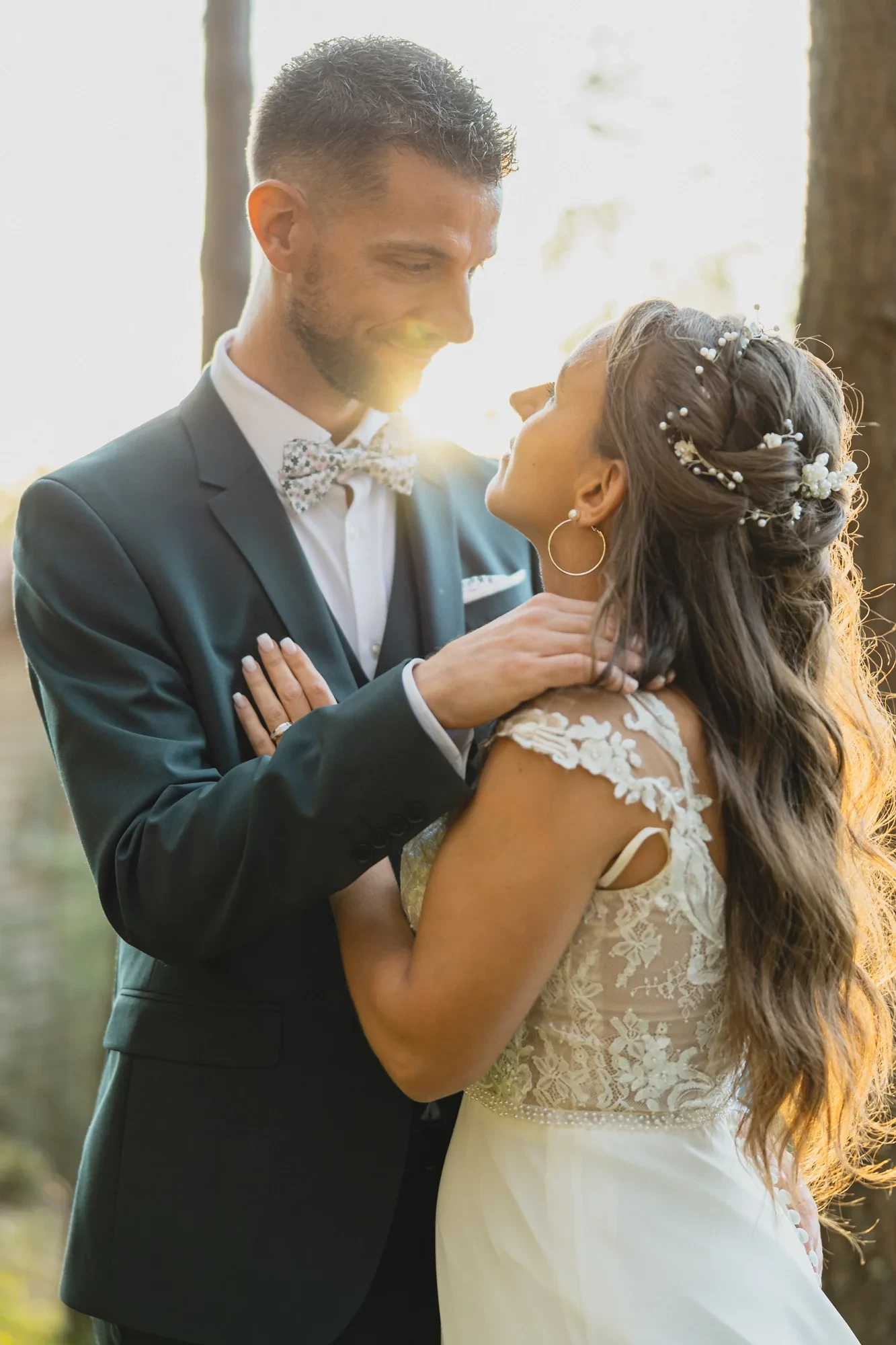
If it rains during portraits, they may move indoors, under arcades or covered terraces, and the session may be shortened. Rain does not prevent beautiful images, but it changes their character.
Couples should decide in advance whether portraits can be rescheduled to another moment of the weekend, which is a real advantage of multiday celebrations.
A destination wedding photography checklist for planners
To keep managing wedding photography expectations simple, we suggest a few checkpoints. Share the mood board and venue rules with the photographer early. Confirm the ceremony time with light in mind. Request full galleries from comparable venues.
Review the contract for scope, travel and delivery terms. Finalize the timeline, shot list and contingency locations a few weeks before the wedding, and confirm them in writing the week before.
Final takeaway
Managing expectations is not about limiting a couple’s dreams. It is about making every promise precise and achievable. When the planner and photographer translate inspiration into a realistic brief, explain light and venue constraints early and put every commitment in writing, couples receive images that feel true to their celebration.
If you are planning a destination wedding in France or Italy and want a partner who works this way, we would be glad to hear about your project.
FAQ
How far in advance should a destination wedding photographer be booked?
Most couples secure their photographer shortly after confirming the venue and the planner. For peak season dates in France and Italy, booking early also leaves time for scouting, permits and travel arrangements.
Can couples receive the raw files?
This depends on each photographer’s policy and should be stated in the contract. Many photographers deliver only edited images, because raw files do not reflect their finished style.
Is a second shooter necessary for a multiday wedding?
For large guest counts, simultaneous getting ready sessions or venues spread across an estate, a second shooter helps ensure nothing is missed. The contract should define their responsibilities clearly.
Who handles drone authorizations at European venues?
Responsibility should be agreed between the planner, the venue and the photographer or videographer. Local rules apply, and some historic sites forbid drones entirely.
What should photographers wear at a black tie destination wedding?
Planners should share the dress code with every vendor. A professional photographer will adapt their attire to blend in discreetly with the guests and the setting.