The last champagne flute is empty, the band has packed up, and somewhere between the bar and the dancefloor your wedding finally stops performing and starts living. That is the moment after-party wedding photography exists for.
For the couples and planners we work with across France and Italy, the hours after midnight hold a completely different energy, looser, funnier, more physical, and more honest than anything that happens before dessert. Yet they are also the hours most often cut from a coverage agreement. This guide explains what happens after dark, how those images are made, and how to build them into your timeline and your contract without guesswork.
After-Party Wedding Photography, Why Midnight Matters
Reading time: ~9 min
- What the after-party actually is, and why it deserves its own chapter
- Why after-party wedding photography completes the story
- How we photograph a dancefloor at 1am
- How many hours of wedding photography coverage should you book after midnight?
- Should you add a second shooter for the after-party?
- Planning a timeline that protects your late-night images
- What late-night wedding coverage costs
- The last frame of the night
- Frequently asked questions
What the after-party actually is, and why it deserves its own chapter
A distinct chapter of your celebration
The after-party is the phase that begins once the formalities are done, the speeches delivered, the cake cut, the first dance danced. It often moves into a second space, a cellar bar, a château orangery, a lounge, a rooftop, and it carries its own dress code, its own soundtrack, and its own rules.
Specialist wedding publications now treat it as a distinct segment of the day. Inside Weddings maintains an entire inspiration category devoted to after-party imagery, and The Knot publishes real wedding galleries built exclusively around late-night celebration. That editorial recognition matters, because it tells you the market already reads these frames as part of a complete wedding story, not as leftovers.
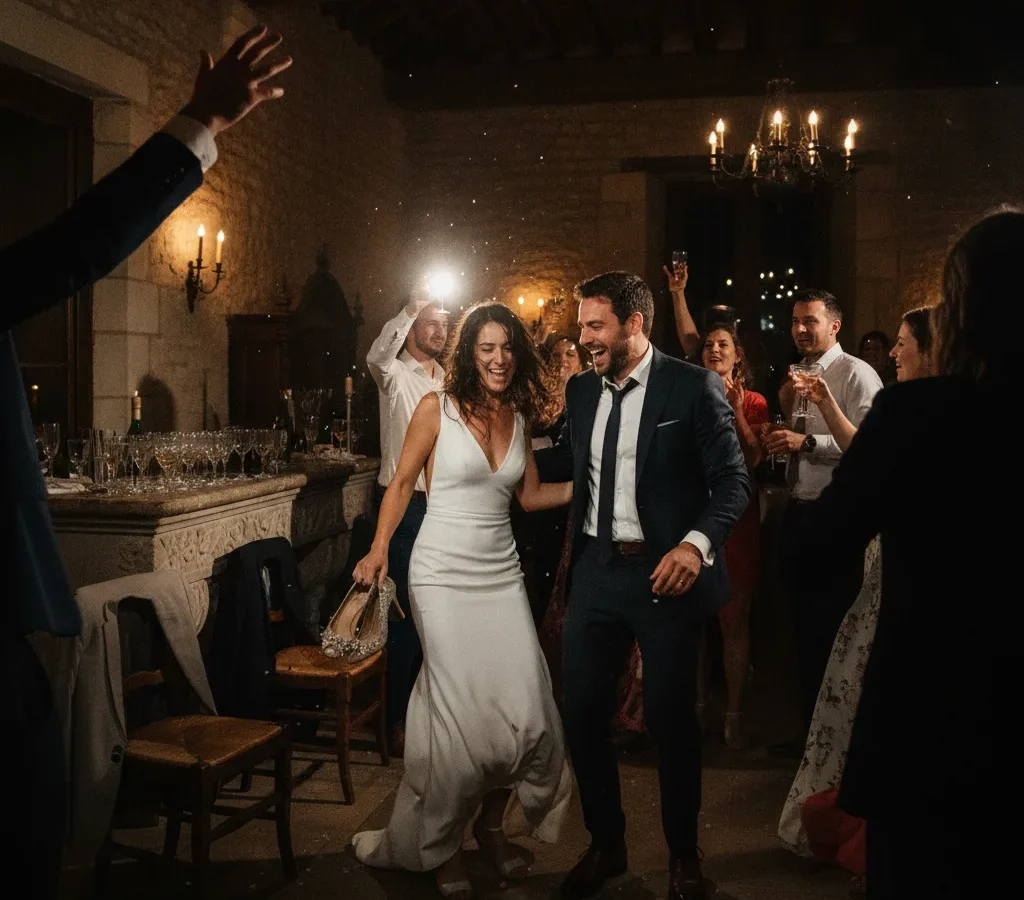
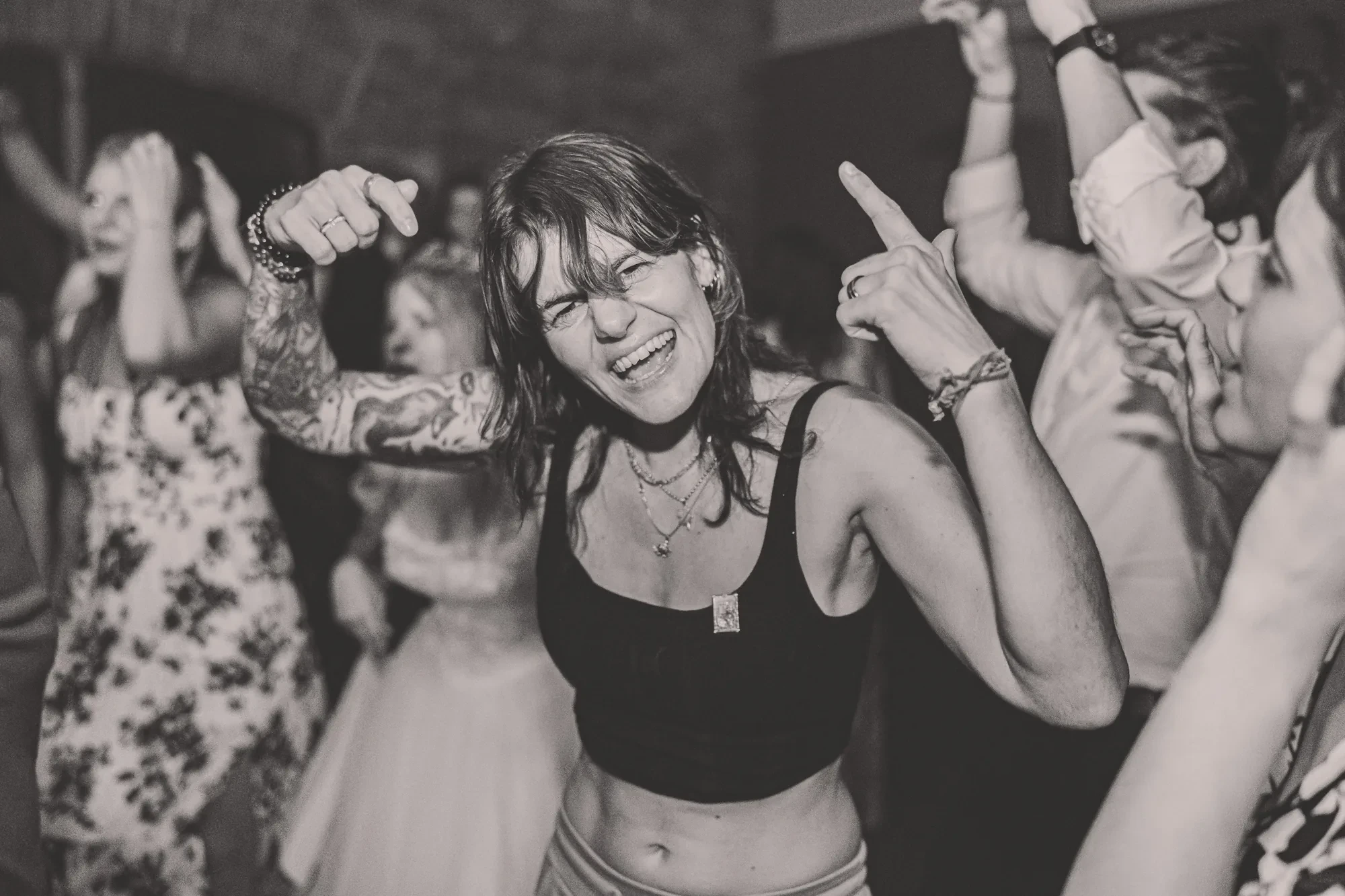
For a multi-day European celebration, the after-party is also where the guest list finally relaxes. People have flown eleven hours across the Atlantic, survived a welcome party and a rehearsal dinner, and by 1am they are barefoot, shirt untucked, dancing with a cousin they have not seen in a decade. Many photographers who cover late reception hours report that the most memorable moments arrive long after the first dance. Those wedding party photos after dark are also the ones your friends will ask you for six months later.
Why after-party wedding photography completes the story
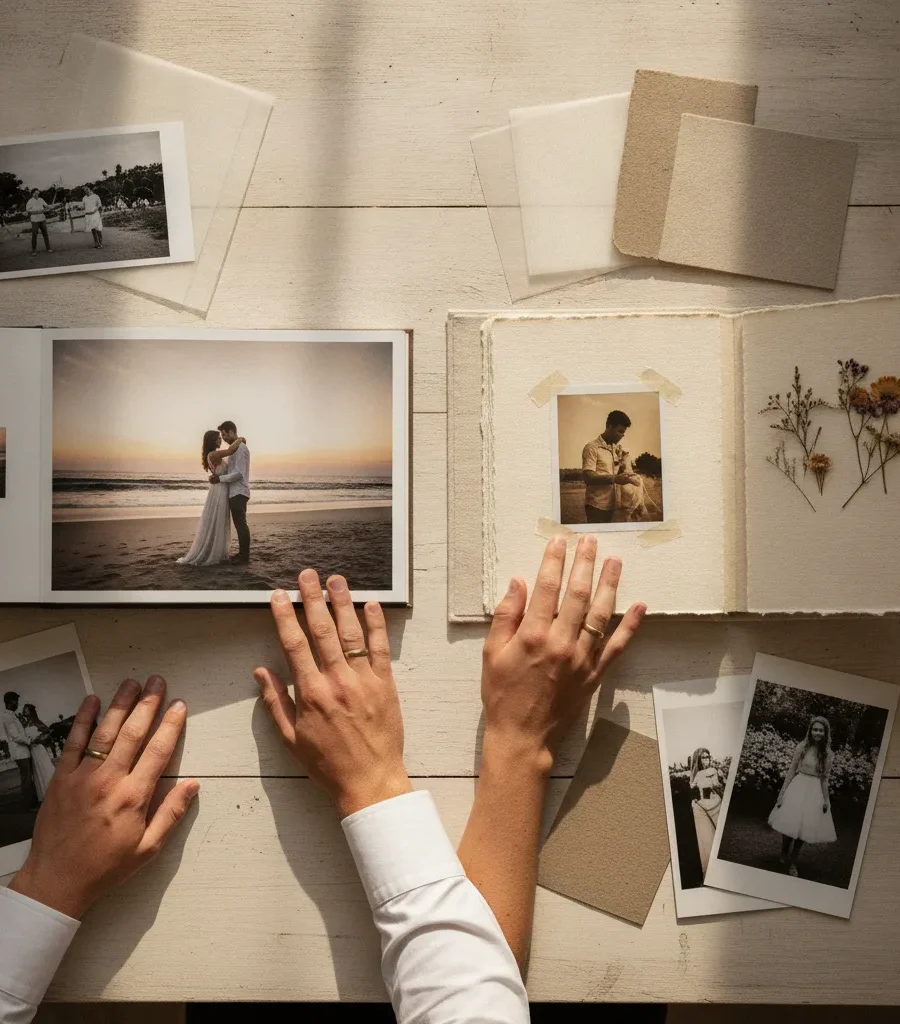
Your daytime gallery carries the elegance, the light through the shutters, the fine tailoring, the tablescape your designer spent a year conceptualising. It is the editorial layer. The end of night wedding photos carry something else entirely, the grain, the motion, the sweat, the laughter with heads thrown back. Placed side by side in an album, the contrast is what creates a real wedding storytelling arc. One register without the other reads as incomplete, a beautiful magazine feature with the final pages torn out.
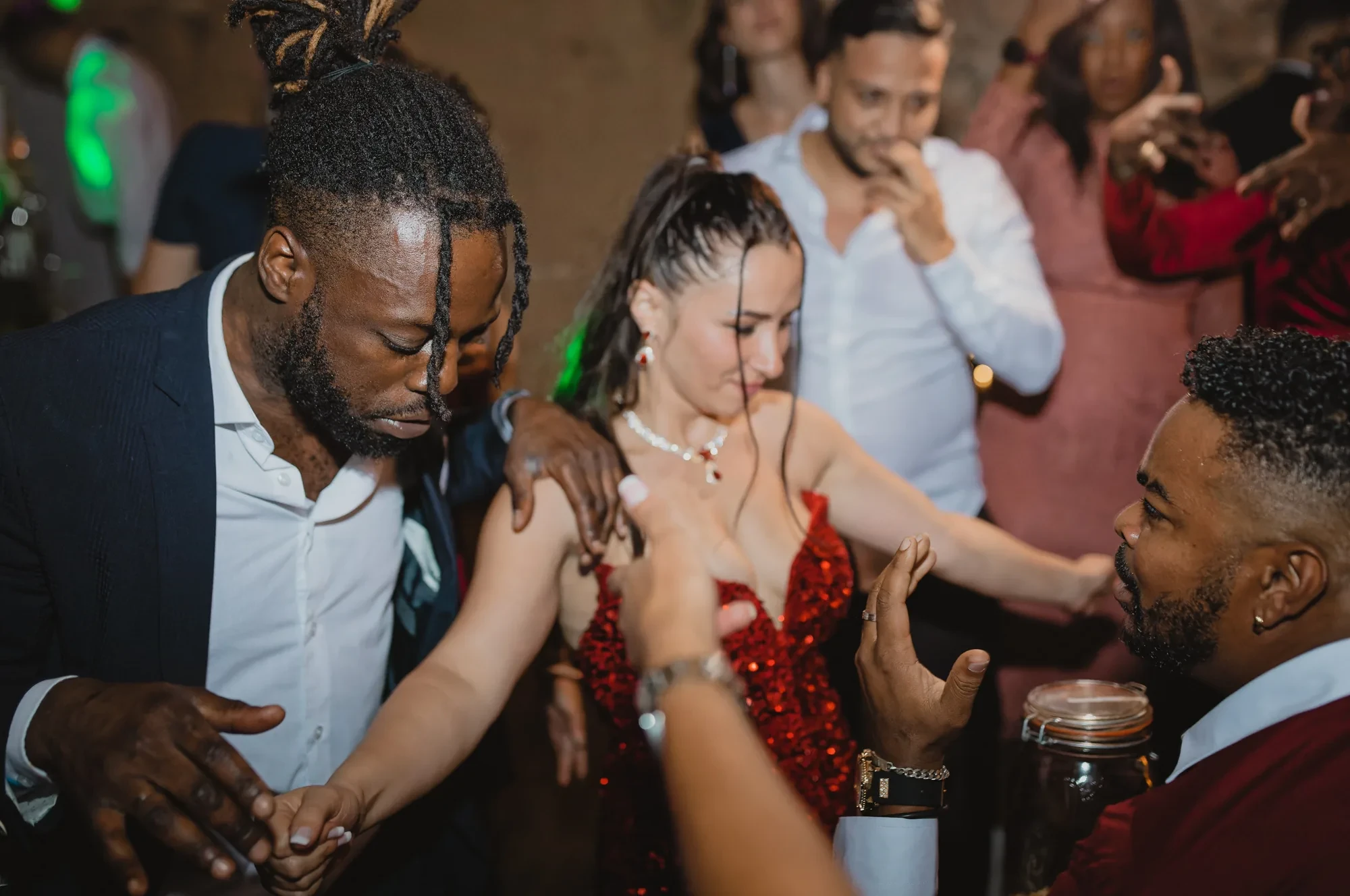
There is also a practical dimension. The after-party is usually where second looks appear, a burgundy satin gown for dancing, a red velvet caftan for a traditional celebration sequence, a dinner jacket abandoned over a chair. Those changes represent real styling decisions and real investment, and without late-night wedding coverage they simply never appear in the archive. We see the same pattern across our château and Riviera work, visible in our wedding portfolio, where the final third of the night frequently produces the frames couples choose for their large-format prints.
How we photograph a dancefloor at 1am
Our approach to late-night lighting
Nighttime wedding photography is not about fighting darkness. It is about treating darkness as a background and painting into it. The starting point is always a venue lighting assessment, ideally during the site visit or the rehearsal dinner. We look at where the ambient sources sit, festoon strings, candles, DJ wash lights, the glow from a bar, and we decide which of them will become part of the picture rather than an obstacle.
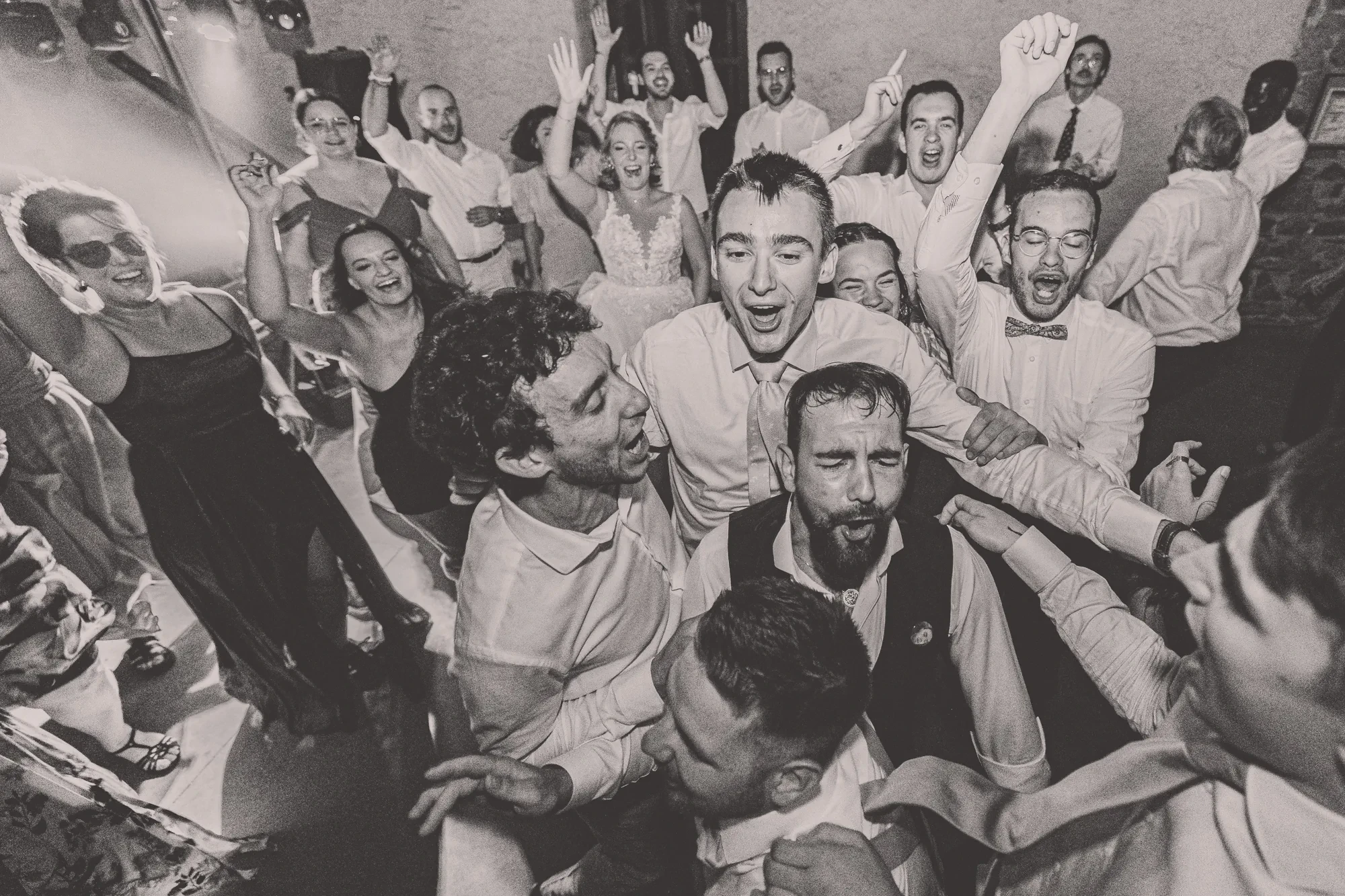
From there the toolkit is deliberate. Direct flash photography produces the high-contrast, editorial realism look that has defined the editorial wedding photography movement in recent seasons, sharp, unapologetic, a little raw. Bounce flash technique off a low ceiling or a bounce card softens things when the architecture allows it, a point PetaPixel has made repeatedly in its night wedding guidance. Off-camera flash, one to four Speedlight units on radio triggers, builds more dramatic and stylised lighting around the couple, with colored gels for flash used to match or intentionally clash with the ambient light layering already in the room. Backlighting and silhouettes turn a garland or a sparkler exit into a graphic frame rather than a snapshot.
The settings follow the same logic. Wide aperture low-light shooting at f/1.4 to f/2.8, high ISO in the 1600 to 6400 range paired with modern high ISO noise reduction, and dragging the shutter at speeds around 1/10 to 1/20 of a second to let the room breathe while flash freezes the subject. Light streaks and zoom burst effects come from the same technique used intentionally. Autofocus struggles in near darkness, so manual focus in darkness and the AF assist beam both stay in rotation. Everything is captured in RAW format, because late-night files demand the widest possible latitude in post-processing, and TTL flash metering is used where the pace makes manual power adjustment impractical.
Good to know
A venue that forbids flash after a certain hour, or that dims house lighting to near zero for the DJ set, changes the entire approach. Asking your planner to confirm these rules in advance protects the quality of your wedding dancefloor photography.
How many hours of wedding photography coverage should you book after midnight?
The honest answer is that it depends on where your night actually ends, not on where the printed timeline says it ends. Most photographers who offer wedding after-party coverage recommend two to four additional hours beyond the first dance, enough to capture the transition into the after-party, the peak of the dancefloor, and any late-night portrait session. Booking one extra hour usually means leaving just as the room finally lets go.
Here is how the main options compare in practice.
| Coverage option | What it captures | Timeline consideration |
|---|---|---|
| Standard evening end, through first dance | Entrances, speeches, cake, first dance, opening of the floor | Photographer leaves before the after-party begins |
| Plus two hours | Second looks, move to the after-party space, early dancefloor candid shots, bar moments | Works when the after-party starts promptly after dinner service |
| Plus three to four hours | Full after-midnight wedding photos, peak dancefloor, late toasts, sparkler or send-off exit | Best for multi-day weekends where guests stay until the end |
| Dedicated late-night portrait session | Quiet, intimate wedding night portraits away from the crowd | Needs a fifteen to twenty minute window scheduled before fatigue sets in |
| Second shooter on the floor | Simultaneous wide-angle atmosphere and close reaction frames, photobooth editorial | Requires briefing on who covers which space |
Should you add a second shooter for the after-party?
For a large celebration spread across several rooms, yes. A single photographer on a crowded floor has to choose between the couple and the crowd. A second shooter removes that compromise, covering the bar, the terrace, the smokers’ corner where half the best conversations happen, while the lead photographer stays with you. For planners submitting to prestigious publications, this also doubles the chance of capturing the design elements as they are experienced at night, the installation lit from below, the tablescape mid-celebration rather than pristine and empty.
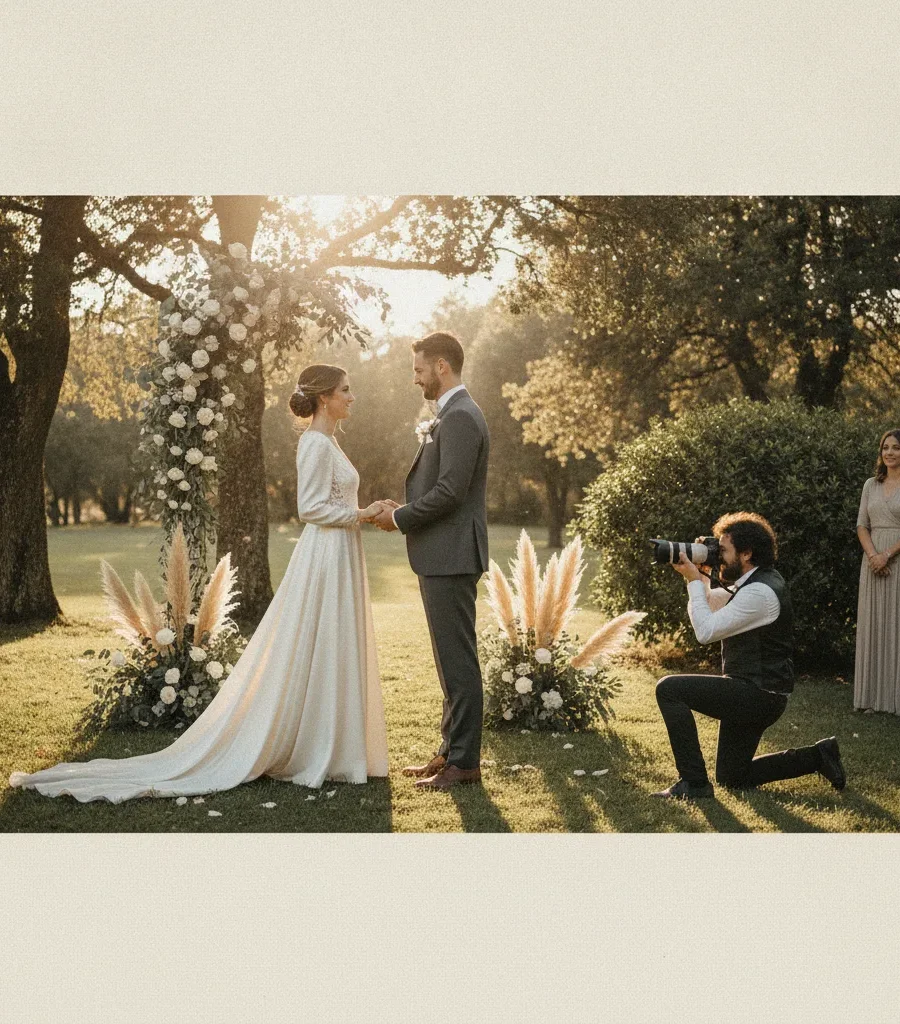
We work as part of your vendor team, not alongside it. That means black-tie appropriate attire, respect for the run of show, discreet movement during the quieter moments, and coordination with the videographer so neither team blocks the other. Our approach to collaborative production is outlined on our wedding photographer page.
Planning a timeline that protects your late-night images
Key decisions to protect late-night coverage
The single most effective thing you can do is raise the after-party during the first planning conversations, not in the final month. Late-night wedding photography needs to exist in the budget and in the schedule at the same time. Practically, that means agreeing on a few decisions early with your planner and with us.
Before the weekend, we recommend confirming the following points together:
- The exact hour the after-party opens, the room it occupies, and who controls the lighting in that room.
- A short protected window for wedding night portraits, ideally before 1am, while energy is still high and hair and makeup still hold.
- Whether a sparkler exit, confetti moment, or fireworks sequence is planned, along with any local noise or fire regulations affecting it.
- Which design details still need to be photographed under night lighting for later submission.
Important
If you are planning a sparkler exit, build it into the schedule rather than improvising it. Gathering guests, distributing sparklers, and positioning the couple takes longer than most timelines allow, and a rushed exit rarely photographs well.
What late-night wedding coverage costs
Pricing for a wedding after-party photographer is almost always structured as an extension of the main coverage rather than as a standalone service, calculated by additional hours and by whether a second shooter joins for the night. For the multi-day destination weddings we document, from welcome party to farewell brunch, coverage is quoted for the full weekend rather than hour by hour, which usually makes after-party inclusion simpler to plan than an à la carte addition. The variables that genuinely move the figure are the number of photographers, the number of separate venues, and the total span of the celebration. We discuss all of this openly during the first call, and you can start that conversation through our contact page.
The last frame of the night
A wedding does not end with the cake. It ends when the last guests refuse to go to bed, and those hours produce a kind of image that cannot be staged, directed, or recreated the following morning. Adding after-party wedding photography to your coverage is less an upgrade than a decision about how complete you want your archive to be. When those frames land in a handcrafted fine art album beside the portraits from golden hour at the château, the story finally reads from beginning to end.
FAQ
Will our guests mind being photographed late at night?
Most will not notice, which is the point. Working discreetly with available light and controlled flash means we document the room rather than interrupt it. If certain guests prefer to stay out of frame, let us know in advance and we will simply direct attention elsewhere.
Does after-party coverage change the way our album is designed?
It adds a distinct final chapter with its own visual register, higher contrast and more movement. We usually sequence these images as a closing section, which gives the album a clear rhythm rather than a uniform tone throughout.
Can the same photographer cover the welcome party, the wedding day, and the after-party without losing consistency?
Yes, and consistency is precisely why single-team coverage matters across a multi-day celebration. Shooting every event ourselves means the colour treatment, the framing language, and the editorial approach stay unified from the Thursday welcome dinner to the Sunday brunch.
What happens if the after-party moves to a different venue at the last minute?
We adapt, but a quick message to the planner helps enormously. A two-minute assessment of the new space, its ceiling height, its light sources, and its colour temperature, allows us to reconfigure flash and settings before the first guests arrive.
Are late-night images edited differently from the daytime gallery?
They are treated with their own logic. Noise is managed rather than erased, because texture is part of the atmosphere, and colour is balanced to preserve the character of the room instead of neutralising it into something that looks like daylight.