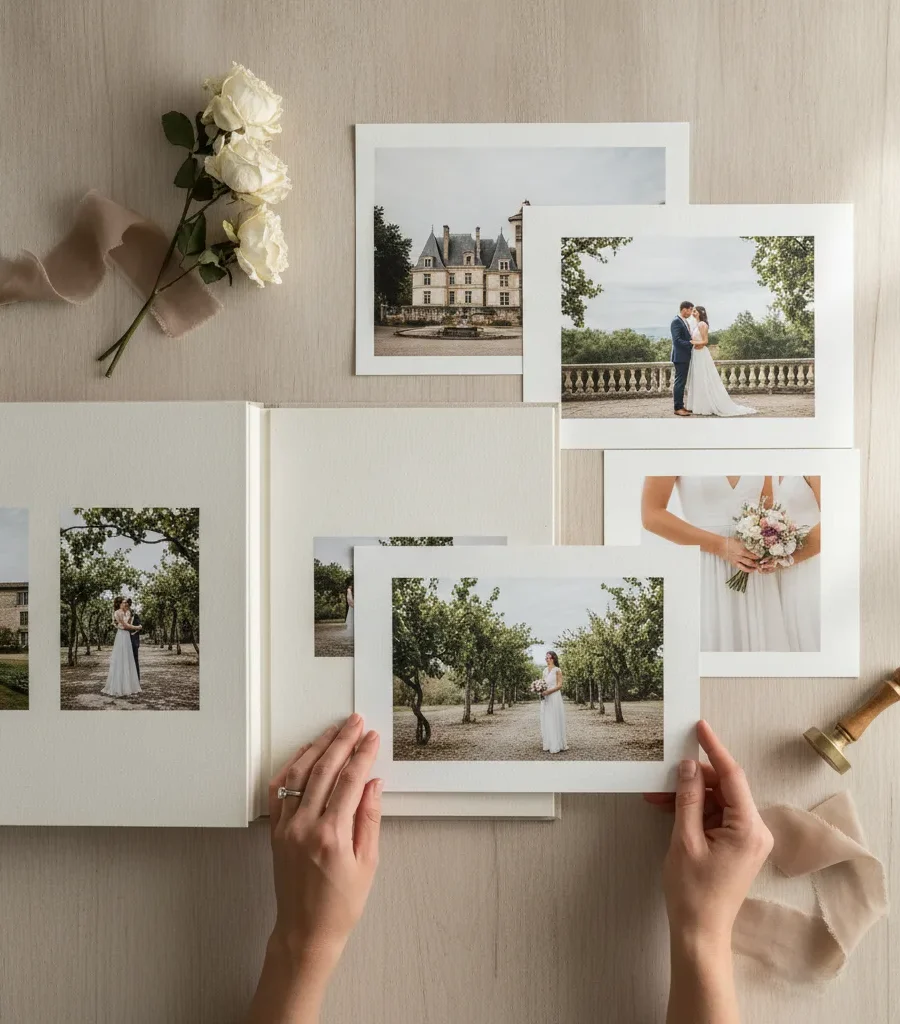
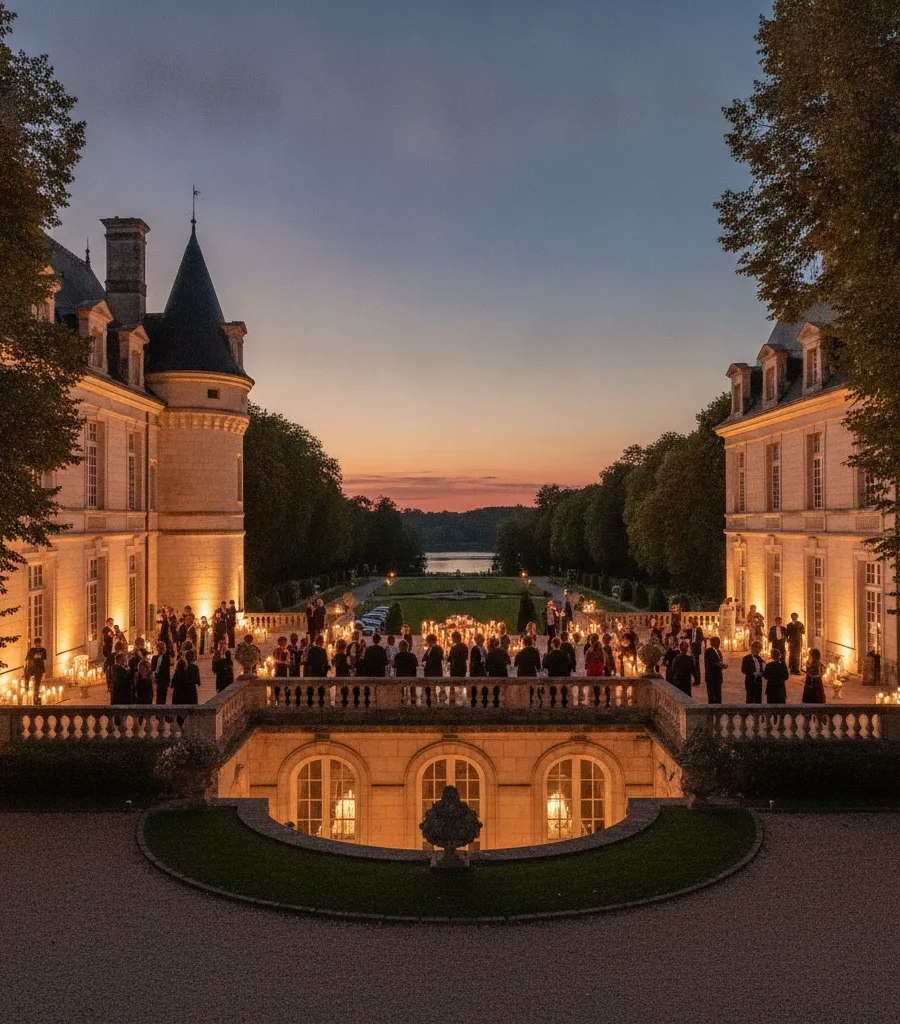
Booking a photographer an ocean away can feel like an act of faith when you are building a European photographer relationship remotely. You have studied the portfolio, admired the light in every frame, yet you have never shaken hands.
Building a European photographer relationship remotely is possible, and it rests on structure rather than proximity: clear conversations, shared visual references, written agreements and honest feedback. In 2026, this guide explains how American couples and wedding planners can turn a remote booking into a lasting, trusted partnership.
Reading time: about 9 minutes
Building a European Photographer Relationship Remotely
- Why trust matters more than the portfolio
- How to find and hire a photographer in Europe from the US
- How to vet a photographer without meeting in person
- Building a European photographer relationship remotely, one conversation at a time
- What a remote photography brief should include
- Contracts, copyright and licensing across borders
- Paying a European photographer internationally
- Model releases, GDPR consent and data
- International photography project management at a glance
- After the event: feedback that turns a booking into a partnership
- Bringing trust across the Atlantic
- FAQ
Why trust matters more than the portfolio
Trust in remote collaborations
A beautiful portfolio shows what a photographer can do on their best day. It does not show how they communicate across time zones, how they handle a timeline that shifts at the last minute, or how they behave around a vendor team during a black tie dinner.
For a multiday destination wedding in a French château or an Italian villa, those qualities matter as much as the images.
Research on transnational production teams has found that distributed collaborators can perform comparably to colocated teams when they use online communication and project management tools well.
The lesson for you is practical. Distance does not weaken a collaboration. Vague expectations, undocumented decisions and irregular contact do.
How to find and hire a photographer in Europe from the US
Finding the right photographer from afar
Most American couples begin with their planner’s recommendations, editorial features and venue preferred lists. Planners, in turn, rely on vendors they have seen work under pressure.

When you are hiring an international photographer, look beyond the curated highlights and ask for complete galleries from weddings similar to yours, ideally covering a full weekend from the welcome party to the farewell brunch.
Location also matters. A photographer based in France already knows the light of Provence, the logistics of the Riviera and the etiquette of historic estates. You can explore how we document full celebrations in our wedding at Château de Matel or our lakeside coverage in Menthon Saint Bernard.
Consistency across very different venues is one of the clearest signals of craft.
How to vet a photographer without meeting in person
Remote vetting in practice
Vetting remotely means replacing a handshake with evidence. Start with a discovery call on video. Notice whether the photographer asks about your families, your guests and the atmosphere you want, or only talks about packages. A good discovery call feels like the first conversation with an artistic director, not a sales pitch.
Next, request a written description of the working process: how the timeline is built, how the team coordinates with the planner, what happens on the day and how images are delivered.
Ask for two professional references when the investment is significant, for example a planner or venue coordinator they have worked with recently. Confirm the legal identity of the business and its billing details.
For planners who expect to work with the same photographer repeatedly, a small paid test project, such as an engagement session in Paris or on the Côte d’Azur, is an elegant way to test chemistry before a large production.
Building a European photographer relationship remotely, one conversation at a time
Structuring ongoing communication
The strongest remote partnerships follow a rhythm. Rather than relying on scattered emails, agree on a cadence of regular video calls: an initial discovery call, a planning call once the venue and planner are confirmed, a detailed timeline review a few weeks before the wedding and a short final check in the days before travel. Each call should be summarized in writing so that decisions live in one place.
Time zone overlap is the practical constraint. France and Italy follow Central European Time (CET), which is nine hours ahead of California for most of the year. That leaves a comfortable window in the Californian morning and the European late afternoon.
Between calls, asynchronous communication through a single shared channel keeps momentum without forcing anyone to answer at midnight. Agree on expected response times from the start.
Language and cultural communication styles deserve attention too. Academic research on international collaboration identifies language barriers and differing communication styles as factors that can slow meetings and reduce engagement. A concise European reply is rarely a lack of interest.
Ask explicitly whether the photographer sees any risks in the timeline, avoid idioms in critical instructions and ask for important points to be restated. Working with a European photographer remotely who speaks fluent English, as we do, removes much of this friction, but written confirmation remains good practice.
Good to know
Video calls do more than share information. Studies of global teams suggest that seeing each other improves understanding across cultures, which is why we treat every call as a chance to build trust, not only to confirm details.
What a remote photography brief should include
Key components of your brief
A remote photography brief limits interpretation. It is the document your photographer will return to when planning each day of the weekend. A solid brief, whether drafted from a remote photography brief template or written from scratch, should cover these elements:
- The vision and atmosphere you want, supported by a mood board and visual references
- The schedule of every event across the weekend, with locations and timings
- A shot list of must have family groupings and key moments
- Design elements to document for the planner, such as tablescapes, florals and architecture
- Cultural traditions, guest dynamics and any sensitivities to respect
- Deliverables, formats and the timing of sneak peeks for planners and publications
- Usage plans, such as personal use, editorial submission or vendor portfolios
The best briefs separate firm requirements from creative preferences. A mood board might pair a structured mermaid gown photographed beside a gilded mirror and Art Deco wallpaper with candid dance floor energy, like a guest in an embroidered red caftan celebrating under string lights.
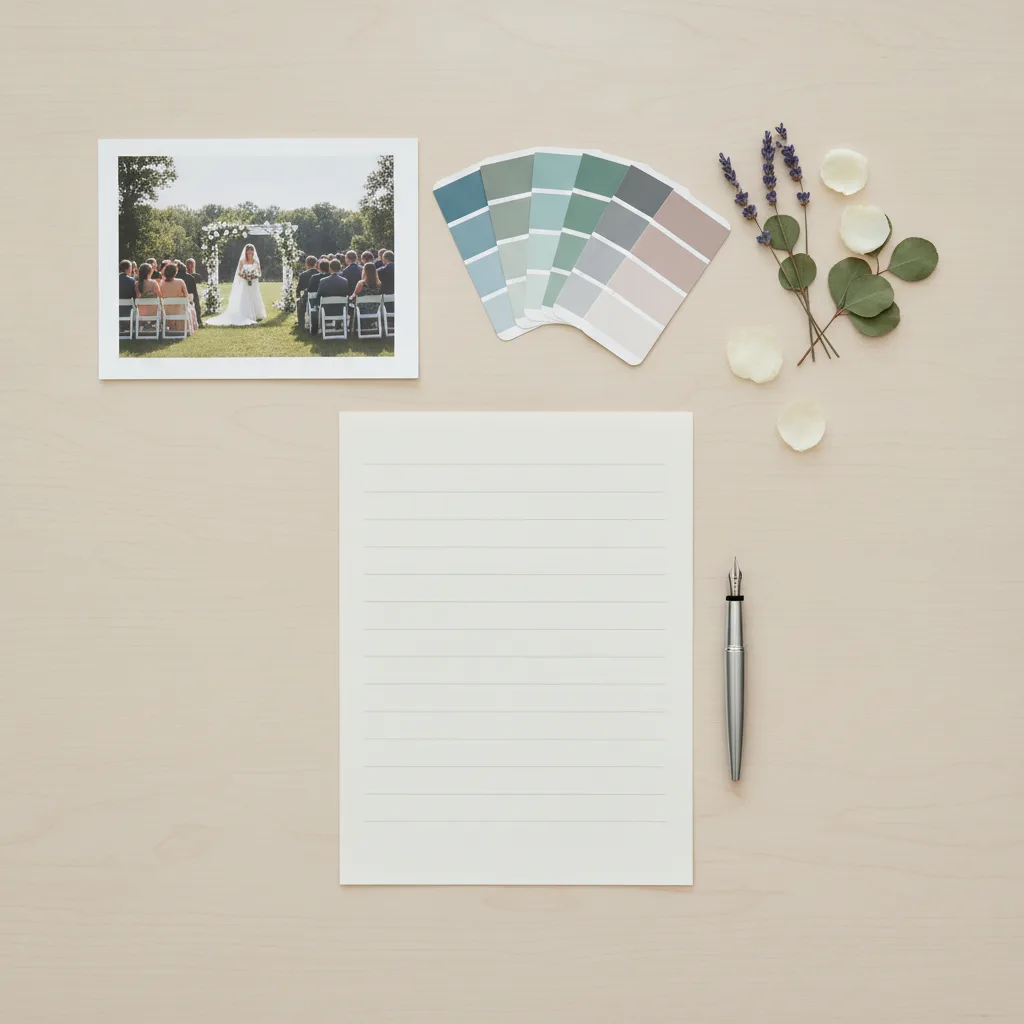
Those references tell the photographer about light, texture and mood without dictating every frame. For ceremonies outdoors, a reference such as a wooden arch dressed with seasonal flowers helps align on composition and color.
Contracts, copyright and licensing across borders
A photography contract in Europe should be as precise as the timeline. One of the most common misunderstandings concerns copyright ownership. Under the Berne Convention, copyright arises automatically when an image is created, in both the United States and European Union countries.
The National Union of Journalists explains in its fees guide that clients usually pay for a license to reproduce images rather than ownership of the photographs themselves. In France, photographers also hold moral rights that cannot be transferred.
This is why a clear photographer usage rights and licensing agreement matters. The Swedish Photographers’ Association (Svenska Fotografers Förbund) publishes an assignment agreement template that defines the purpose of use, the media and platforms, the formats and the duration of the license, and states that any use beyond that scope requires a further written agreement.
Legal practitioners advising photographers under Dutch copyright law in the Netherlands similarly recommend specifying purpose, medium, duration and territory for each usage right.
For a wedding, the key points are the usage license (exclusive vs non exclusive), the licensing territory and duration, whether couples may print and share images freely, whether planners and designers may publish them, and the photographer’s portfolio rights. Cancellation and rescheduling terms, revision rounds and the deliverables and acceptance criteria should also be written down.
Contracts are typically signed by electronic signature, which makes the process simple across continents.
Important
Clarify early who may submit the wedding to magazines and blogs, and under what credits. Planners investing heavily in design often want editorial publication, and agreeing on this in writing protects everyone’s work.
Paying a European photographer internationally
Payment terms are part of trust. Contract templates for photographers recommend stating fees, deposits, due dates, payment methods, taxes, cancellations and the consequences of late payment. Avoid vague wording such as payment upon completion. Define what counts as delivery and when the final balance becomes due.
For destination weddings, deposit and milestone payments are standard: a deposit to reserve the date, then balances tied to clear stages. The invoice should state the currency, applicable VAT (value added tax) and who covers bank fees.
VAT and cross border invoicing depend on whether the client is a private couple or a business, and where that business is established, so ask for the treatment to be shown explicitly.
SEPA (Single Euro Payments Area) transfers are routine within Europe, while American clients usually pay by international wire. Travel and accommodation should be itemized rather than estimated loosely.
Model releases, GDPR consent and data
The GDPR (General Data Protection Regulation) can apply to photographs showing identifiable people, as well as to contact details, contracts and files exchanged online. For a private wedding, images are primarily for the couple. Questions arise when photographs are used commercially or published widely.
Contract template providers note that commercial use of identifiable people without written authorization can create image rights and data protection risks.
In practice, GDPR photography consent and model release forms matter most for vendor advertising and press, especially where minors appear. Agree on data retention and processing roles, use secure file transfer and gallery access with private links, and decide how long the photographer archives your files.
For complex commercial projects, a check with a local lawyer remains wise.
International photography project management at a glance
The table below summarizes how a remote collaboration typically unfolds and what should be documented at each stage.

| Phase | Key action | Written record |
|---|---|---|
| Discovery | Video discovery call and portfolio review | Call summary and proposal |
| Commitment | Contract and deposit | Signed agreement and invoice |
| Planning | Brief, mood board and shot list | Shared brief and timeline |
| Final check | Timeline review with planner | Validated schedule and contacts |
| Delivery | Sneak peeks, gallery and heirloom album | Delivery confirmation |
| Review | Feedback session after the event | Notes and style guide updates |
After the event: feedback that turns a booking into a partnership
The relationship should not end when the gallery arrives. A short review call after delivery is where a single booking becomes a long term European photographer client relationship.
Couples can share which moments moved them most and which images they want in their fine art album, handcrafted in France. Planners can explain which detail shots served their portfolio and which angles they want next time.
For planners who return to Europe each season, a style guide for recurring projects is invaluable. It records preferred framing, color treatment, retouching rules, approved examples and the delivery formats needed for social media and press.
Over time, it allows remote creative collaboration with photographers to feel effortless, because each wedding builds on what the previous one taught. This is the kind of continuity we aim for with every planner we work alongside. You can learn more about our approach on our about page.
Bringing trust across the Atlantic
Distance is rarely the real obstacle in remote photographer collaboration. Uncertainty is. When calls follow a rhythm, mood boards speak for you, contracts define rights and payments, and feedback flows after the event, trust grows naturally across the Atlantic.
Whether you are a couple planning a château weekend or a planner orchestrating a villa celebration, treat your photographer as a partner from the first call. If you would like to start that conversation, you can reach us through our contact page.
FAQ
How far in advance should we book a European wedding photographer?
Once your venue and planner are confirmed, it is wise to secure your photographer, since peak season weekends at iconic French and Italian venues are reserved well ahead. This also gives enough time for several planning calls before the wedding.
Can we meet the photographer in person before the wedding?
Yes, an engagement session in Europe is an excellent option. It lets you experience the photographer’s direction style in person and often doubles as a paid test of chemistry before the main celebration.
Should we ask for RAW files?
Most luxury photographers deliver carefully edited final images rather than RAW files, because the edit is part of their artistic signature. If RAW files matter to you, raise it during the discovery call so it can be written into the contract.
Does the photographer coordinate directly with our planner?
It should. A seamless integration with the vendor team, including shared timelines and a dedicated pre wedding call with the planner, is a sign of a reliable production partner.
Can one team cover both photography and film?
Some studios offer both, which simplifies coordination across a multiday weekend. Our wedding videographer service works with the same visual direction as our photography.