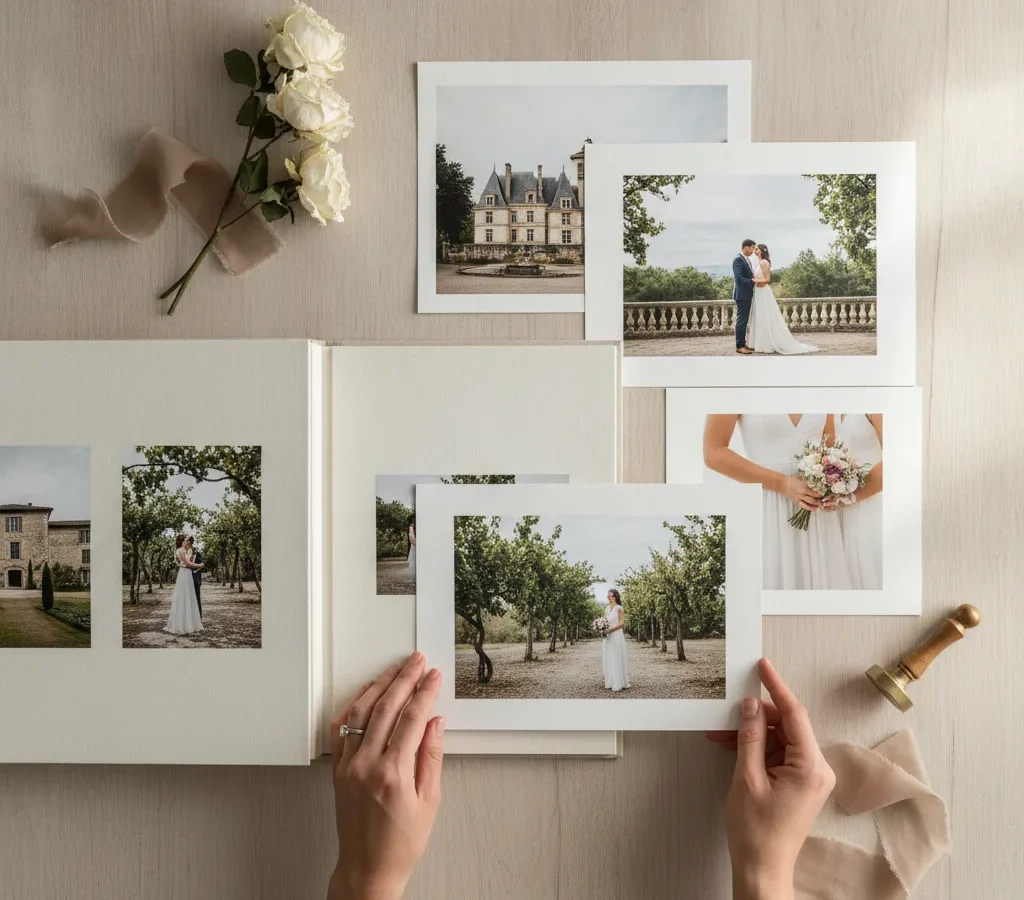
Printing wedding photos on fine art paper is the moment a digital gallery becomes an object you can hold, hang and pass down. After a multi-day celebration in a French chateau or an Italian villa, the images deserve more than a screen and more than a standard drugstore print.
The difference between a commodity print and a museum-quality wedding photo print lies in three things: the fibre of the paper, the chemistry of the ink and the care taken with colour management. This guide explains how those elements work together, how to choose between cotton rag, baryta and luster, and how to prepare your files so the final piece looks exactly like the photograph you fell in love with.
Printing Wedding Photos on Fine Art Paper – 2026 Guide
Reading time: ~11 min
- Why fine art paper suits wedding photography
- Fine art paper vs luster vs glossy
- Cotton rag or baryta: choosing between two fine art philosophies
- Pigment inks, acid-free paper and real archival permanence
- Preparing your files for fine art printing
- How to choose a professional photo lab
- Are fine art wedding prints worth the extra cost
- Our approach at Lino Ludovic
- Making your fine art prints last
- Frequently asked questions
Why fine art paper suits wedding photography
How fine art paper supports wedding photography
Fine art paper is a matte or lightly textured surface, usually made from cotton or other long-lasting fibres, designed for artwork reproduction rather than mass photo printing. Specialist guides consistently describe it as the support of choice for portraits, black and white images and framed enlargements, precisely because it reads as artwork rather than as a snapshot. The surface diffuses light instead of bouncing it back, which means a framed enlargement above a console table stays readable from any angle in the room.
There is also a tactile argument. A heavier sheet has a presence in the hand that a thin resin-coated print never achieves. Paper weight is expressed in GSM, grams per square metre, and papers of 300 GSM and above are commonly associated with fine art and archival printing. That said, weight alone is not a quality marker. Fibre composition, coating, ink compatibility and the way the surface renders skin tones matter far more than the number printed on the box.
For couples who spent a year curating every detail of a weekend in Provence or on Lake Como, this is the logical last step. The welcome party, the rehearsal dinner, the ceremony and the farewell brunch produce a body of work. Fine art reproduction is how that body of work becomes a family archive rather than a folder on a hard drive.
Fine art paper vs luster vs glossy
The most useful comparison for couples is not between brands but between surfaces. Each finish handles contrast, reflection and texture differently, and the right answer depends on the image and on where the print will live.
| Surface | Look | Strengths | Limits | Best use |
|---|---|---|---|---|
| Matte fine art (cotton rag) | Soft, matte, subtly textured | Elegant rendering, almost no glare, tactile feel | Slightly less punchy colour, blacks less dense than baryta | Framed portraits, editorial enlargements, album covers |
| Baryta | Semi gloss, close to a traditional darkroom print | Deep blacks, crisp detail, strong archival reputation | More reflective than matte | Black and white, high contrast images, exhibition pieces |
| Luster | Semi matte with a fine grain | Balanced colour, good detail, reduced reflection | Less distinctive than a true fine art sheet | Album pages, everyday portraits, multi image sets |
| Glossy | High shine, saturated | Maximum contrast and colour intensity | Reflections and fingerprints, difficult behind glass | Very colourful scenes in low light rooms |
Luster is often described as the versatile wedding option because it holds colour and detail without the mirror effect of glossy stock. Fine art paper, by contrast, is the considered choice when a single image is going to be framed, lit and looked at for decades.
Cotton rag or baryta: choosing between two fine art philosophies
Choosing between cotton rag and baryta for wedding prints
The question we hear most often from couples and from their planners is the difference between baryta and cotton rag paper for wedding prints. Baryta papers carry a slightly glossy barium sulphate coating engineered to mimic traditional silver gelatin prints, delivering dense blacks, precise micro detail and a professional, gallery-like presence. Cotton rag is the opposite temperament: a pure matte cotton sheet with a velvety surface that softens contrast and flatters skin.
In practice, we recommend baryta for the graphic, architectural and black and white frames. Think of the chateau facade at dusk, a groom’s portrait in hard side light, the silhouette of a first dance. We recommend cotton rag for the romantic and painterly images, the ones where the light is diffused and the emotion is quiet. A bride in white ruffled silk in front of a gilded mirror, or a guest in a red velvet caftan mid dance under strings of coloured lights, both benefit from the way a matte cotton surface handles warmth and highlight roll off.
Hahnemühle Photo Rag and German Etching are the two references most frequently cited in fine art print comparisons, alongside Canson Infinity, and they illustrate the range well. Photo Rag is smooth enough for detailed portraits, while German Etching carries a pronounced texture better suited to larger, looser compositions. Heavy texture on a close-up face can compete with the retouching and reduce perceived sharpness, which is why texture should always be matched to subject matter.
Bon à savoir
A pronounced paper texture becomes more visible as print size increases. For a framed portrait under 40 cm, a smooth or lightly textured cotton sheet usually renders skin more faithfully than a deeply embossed one.
Pigment inks, acid-free paper and real archival permanence
Archival inks, paper and framing basics
A fine art sheet printed with the wrong ink is not archival. Pigment inks, used in giclée printing and professional fine art labs, are recognised for their superior fade resistance compared with dye-based inks, which dissolve colourant in liquid and degrade faster under light. This is the single most important technical question to ask any lab.
The paper side of the equation is equally specific. Look for the words acid-free, archival, 100% cotton rag or museum-grade, and for a stated permanence standard such as ISO 9706 where the manufacturer provides it. Independent longevity testing, notably the work of Wilhelm Imaging Research, is the usual reference point for display life figures, but those figures always depend on test conditions, lighting, humidity and framing. For that reason we never promise a print will last forever. The honest formulation is this: combined with archival paper, pigment inks, archival mat board and UV-protective glazing, a fine art print is engineered for long-term display.
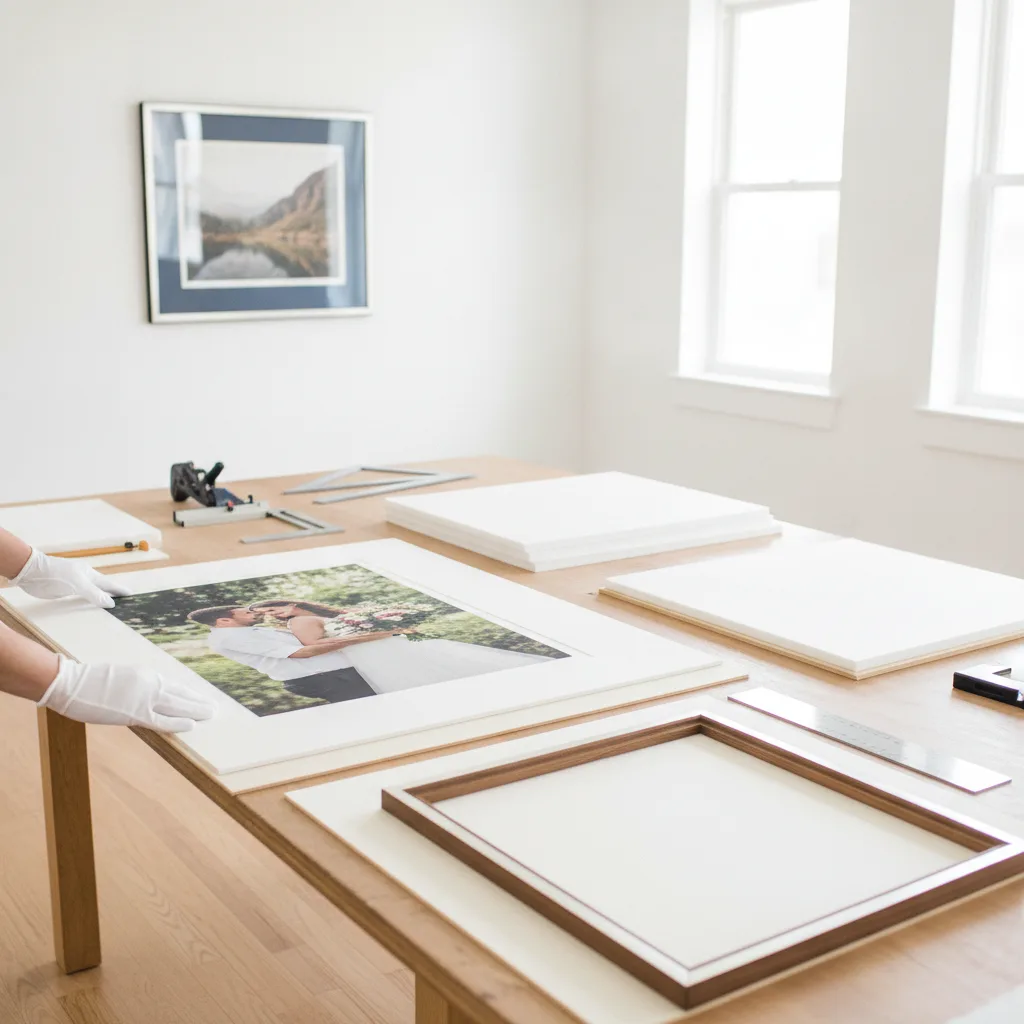
Framing is not a decorative afterthought, it is part of the conservation system.
- Keep prints out of direct sunlight and avoid damp walls or bathrooms
- Use acid-free mats and backing boards
- Handle the surface with clean hands or cotton gloves
- Ask your framer for UV filtering glass or acrylic
A beautiful archival wedding photo print hung opposite a south facing window will still fade faster than the same print in a shaded hallway.
Preparing your files for fine art printing
Fine art print file preparation checklist
Most disappointing prints are file problems, not paper problems. A file that looks luminous on an uncalibrated laptop can print flat and muddy because screens emit light while paper reflects it. Matte fine art papers in particular have a narrower colour gamut and slightly lifted blacks, so shadow detail needs to be checked before output rather than after.
Here is the preparation sequence we follow before any fine art order leaves our studio:
- Calibrate the display, then work in a consistently lit room rather than under changing daylight
- Download the ICC colour profile published by the lab for the exact paper and printer combination, as defined by the International Color Consortium
- Soft proof the image against that profile, checking skin tone rendering, shadow detail and highlight retention, and flag any out of gamut colours
- Target a print resolution around 300 DPI at the final output size, remembering that file resolution, output size and viewing distance are three separate variables
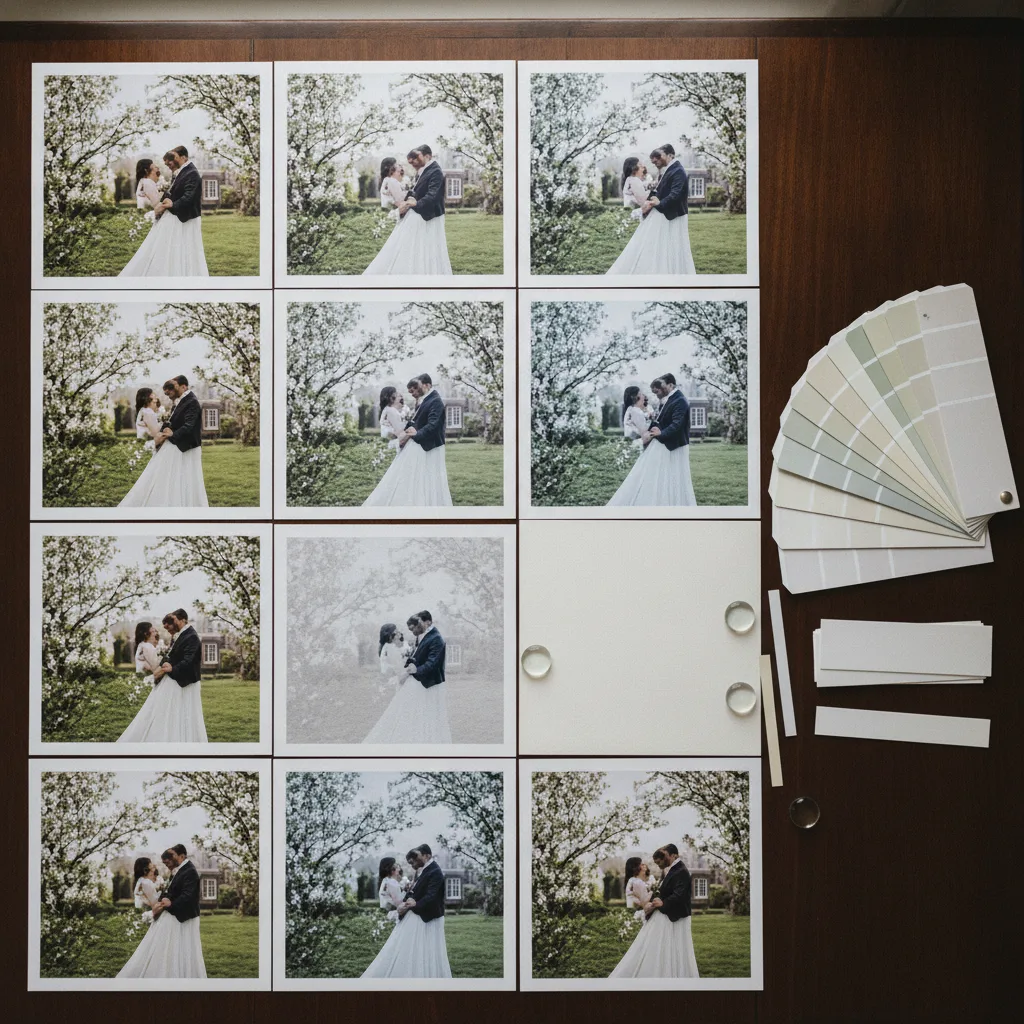
- Order a sample print of one image on two different papers before committing to a series of framed enlargements
That last step is the one couples skip most often and regret most. Comparing the same photograph on cotton rag and on baryta, under the actual lighting of the room where it will hang, settles the debate in thirty seconds.
How to choose a professional photo lab
Evaluating professional fine art photo labs
Where to print wedding photos on fine art paper in the US is a fair question, and the answer depends on whether you want a consumer service or a professional partner. Labs such as WHCC, White House Custom Colour, are regularly cited in vendor comparisons as a reference for fine art papers and high-end albums in the professional photography market, while services like Nations Photo Lab publish detailed paper selection guidance for portrait and wedding work. Treat third party rankings as opinion, then verify the specifics yourself.
| Criterion | What to check |
|---|---|
| Paper stock | Which papers are offered, and are they cotton or baryta |
| Ink type | Whether pigment inks are used |
| Colour management | Whether ICC profiles are published for download |
| Quality control | Whether files receive manual review before printing |
| Sampling | Whether a sample pack is available |
| Sizing | Whether custom sizes and exact trim dimensions are honoured |
| Framing add-ons | Whether mats and UV glazing are offered |
| Shipping and aftercare | How prints are packed, production versus shipping time, and the replacement policy |
Important
Ask your lab to ship flat rather than rolled for any fine art print above A3. Cotton papers hold a curl memory, and a rolled sheet can be difficult to mount cleanly without professional flattening.
Are fine art wedding prints worth the extra cost
Fine art papers cost more than standard photographic stock because of the raw material, the ink, the colour management time and the quality control involved. The right way to evaluate that is not price per print but value per year of display.
A luster print in an album and a museum quality wedding photo print above the fireplace are answering two different briefs, and a sensible plan uses both. We generally suggest luster or a comparable surface for the everyday album pages, and cotton rag or baryta for the handful of images that will be framed, gifted to parents or reproduced at large scale.
This is also where our fine art albums, handcrafted in France, come in. An heirloom album is the narrative object, sequencing the welcome party, the ceremony and the farewell brunch into one story, while framed enlargements are the punctuation. Couples who commission both tend to be the ones still opening the album ten years later. You can see how we sequence a full weekend across our portfolio, and the same editorial logic guides how we select images for print.
Our approach at Lino Ludovic
We photograph with the final print in mind, not only the gallery. Exposure, colour and retouching decisions are made so that skin tones hold on matte cotton and so that shadow detail survives the transition from screen to paper.
For couples travelling from California to France or Italy, we handle the print specification conversation in plain English, advise on paper for each selected image, and coordinate with your planner or designer when framed pieces are part of a larger interior project. If you would like to discuss a print or album commission, you can reach us.
Making your fine art prints last
Printing wedding photos on fine art paper is a craft decision as much as a purchase. Choose the surface for the image rather than the other way round, insist on pigment inks and acid-free stock, manage colour properly with ICC profiles and soft proofing, order a sample before you commit, and frame with UV-protective glazing and archival mat board. Do those five things and the photographs from your weekend in Europe will still look considered, luminous and intentional long after the last thank you note has been sent.
Preserving your wedding photographs with fine art printing
Printing wedding photos on fine art paper is ultimately about intention: selecting a handful of images that deserve museum-quality treatment, working with a lab that uses pigment inks and archival stock, and framing them so they can be enjoyed without damage. When those pieces are paired with a well-designed album for the full story, you end up with a set of objects that feel as considered as the celebration itself, and that can be shared, displayed and passed down confidently.
FAQ – Frequently asked questions
Can I print the same image on fine art paper twice and get an identical result years apart?
Not exactly. Paper batches, printer firmware and ink formulations evolve over time, so a reprint made several years later may differ slightly. If a matched set matters to you, for instance a triptych or a pair of parent gifts, order all pieces in the same production run.
Does fine art paper work for colour reception images or only for black and white?
It works for both, but the rendering differs. Matte cotton softens saturation, which can be an advantage for candlelit dinners and warm florals, while high energy colour scenes with strong contrast often gain from baryta or luster. When in doubt, proof one colour frame and one black and white frame on each paper.
Should a print be signed or numbered?
For a private wedding commission it is optional, but many couples appreciate a discreet signature and date on the back of the mount rather than on the image itself. Use a pencil or an archival pigment pen so the marking does not migrate into the paper fibres over time.
How should prints be stored if they are not framed immediately?
Keep them flat in an acid-free portfolio box with interleaving tissue, in a dry room with stable temperature. Avoid attics, basements and plastic sleeves that can trap humidity against the surface.
Can you print images taken by another photographer on fine art paper?
Print rights depend on the licence granted by the original photographer, so always check your contract first. When we handle printing for our own couples, colour management and file preparation are included in the process from capture through to final delivery.