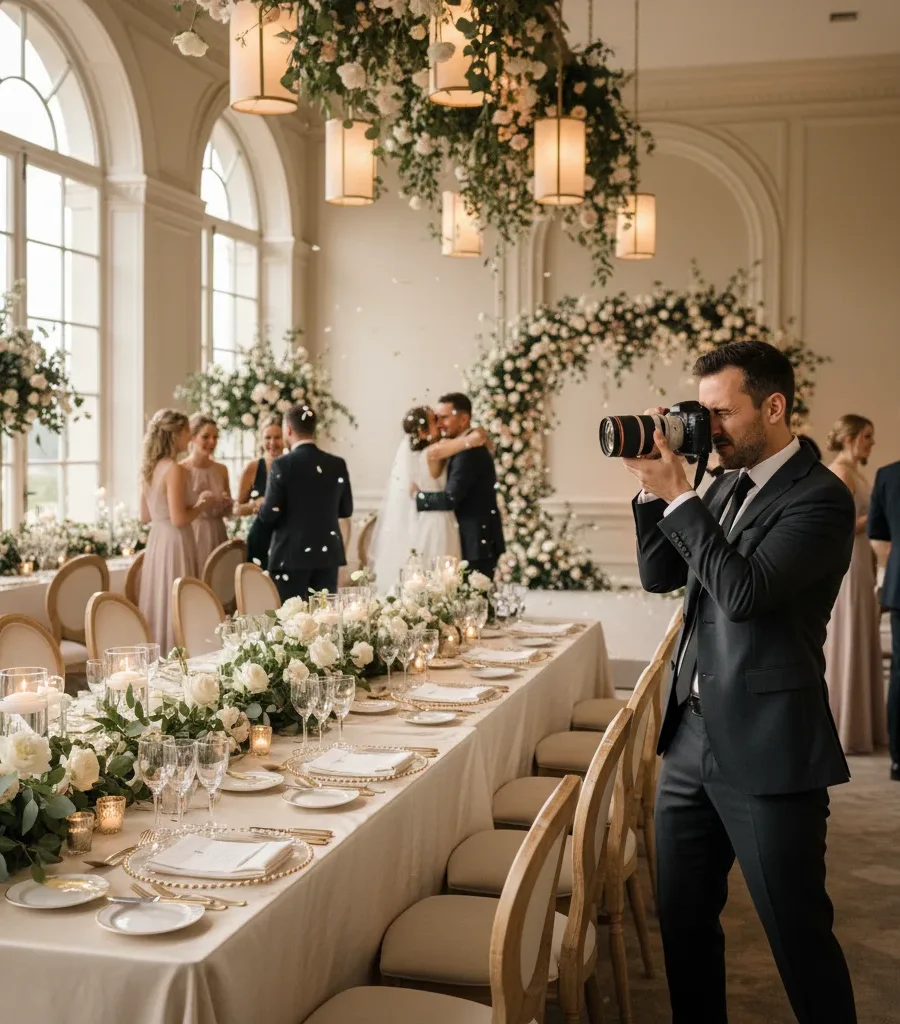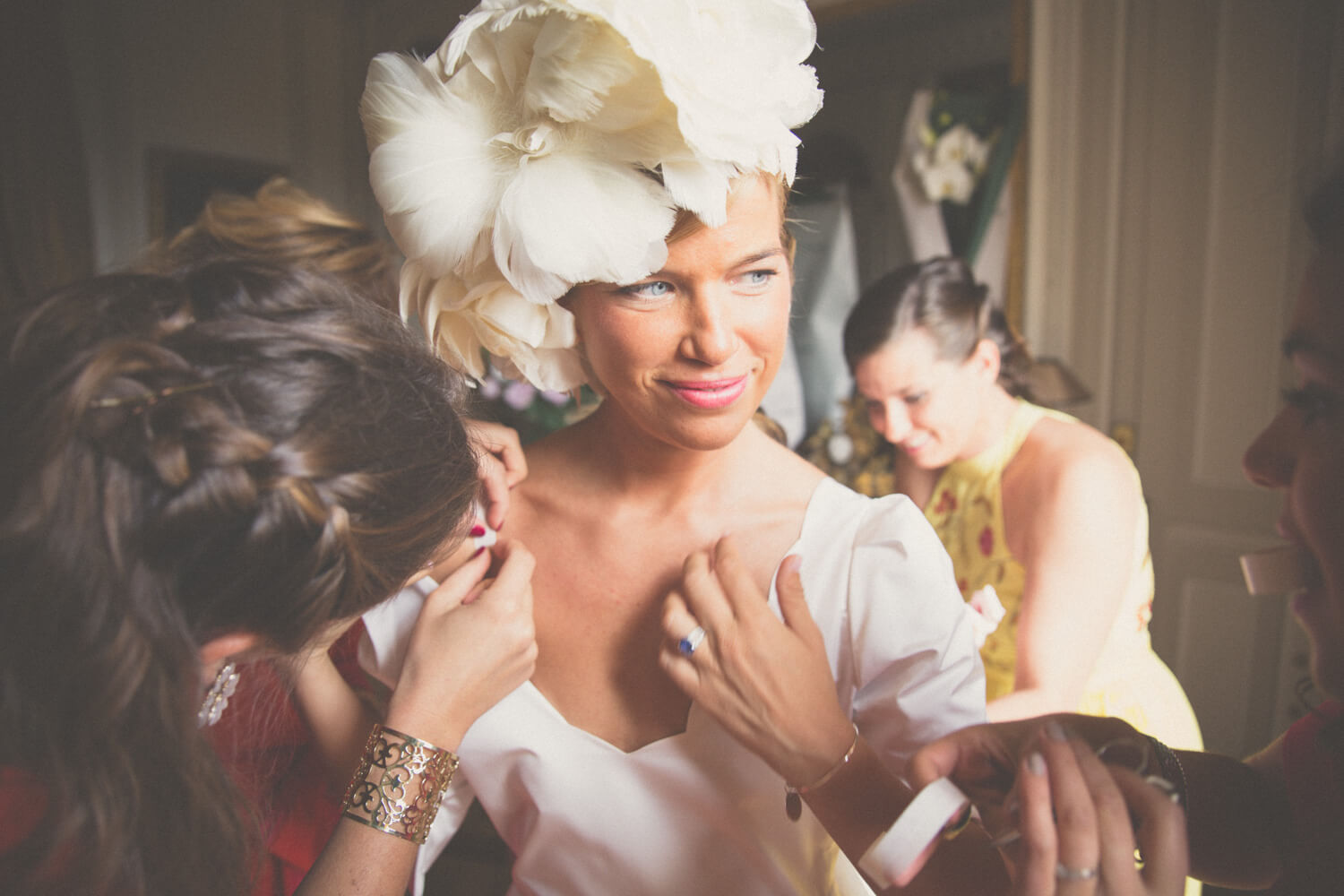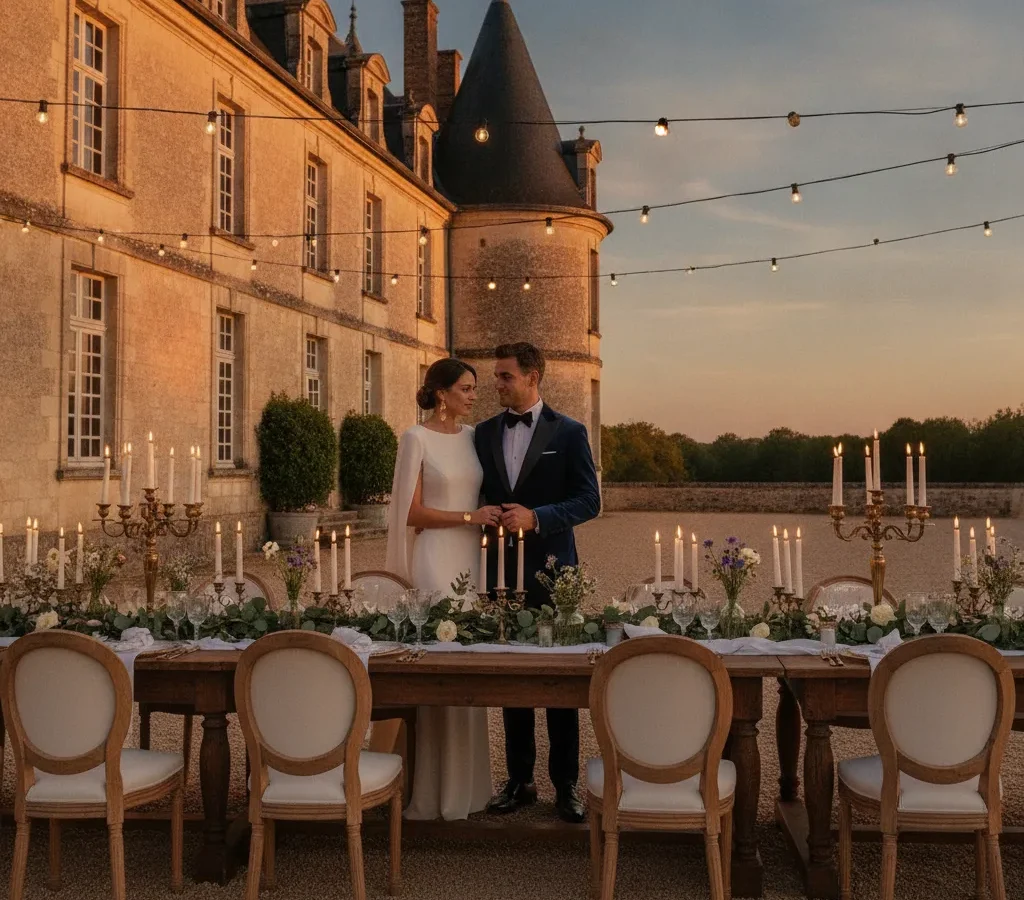
French wedding traditions offer a rich framework for couples who want a celebration that feels refined, romantic, and deeply rooted in culture, whether in France or at a destination abroad.
Introduction
Planning a destination wedding in France means stepping into one of the world's most storied wedding cultures, one that has shaped ideas of romance, elegance, and celebration for centuries. Yet for American couples, navigating French wedding customs can feel both exciting and overwhelming. Which traditions are worth keeping? Which ones translate beautifully to a modern, international celebration?
As a photographer who has documented weddings across French châteaux, the Riviera, and the Provençal countryside, I have seen firsthand how the right blend of French wedding traditions for a modern couple can transform a beautiful event into something truly unforgettable. This article walks you through five customs worth incorporating into your celebration, and explains why each one creates extraordinary moments, both to live and to remember.
5 French wedding traditions to Incorporate into Your Modern Destination Wedding
Temps de lecture : ~12 min
- What Makes a French Wedding Genuinely Different
- Embrace the Dual Ceremony Structure
- Host a Vin d'Honneur in Place of a Standard Cocktail Hour
- Serve a Croquembouche Instead of a Traditional Tiered Cake
- Reinterpret the Cortège for a Modern Procession
- Plan for an All-Night Celebration with a Late-Night Onion Soup
- How These French Wedding Traditions Work Together as a Visual Story
- FAQ
- Choosing French Wedding Traditions That Give Your Day Meaning
What Makes a French Wedding Genuinely Different
Family-centered celebrations and witnesses
Before diving into specific traditions, it helps to understand the underlying philosophy. French weddings are not bride-centric spectacles. They are family gatherings built around gastronomy, intimacy, and the slow, deliberate pleasure of being together. There are no large bridesmaid squads lining the aisle. Instead, couples choose two to eight témoins (witnesses) who play both a legal and deeply personal role, signing the marriage register and standing beside the couple throughout the day.
The importance of the civil ceremony at the mairie
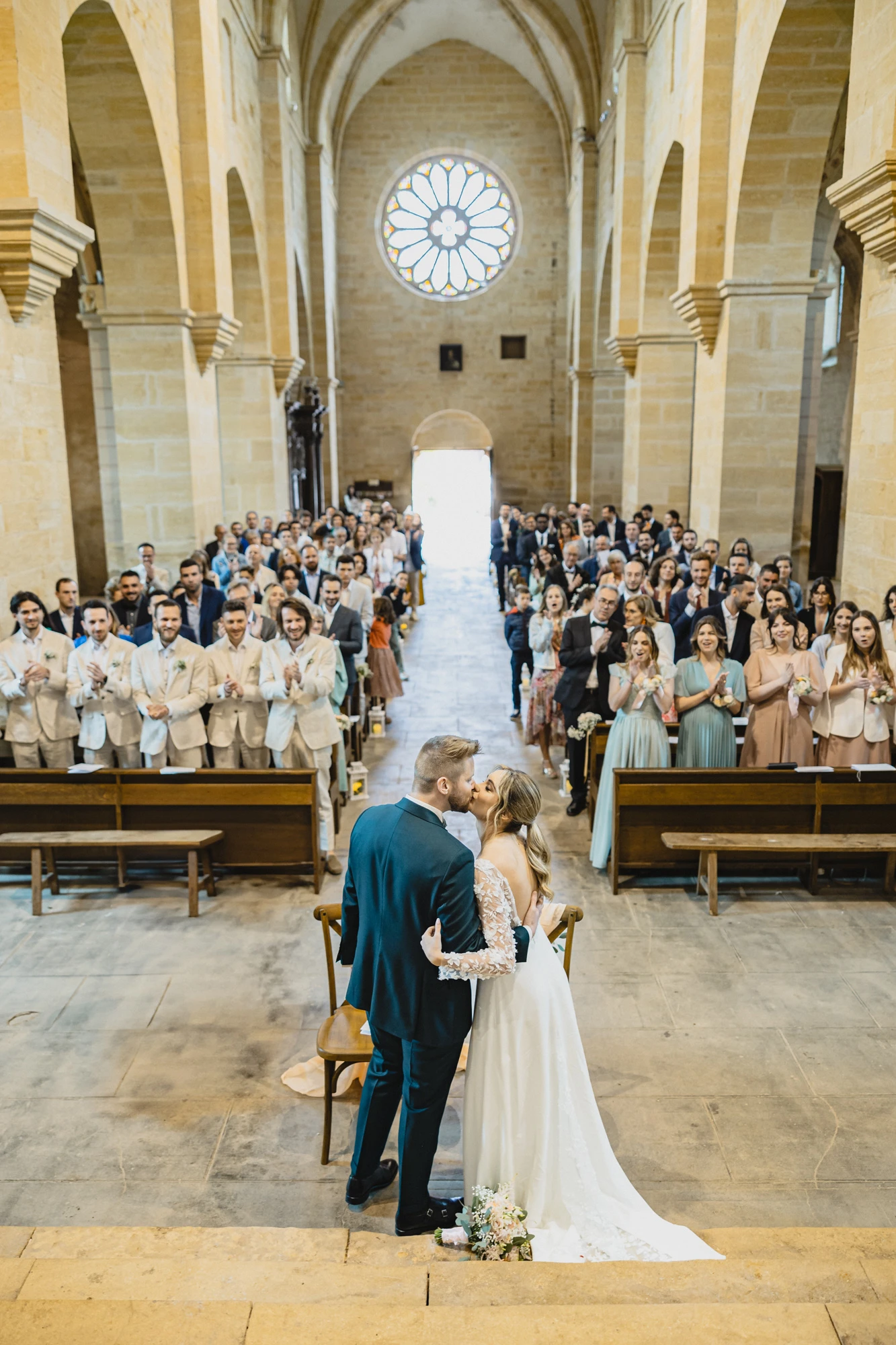
French law also requires every couple to marry at the mairie (town hall) in a civil ceremony officiated by the mayor. This brief, formal moment, lasting roughly twenty to thirty minutes, is the only legally recognized marriage in France. Many couples then add a second symbolic ceremony at a château, in a garden, or within a historic church, giving the day a natural two-act structure that is rich with photographic possibility.
The result is a wedding that unfolds over many hours, sometimes well past dawn, with multiple settings, shifting light, and layers of emotion. For a couple flying their closest friends and family across the Atlantic, that kind of extended celebration is not just beautiful. It is deeply meaningful.
Embrace the Dual Ceremony Structure
Designing your civil ceremony
One of the most elegant French wedding traditions a modern couple can adopt is the dual ceremony format. The civil ceremony at the mairie offers something quietly powerful: a stripped-back, architectural setting, a moment of legal gravity, and the kind of candid family reactions that no staged setup can replicate. Many couples choose a minimal, tailored look for this part of the day, reserving more elaborate attire for the symbolic ceremony that follows.
Personalizing your symbolic ceremony
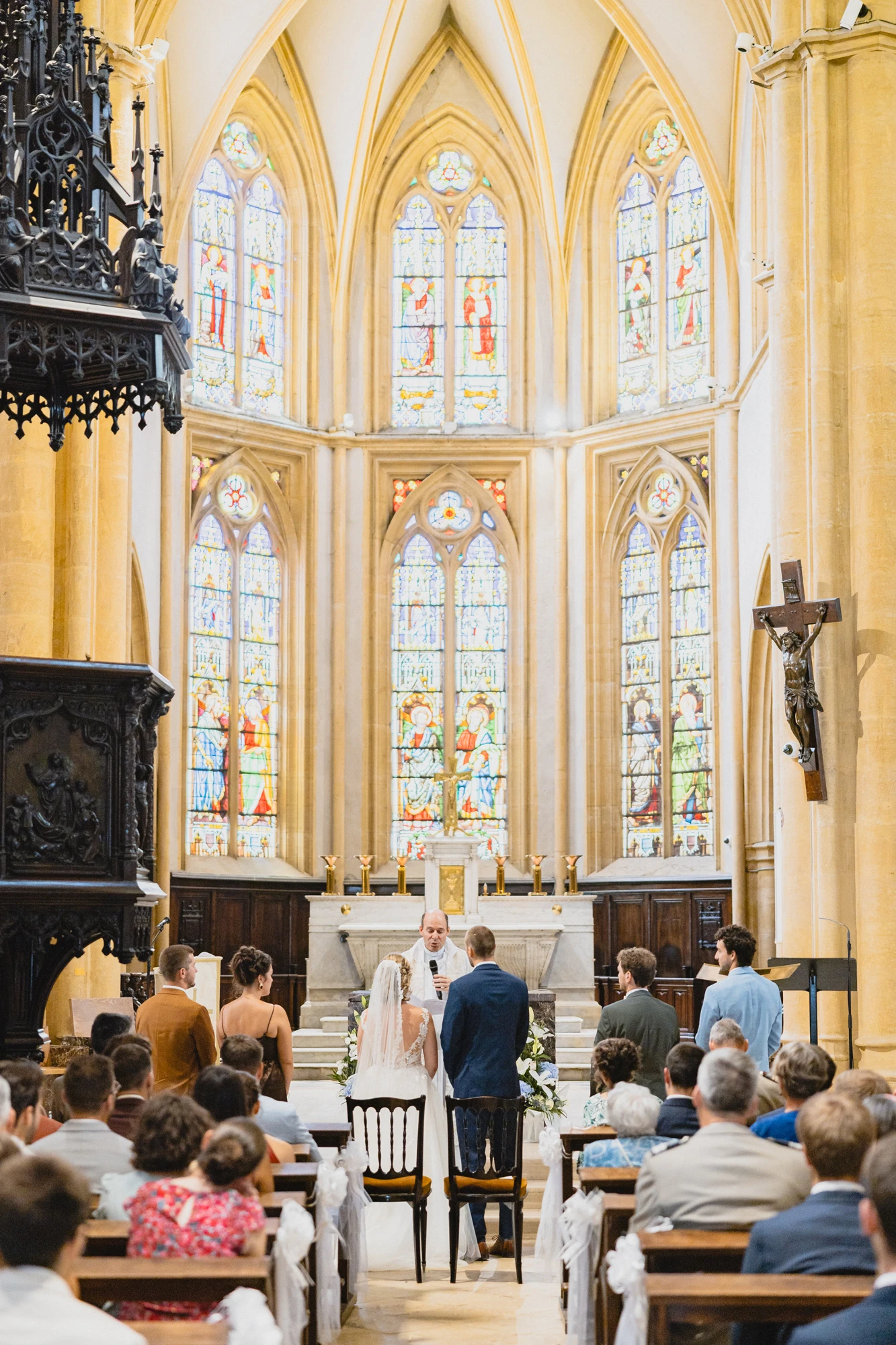
That second ceremony, held at your venue of choice, is where personal vows, cultural rituals, and aesthetic vision come together. For American couples marrying in France, this structure solves a common dilemma: how to satisfy both the legal requirements and the desire for a ceremony that feels entirely your own. A secular officiant, a bilingual ceremony, or even a ceremony that weaves in elements from two different cultures all fit naturally within this framework.
From a visual storytelling perspective, two ceremonies mean two distinct emotional arcs. The mairie offers documentary intimacy. The château or garden ceremony delivers grandeur. Together, they give your photographer the material to build a complete narrative of your day.
Host a Vin d'Honneur in Place of a Standard Cocktail Hour
Who to invite to the vin d'honneur
The vin d'honneur is the French equivalent of a cocktail reception, but with a distinctly different spirit. Held immediately after the ceremony, it is traditionally open to a wider circle of guests than the main dinner, giving colleagues, neighbors, and extended family a chance to raise a glass and offer their wishes before the evening begins in earnest.
Design and atmosphere that photograph beautifully
In its modern form, the vin d'honneur has evolved into one of the most visually compelling parts of a French wedding. Imagine a château terrace bathed in late afternoon light, guests gathered around grazing tables and Champagne trays, the couple moving freely through a crowd of people who love them. It is relaxed, convivial, and genuinely French in its approach to hospitality.
For couples planning a destination wedding, this tradition also serves a practical purpose. It creates a natural window for group portraits and candid interactions, while the couple takes a brief moment apart for portraits during golden hour. The guestbook, a small gift or donation box, and the first toasts all happen here, creating a series of quiet, meaningful details worth documenting.
Serve a Croquembouche Instead of a Traditional Tiered Cake
Modern ways to present the croquembouche
Few French wedding traditions are as visually striking as the croquembouche. This towering construction of caramel-glazed choux pastries has been the centerpiece of French wedding tables for generations, and it remains one of the most photographed elements of a French celebration. Unlike a tiered fondant cake, the croquembouche has texture, height, and a certain architectural drama that reads beautifully in both wide shots and close-up detail work.
Modern couples are finding inventive ways to reinterpret this tradition. Some pair a small contemporary cake with individual choux served at the table. Others commission a croquembouche decorated with fresh flowers, edible gold, or seasonal fruit that mirrors the overall aesthetic of the wedding. Either way, the moment of cutting or presenting the croquembouche is a genuine event within the evening, one that draws guests together and creates spontaneous, joyful reactions.
Styling traditional dragées as favors
Alongside the croquembouche, consider incorporating dragées: sugar-coated almonds traditionally given as wedding favors. Five almonds per guest, each symbolizing health, wealth, happiness, fertility, and longevity. Styled in minimalist linen pouches or hand-blown glass jars, they become one of the most quietly elegant details on a French wedding table, and one of the most photogenic.
Reinterpret the Cortège for a Modern Procession
The French bridal procession, known as le cortège, follows a specific tradition: the groom walks down the aisle with his mother, followed by the witnesses, and the bride enters last on her father's arm. It is a family-centered ritual that immediately signals something different from the American model, where the bride is often the sole focus of the entrance.
Modern couples are finding beautiful ways to adapt this structure. Both partners may enter together, walking toward each other from opposite ends of the aisle. Same-sex couples naturally reshape the procession to reflect their own dynamic. Multi-cultural weddings might blend the French cortège with elements from another tradition entirely. What remains constant is the emphasis on family as active participants rather than passive audience members.
In some rural French regions, children traditionally stretch white ribbons across the path of the newlyweds, which the bride then cuts to symbolize overcoming the obstacles ahead. A more contemporary version involves passing through a white sheet with a heart cut out, held by guests on either side. It is playful, symbolic, and creates one of those spontaneous bursts of laughter and movement that make for extraordinary photographs.
Plan for an All-Night Celebration with a Late-Night Onion Soup
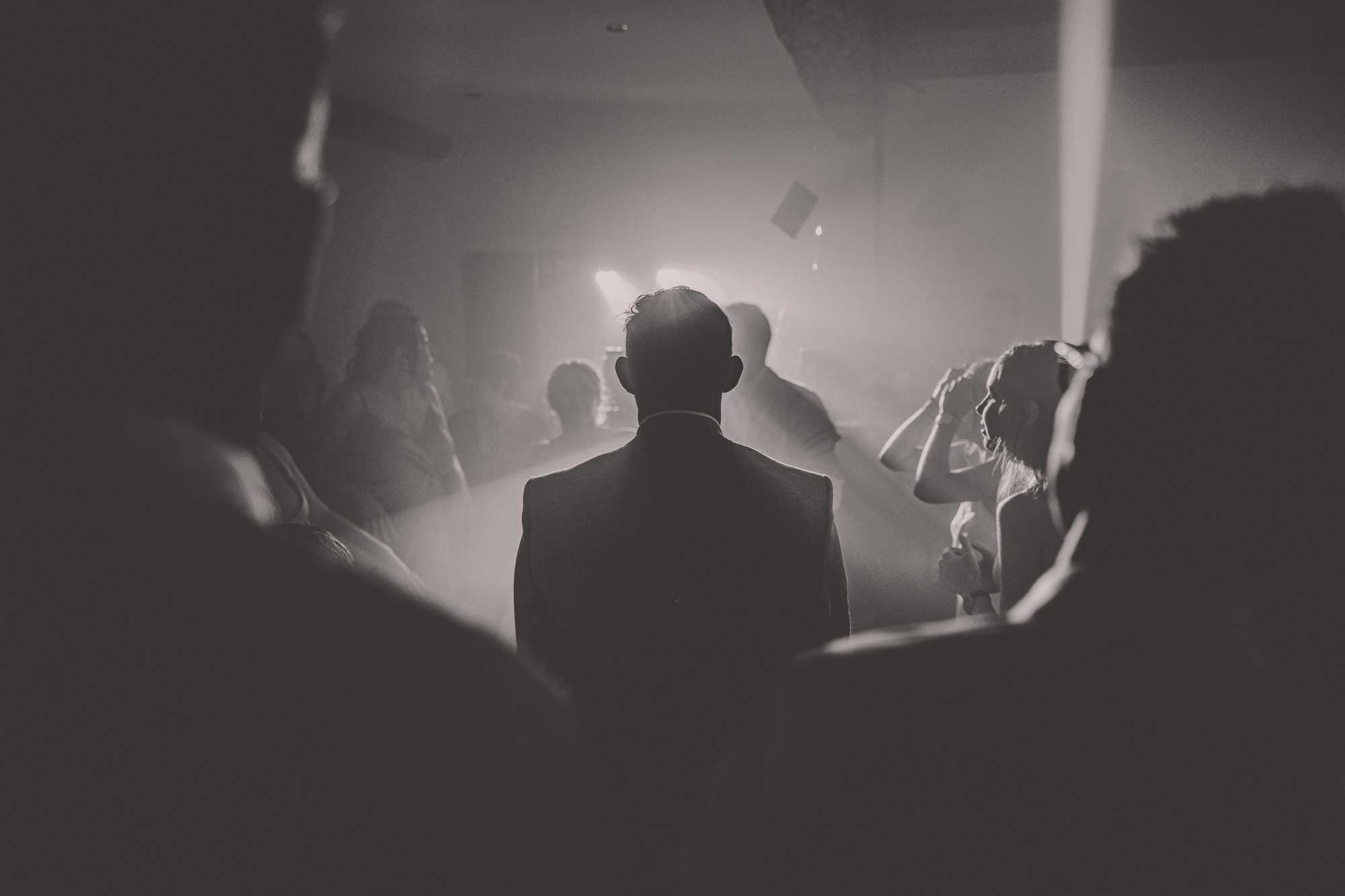
Perhaps the most distinctly French wedding tradition of all is the sheer length of the celebration. French weddings do not end at midnight. They continue until four, five, or even seven in the morning, with dancing that builds rather than fades as the hours pass. This is not incidental. It is a deliberate expression of the French commitment to savoring time together.
The late-night onion soup, traditionally served in the early hours of the morning, is both a practical and symbolic gesture. It is a warm, comforting dish designed to sustain guests who have been dancing for hours, and it carries a kind of tender humor that is very French. The moment the soup arrives, something shifts in the atmosphere. The formality of the evening dissolves entirely, and what remains is pure, unguarded joy.
For couples planning a multi-day destination wedding, this tradition connects naturally to the broader arc of the weekend. The energy of the all-night celebration flows directly into the Farewell Brunch the following morning, where guests gather still glowing from the night before. It is the kind of continuity that transforms a wedding into a genuine experience, one that guests talk about for years.
The following elements are worth planning specifically to allow full coverage of the evening:
- Confirm with your photographer that their package includes late-night coverage through at least the first dance and the late-night service
- Brief your planner on the lighting transition from dinner to dancing, as the shift from candlelight to dance floor creates very different photographic conditions
- Consider a dedicated "end of night" portrait session with just the two of you, when the venue is quieter and the atmosphere is at its most intimate
How These French Wedding Traditions Work Together as a Visual Story
What makes French wedding customs so compelling for modern destination couples is not any single tradition in isolation. It is the way they layer together across the course of a day and night to create a complete, emotionally rich story. The civil ceremony at the mairie establishes the legal and familial gravity of the occasion. The symbolic ceremony at the château delivers the visual grandeur. The vin d'honneur opens the celebration to warmth and spontaneity. The seated dinner, the croquembouche, the dragées, and the all-night dancing each add a new chapter.
For a photographer working a French destination wedding, this structure is a gift. Every tradition creates its own distinct light, its own emotional register, its own cast of characters. The job is not to manufacture moments but to be present, attentive, and culturally fluent enough to recognize them as they unfold.
Sample French wedding day timeline
| Moment | Approximate timing | Key tradition or focus |
|---|---|---|
| Civil ceremony at the mairie | Late morning or early afternoon | Legal vows, signatures with témoins, intimate family reactions |
| Symbolic ceremony | Afternoon | Personal vows, cultural rituals, bespoke design at château, garden, or church |
| Vin d'honneur | Late afternoon to early evening | Extended guest list, Champagne, canapés, relaxed portraits and candid moments |
| Seated dinner & croquembouche | Evening | Multi-course meal, toasts, presentation of croquembouche and dragées |
| Dancing & late-night onion soup | Late night to early morning | All-night celebration, dance floor, comforting soup served before dawn |
FAQ
Do American couples need to follow French legal requirements to incorporate these traditions?
No. If you are marrying legally in the United States and hosting a symbolic celebration in France, you are free to incorporate any or all of these customs without being subject to French civil law. Many couples choose to have their legal ceremony at home and then host a full French-style symbolic wedding abroad, complete with a vin d'honneur, croquembouche, and all-night dancing.
How do I find a photographer who understands both French traditions and American expectations?
Look for a photographer who is based in France or Italy, speaks fluent English, and has documented multi-day destination weddings for international couples. Review their portfolio specifically for evidence of both editorial elegance and genuine emotional storytelling. The two are not mutually exclusive, but not every photographer achieves both. A strong client experience, from the first consultation through album delivery, matters as much as the images themselves.
Are these traditions appropriate for a non-French venue, such as a Tuscan villa or a Riviera estate?
Absolutely. French wedding customs travel well because they are rooted in values, gastronomy, family, and the art of celebration, rather than in specific geography. A croquembouche is just as beautiful on a terrace above Lake Como as it is in a Norman château. The vin d'honneur works equally well in a Provençal garden or a Florentine courtyard. What matters is the intention behind each tradition and the care with which it is woven into the overall design of the day.
How far in advance should we discuss these traditions with our planner and photographer?
Ideally, these conversations happen during the initial planning phase, at least twelve to eighteen months before the wedding. Your photographer needs to understand the full structure of the day, including both ceremonies, the vin d'honneur timing, and the anticipated end time, in order to plan coverage, manage equipment, and coordinate with the rest of the vendor team. The earlier these details are established, the more seamlessly everyone can work together.
Choosing French Wedding Traditions That Give Your Day Meaning
Incorporating French wedding traditions into a modern destination celebration is not about replicating the past. It is about choosing the customs that resonate most deeply and allowing them to shape the rhythm and feeling of your day. Whether that means a candlelit all-night reception, a croquembouche towering over a stone table, or a cortège that honors both families in a new way, each of these traditions offers something that no décor element alone can provide: genuine meaning, rooted in centuries of French culture.
If you are beginning to plan your European celebration and want to explore how these moments can be documented with the elegance and emotional depth they deserve, discover the approach at Lino Ludovic.