There is a moment, weeks after the last guest has flown home, when the excitement of a destination wedding begins to settle into memory. The flowers have faded, the champagne is long gone, and what remains is something far more durable: the photographs and, ultimately, the album that will be Handcrafted in France.
Yet even a gallery of stunning images lives in a screen, fragile and intangible. A handcrafted album made in France transforms those images into a physical object built to outlast generations. This is not a photo book ordered from an online printer. It is a work of art, produced by hand in a French atelier, shaped by a tradition that predates photography itself.
Handcrafted in France | Inside a Fine Art Album Atelier
Reading time: ~12 min
- The French Bookbinding Tradition Behind Every Handcrafted Album
- What Separates a Handcrafted French Atelier Album from a Mass-Produced Photo Book
- The Materials That Define Heirloom Quality
- Inside the Atelier: How a Luxury Photo Album Is Made by Hand
- Why a Handcrafted Album Becomes a Generational Keepsake
- What to Look for When Ordering a Handmade Album from a French Atelier
- The Lino Ludovic Approach to the Handcrafted Album
- A Lasting Legacy for Your Wedding Memories
- Frequently Asked Questions
The French Bookbinding Tradition Behind Every Handcrafted Album
To understand why a handcrafted album made in France carries such weight, it helps to understand the tradition it draws from. France has one of the most distinguished bookbinding lineages in the Western world. The practice of reliure d’art, or fine bookbinding as a recognized art form, has been cultivated in French ateliers for centuries. The Bibliothèque nationale de France holds some of the most extraordinary examples of this craft, volumes whose covers were tooled, gilded, and stitched by hand with a precision that modern machinery still struggles to replicate.
This heritage did not disappear. It evolved. In the 1850s in France, photography was still very much a handcrafted medium, closer to cuisine than science, with photographers relying on technical treatises like cookbooks and adapting processes individually.
The same principles that governed the binding of royal manuscripts now inform how a master bookbinder constructs the spine of a wedding album. The Compagnons du Devoir, the storied French artisan guild system, continues to train craftspeople in these techniques, ensuring that knowledge is transmitted through direct apprenticeship rather than instruction manuals. When a French atelier produces a photo album today, it is drawing on hundreds of years of accumulated savoir-faire.
The Entreprise du Patrimoine Vivant label, awarded by the French state, recognizes workshops that embody this living heritage. Ateliers working with photographic bookbinding that carry this distinction offer a verifiable guarantee of exceptional craft. It is one of the clearest signals that you are dealing with a workshop where quality is not a marketing claim but a measurable standard.
What Separates a Handcrafted French Atelier Album from a Mass-Produced Photo Book
The difference is not simply aesthetic. It is structural, material, and philosophical.
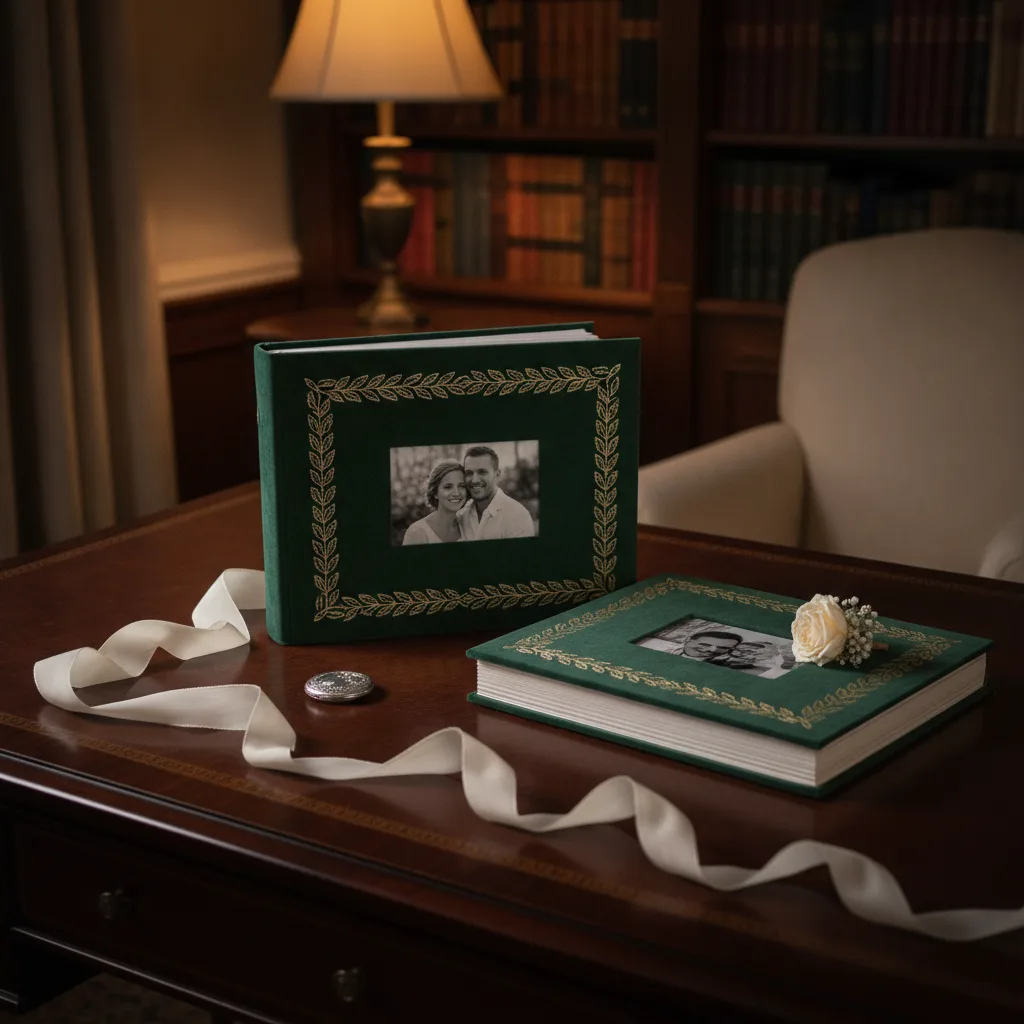
A mass-produced photo book is assembled by automated machinery in a matter of hours. Pages are printed on digital presses, glued together, and bound with a machine-applied cover. The result can look appealing on screen, but it is engineered for speed and margin, not permanence. The adhesives used may yellow over time, the pages can warp with humidity, and the cover materials are typically synthetic laminates chosen for cost rather than character.
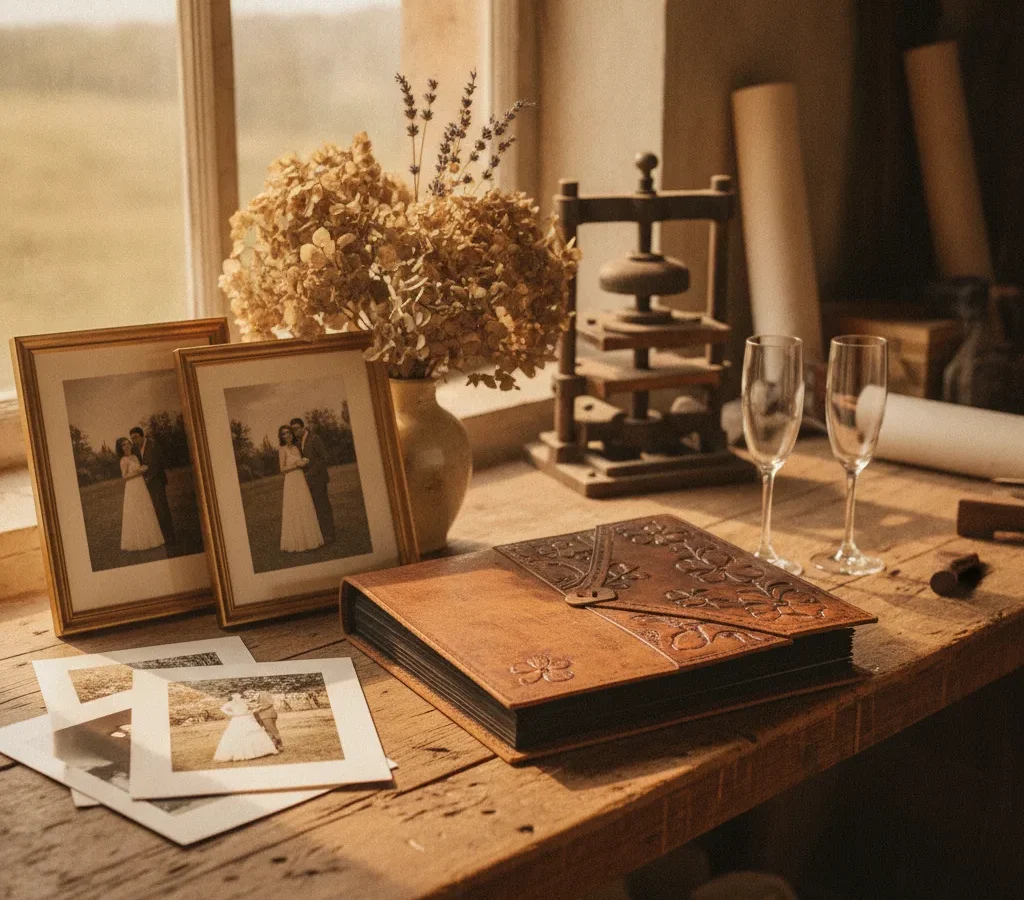
A handcrafted album from a French atelier follows an entirely different logic. Each stage involves a human pair of hands making deliberate decisions. The bookbinder selects the paper, checks the grain direction, and cuts each folio by hand. The lay-flat binding, which allows the album to open completely flat without stressing the spine, is achieved through hand-stitching rather than gluing alone. The cover is wrapped in genuine linen or full-grain leather, often with debossing or gilding applied by a specialist using heated tools. The result is an object with a tactile experience that no screen can communicate: the soft resistance of the pages, the faint scent of archival materials, the weight that signals substance.
This is slow craft. A single album may take several weeks to complete from the moment the final image selection is confirmed. That timeline is not a flaw. It is the cost of doing something properly.
The Materials That Define Heirloom Quality
Materials are where the commitment to permanence becomes concrete. Every component of a luxury handcrafted album made in France is chosen with archival longevity in mind.
The paper used for fine art printing in a French atelier is typically acid-free and meets or exceeds the ISO 9706 standard for archival paper permanence. This standard specifies that paper must resist degradation for a minimum of several hundred years under normal storage conditions. It is the same standard applied to documents intended for national archives. When your photographs are printed on paper that meets this benchmark, the colors, contrast, and detail remain stable across generations.
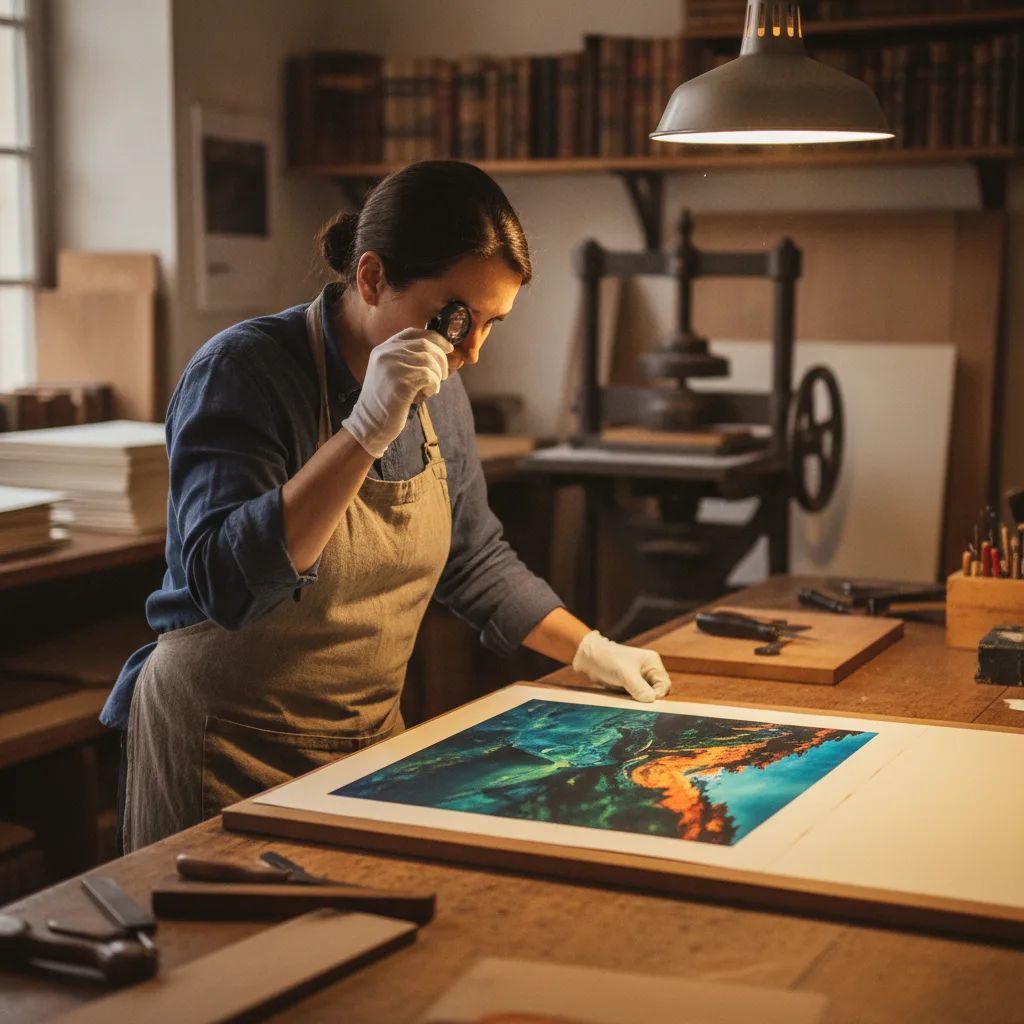
The printing process itself matters as much as the paper. Museum-quality fine art prints produced with pigment-based inks on archival substrates offer a color gamut and longevity that standard inkjet or laser printing cannot match. The prints are assessed by hand before being mounted, and any sheet that does not meet the workshop’s standard is reprinted.
For the cover, French ateliers typically offer a range of materials: natural linen in a spectrum of tones, full-grain leather sourced from tanneries with traceable provenance, and occasionally more unusual materials such as silk or handmade paper for the interior endpapers. Debossing, the technique of pressing a name, date, or motif into the cover material without ink, adds a subtle and lasting personalization. Gilding, applied with gold leaf or gold foil, elevates the cover into something closer to a jewel box than a book.
A comparison of album construction types
| Criterion | Mass-produced photo book | Handcrafted French atelier album |
|---|---|---|
| Production time | 24 to 72 hours | 3 to 6 weeks |
| Paper standard | Commercial digital print stock | Acid-free, ISO 9706 archival paper |
| Binding method | Machine gluing | Hand-stitching and lay-flat binding |
| Cover material | Synthetic laminate or faux leather | Genuine linen, full-grain leather |
| Personalization | Printed text on cover | Debossing, gilding, bespoke fabrication |
| Expected lifespan | 10 to 30 years | 100 years or more with proper storage |
| Artisan involvement | None | Every stage involves a trained craftsperson |
Inside the Atelier: How a Luxury Photo Album Is Made by Hand
From image selection to binding
The process begins long before a single page is printed. In collaboration with the photographer, you select the images that will tell the story of your celebration. This curation is itself a skilled act: the sequencing of photographs across folio pages follows a visual rhythm, balancing full-bleed spreads with quieter moments, architectural details with portraits, wide establishing shots with intimate close-ups.
Once the layout is approved, the prints are produced on the atelier’s fine art printing equipment. Each sheet is handled with cotton gloves to avoid fingerprints on the surface. The bookbinder then cuts the pages to exact dimensions, checks the grain direction of the paper so that it runs parallel to the spine, and begins the hand-stitching process that will hold the pages together over decades.
The cover is prepared separately. If you have chosen a leather cover, the hide is dampened, stretched, and adhered to the boards by hand, with corners folded and tucked in a technique that takes years to master. If debossing or gilding is requested, the craftsperson uses heated brass dies pressed into the material at precisely controlled pressure and temperature. A slight variation in either produces a result that is either too shallow or scorched. This is not a step that can be rushed or automated.
The finished album is inspected under raking light to catch any imperfection before it is wrapped in archival tissue and placed in a custom clamshell box, itself often lined with suede or velvet.
Why a Handcrafted Album Becomes a Generational Keepsake
The word heirloom is used loosely in the luxury market. In the context of a handcrafted French atelier album, it is accurate. An object built from archival materials, bound by hand using techniques refined over centuries, and printed with museum-quality inks does not simply survive. It ages with grace. The linen cover develops a gentle patina. The leather softens. The pages remain crisp and color-accurate because the materials were chosen specifically to resist the chemical processes that cause degradation.
There is also a cultural dimension to provenance that matters to discerning clients. An album made in a French atelier carries the weight of a specific place and a specific tradition. It is not a generic luxury product assembled wherever labor costs are lowest. It is an object with a traceable origin, made by named craftspeople working within a recognized heritage. That story becomes part of the object itself.
For couples who have invested in a destination wedding in France or Italy, this continuity is meaningful. The celebration was rooted in a particular culture, a particular landscape, a particular sense of beauty. The album that documents it should reflect the same values.
What to Look for When Ordering a Handmade Album from a French Atelier
Not every studio that uses the word artisanal produces work that merits the description. Before committing to an album, it is worth asking precise questions.
Key criteria to evaluate before placing your order
- Paper specification: Ask for the paper name, weight, and whether it meets ISO 9706 archival standards.
- Binding method: Confirm that the album uses lay-flat binding achieved through hand-stitching rather than gluing alone.
- Cover material provenance: For leather, ask where the hide originates and whether the tannery has traceable sourcing.
- Production location: Confirm that the album is entirely produced in France, not designed in France and assembled elsewhere.
- Artisan credentials: Ask whether the workshop holds an EPV label or whether its craftspeople trained through the Compagnons du Devoir system or an equivalent recognized apprenticeship.
- Sample album: Any serious atelier will provide a physical sample. If they only offer digital mockups, that is a meaningful signal.
Good to know: The ISO 9706 standard for paper permanence requires that the paper maintain its physical and chemical integrity for a minimum of several hundred years under controlled storage conditions. It is the benchmark used by national archives and museum conservation departments worldwide.
The Lino Ludovic Approach to the Handcrafted Album
At Lino Ludovic, the album is not an afterthought or an optional add-on. It is the final chapter of the visual story created across your entire celebration, from the welcome party and rehearsal dinner through the wedding day and farewell brunch. Every image selected for the album has been chosen because it contributes to a coherent narrative: the architecture of the venue, the emotion in a glance, the precision of a floral installation, the energy of the dance floor.
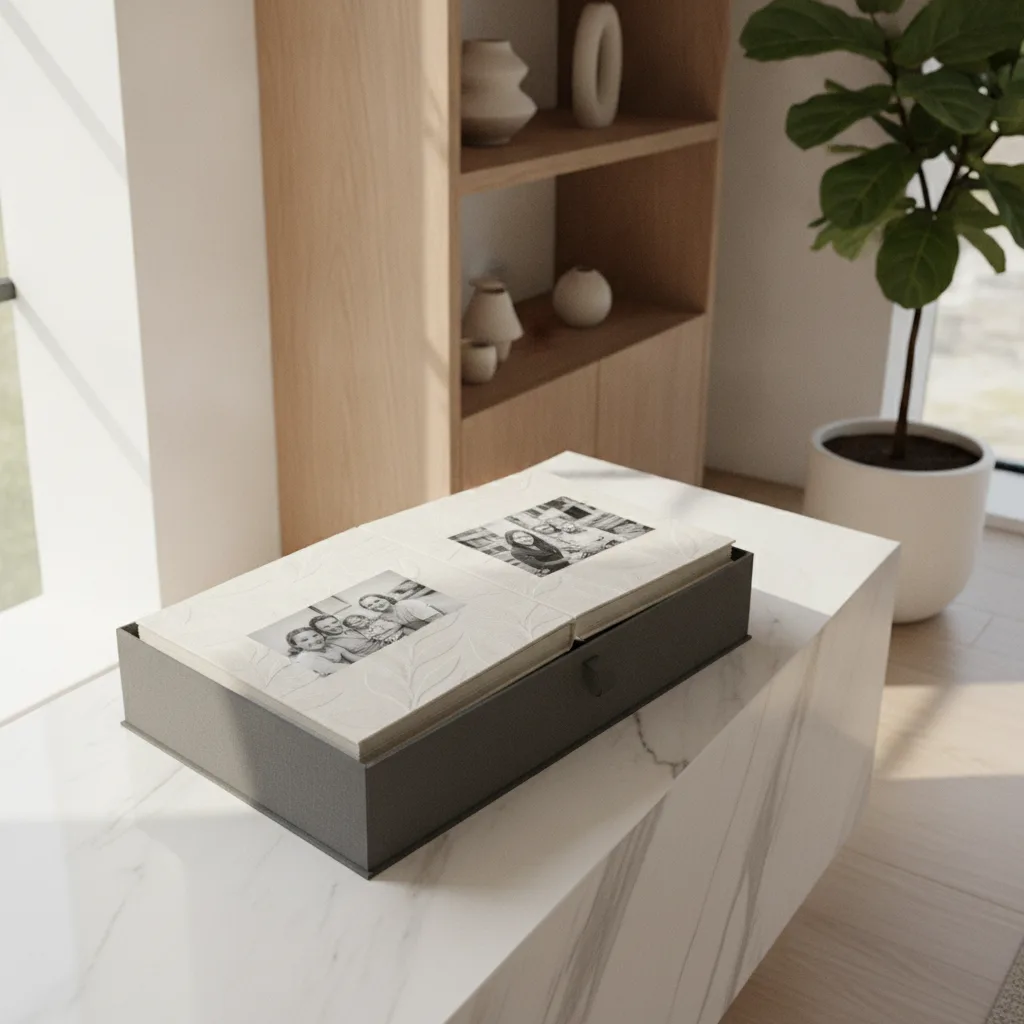
The albums offered through luxury wedding photography and album production are handcrafted in France by an atelier whose work meets the standards described throughout this article. The materials are archival, the binding is hand-stitched, and the cover is finished with the same attention to detail that defines the finest French couture finishing traditions. For couples based in California or across the United States who have traveled to France or Italy for their celebration, this album is the object that will sit on a library shelf and be opened by people who were not yet born when the photographs were taken.
You can explore the full approach to luxury wedding photography and album production at https://www.linoludovic.fr/.
Key takeaway: A handcrafted album made in France is not simply a premium version of a photo book. It is a distinct category of object, produced within a living craft tradition, using materials selected for archival permanence. The difference becomes most apparent not on delivery day, but thirty years later.
A Lasting Legacy for Your Wedding Memories
A destination wedding in France or Italy represents one of the most considered investments a couple makes. The venue, the flowers, the cuisine, the music: each element is chosen with care and carries a significant cost. The photographs that document this celebration deserve an equally considered final form. A handcrafted album made in France, produced in a genuine atelier by craftspeople working within a centuries-old tradition, is the only format that matches the scale of the occasion. It is an object built not for the moment of opening, but for every opening that follows across a lifetime and beyond.
FAQ
How should I store a handcrafted French photo album to preserve it for future generations?
Store the album flat in its clamshell box, away from direct sunlight and sources of humidity. A stable environment between 60 and 70 degrees Fahrenheit with relative humidity between 30 and 50 percent is ideal. Avoid storing it in attics or basements where temperature fluctuations are significant.
Can I add more pages to my album after it has been delivered?
In most cases, a hand-bound album cannot have pages added after the binding is complete without compromising the structural integrity of the spine. This is one reason why the curation and layout approval process before production is so important. Discuss your needs with the atelier before finalizing the page count.
What is the difference between debossing and embossing on a cover?
Debossing presses the design into the cover material, creating a recessed impression. Embossing raises the design above the surface. For luxury linen and leather covers, debossing is the more common and typically more elegant choice, as it integrates the personalization into the material rather than adding relief that can catch and wear over time.
Is a handcrafted French album appropriate as a gift for parents of the couple?
Absolutely. Many couples commission a smaller parent album alongside their own, using a curated selection of the same images. These companion albums follow the same production standards and are often presented as the most meaningful gift a couple can offer to the families who supported their celebration.
How far in advance should I plan my album order after the wedding?
Given that production in a French atelier takes three to six weeks once the layout is approved, and that the image selection and design process itself requires time, it is realistic to expect the album to be delivered two to four months after the wedding. Planning for this timeline from the outset, rather than treating it as urgent, ensures the process remains enjoyable rather than pressured.