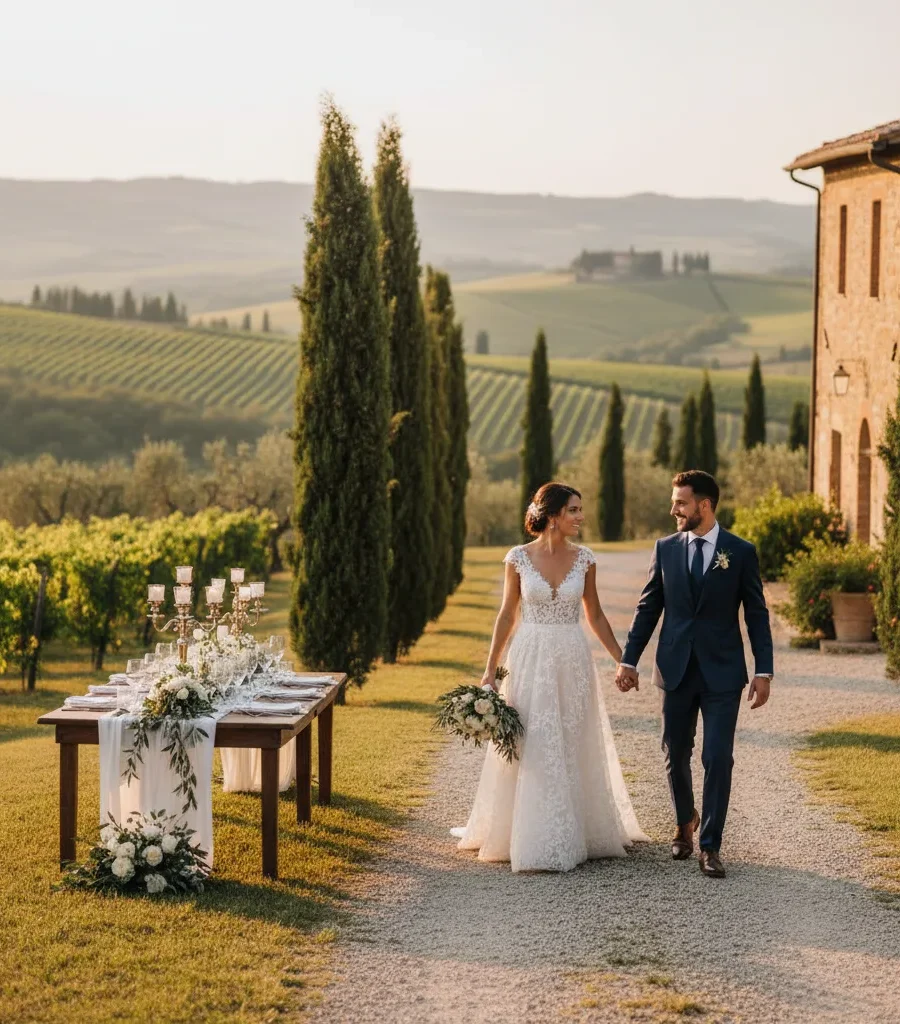
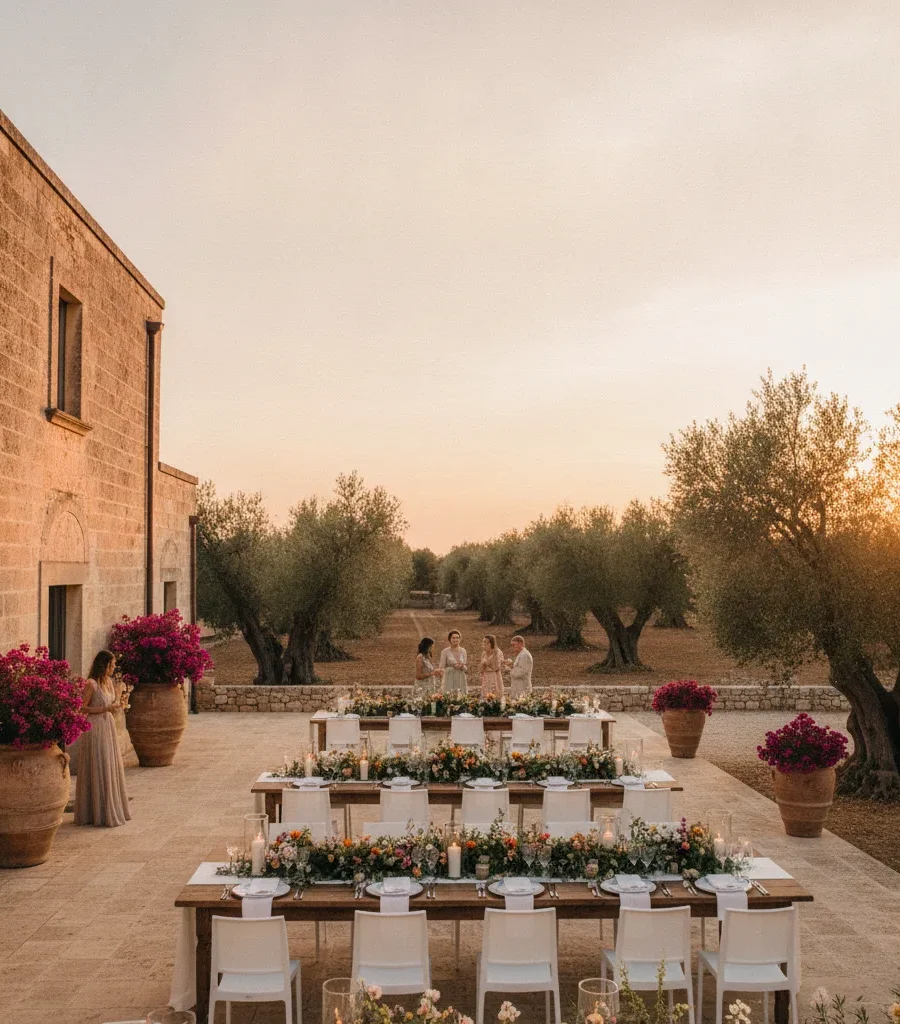
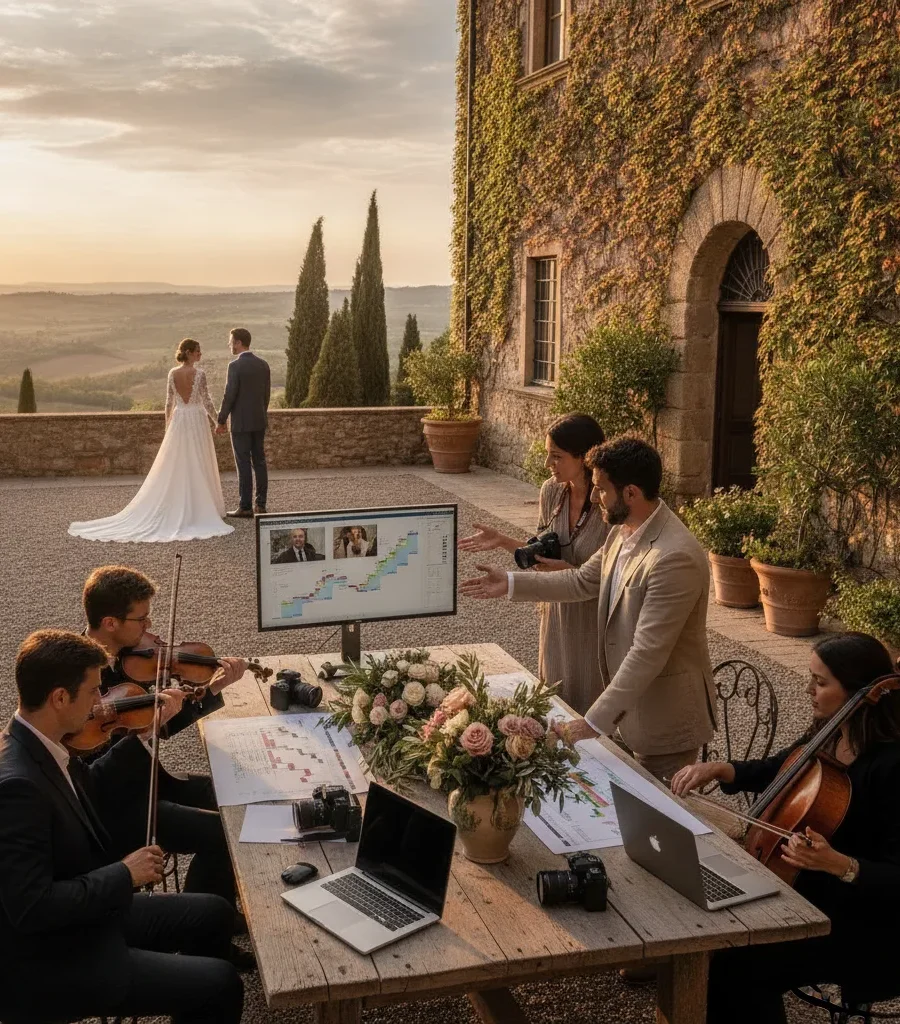
Your clients have secured the château in Provence or the villa on Lake Como, the floral designer is booked, and the guest list spans two continents. Then the venue coordinator mentions the luxury wedding permits France Italy details that will shape the event: a strict music curfew, a sound limiter on the terrace, and a ban on drones over the gardens.
For US planners, luxury wedding permits France Italy are often the least visible part of the production and the most likely to reshape a carefully built timeline. This guide explains the rules that surprise American teams most, so you can plan around them well before the welcome dinner.
Luxury Wedding Permits in France and Italy – 2026 Guide
- Why luxury wedding permits France Italy catch US planners off guard
- Legal vs symbolic wedding in France for Americans
- Nulla osta for American couples marrying in Italy
- Venue contracts, château wedding photography rules and heritage sites
- European wedding noise ordinances and curfews
- Wedding drone permit France Italy
- France vs Italy at a glance
- Privacy, GDPR, model release and image-use rights
- Destination wedding planner checklist Europe
- Planning ahead with luxury wedding permits in France and Italy
- FAQ
Temps de lecture : 8 minutes
Why luxury wedding permits France Italy catch US planners off guard
In the United States, a venue contract and a marriage license usually cover most of the legal ground. In Europe, the picture is layered. Marriage legality is handled by the Mairie (French town hall) or the Comune (Italian municipality). Event authorization belongs to the estate, the municipality, or a heritage body. Photography and filming rights are often governed separately by the venue contract, and drones fall under aviation rules on top of everything else.
Understanding luxury wedding permits France Italy means keeping these layers distinct. A couple can hold a perfectly valid marriage file and still be refused permission to fly a drone over a listed château. A venue can welcome 150 guests and still require amplified music to end at a set hour.
As a photographer based in France who works alongside US planning teams, we see these details shape multi-day celebrations every season, and we treat them as part of our preparation rather than an afterthought.
Legal vs symbolic wedding in France for Americans
The first question most couples ask is whether they can legally marry in a French château. Official guidance from Service-Public.gouv.fr states that a French civil wedding must be conducted through the relevant Mairie, and the marriage file (dossier de mariage) is submitted to the municipality chosen for the ceremony. France.fr, the official tourism site run by Atout France, adds that at least one member of the couple must provide proof of residence in that municipality for the required period before applying.
Residency rules for a French civil wedding
The key limitation is clear in the official guidance: two foreign nationals who do not live in France generally cannot simply choose any French Mairie for their civil wedding. In practice, this is why most American couples celebrating in Provence, the French Riviera, or a Loire château opt for a symbolic wedding ceremony and complete the legal marriage at home before or after the trip. The symbolic ceremony can be held on the estate lawn or in the orangery, with an officiant of their choosing and no residency requirement.
Documents typically requested by the Mairie
For couples who do qualify for a civil marriage, the document list can include passports, birth certificates, proof of residence, evidence of marital status, and paperwork relating to any previous divorce. Foreign documents may need a certified translation as well as an apostille under the Hague Convention or legalization. The U.S. Embassy in France also explains that some nationalities use a specific certificate of custom or capacity to marry. Requirements vary by municipality, so the Mairie should be contacted early.
Nulla osta for American couples marrying in Italy
Italy is more accessible for non-resident couples, but the paperwork is substantial. Civil marriages are handled by the local Comune, usually through its wedding or civil-status office. The central document is the nulla osta, a declaration confirming that a foreign national is legally free to marry under the law of their country, as referenced in Article 116 of the Italian Civil Code.
Core documents and validity rules for the nulla osta
The nulla osta may be issued by the applicant’s embassy or consulate in Italy, or by a competent authority in the country of origin. Guidance published by the Italian Ministry of Foreign Affairs (Esteri.it) indicates that it may need to be issued within a validity window, commonly no more than six months before the wedding. It may also need to list names, dates and places of birth, residence, citizenship, civil status, and parental information. Documents issued abroad can require translation, legalization, or an apostille.
Timing matters. The Comune of Lucca, in Tuscany, asks couples to contact its wedding office up to six months before the ceremony, and certain formalities take place shortly before the wedding itself. Since every Comune sets its own procedure, an Italian villa wedding permit checklist should always be built around the specific municipality, whether that is a lakeside town on Lake Como or a hilltop village in Tuscany.
Is a symbolic wedding ceremony in France or Italy easier? Usually yes, because it avoids the civil marriage procedure entirely. However, the venue may still require event authorization, insurance, and public-space permits, so the logistics remain real.
Venue contracts, château wedding photography rules and heritage sites
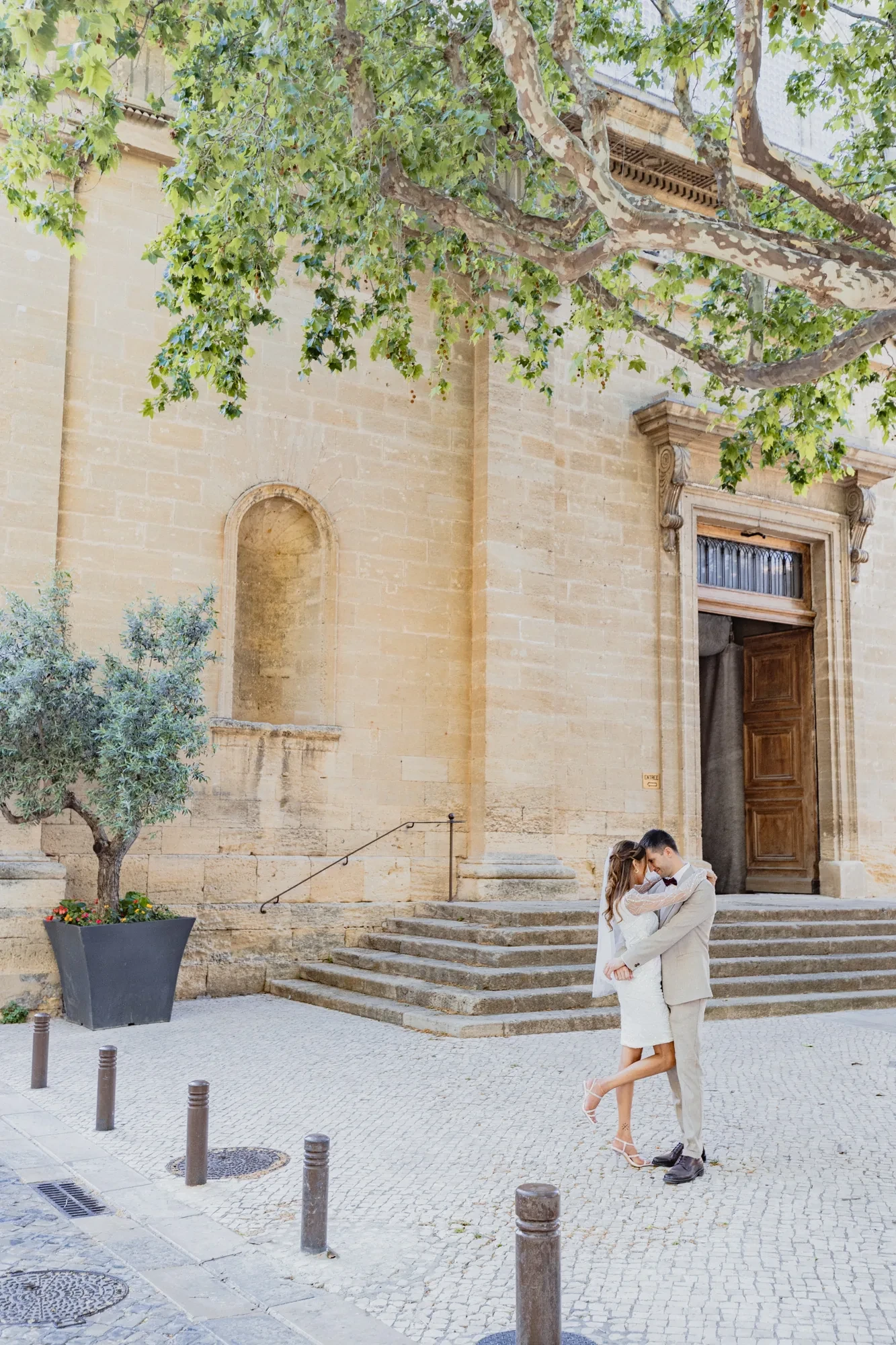
Civil paperwork does not authorize a private event, and a venue booking does not automatically authorize professional photography. Historic estates often have an approved supplier list, and some charge a location fee or require a commercial photography permit when images may be published. When we photographed couples at Château de Matel or Château d’Ailly, early coordination with the venue team made the difference between a smooth day and last-minute restrictions on rooms or lighting.
Key points to confirm in the venue contract
Before signing, we recommend that planners request written confirmation of the following points from the venue:
- Whether external photographers and videographers are permitted, or only approved suppliers
- Authorized areas and access times for preparation, portraits, and breakdown
- Restrictions on flash and lighting, tripods, and stabilizers, along with any equipment list submission deadline
- Rules covering candles, confetti, fireworks, floral installations, and amplified music
- Guest capacity limits, event insurance and liability requirements, and damage deposits
- Whether the photographer may publish images for portfolio, editorial, or award submissions
Heritage site restrictions add another layer. Publicly managed gardens, museums, and listed monuments may require a separate filming application, limit crew size, protect floors and artwork, and assign a site supervisor or venue coordinator who must be present. Editorial portraits often involve lighting and assistants, which is exactly what these rules target.
Important
A venue contract is not always enough to allow your photographer to work and publish images. It should explicitly authorize professional photography, name the access areas, and state any limits on commercial publication.
Public spaces deserve the same attention. Do you need a permit for wedding photos in public places in Italy or France? Often not for a discreet portrait session, but a public-space permit may be required when the shoot is commercial, uses equipment, blocks access, or occupies a square, beach, or viewpoint. The correct contact is the Mairie in France or the Comune in Italy, and sometimes the park authority or local police.
European wedding noise ordinances and curfews
This is the rule that surprises US planners most. Many European venues, particularly historic estates in rural villages or residential lakeside areas, enforce a noise curfew written into the venue contract or set by local rules. Some properties install a sound limiter that cuts power to amplified equipment if a threshold is exceeded, and some restrict amplified music outdoors altogether.

What time does music have to stop at a wedding in France or Italy? There is no single national answer. The wedding music curfew depends on the venue, the municipality, and sometimes the season. Some estates allow the party to continue indoors with doors closed, while others end amplified sound at a fixed hour and allow only acoustic music afterwards. The only reliable source is the venue contract, confirmed in writing.
For a multi-day celebration, this affects more than the reception. A welcome party on a terrace, a rehearsal dinner in a village restaurant, and a late dance floor on the wedding night may each fall under different rules. We plan our coverage of first dances, toasts, and the evening energy around the confirmed curfew, so the most emotional moments of the night are never compressed into the final minutes.
Fireworks, candles and confetti rules
Fireworks are a frequent wish for a château finale, but they typically require authorization beyond the venue’s consent, and many estates simply forbid them because of fire risk or neighbors. Historic interiors may ban open flames, which affects candlelit tablescapes, and gardens may prohibit paper confetti or require biodegradable alternatives. For the photographer, these rules shape the lighting plan and the exit shot, so they should be shared well before the event.
Wedding drone permit France Italy
Can your photographer use a drone at a luxury wedding venue in Europe? Only after checking several separate layers. Drone work involves drone operator registration and pilot qualification, airspace restrictions near airports, military areas, and protected sites, privacy obligations, safe distances from guests and neighboring properties, and insurance. A venue’s permission to photograph does not authorize drone flights, so written approval from the property owner is needed in addition to aviation compliance.
Heritage sites and some Riviera or Lake Como locations sit within restricted zones, which can make aerial coverage impossible regardless of the venue’s enthusiasm. When a drone is not an option, we rely on elevated vantage points, terraces, and architecture to give the same sense of scale.
France vs Italy at a glance
The table below summarizes the main differences planners should anticipate when comparing destination wedding legal requirements in France and Italy.
| Topic | France | Italy |
|---|---|---|
| Civil authority | Mairie (town hall) | Comune, through its wedding or civil-status office |
| Key eligibility issue | Residence connection with the municipality | Procedure of the chosen Comune and foreign-national documentation |
| Core documents | Passport, birth certificate, proof of residence, marital-status documents, translations | Passport, nulla osta or equivalent certificate, civil-status documents, translations and legalization |
| Main challenge for non-residents | Strict limits on where two foreign non-residents can legally marry | Substantial consular and document formalities |
| Symbolic ceremony | The most common route for American couples | Widely practical, subject to venue and municipal rules |
| Photography authorization | Venue or public authority | Venue, Comune, heritage body, or public-space authority |
Privacy, GDPR, model release and image-use rights
Europe applies privacy and data protection rules under the GDPR, which matters when images circulate beyond private delivery. Model release and image-use rights should be clarified before publishing, especially when identifiable guests appear in editorial features, advertising, or campaigns. Some venues also require credit, prior approval, or restrictions on geotagging, and private access routes should never appear in published images.
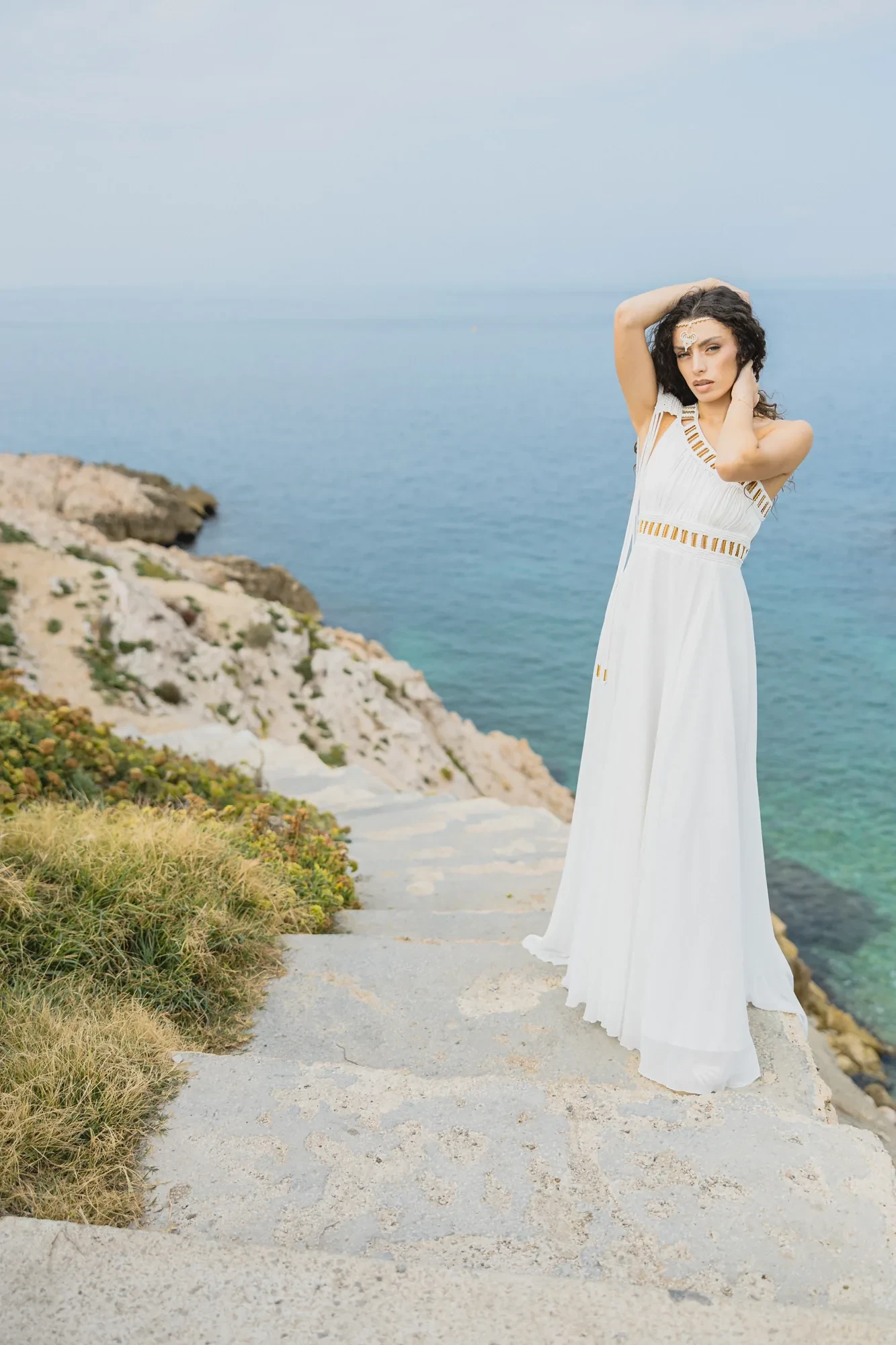
For planners who submit weddings to magazines and blogs, this is worth addressing in contracts from the start. We align with the planning team on publication intentions, so sneak peeks for PR and social media, as well as full editorial submissions, respect both the couple’s wishes and the venue’s terms.
Good to know
Official authorities should always confirm current requirements before contracts are signed or travel is booked. Rules change, and they differ between municipalities within the same region.
Destination wedding planner checklist Europe
A reliable wedding timeline and document deadlines plan starts with the legal question, then moves to the venue, then to vendors. Confirm whether the ceremony is civil or symbolic, then contact the Mairie or Comune, the consulate, and the venue separately. Request the photography policy, the noise curfew, and the rules on fireworks, candles, and drones in writing. Share the photographer’s equipment list and insurance certificate with the venue coordinator, and establish who can approve a last-minute location change on the day.
This is where a European photographer becomes an informed ally rather than a vendor to manage. We know how French and Italian venue coordinators work, we read venue contracts with these points in mind, and we integrate discreetly into the production team, in black tie when the event calls for it. You can see this approach across our portfolio, from Savoie lakesides to Provence villages.
Planning ahead with luxury wedding permits in France and Italy
The regulations behind a European wedding are not obstacles, they are part of the craft. Separating marriage legality, venue authorization, and photography permissions gives US planners a clear framework, and anticipating curfews, drone limits, and image rights protects both the timeline and the final gallery.
If you are planning a multi-day celebration in France or Italy, we would be glad to review the venue’s requirements with you early and build our coverage around them. Our contact page is the best place to start that conversation.
FAQ
Do foreign couples need a permit to get married in France?
They must meet the civil marriage requirements of the relevant Mairie, including the residence condition. Two foreign nationals who do not live in France face strict limits on where a legal marriage can take place, which is why a symbolic ceremony is so common.
Can two Americans legally marry in a French château?
A civil marriage in France takes place under the authority of the Mairie, not the estate. Non-resident American couples generally hold a symbolic ceremony at the château and complete the legal marriage in the United States.
What is a nulla osta and how do I get one as a US citizen?
It is a declaration confirming you are legally free to marry. It may be issued by your embassy or consulate in Italy or by a competent authority at home, and it may need translation, legalization, or an apostille. Check its validity window with the chosen Comune.
Who should handle the equipment list submission for a historic venue?
The photographer prepares the list, and the planner usually forwards it to the venue coordinator with the insurance certificate. Sending it early allows the venue to flag any restriction on lighting, stabilizers, or drones.
Does a symbolic ceremony still need permissions?
Yes. Even without civil formalities, the venue can require event authorization, insurance, and specific rules on music, candles, or guest capacity, and public locations may need a municipal permit.