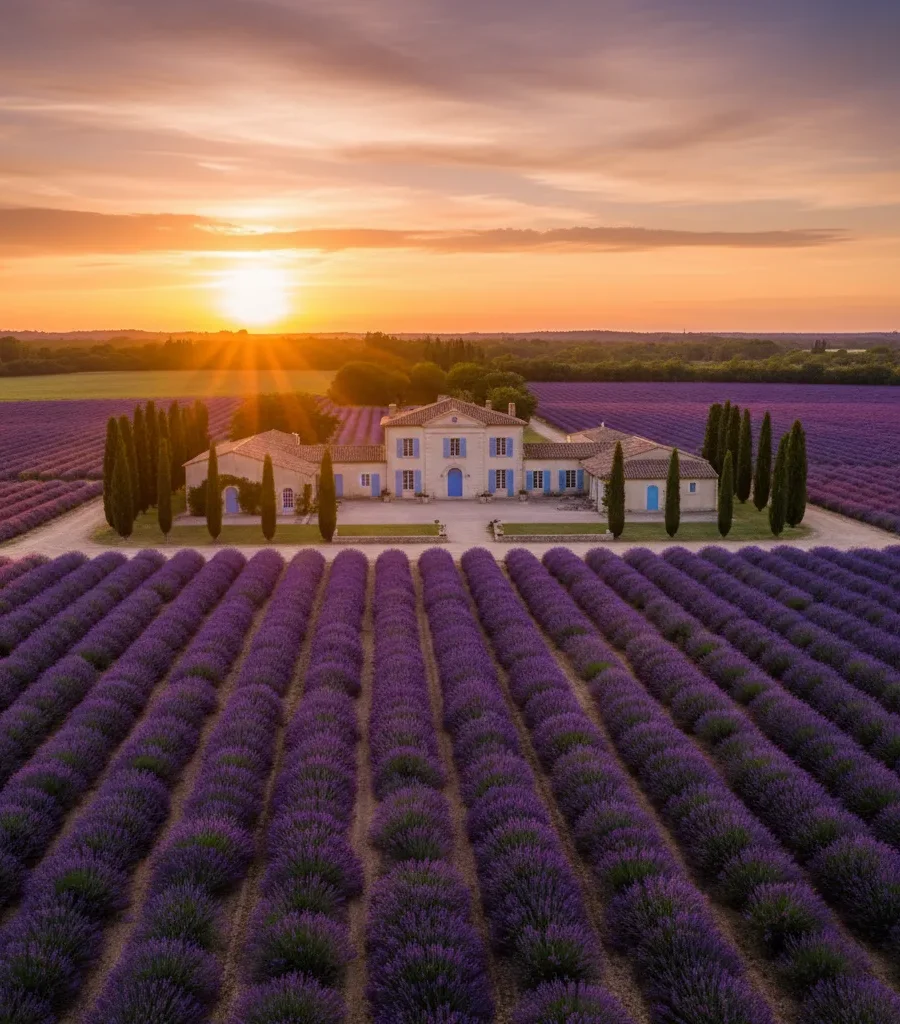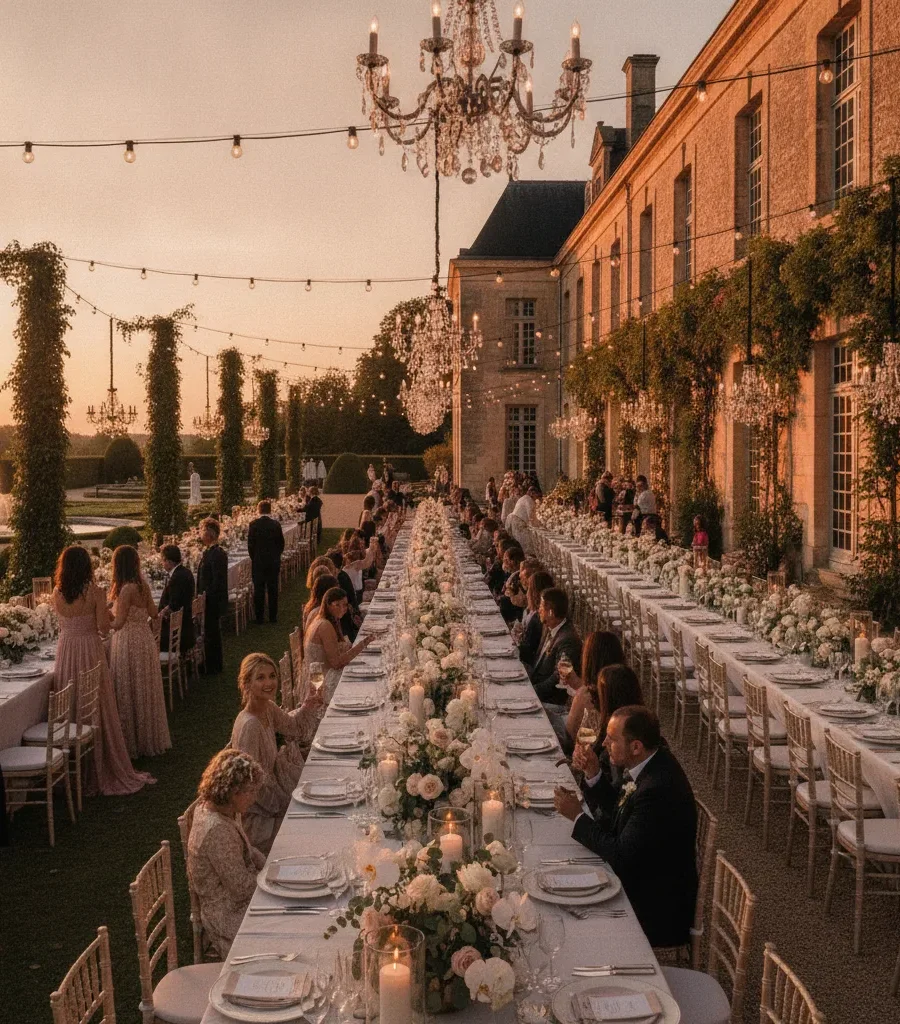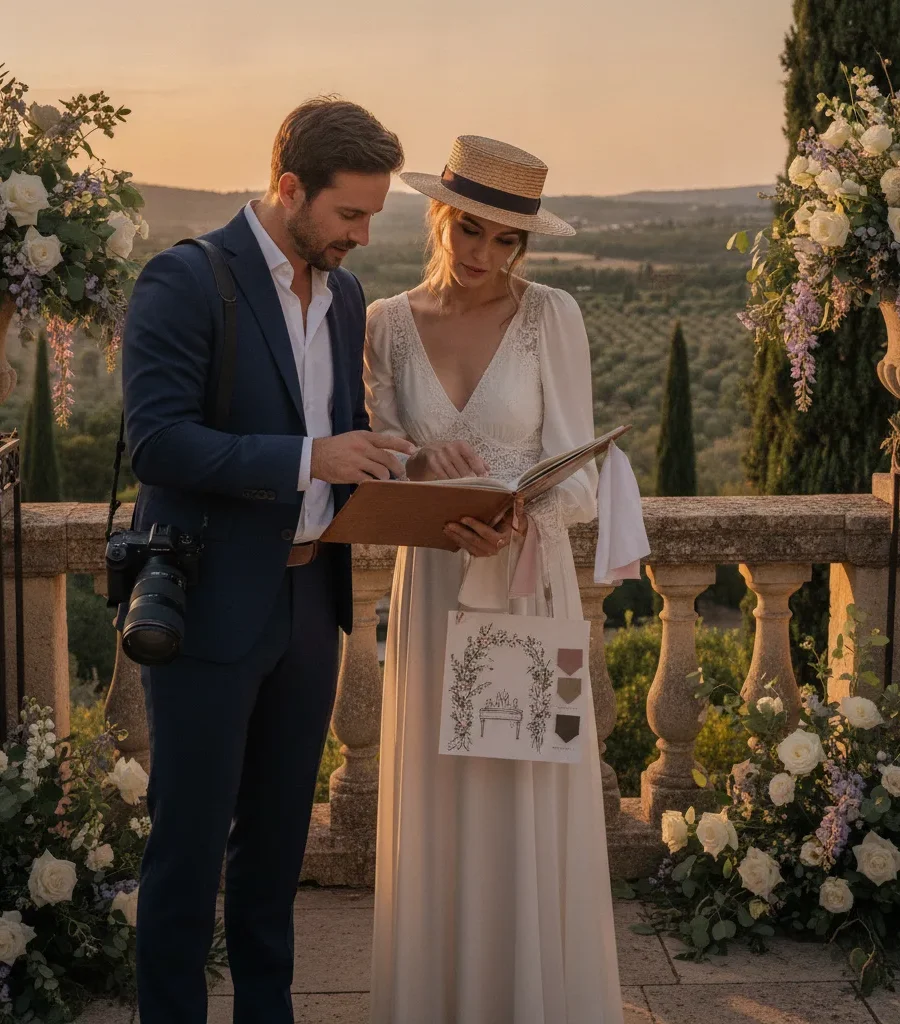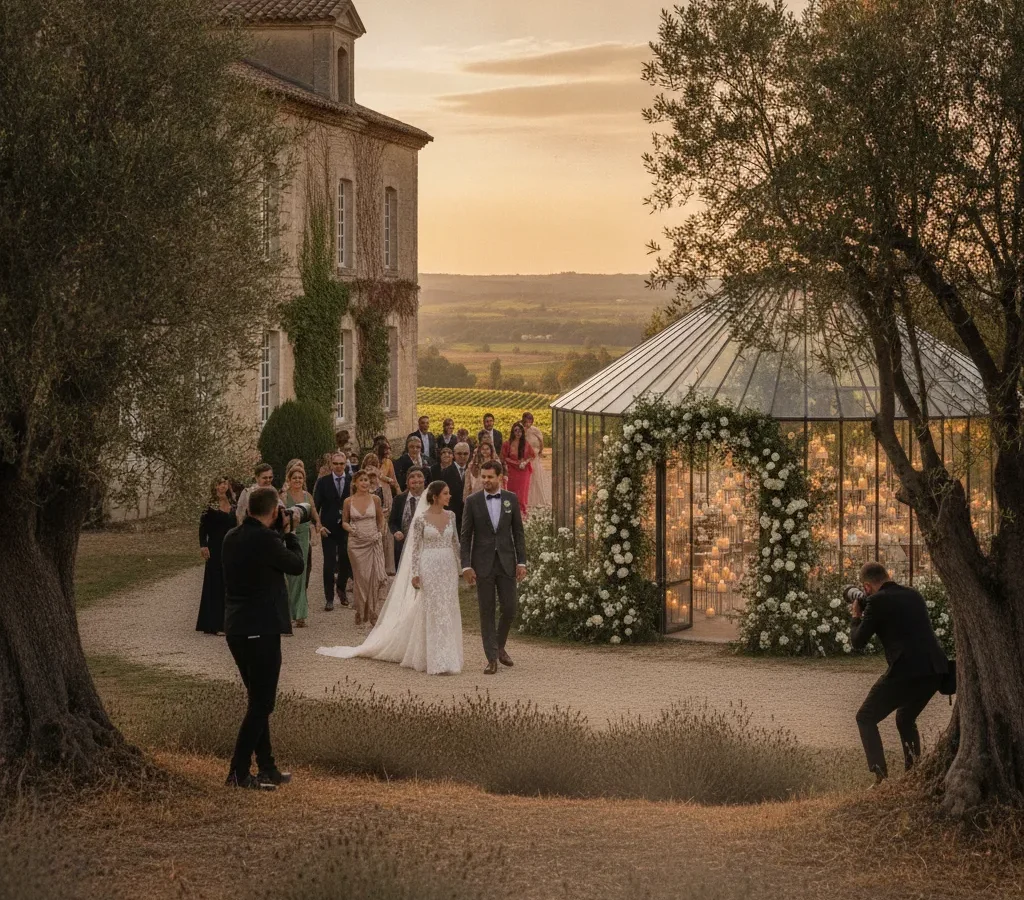
A destination wedding in France or Italy, especially a second shooter destination wedding, rarely unfolds in a single room, at a single hour, in a single light. Guests arrive from three continents, the couple gets ready in two different wings of a chateau, the ceremony sits under olive trees and the reception moves to a candlelit orangery.
In that context, the question of a second shooter destination wedding team stops being a stylistic preference and becomes a question of coverage logic. This guide explains when a second photographer is genuinely justified, when it is not, what it costs, how it is contracted and how planners can advise their clients with clarity.
When to Add a Second Shooter to a Destination Wedding
Reading time: ~12 min
- What a second shooter actually is
- Do you need a second shooter for your destination wedding?
- What a second shooter does during the wedding day
- The real benefits of a second photographer at a destination wedding
- Is a second shooter included in the photography package?
- Second shooter cost, travel and payment terms
- How to hire a second shooter for a destination wedding
- What belongs in a second shooter contract
- Gear and preparation for the day
- When one photographer is genuinely enough
- Frequently asked questions
What a second shooter actually is
Definition of a second shooter
A second shooter is a professional photographer contracted by the lead photographer to cover complementary angles, candid moments, guest reactions and the parts of the day the lead cannot physically be present for. They work under the artistic direction of the lead, follow the same editing style and deliver their files into a single wedding photography workflow.
They are not a co equal photographer with a separate vision, and they are not a public facing vendor. The couple hires the lead, and the lead builds the destination wedding photography team around the demands of the weekend.
The distinction matters for planners. A second shooter integrates into your vendor team silently, arrives briefed, respects the wedding day timeline and never negotiates directly with your client. That is precisely why the selection process, the contract and the pre wedding call carry as much weight as the portfolio.
Do you need a second shooter for your destination wedding?
How to decide if a second shooter is necessary
The honest answer is that it depends entirely on the architecture of the day rather than on the prestige of the venue. A sixty guest elopement style celebration in a Provencal bastide, with one location and a relaxed timeline, can be covered beautifully by one photographer. A three hundred guest weekend across a hilltop village, a private villa and a beach club cannot.
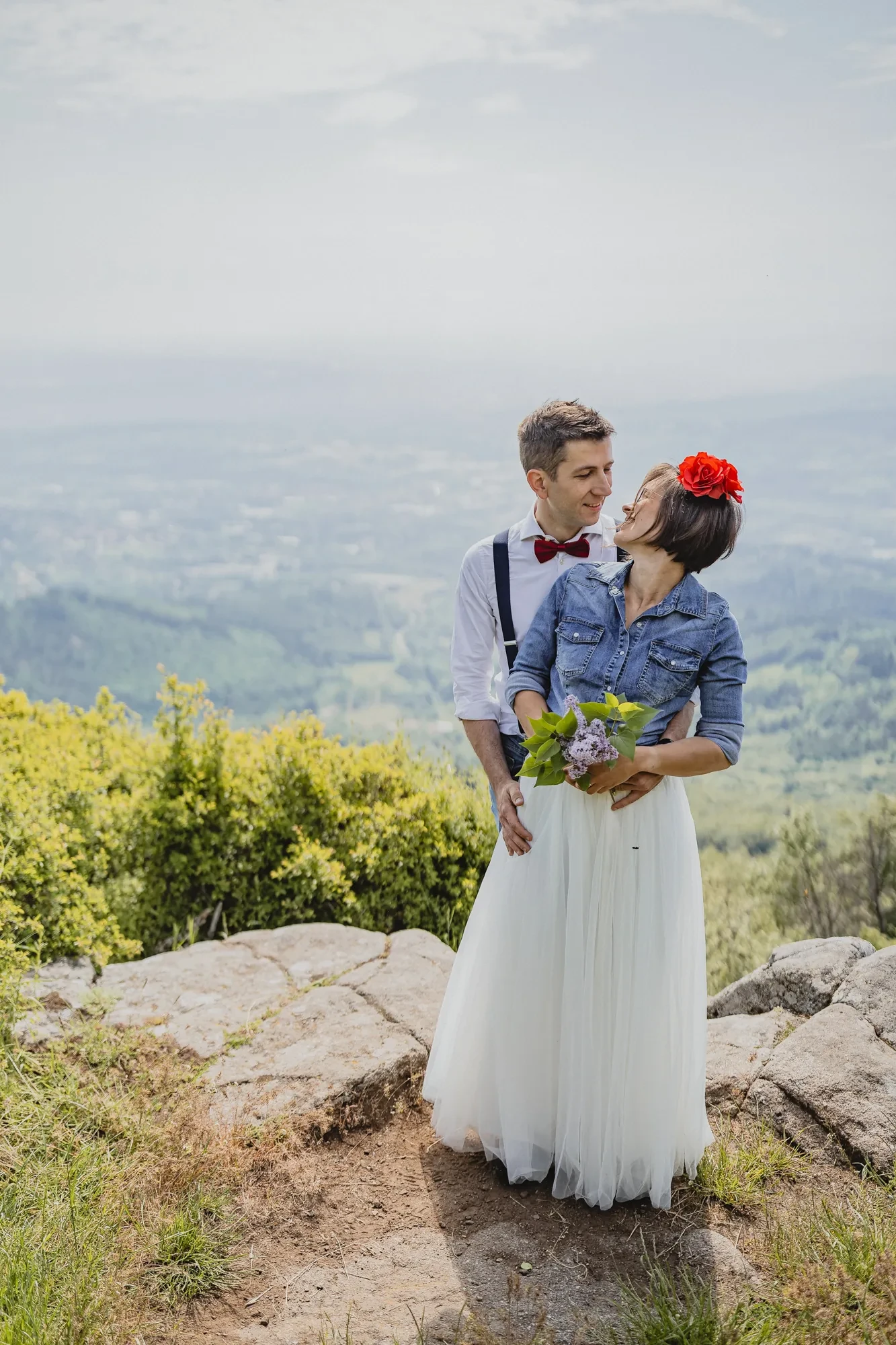
Here are the situations where a second photographer moves from optional to necessary:
- Simultaneous getting ready coverage in two separate locations, especially when the suites are in different buildings or different hotels.
- Guest counts above roughly one hundred and fifty, where formal portraits, cocktail hour and guest candids overlap in the same window.
- Multiple venues in one day, for example a civil ceremony in a town hall, a religious ceremony in a village church and a reception in a private estate.
- Ceremonies with strong architectural constraints, where only one position offers the aisle view and a second angle is needed for the couple's faces and the parents' reactions.
- Multi day celebrations where a welcome party, a rehearsal dinner, the wedding day and a farewell brunch demand consistent energy across four events.
- Tight timelines imposed by golden hour, sunset ceremonies or long transfers between sites.
If none of those conditions apply, adding a second camera adds redundancy but not much narrative value. We say so directly during the planning calls, because an honest recommendation protects the trust a planner has built with their client.
What a second shooter does during the wedding day
Division of roles on the wedding day
The second shooter wedding day role is built around division of subject, not duplication of subject. While the lead photographer stays with the couple during the vows, the second captures the guest reactions, the wide view of the ceremony space, the light falling through the cypress trees and the grandmother wiping her eyes in the third row. During the reception, the lead follows the first dance from the floor while the second works from the balcony with a 70 to 200mm lens for a compressed, editorial frame.

There is also a production dimension that matters enormously for luxury planners. Design elements deserve unhurried attention. The tablescape, the floral installations, the calligraphy, the ceremony arch and the architecture of the venue need to be photographed before the room opens and before the first glass is poured. A second photographer allows the lead to stay on people while the details are documented properly, which is what makes a submission to a prestigious publication credible.
Bon à savoir
A wooden ceremony arch, a sculptural gown or a gilded interior reads very differently at two focal lengths. Multi angle storytelling is what turns a beautiful set into a published editorial.
The real benefits of a second photographer at a destination wedding
The first benefit is completeness. Full coverage wedding photography means the couple receives the story of their weekend, not only the story of the two of them. Families who flew across an ocean deserve to appear in the gallery with the same care as the couple.
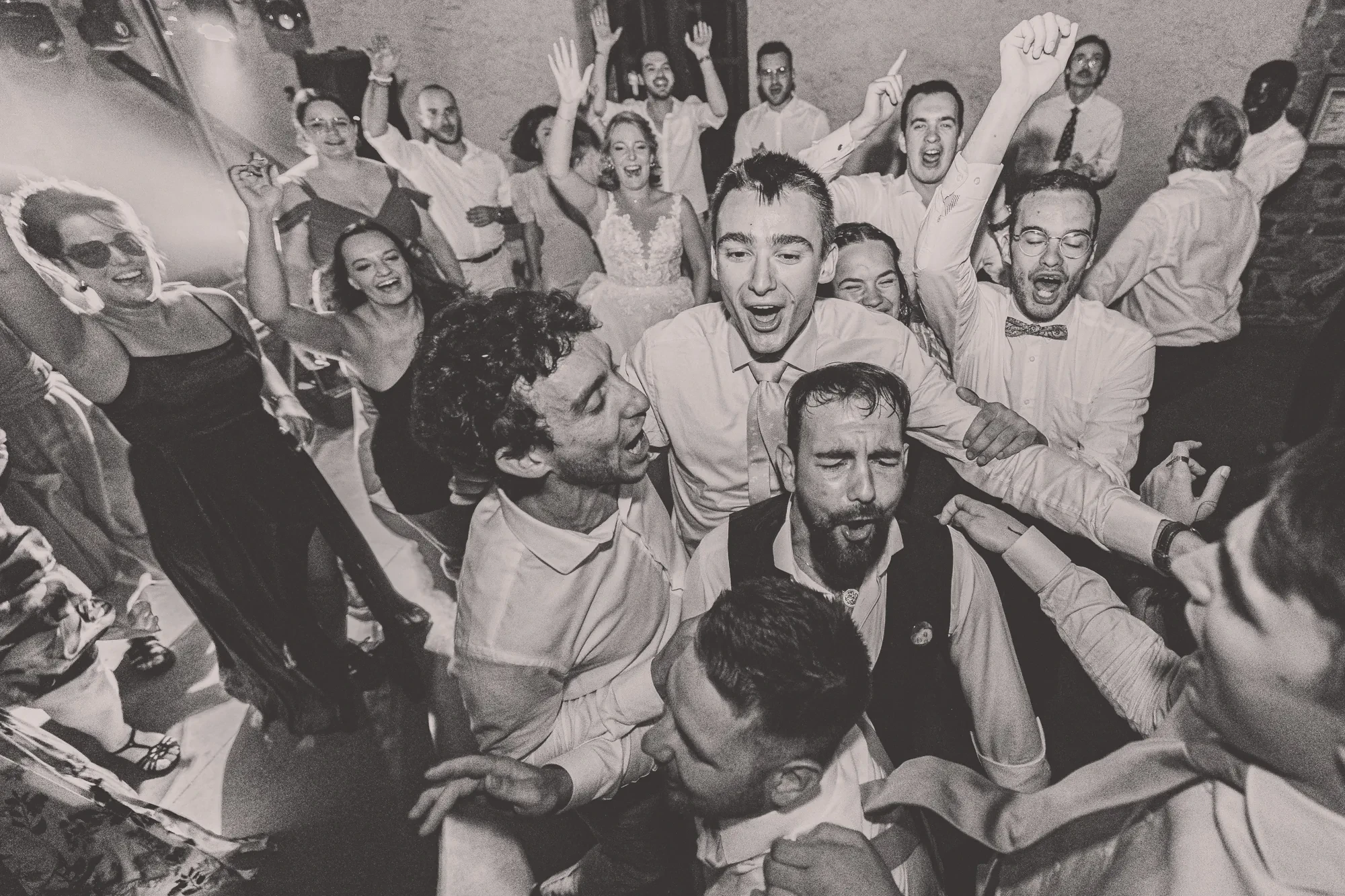
The second benefit is technical security. Two photographers means two bodies, backup camera gear, memory card redundancy and a second set of exposures on every critical moment. On a celebration that took eighteen months to design, that layer of protection is not a luxury, it is basic professional risk management.
The third benefit is stamina. Destination weddings often run from a nine in the morning breakfast to a two in the morning dance floor, in July heat, across gravel courtyards and stone staircases. Sharing that physical load keeps the quality of natural light photography and of the late night reception coverage at the same level as the first frame of the day.
Is a second shooter included in the photography package?
In most high end studios the second photographer wedding package is either an option added to the base collection or included by default in the most complete multi day collections. The lead photographer sources, briefs, insures and pays the second shooter directly, which means the couple and the planner deal with one contract, one invoice and one point of contact. Industry resources such as FStopCRM and ShootDotEdit describe the same model, where the second is a subcontractor of the lead rather than a vendor of the client.
For our own commissions, we assess the weekend structure during the pre wedding call and recommend the team size that the timeline requires. If you want to see how coverage translates into a finished narrative across a full day, our portfolio shows several chateau and countryside celebrations documented from preparations to late reception.
Second shooter cost, travel and payment terms
Typical costs for a second shooter destination wedding
Publicly discussed second shooter wedding rates per hour in the photography industry commonly sit between 30 and 50 USD per hour depending on experience, with adjustments for travel time and a travel stipend for distant assignments. Payment practice recommended by professional resources is quick settlement, typically within one to two weeks, which is why net 14 payment terms have become a standard clause. For a destination wedding, the cost structure extends beyond the shooting hours.
| Cost element | Common practice | Notes for destination weddings |
|---|---|---|
| Hourly rate | 30 to 50 USD per hour | Varies with experience and event complexity |
| Payment terms | Net 7 to net 14 | Prompt payment builds a reliable recurring team |
| Travel | Stipend or reimbursement | Flights, train, transfers and mileage agreed in writing |
| Accommodation | Covered by the lead | Essential for early call times and late finishes |
| Meals | Per diem or vendor meal | Confirmed with the planner in the timeline |
| Image rights | Defined by contract | Limited portfolio usage rights, no direct client contact |
For the couple, the second shooter appears as a single line in the collection rather than as a set of separate expenses. That simplicity is part of the high touch experience we owe clients who are coordinating a wedding from Los Angeles or the Bay Area.
How to hire a second shooter for a destination wedding
The strongest sourcing channel remains referral. Photographers who work regularly in the same regions know who is reliable at a black tie chateau wedding and who is not. Beyond referrals, specialised Facebook Groups for wedding photographers, regional photography communities and Instagram searches combining a city name with wedding photographer are the practical tools for finding a local second shooter in a destination market.
Using a local second shooter has concrete advantages. They know the venue, the parking, the light at five in the afternoon in that particular valley, the local customs and the language, which reduces friction on a day where every minute is allocated. When we work in Italy or in the French Alps, we favour photographers we have already shot alongside, because stylistic consistency cannot be improvised.
Vetting should cover three points, in this order. Portfolio consistency with the lead's aesthetic, proven experience in full wedding days rather than isolated sessions, and temperament. A technically brilliant photographer who disrupts a ceremony or steps into the lead's frame is a liability on a production that a planner spent a year designing.
What belongs in a second shooter contract
A wedding photographer second shooter contract is not administrative decoration. Professional publications such as Digital Camera World and Digital Photography School consistently list the same essential clauses, and destination work adds a few more.
The agreement should state the date, the venue, the exact coverage hours and the defined role. It should set payment amount and deadline, travel and accommodation responsibility, and cancellation or postponement policy including flight disruption and weather. It should address image ownership clearly. Under US copyright law, ownership of images created by an independent contractor depends on what the written agreement stipulates, which is why every serious contract assigns the images to the lead photographer and grants the second limited portfolio usage rights only after the couple has received their gallery. It should also prohibit direct solicitation of the client and any discussion of pricing on the wedding day.
Important
Without a written assignment of rights, the question of who owns the second shooter's photos becomes genuinely ambiguous. For a luxury client, that ambiguity is unacceptable and easily avoided.
Gear and preparation for the day
A second shooter at this level arrives with a professional mirrorless camera, a backup body, a 24 to 70mm and a 70 to 200mm as the working pair, a fast prime for low light, external flash, several fully charged batteries and multiple fast memory cards. Dual card slots for memory card redundancy are expected, not optional. Attire is formal and neutral, appropriate for a black tie event, because a photographer in the wrong clothing is visible in every guest's peripheral vision.
Preparation matters as much as equipment. One to two weeks before the wedding, we hold a pre wedding call covering the full wedding day timeline, the shot list, the family formals, the cultural or religious rituals, the design elements the planner needs documented, the venue logistics and the dress code. The second arrives fifteen to thirty minutes early, greets the planner and the videographer, and then works quietly. That discipline is exactly what allows a planner to stop thinking about photography and focus on their production.
When one photographer is genuinely enough
There is no virtue in overstaffing. A small ceremony in a single venue, a slow paced weekend with generous buffers, or a couple who explicitly want minimal presence around them are all situations where one photographer delivers a more intimate result. We would rather recommend a single photographer with an extended timeline than a second camera that adds nothing to the narrative. The role of a trusted European partner is to advise on the structure of the coverage, not to sell additional bodies.
If you are shaping a multi day celebration in France or Italy and want an objective view on the right team size, you can reach us directly and we will map the coverage against your timeline before anything is quoted.
Final thoughts on second shooter destination weddings
A second shooter destination wedding is justified when it protects the narrative of the day, the emotional moments between guests and the design work invested by the planner. For intimate celebrations with simple logistics, one photographer can be more than enough, but once timelines compress, guest counts rise or multiple locations come into play, a thoughtfully chosen second shooter becomes part of the core production. The most reliable results come from clear contracts, aligned expectations and a team that has been curated with as much care as the venue and the decor.
FAQ
Can the second shooter attend only part of the weekend?
Yes, and this is often the most rational approach. Many couples book a second photographer only for the wedding day itself, where simultaneous preparations and a large guest list create genuine overlap, while the welcome party and the farewell brunch are covered by the lead alone.
Does the second shooter edit their own images?
No. All files are ingested into the lead photographer's workflow and edited to a single colour and contrast profile, so the final gallery reads as one coherent body of work rather than two visual styles side by side.
Will guests notice there are two photographers?
With an experienced team, barely. The second works from different positions, uses longer focal lengths and avoids the lead's frame, which usually makes their presence less noticeable than that of a single photographer constantly repositioning.
Should the planner communicate directly with the second shooter?
Communication flows through the lead photographer before and during the event, which keeps instructions consistent. On the day, the second introduces themselves to the planner so that both know each other on sight, and then follows the briefing already agreed.
What happens if the second shooter cannot travel?
A well drafted contract includes a replacement clause and the lead maintains a short list of vetted alternatives in each region. For destination assignments we also favour arrival the day before the wedding to absorb any transport disruption.