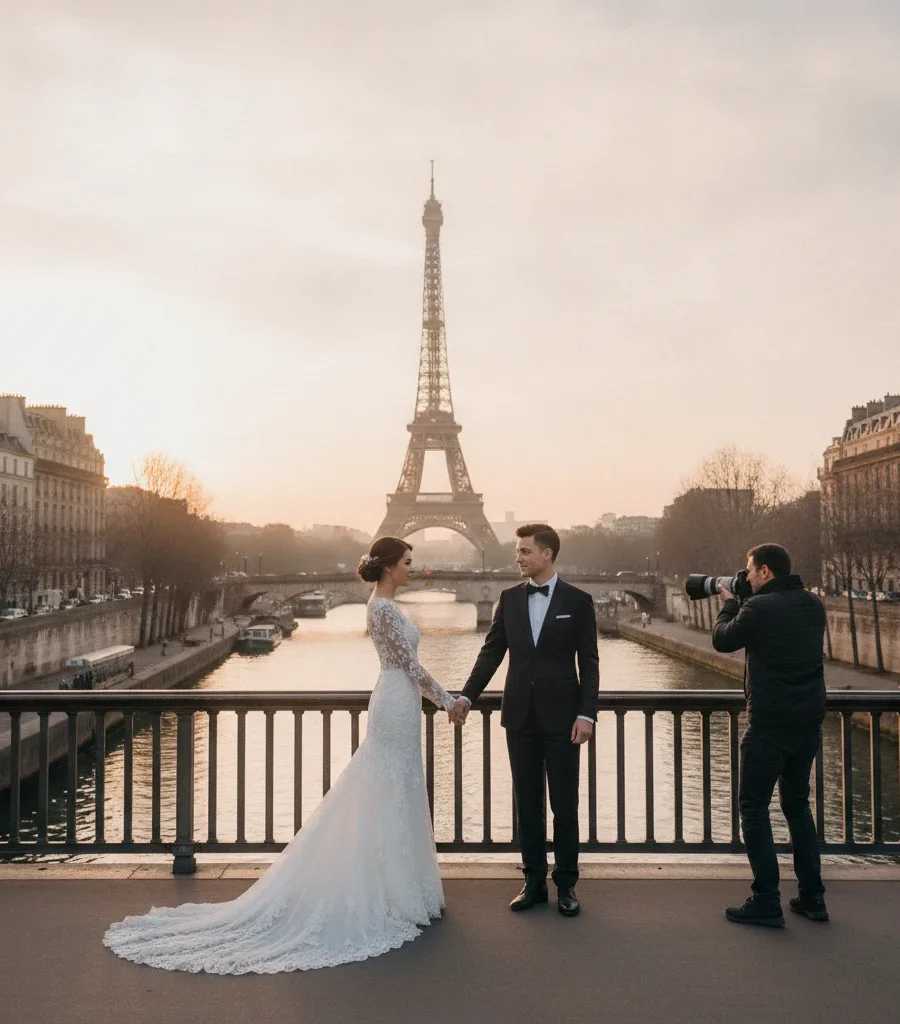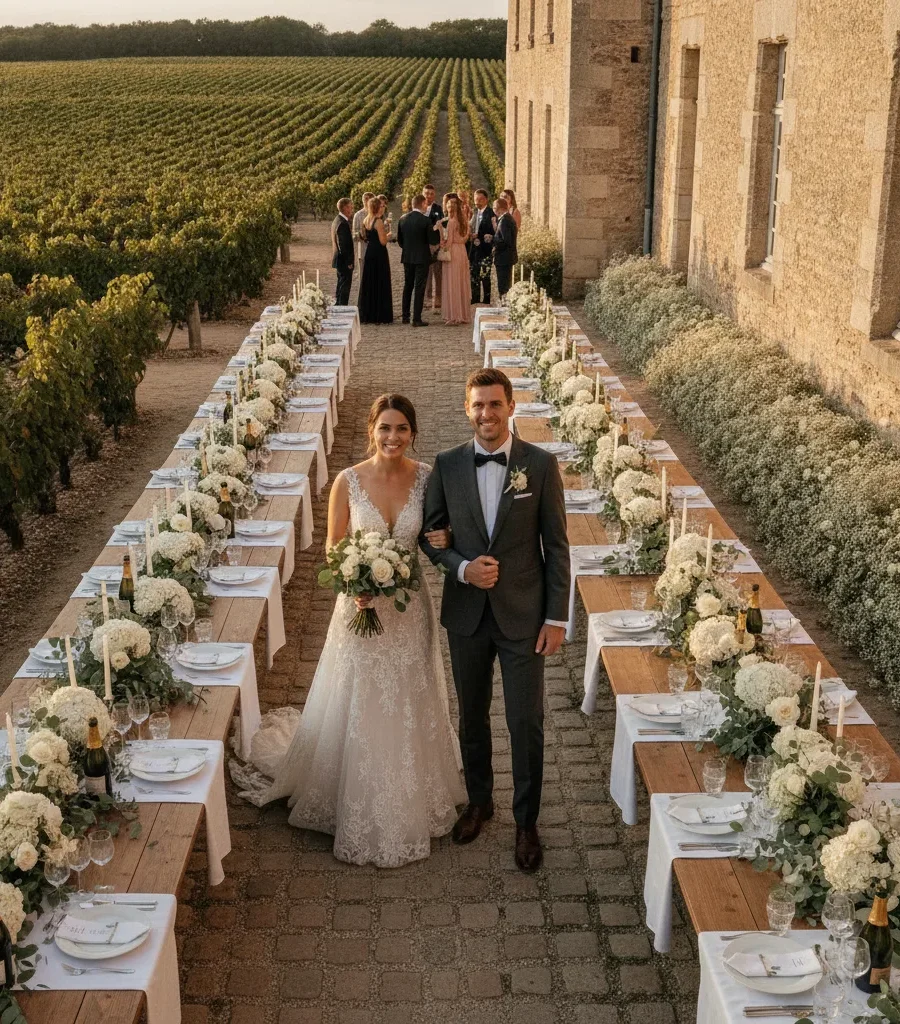
Planning a multi-day celebration in France for American clients means navigating more than time zones and spreadsheets. Cultural differences US vs French weddings reshape the flow of the day, the expectations of local guests and even what “on time” truly means. For a planner used to Napa or New York, understanding these nuances is the difference between a seamless, elegant weekend and a series of avoidable misunderstandings.
This guide is written for U.S. luxury planners orchestrating six- or seven-figure destination weddings in France. It translates French etiquette into clear, practical actions you can build straight into timelines, communications and vendor briefs. Along the way you will see how a culturally fluent photographer such as Lino Ludovic can help you hold the visual and experiential thread from the welcome dinner to the farewell brunch.
Navigating Nuances: Cultural differences US vs French weddings – A US Planner’s Guide to French Wedding Etiquette
Reading time: ~15 min
- Table of contents
- Cultural differences U.S. vs French weddings at a glance
- Legal and ceremonial etiquette: what U.S. planners must know
- Timeline, stamina and the art of “late” in France
- Food, wine and service etiquette
- Social etiquette with French guests and vendors
- How a culturally fluent photographer supports your planning
- Dos and Don’ts for a U.S. planner in France
- FAQ
Cultural differences U.S. vs French weddings at a glance
Before diving into etiquette, it helps to re-frame the event itself. These differences do not just touch one moment, they reshape the entire architecture of the celebration.
| Aspect | Typical U.S. luxury wedding | Typical French wedding |
|---|---|---|
| Legal ceremony | Marriage license plus officiant anywhere | Mandatory town-hall (mairie) civil ceremony |
| Number of ceremonies | Usually one main ceremony | Often two (civil plus religious or symbolic) |
| Duration for guests | About 5–7 hours | Often 12–16 hours, dancing until 3–5 a.m. |
| Bridal party | Large bridal party, many roles | Few witnesses (témoins), minimal attendants |
| Timing of dinner | Around 6–7 p.m. | Rarely before 8 p.m., slow multi-course meal |
| Focus of the event | Couple and show elements (entrances, speeches) | Couple and families, gastronomy, convivial atmosphere |
| Dessert moment | Cake after dinner, before dancing | Croquembouche or cake around midnight with sparklers |
This framework lets you explain to a Californian couple why their French caterer raises an eyebrow at a 6 p.m. dinner call, or why French guests are only warming up when the U.S. crowd would usually be heading home.
Legal and ceremonial etiquette: what U.S. planners must know
1. The mairie is non-negotiable
For French authorities, the town-hall ceremony is the wedding. Treat the mairie exactly as you would a prime ceremony slot in the U.S.; avoid casual rescheduling and build generous transfer buffers through often pedestrian historic centers. Brief American guests that this is a formal legal moment, not a quick photo stop.
2. Two ceremonies mean two sets of expectations
Clarify early which ceremony matters most emotionally for your couple and for their families. U.S.-based clients may host an intimate weekday civil wedding followed by a château weekend. Ensure hair and makeup, transportation and photography cover both events.
3. Witnesses instead of a large bridal party
French couples appoint one to four witnesses who sign the register, with far less emphasis on a big coordinated party. Offer hybrid options—perhaps a small attendant group for portraits—while still respecting formal witness roles, and remind your photographer to document witnesses and parents with the same care usually reserved for bridesmaids and groomsmen.
Timeline, stamina and the art of “late” in France
Key phases of a French wedding day
Unlike the precise 5–7-hour U.S. format, French weddings unfold from mid-afternoon to dawn in distinct chapters: ceremony, a two-hour vin d’honneur, seated dinner beginning around 8 p.m., dessert at midnight, then dancing until the early hours. Suggesting a 6 p.m. dinner can feel rushed to local caterers, while U.S. guests may tire before French friends have even hit the dance floor. Communicate the true pace in advance and arrange late-night shuttles, as rural taxis can be scarce at 3 a.m. A photographer comfortable with 12–16 hours of low-light coverage is essential.
Food, wine and service etiquette
The vin d’honneur
More than a cocktail hour, this generous reception often includes champagne, wine and refined canapés, with some guests invited only to this portion. Budget accordingly and schedule portraits without removing the couple for its entire duration.
The dinner
Expect several courses at a calm pace with careful wine pairing. French kitchens can be disrupted by multiple long speeches, so balance U.S.-style toasts with the flow of service and coordinate speech timing closely with the caterer.
Dessert and late night
A croquembouche or pièce montée usually enters with sparklers around midnight, often followed by an intense stretch of dancing and a light snack buffet later in the night. Ensure lights, music and camera crews are ready for the dramatic dessert reveal.
Social etiquette with French guests and vendors
Initial communication with French partners tends to be more formal; titles and polite forms matter. Warmth grows with time, and in person a brief handshake—or cheek kisses among close collaborators—is normal. Dress codes such as black-tie or garden chic are interpreted slightly differently in France, so refine guidance with local stylists. French caterers and florists may work from broad outlines rather than hyper-detailed U.S. timelines; share a clear master schedule (ideally bilingual) while allowing controlled flexibility, particularly for the vin d’honneur.
How a culturally fluent photographer supports your planning
A Europe-based photographer who regularly works with U.S. planners anticipates rituals such as the mairie exit, midnight dessert or ribbon-cutting traditions; directs nervous American couples gracefully; and captures design details to U.S. publication standards while honoring French artisans. Explore multi-day château celebrations on Lino Ludovic’s site to see this narrative approach in action.
Dos and Don’ts for a U.S. planner in France
- Do prepare your U.S. clients for the length of a French wedding (and suggest spare shoes).
- Do work with France-based vendors who speak fluent English and understand U.S. standards.
- Do respect the vin d’honneur and dinner as signature moments, not mere logistical tunnels.
- Do schedule extended photo coverage for the civil ceremony, vin d’honneur, midnight dessert and late-night dancing.
- Don’t impose a 6 p.m. dinner without explaining the cultural context to French vendors.
- Don’t cut courses or shorten service without discussing the impact with the caterer.
- Don’t insist on an oversized U.S.-style wedding party if the French family is reluctant.
- Don’t underestimate late-night transport needs for guests unfamiliar with the region.
FAQ
How do I explain late finishes to U.S. clients?
Present the reception as a series of “chapters” rather than a single time block. Emphasize that dancing often starts after midnight once dessert is served and that many guests consider it normal to stay until 3 or 4 a.m. Provide comfort solutions—night shuttles, lounge corners, second pairs of shoes—and align vendor contracts with the extended timeline.
Is a second ceremony always required in France?
No. If neither partner is French or resident in France, many couples complete the legal paperwork in their home state and hold one symbolic ceremony in France. Once French administration is involved, however, the town-hall civil wedding is compulsory. Clarify the legal situation early to avoid last-minute surprises.
How do I manage speeches with French guests?
Explain to U.S. clients that long successive speeches are less common in France. Recommend a few targeted toasts, ideally between courses or at the start of dessert, and coordinate timing with the caterer to maintain the meal’s rhythm. Brief each speaker on desired length to keep the ambiance fluid for all guests.
A final word
Mastering U.S.–French nuances lets you deliver a European weekend that is far more than a change of scenery. By honoring the vin d’honneur, the unhurried dinner, the legal weight of the mairie and the family-centric spirit, you can script an event that respects both cultures while remaining impeccably orchestrated. For a visual partner who translates these subtleties into timeless editorial images, explore Lino Ludovic’s destination-wedding portfolio at https://www.linoludovic.fr/.