When couples start planning their wedding photography, one of the first questions they ask is whether they need a wedding photos shot list. It’s a reasonable question, and the honest answer is nuanced. A shot list can be a genuinely useful planning tool, but in the hands of the wrong photographer, or followed too rigidly, it becomes a script that suffocates the very moments you’re trying to preserve. At Lino Ludovic, we’ve chosen a different path, one rooted in artistic direction, deep preparation, and the kind of trust that produces images you’ll actually want to frame.
Why We Don’t Work From a Wedding Photos Shot List (And What We Do Instead)
Temps de lecture : ~7 min
- What a Wedding Photos Shot List Actually Is
- The Problem With Treating It Like a Script
- What We Do Instead
- The Framework We Actually Use
- What This Means for You
- Do’s and Don’ts for Working With a Wedding Shot List
- FAQ
- The Best Wedding Shot List Is a Conversation, Not a Script

What a Wedding Photos Shot List Actually Is
Defining the wedding photos shot list
A shot list is a curated guide of key moments, people, and details to photograph throughout the wedding day, typically organized by timeline and category. Most comprehensive versions break the day into four or five phases: getting ready, the ceremony, post-ceremony portraits and family formals, and the reception. Within each phase, the list catalogs specific images, from the dress hanging by the window to the ring exchange, the father-daughter dance, and the grand exit.
How a shot list supports your wedding photography
Used well, a shot list serves a clear purpose. It ensures that critical people and moments are not overlooked, it helps manage the timeline (especially during family formals, which can easily consume an hour if left unstructured), and it aligns expectations between the couple and their photographer before the day begins. Sharing a list with your photographer well in advance allows them to assess whether it’s realistic within the schedule, suggest efficient groupings for family portraits, and flag any sensitive situations, such as separated parents or a grandparent with limited mobility, that require thoughtful handling.
That’s the case for having one. But there’s an equally strong case for questioning how much weight it should carry.
The Problem With Treating It Like a Script
When a wedding photos shot list becomes a script
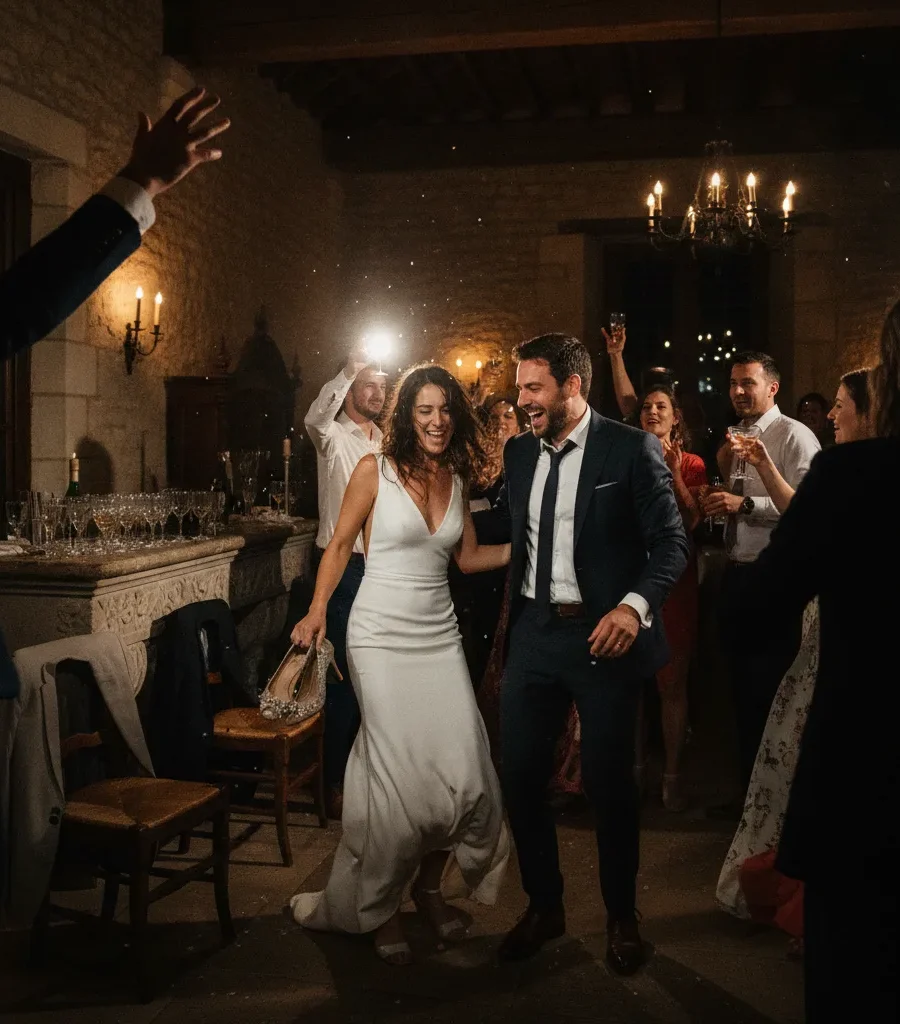
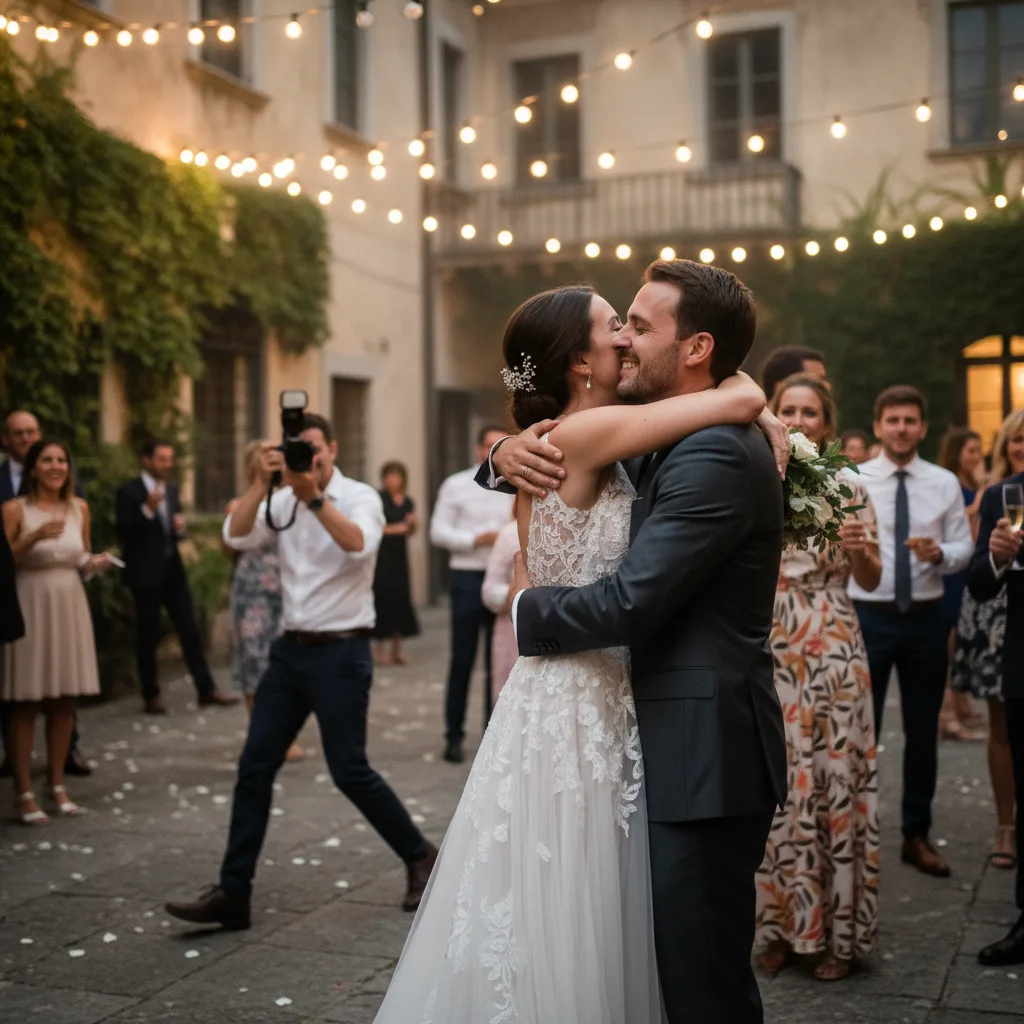
Experienced photographers have long observed that hyper-detailed shot lists, the kind that run to three pages and specify exact poses, tend to work against authentic storytelling. When a photographer is mentally ticking boxes rather than reading the room, they miss the glance exchanged between a mother and her daughter just before the ceremony begins, or the way your best friend laughs when the flower girl trips on her dress. Those are the images couples actually print and hang on their walls years later. They are not on any checklist.
The limits of a rigid wedding photography checklist
There is also a practical tension. A destination wedding at a French château or an Italian villa on Lake Como is not a controlled studio environment. The light shifts dramatically. The venue has its own rhythm. Guests wander in unexpected directions. A rigid photography checklist for a wedding day assumes a level of predictability that simply doesn’t exist, and the more tightly a photographer clings to the list, the more they resist the beautiful chaos that makes a wedding feel alive.
The images couples cherish most tend to be people-focused, particularly key relationships and unscripted emotional moments, rather than décor details or formally posed group shots. That insight should shape how you think about what a shot list is actually for.
What We Do Instead
At Lino Ludovic, our approach begins long before the wedding day. During our initial conversations, we spend time understanding not just the logistics but the story. Who are the people that matter most to you? What does your relationship actually feel like when no one is watching? What are you most afraid of missing? This conversation replaces the exhaustive checklist with something more valuable: shared understanding.
On the day itself, we operate as a discreet observer and an artistic director simultaneously. We know the key moments that must be documented, and we ensure they are. But we also move through the day with the sensitivity to recognize when something unplanned and unrepeatable is unfolding, and we’re already in position to capture it.
For family formals, which genuinely do benefit from structure, we use a clear and efficient grouping system. A well-organized family portrait session covering both sides of the family, including grandparents and immediate family combinations, can be completed in approximately thirty minutes when managed properly. We ask couples to share a list of family groupings in advance and to designate a family member on each side to help gather people quickly. This is where a structured approach saves time and prevents the frustration of realizing after the fact that a specific combination was missed.

The Framework We Actually Use
Rather than a minute-by-minute storyboard, we work from a flexible framework built around three categories.
The first category is non-negotiable moments. These are the images that exist only once and cannot be recreated: the first look, the ring exchange, the first kiss, the first dance, the cake cutting, and the send-off. We treat these with the same certainty as any formal checklist would.
The second category is key relationships. Before every wedding, we ask couples to identify the people they most want documented together. This goes beyond the standard family formal list to include the college roommate who flew in from New York, the grandmother who almost didn’t make the trip, the childhood friend who is now a groomsman. These are the portraits that become heirlooms.
The third category is atmosphere and details. For destination weddings in France or Italy, the setting itself is part of the story. The architecture, the floral installations, the tablescape, the light falling through a stone archway at golden hour. These images matter enormously, both for the couple’s memories and for the editorial submissions that planners and designers rely on for their portfolio and press coverage. We document them with the same editorial eye we bring to every other aspect of the day.
What This Means for You
For couples planning a destination wedding
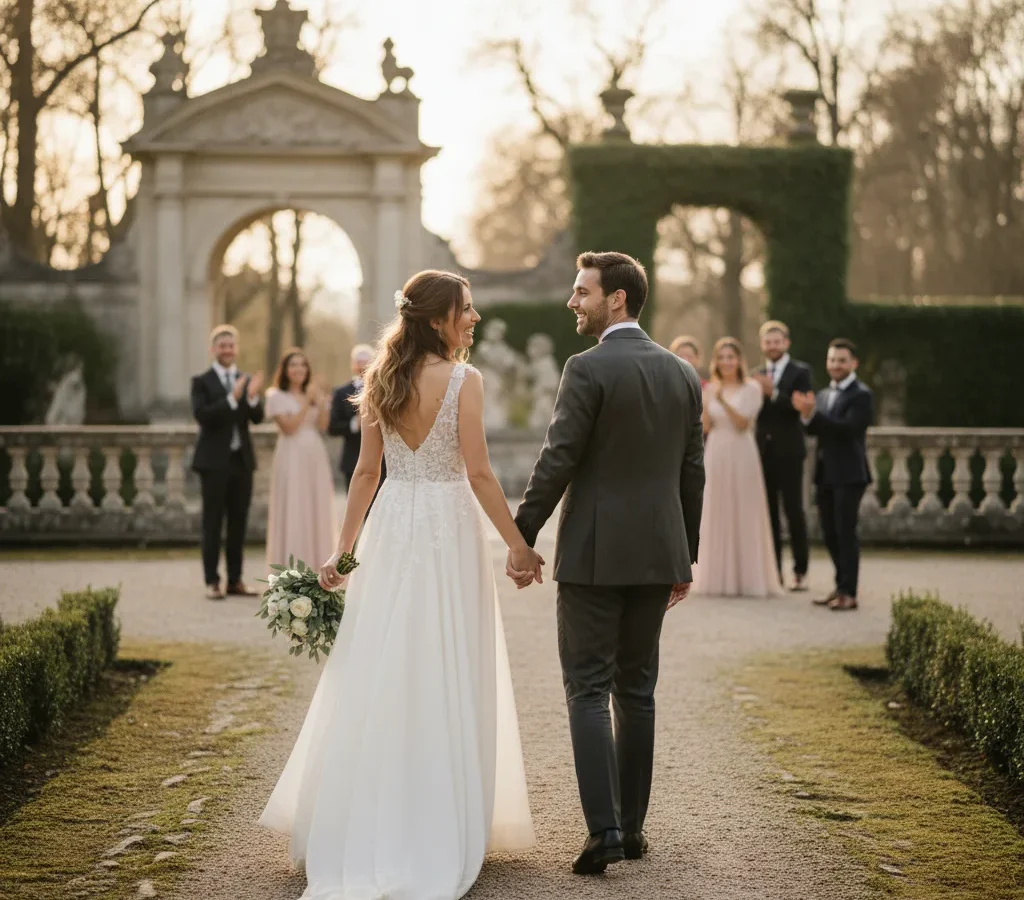
If you are a couple planning a destination wedding in Europe, the most important thing you can do is not hand your photographer a long list. It is to choose a photographer whose aesthetic and working style you trust completely, then give them the context they need to tell your story well.
For wedding planners and event designers
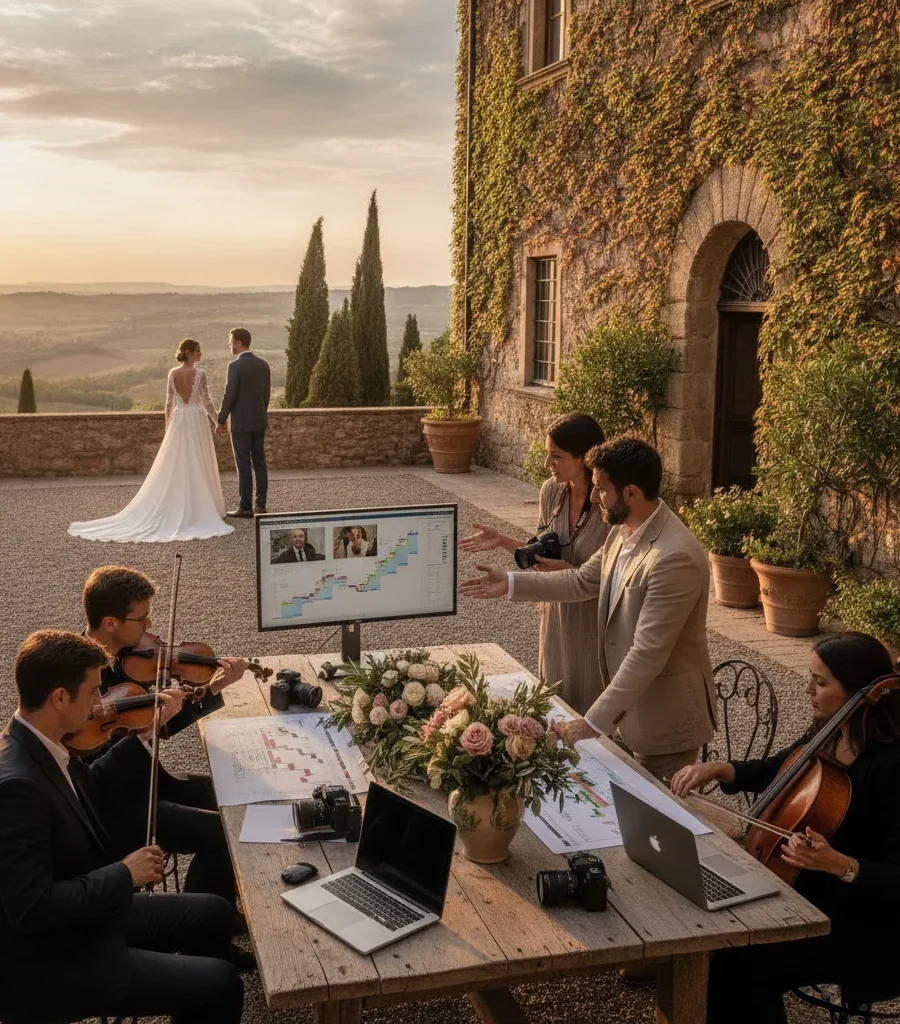
If you are a wedding planner or event designer coordinating a multi-day celebration, what you need from your wedding photography partner is not someone who follows instructions mechanically. You need someone who understands complex timelines, respects the design details you spent a year conceptualizing, and delivers the detail shots your PR team needs without disrupting the production flow. That requires judgment, experience, and genuine collaboration, none of which fits neatly into a checklist.
The wedding photography checklist has its place. It is a useful starting point, a safety net for logistics, and an efficient tool for family formals. But it is not a creative strategy, and it should never be the primary language between a couple and their photographer.
Do’s and Don’ts for Working With a Wedding Shot List
| Do | Don’t |
|---|---|
| Share a list of key family groupings with your photographer at least four to six weeks before the wedding. | Send a three-page document specifying poses, angles, and exact sequences for every hour of the day. |
| Identify your top ten to fifteen non-negotiable moments and communicate them clearly. | Expect a rigid photography checklist to replace a genuine creative conversation with your photographer. |
| Assign a family member or coordinator to help organize people during portrait sessions. | Prioritize décor shots over relationship-driven portraits when time is limited. |
| Check venue rules in advance, particularly in historic churches or private estates, as some restrict photography during specific parts of the ceremony. | Forget to mention sensitive family dynamics (divorced parents, estranged relatives) that require discreet handling. |
FAQ
Do we really need a wedding shot list?
Not in the traditional sense. What you genuinely need is a clear communication of your priorities, the people and moments that matter most to you, shared with your photographer well in advance. A brief list of family groupings and a handful of non-negotiable moments is far more useful than an exhaustive document that tries to script every minute of the day.
How long do family formal portraits usually take?
When organized efficiently, with a clear grouping plan and a designated family helper on each side, standard family formals covering both families including grandparents and immediate family combinations typically take around thirty minutes. Without that structure, the same session can easily run twice as long and still feel incomplete.
What is the difference between a shot list and a photography timeline?
A shot list catalogs specific images and groupings to capture. A photography timeline is a schedule that allocates time to each phase of the day, from getting ready through the reception. Both are useful planning tools, but neither replaces the creative judgment that distinguishes documentary storytelling from mechanical coverage. The most effective approach combines a loose framework for logistics with genuine artistic freedom for everything in between.
The Best Wedding Shot List Is a Conversation, Not a Script
The most enduring wedding photographs are never the ones that were planned to the letter. They are the ones that happened because a photographer was present, attentive, and trusted enough to move freely through the day. If you are planning a destination wedding in France, Italy, or elsewhere in Europe and want to understand what a truly elevated photography experience looks like from first contact to final album, explore the full approach at Lino Ludovic.