Getting married in Provence is a dream for many Californian couples seeking a destination wedding that blends familiar sunshine with Old World charm, and this guide is designed to help you navigate every aspect of planning such a celebration.
Introduction
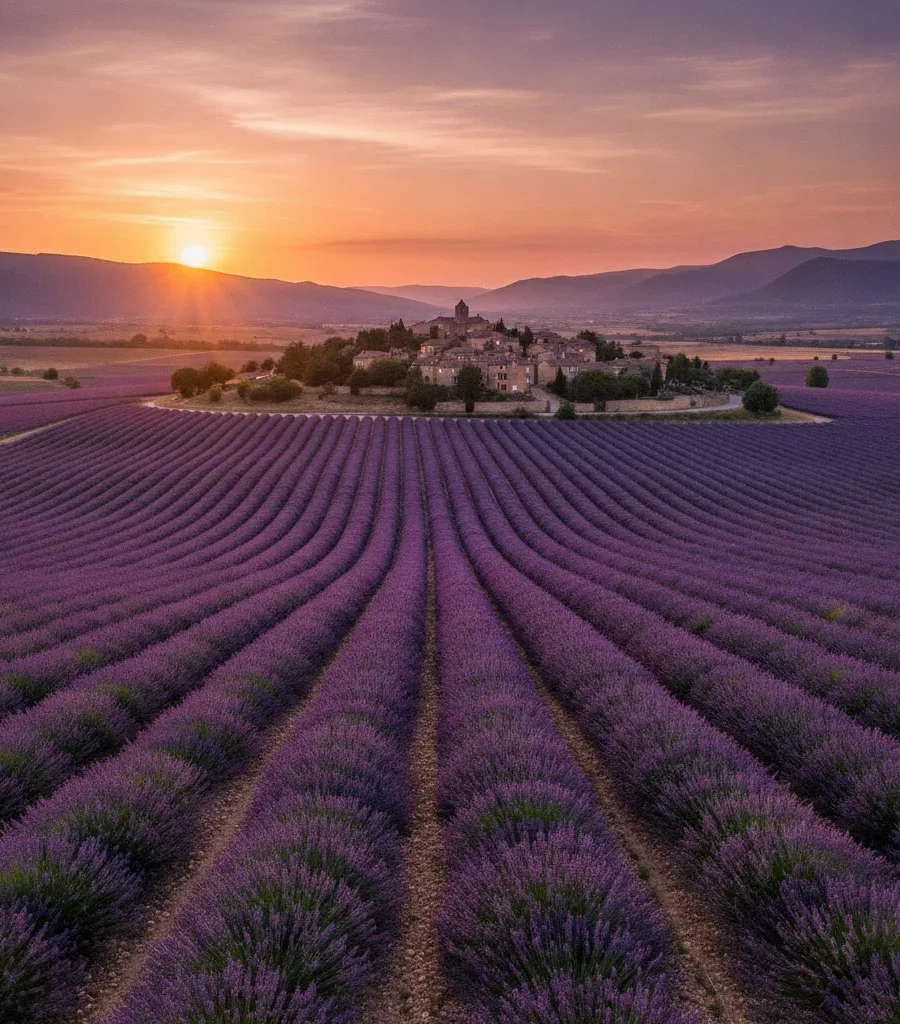
Provence has long held a kind of magnetic pull on couples who dream of something more than a wedding — something closer to a cinematic memory. For Californians in particular, the region offers a visual language that feels both familiar and entirely foreign: the warm, dry air, the golden afternoon light, the endless rows of lavender stretching toward a pale blue sky. Getting married in Provence is not simply a logistical decision. It is an aesthetic one, and for those who understand the difference between a beautiful event and a truly unforgettable one, it may well be the most important choice of the entire planning process.
A Californian’s Guide to Getting Married in Provence: Lavender Fields, Timeless Estates, and Golden Light
Temps de lecture : ~8 min
- Why Provence Speaks Directly to the Californian Aesthetic
- Understanding the Legal Framework Before You Plan
- Choosing Your Season and Understanding the Light
- Planning Your Provence Wedding: A Realistic Timeline
- Venue Types and What They Mean for Your Images
- Budgeting Realistically for a Destination Wedding in Provence
- FAQ
- Provence Weddings Reward Intention and the Right Team
Why Provence Speaks Directly to the Californian Aesthetic
There is a reason so many couples from the Bay Area, Los Angeles, and Napa Valley find themselves drawn to Provence before they have even visited. The visual parallels are striking. Both regions share a Mediterranean climate, a culture of exceptional wine, and landscapes that seem designed for photography. But where Napa offers rolling vineyards and contemporary architecture, Provence layers in centuries of history: dry-stone walls, hilltop villages, ancient olive groves, and estates that carry the weight of generations.
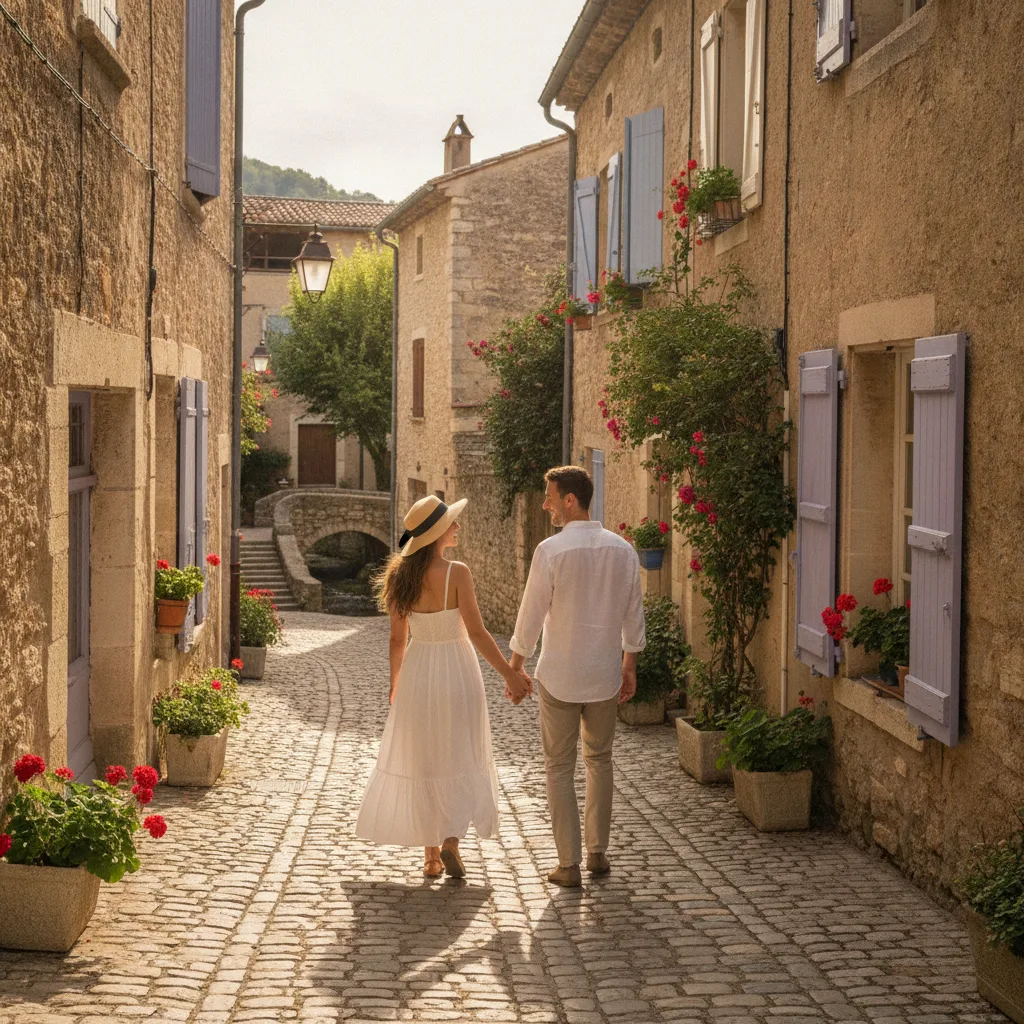
The Luberon and the Alpilles, the two most celebrated areas for destination weddings in Provence, sit roughly between Marseille and Avignon. Villages like Gordes and Saint-Rémy-de-Provence have become synonymous with a kind of understated, sun-drenched luxury that translates extraordinarily well into editorial photography. The light here is not an accident. Provence is famous among photographers for its exceptional natural quality of light, long summer evenings, and warm colour palette that makes fine-art imagery feel effortless rather than constructed.
For a couple who has spent months curating every detail of their celebration, from the florist to the tablecloths, the question of how that investment will be documented is not secondary. It is central. Provence, more than almost any other destination in Europe, rewards that level of care.
Understanding the Legal Framework Before You Plan
One of the most important things to clarify early in the planning process is how getting married in Provence works from a legal standpoint. The answer is more nuanced than most couples initially expect, and understanding it early will save considerable stress later.
Civil ceremony requirements in France
In France, the only legally recognised form of marriage is a civil ceremony performed at the town hall (the mairie), officiated by the mayor or their delegate. Religious ceremonies and symbolic ceremonies have no legal standing on their own. Furthermore, the civil ceremony must take place inside the mairie itself — not at a private venue, a château, or a hotel.
For international couples, the additional challenge is a residency requirement. French law requires that at least one spouse have a genuine and lasting connection to the commune where the ceremony takes place. In practice, this typically means having lived there for a minimum of 30 to 40 days prior to the ceremony. For most American couples planning a destination wedding, this requirement makes a French civil ceremony logistically impractical.
Symbolic ceremonies and photography
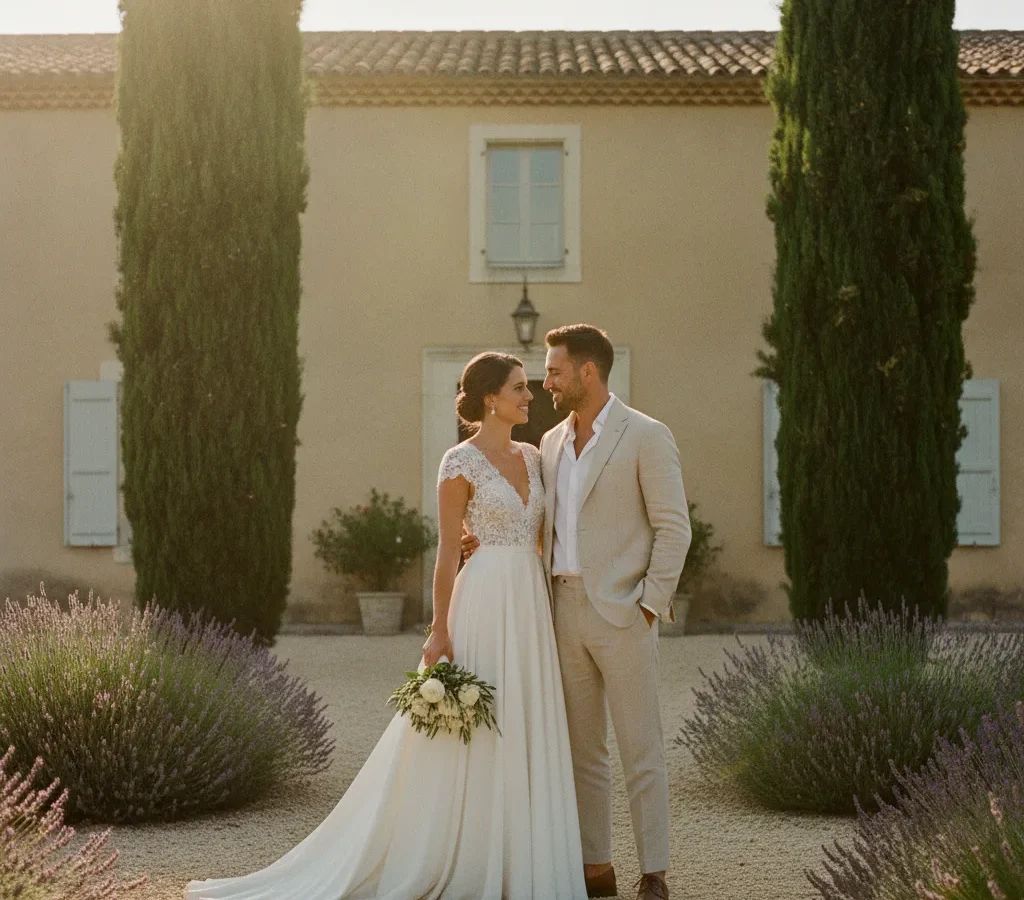
The solution adopted by the vast majority of foreign couples is both elegant and liberating: they complete their legal marriage at home, at a registry office for instance, and then plan a symbolic or humanist ceremony in Provence. This ceremony carries no legal weight, but it is the one that takes place in the lavender fields, beneath the olive trees, or on the terrace of a historic estate at golden hour. It is, in every meaningful sense, the real celebration.
This approach also unlocks something particularly valuable from a photographic perspective. Because a symbolic ceremony is not bound by the constraints of a town hall, the couple and their planner can choose a location entirely on the basis of beauty, light, and emotional resonance. The ceremony can be timed to take advantage of Provence’s extraordinary late-summer light, with golden hour falling around 9pm in high season.
Same-sex couples follow the same legal procedure, as same-sex marriage has been recognised in France since 2013.
Choosing Your Season and Understanding the Light
Peak wedding season in Provence
The most popular window for weddings in Provence runs from May through October, with June to early September generally offering the most reliable weather and the longest days. This is peak season in terms of demand, and top venues and vendors book up quickly, sometimes more than a year in advance.
Lavender season and couple sessions
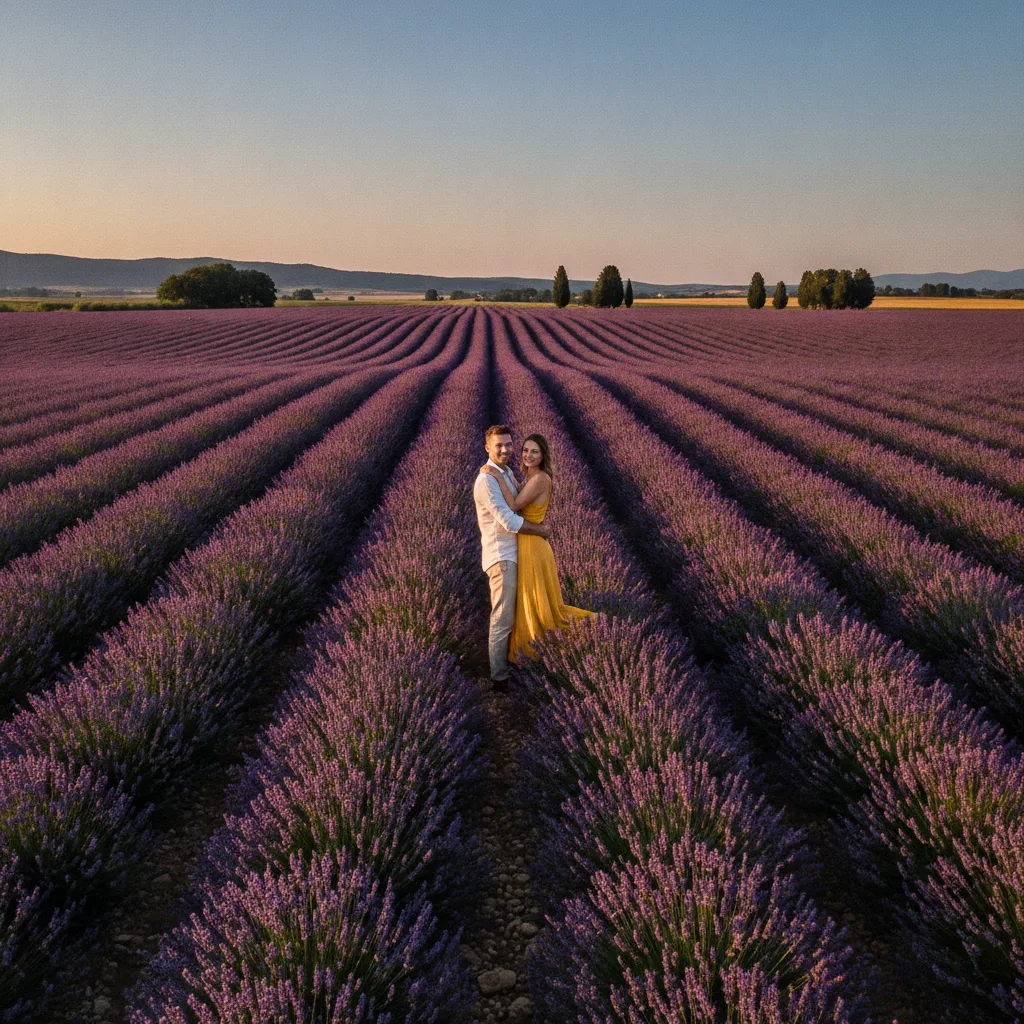
For couples drawn to the iconic image of lavender in full bloom, late June to mid-July is the sweet spot. The fields are at their most vivid, the light is extraordinary, and the contrast between purple and gold creates imagery that is immediately recognisable and deeply evocative. A pre-wedding couple session in a lavender field during this window can produce some of the most striking images of the entire celebration.
Light and weather considerations
From a photography standpoint, the Provençal summer presents both gifts and challenges. The midday sun is intense and unflattering for outdoor portraits, which is why experienced photographers plan the day carefully: ceremony and family portraits in open shade or the early evening, couple portraits during the golden hour, and creative use of the estate’s architecture for any midday coverage. The long summer evenings are genuinely one of Provence’s greatest assets, giving couples and their photographers hours of beautiful, warm, directional light after dinner has been served.
May and September offer a softer version of this experience: slightly cooler temperatures, fewer crowds, and a light that is arguably even more nuanced and painterly. These months are increasingly popular with couples who prioritise photography and guest comfort over the peak-summer aesthetic.
Planning Your Provence Wedding: A Realistic Timeline
Specialists consistently recommend beginning the planning process 12 to 18 months before the wedding date, particularly for peak-season weekends. The most sought-after châteaux and domaines book up quickly, and the same is true for experienced local photographers and planners who work at a high level.
12 to 18 months before
Set your overall budget, identify your preferred area of Provence (Luberon, Alpilles, near Aix-en-Provence), shortlist venues, and secure your photographer and venue simultaneously to lock in the date.
9 to 12 months before
Hire a wedding planner with strong local expertise, send save-the-dates to allow guests time to book international travel, and confirm your key vendors including caterer, florist, and celebrant.
6 to 9 months before
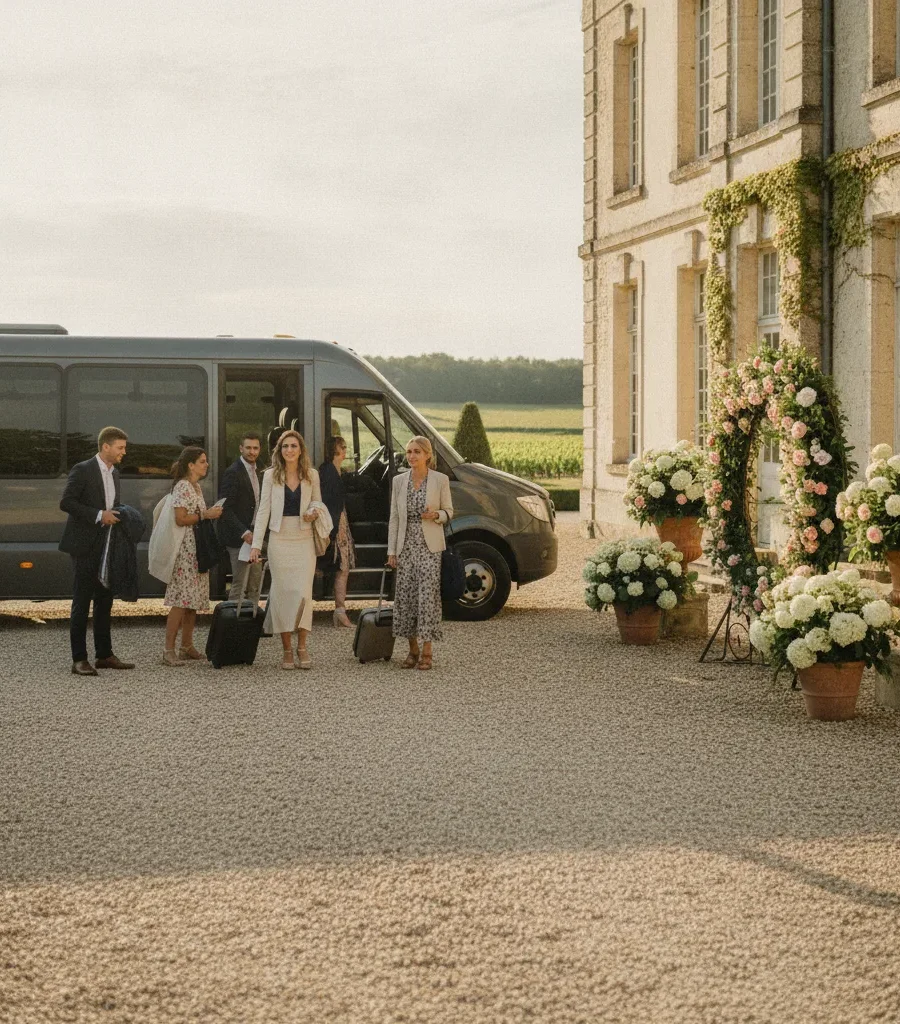
Arrange guest accommodation and airport transfers, finalise your ceremony structure and personal vows, and begin thinking about the photographic timeline for the day.
3 to 6 months before
Complete your legal marriage at home if you have not already done so, send formal invitations, and finalise the wedding day timeline in collaboration with your planner and photographer.
Final weeks
Confirm every vendor, prepare any documents required for religious elements if applicable, and hand over day-of coordination to your planner so you can be fully present.
Venue Types and What They Mean for Your Images
Provence offers a remarkable diversity of venues, each with its own visual character and photographic potential.
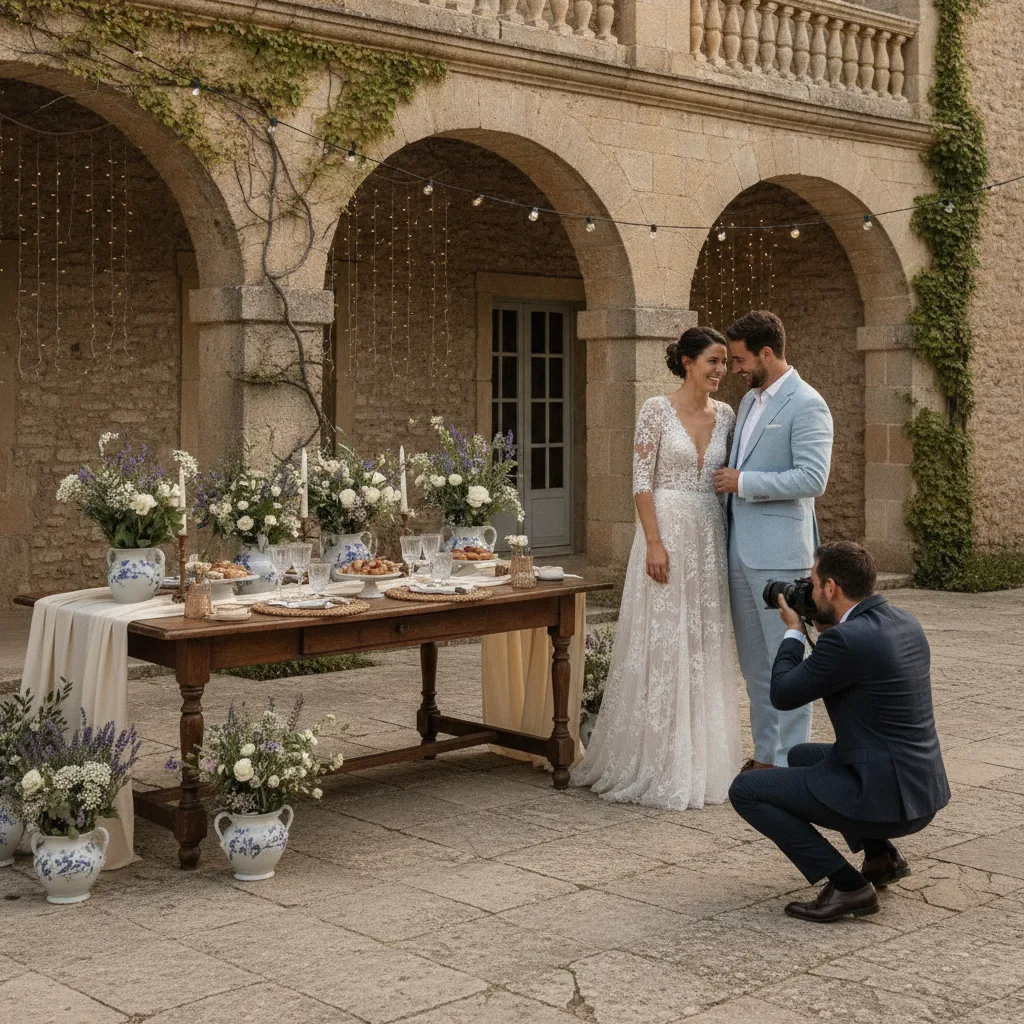
Historic châteaux and grand estates provide formal architecture, manicured gardens, and often on-site accommodation for guests. They photograph beautifully in the late afternoon light, with stone facades that take on a warm amber glow as the sun drops. Traditional mas (Provençal farmhouses) and domaines surrounded by olive trees and vineyards offer a more intimate, rustic-luxury atmosphere that suits couples drawn to a natural, editorial aesthetic. Vineyards and wineries bring an obvious connection to the landscape and work particularly well for open-air receptions. Boutique hotels and hilltop village venues offer dramatic views and an intimate scale that can feel genuinely cinematic.
When evaluating venues, it is worth thinking beyond the brochure. Practical considerations include the orientation of the main terrace (does it face west for sunset portraits?), the availability of shaded areas for midday coverage, on-site accommodation capacity, noise curfews, and the venue’s experience with international guests and multi-day celebrations. A welcome dinner on the Friday evening, the ceremony and reception on Saturday, and a farewell brunch on Sunday morning — this kind of multi-day format is increasingly common among American couples bringing guests from across the world, and it requires a venue and a vendor team with genuine stamina and coordination.
Budgeting Realistically for a Destination Wedding in Provence
A destination wedding in Provence for 60 to 120 guests typically requires a budget somewhere between €25,000 and €60,000 at a minimum, with many luxury celebrations reaching €50,000 to €100,000 or beyond depending on the venue, the season, and the level of service expected. The largest shares of the budget generally go to venue hire and catering, followed by photography, planning, and florals.
| Category | Typical range |
|---|---|
| Venue hire | €3,000 to €25,000 |
| Catering and drinks | €80 to €200 per guest |
| Photography | €1,500 to €6,000 (and above for multi-day coverage) |
| Wedding planner | €3,000 to €10,000 |
| Flowers and décor | €2,000 to €8,000 |
| Celebrant | €500 to €2,000 |
For couples investing at this level, the photography budget deserves serious consideration. A photographer who knows Provence intimately — its light, its landscapes, its vendor ecosystem, and the logistical rhythms of a multi-day destination celebration — brings something that cannot be replicated by flying in someone unfamiliar with the region. The ability to communicate fluently in English, to anticipate the timeline, and to move invisibly through a formal event while capturing both the grand design details and the quiet human moments is a specific kind of expertise.
FAQ
Can Americans legally get married in Provence without living there first?
Technically, a civil marriage in France is possible for foreign nationals, but it requires meeting a residency requirement of approximately 30 to 40 days in the commune where the ceremony takes place. For most American couples, this is impractical. The standard approach is to marry legally at home and then hold a symbolic ceremony in Provence, which is just as meaningful and far more flexible in terms of venue and timing.
What is the best month to get married in Provence for photography?
June, July, and September each have distinct advantages. June and July offer lavender in bloom and extremely long days, with golden hour around 9pm. September brings softer light, cooler temperatures, and a landscape that is still lush and warm. May is an increasingly popular choice for couples who want beautiful light without the peak-season heat and crowds.
Do I need a local wedding planner for a Provence destination wedding?
For a destination celebration of any real complexity, a local planner is not a luxury — it is a necessity. They navigate French administrative requirements, manage vendor relationships, handle language barriers, coordinate the multi-day timeline, and ensure that every element of the celebration functions as intended. For American couples working with a US-based planner, many choose to pair them with a trusted local coordinator on the ground in Provence.
How far in advance should I book my photographer for a Provence wedding?
The most experienced photographers working at a high level in Provence book up 12 to 18 months in advance for peak-season dates. If your date falls in June, July, or early September, beginning your search as soon as your venue is confirmed is strongly advisable.
Provence Weddings Reward Intention and the Right Team
Provence rewards couples who approach it with intention. The light, the landscapes, and the architecture are extraordinary, but they require the right team to translate them into imagery that genuinely reflects the investment and emotion of the day. Whether you are drawn to the lavender fields of the Luberon, the hilltop villages of the Alpilles, or the grand estates near Aix-en-Provence, the foundation of a successful destination wedding here is the same: plan early, choose vendors who understand both the local context and international standards of luxury, and trust that Provence will do the rest. If you are beginning to explore what this kind of celebration could look like, Lino Ludovic offers a perspective on destination wedding photography in France built around elegance, discretion, and a deep knowledge of the light that makes this region unlike anywhere else in the world.