Planning a destination wedding in France is one of the most romantic decisions a couple can make, but choosing the right time of year is just as important as selecting the venue itself. The season you choose will shape everything: the quality of light in your photographs, the comfort of your guests, the availability of top vendors, and the overall atmosphere of your celebration. Whether you are dreaming of cherry blossoms in Paris, lavender fields in Provence, or golden vineyards on the Côte d’Azur, understanding the best time to get married in France will help you make a decision you will treasure for decades. This guide walks through each season with an honest look at what it means for your photography, your logistics, and the experience you want to create.
Best time to get married in France: The Four Seasons of a French Wedding
Temps de lecture : ~8 min
Contents
- What Makes France Such a Compelling Wedding Destination Year-Round
- Spring Weddings in France (March to May)
- Summer Weddings in France (June to August)
- Autumn Weddings in France (September to November)
- Winter Weddings in France (December to February)
- Regional Considerations Across France
- A Practical Overview by Season
- Legal Timing for US Couples Marrying in France
- FAQ
- Choosing the Perfect Season for Your French Wedding
What Makes France Such a Compelling Wedding Destination Year-Round
Year-round visual diversity in France
France offers something genuinely rare: extraordinary visual diversity across all four seasons. From the soft pastels of a Parisian spring to the amber warmth of a Provençal autumn, the country never runs out of beauty. This is precisely why couples flying in from California, New York, or the West Coast are increasingly choosing France over other European destinations. The landscape does much of the creative work for you, and a skilled photographer knows how to read each season and turn it into a visual language that feels entirely your own.
That said, each season comes with its own set of trade-offs, and the best time to plan your French wedding will depend on your priorities as a couple.
Spring Weddings in France (March to May)
Advantages of spring weddings in France
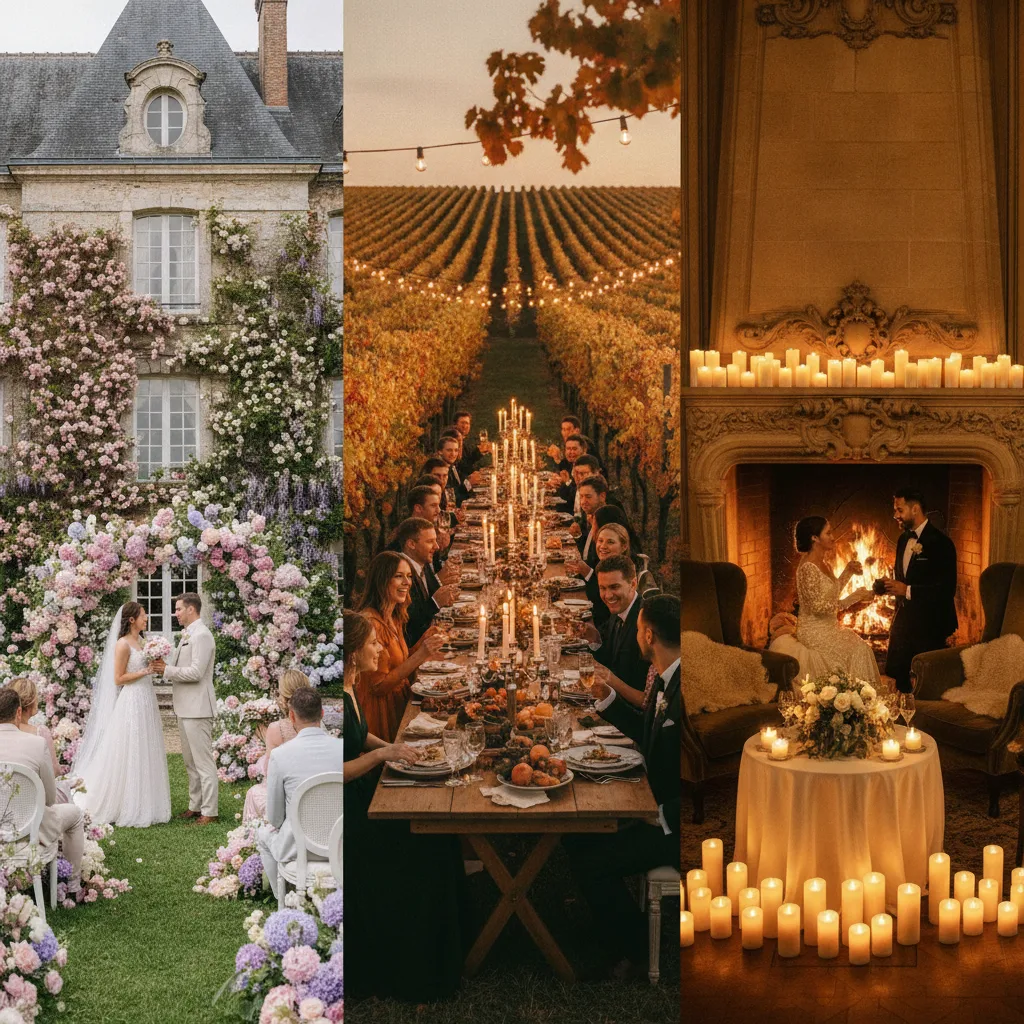
Late spring is consistently ranked among the most desirable windows for a destination wedding in France. From late March through early June, the weather is pleasantly mild, the countryside is lush, and the light is soft without being harsh. In Paris especially, cherry blossoms, wisteria, and blooming gardens create backdrops that feel almost impossibly romantic. For editorial-style photography, spring offers a color palette of fresh greens, pastels, and floral abundance that translates beautifully into fine-art imagery.
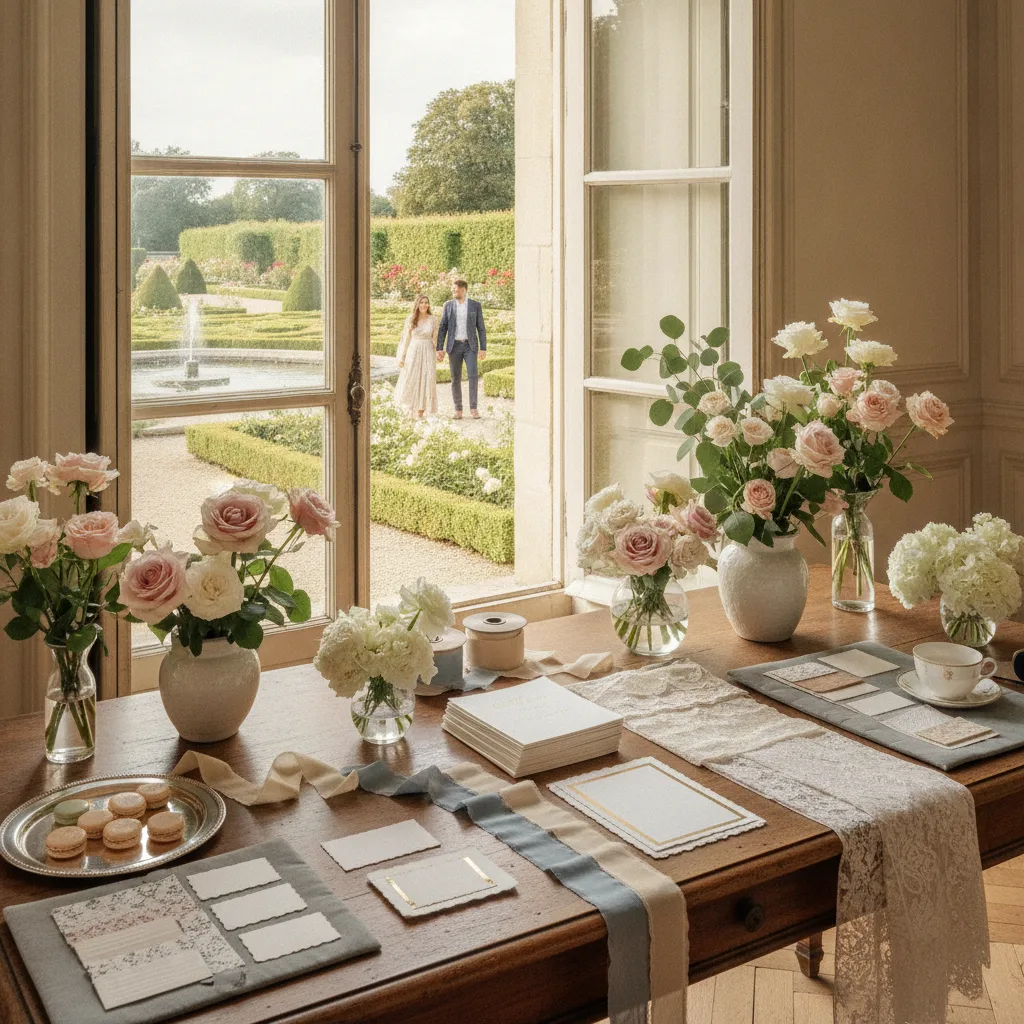
From a photographic standpoint, spring days are long enough to allow for extended coverage, yet the sun sits at a lower angle than in midsummer, producing the kind of diffused, flattering light that portrait photographers love. Outdoor ceremonies feel effortless, and golden-hour portrait sessions are easy to plan without competing with extreme heat.
Things to consider for a spring wedding in France
The main consideration with spring is unpredictability. Rain showers and cooler evenings are common, particularly in late March and April, and a backup plan (a well-designed tent or a stunning indoor salon) is not optional; it is essential. Couples marrying in May enjoy the most reliable conditions within the spring window, and many top venues and photographers begin filling their May calendars 12 to 18 months in advance.
Summer Weddings in France (June to August)
Why summer is popular for French weddings
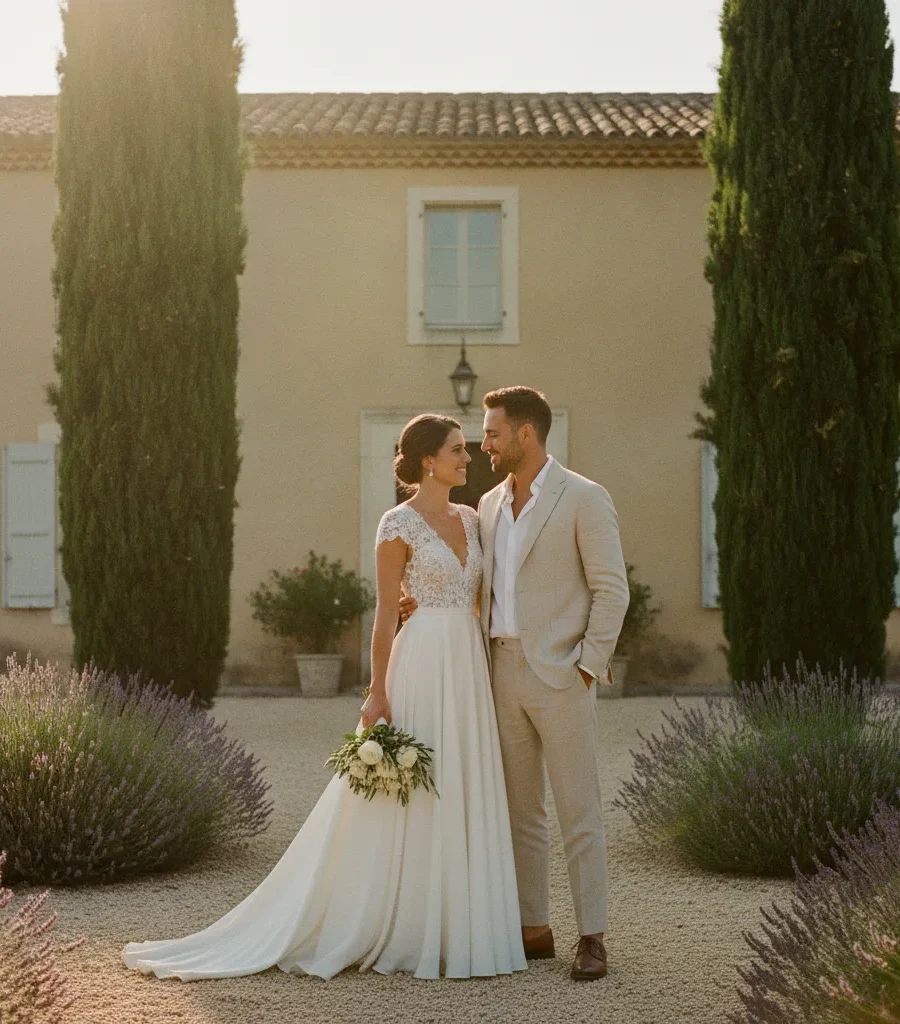
Summer is the most popular season for destination weddings in France, and it is easy to understand why. Long daylight hours, consistent sunshine, and warm evenings make outdoor receptions feel natural and festive. In the South of France, Provence, and along the Côte d’Azur, summer is practically synonymous with celebration: rosé on a château terrace, candlelit dinners under the stars, and swimming pools that double as backdrop for welcome parties.
For photographers, summer offers extraordinary flexibility. Ceremonies can be scheduled in the late afternoon, receptions extend well into the night, and sunset sessions over vineyards or lavender fields produce images that feel cinematic and alive. French weddings are known for running very late, often continuing until 4:30 in the morning, and summer’s long days make that kind of extended coverage feel natural rather than exhausting.
Summer heat and high-season considerations
The challenge with July and August, however, is the heat. Temperatures in the South of France regularly reach 30°C and can spike to 42°C during heatwaves. This affects not only guest comfort but also the quality of midday photography, when harsh overhead light creates unflattering shadows and causes even the most relaxed couple to look tense. Experienced photographers working in this region will almost always recommend scheduling the ceremony in the late afternoon or early evening to avoid the worst of the light and the heat.
High season also means higher costs and reduced availability. Late June and September are the first dates to sell out among top venues and photographers, so couples with a summer vision should begin their search early and expect to commit to their vendor team well over a year in advance.
Autumn Weddings in France (September to November)
Why autumn is ideal for a French wedding
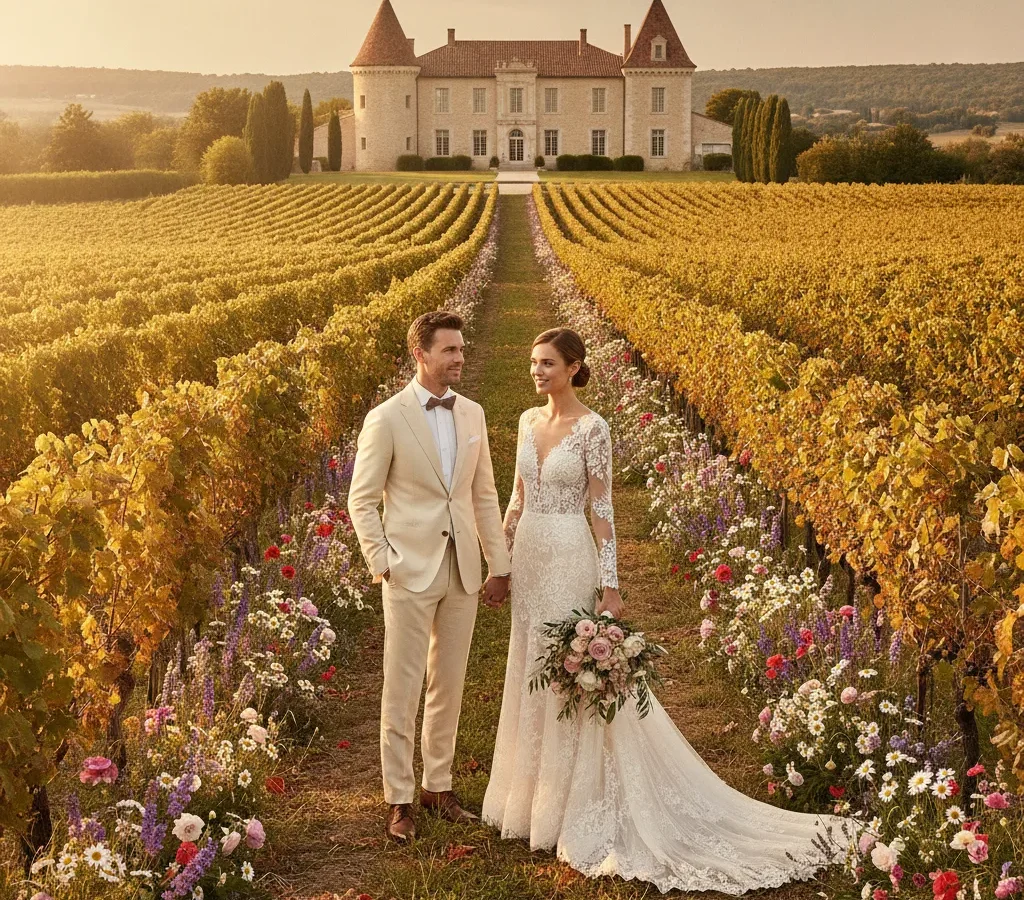
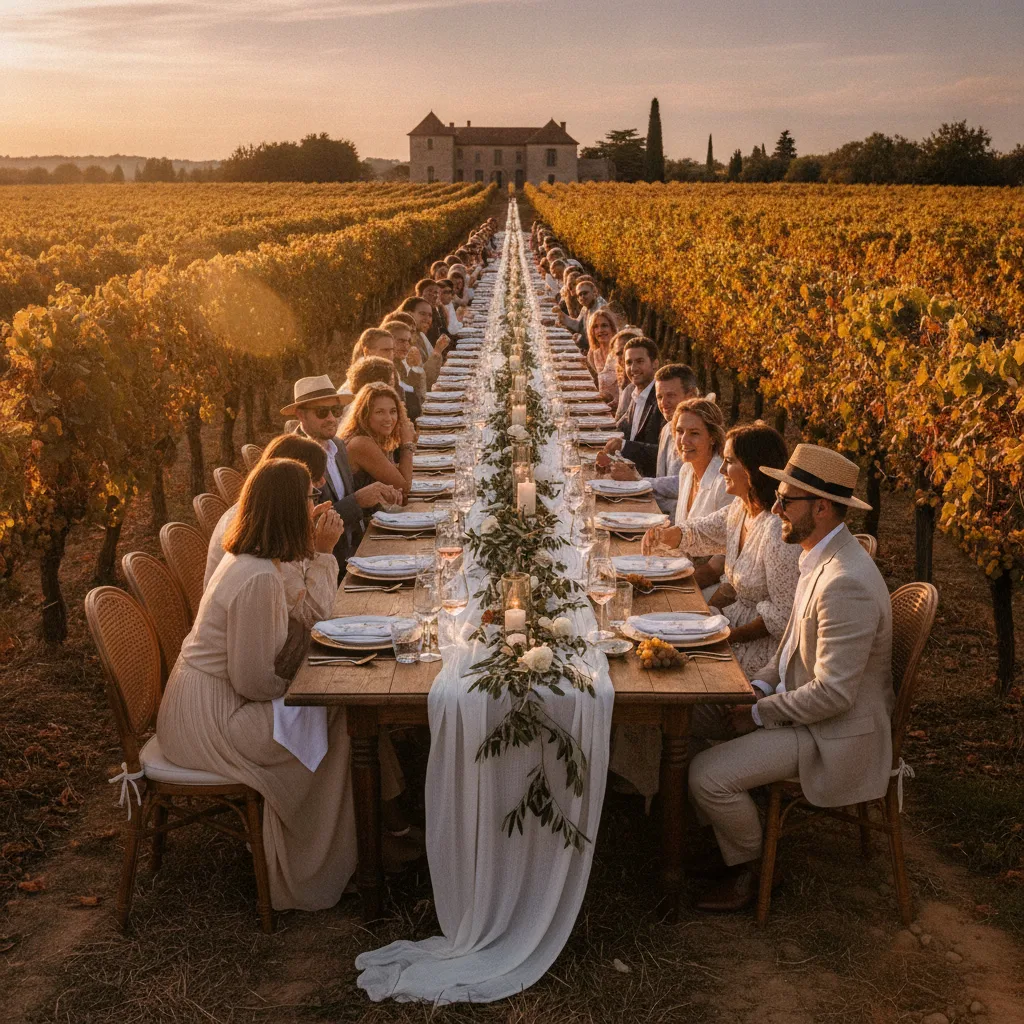
Many wedding professionals, including photographers and planners with years of experience in France, consider September to be the single best month for a French wedding. The reasoning is straightforward: the heat of summer has softened, the light has turned golden and directional, the tourist crowds have thinned, and the landscape has taken on the warm, harvest-season richness that makes Provence and the Loire Valley look like paintings.
For photography, early autumn is exceptional. The sun sits lower in the sky, which means golden hour arrives earlier and lasts longer. Vineyard weddings in September benefit from the harvest season backdrop, with rows of heavy vines and warm amber light that no filter can replicate. Château gardens begin their transition from lush green to copper and gold, adding depth and texture to every frame. Guest comfort is also significantly better than in midsummer, which means longer outdoor portrait sessions and a more relaxed energy throughout the day.
October remains beautiful, particularly in Paris, where the city’s famous avenues are lined with falling leaves and the light takes on a quality that feels almost melancholic in the best possible way. The practical consideration from October onward is that days shorten quickly, which requires careful timeline planning to ensure key moments (the ceremony, the portraits, the first dance) all fall within the available light window. Rain also becomes more likely as autumn deepens, so venue selection matters.
Winter Weddings in France (December to February)
Winter weddings in France are less common, but they are far from impossible, and for the right couple, they can be genuinely extraordinary. A candlelit château wedding in December, with roaring fireplaces, seasonal floral arrangements, and the soft glow of festive lighting, has a mood that no other season can replicate. Photographers working in winter have access to atmospheric, moody light that lends itself to intimate, emotionally rich storytelling.
Off-season dates also come with practical advantages. Venue availability is significantly better, and in some cases pricing reflects the lower demand. For couples who are flexible and drawn to a more intimate, cozy aesthetic rather than an outdoor summer celebration, winter deserves serious consideration.
The trade-offs are real: daylight windows are short, outdoor shooting time is limited, and international travel during the Christmas and New Year period can be complicated by disruptions. Couples choosing a winter date should work with a photographer who is genuinely skilled in low-light and indoor environments, and who can bring the same level of artistry to a candlelit ballroom as to a golden-hour vineyard.
Regional Considerations Across France
The right season also depends heavily on where in France you are celebrating. Paris weddings benefit most from spring and early autumn: spring for the blossoms and soft light, autumn for the golden leaves and quieter streets. Summer in Paris is beautiful but crowded, and iconic location shoots near the Eiffel Tower or Montmartre require careful planning to avoid the tourist saturation that peaks in July and August.
Provence and the Côte d’Azur are at their most spectacular in summer, but the heat demands strategic scheduling. Late afternoon ceremonies and early evening receptions are not just a preference here; they are a practical necessity for both guest comfort and photographic quality. September in this region is a genuine sweet spot: warm enough for outdoor dining, cool enough for dancing, and visually stunning in a way that feels effortless.
Château and vineyard regions, including the Loire Valley, Burgundy, and Bordeaux, are best experienced from late spring through early October. The September harvest season in particular offers a backdrop that is unique to France and impossible to recreate elsewhere.
A Practical Overview by Season
| Season | Best months | Light quality | Key advantage | Main consideration |
|---|---|---|---|---|
| Spring | May to early June | Soft, diffused | Blooms, mild weather | Unpredictable rain |
| Summer | Late June to August | Bright, long days | Outdoor receptions, long evenings | Heat, crowds, high costs |
| Autumn | September to October | Golden, directional | Harvest backdrop, fewer crowds | Shorter days from October |
| Winter | December to February | Moody, intimate | Availability, cozy atmosphere | Short daylight, travel risk |
Legal Timing for US Couples Marrying in France
One practical matter that often surprises American couples is the legal structure of French weddings. In France, only the civil ceremony at the town hall (the mairie) is legally recognized. To marry legally in France, at least one partner must typically reside in the relevant commune for a minimum of 40 days before the ceremony, along with providing specific documentation.
For this reason, many US couples choose to complete their legal civil ceremony at home and then hold a symbolic or religious celebration ceremony in France. This approach removes the residency constraint entirely and allows the celebration to be scheduled based purely on the best season for photography, guest travel, and venue availability. It is worth discussing this structure with your wedding planner early in the planning process, as it affects the overall timeline and documentation requirements.
FAQ
Is September really the best month to get married in France?
September is widely regarded by wedding professionals and photographers as one of the strongest months for a French wedding. It combines warm temperatures without the extreme heat of midsummer, softer and more directional light that is ideal for photography, reduced tourist presence at key locations, and the visual richness of the harvest season. It is also worth noting that late June and September are the first dates to be fully booked at top venues, which reflects just how sought-after this window is.
How far in advance should we book a photographer for a French destination wedding?
For peak season dates in May, June, and September, booking 12 to 18 months in advance is strongly recommended. Top photographers and venues fill their calendars quickly for these months, and the most sought-after dates can be gone well before that window. Shoulder season dates in April, May, October, and November offer slightly more flexibility, but the same principle applies: the earlier you secure your creative team, the more options you will have.
Does the season affect the cost of a destination wedding in France?
Yes, season has a direct impact on pricing and availability. High season (June through September) typically commands higher venue fees and sees tighter vendor calendars. Shoulder season dates in late spring and early autumn can offer slightly better value without sacrificing the visual quality that makes France such a compelling destination. A luxury wedding in France can range from roughly 70,000 to 150,000 euros, with ultra-luxury celebrations exceeding that significantly, and the time of year is one of several factors that influences where within that range your budget will land.
What is the best season for wedding photography in Paris specifically?
Paris is at its most photogenic in spring (late March through May) and early autumn (September through October). Spring brings the famous cherry blossoms, wisteria, and a freshness to the city’s parks and gardens that photographs beautifully. Autumn offers golden light, falling leaves along the grand avenues, and a quieter city after the summer crowds have left. Both seasons are strongly recommended for couples who want editorial-quality images in an urban Parisian setting.
Choosing the Perfect Season for Your French Wedding
Choosing the right season for your French wedding is ultimately a reflection of who you are as a couple and what you want your day to feel like. Whether you are drawn to the fresh energy of a May château celebration, the golden warmth of a September vineyard dinner, or the intimate magic of a candlelit winter reception, France has the extraordinary ability to make every season feel like the right one. The key is working with a team that understands not just the logistics but the light, the landscape, and the emotional texture of each moment.
If you are beginning to plan your destination wedding in France and want to explore how to make the most of your chosen season, Lino Ludovic offers the kind of artistry and cultural fluency that transforms a beautiful day into a timeless visual story.