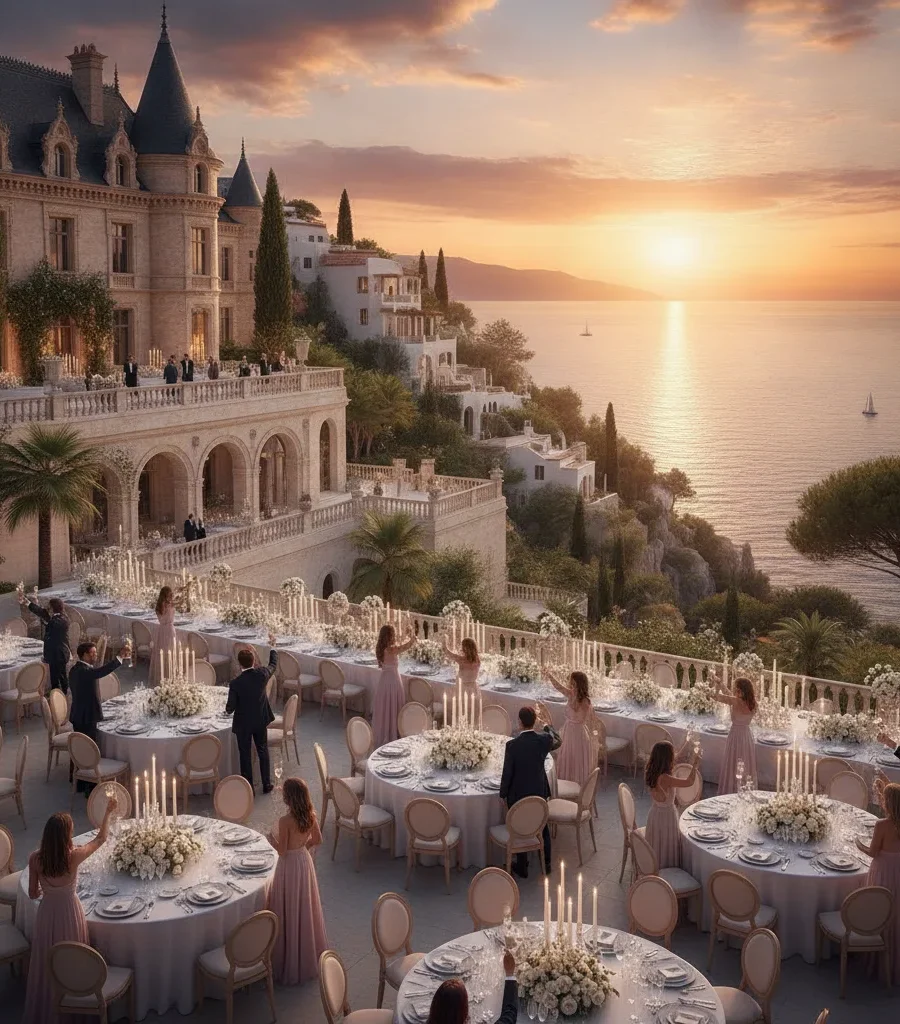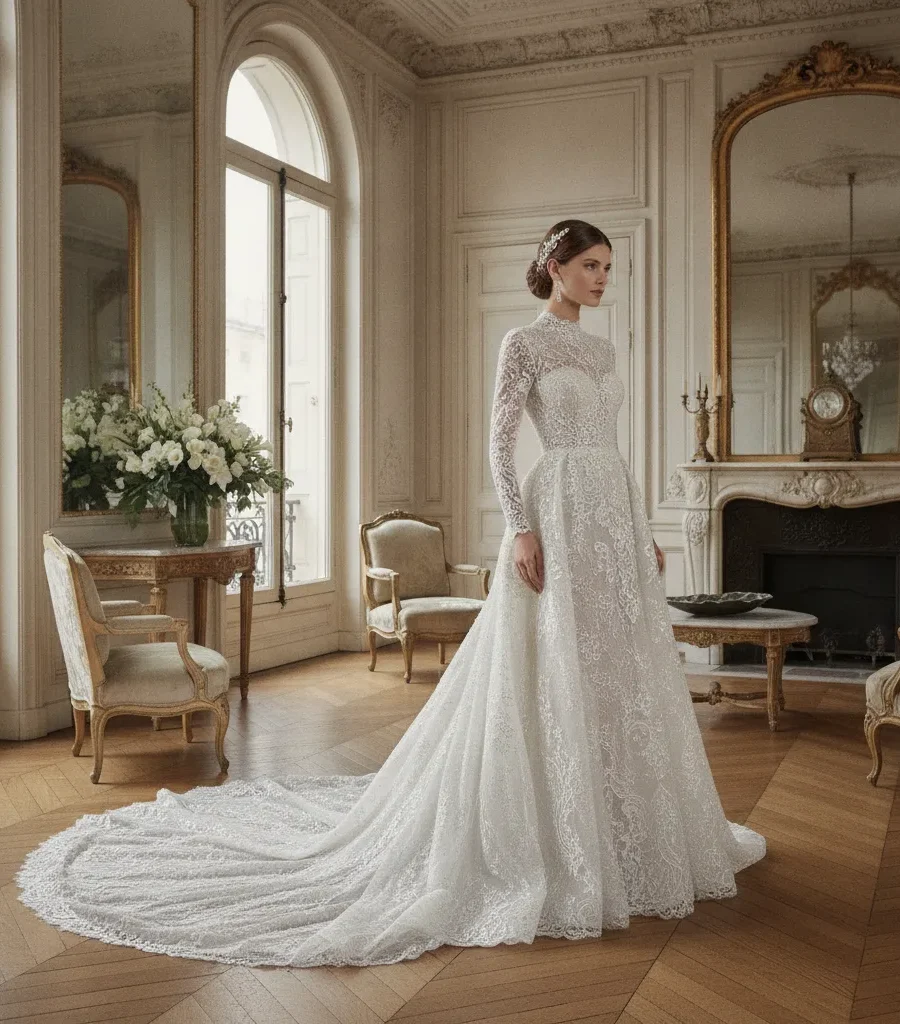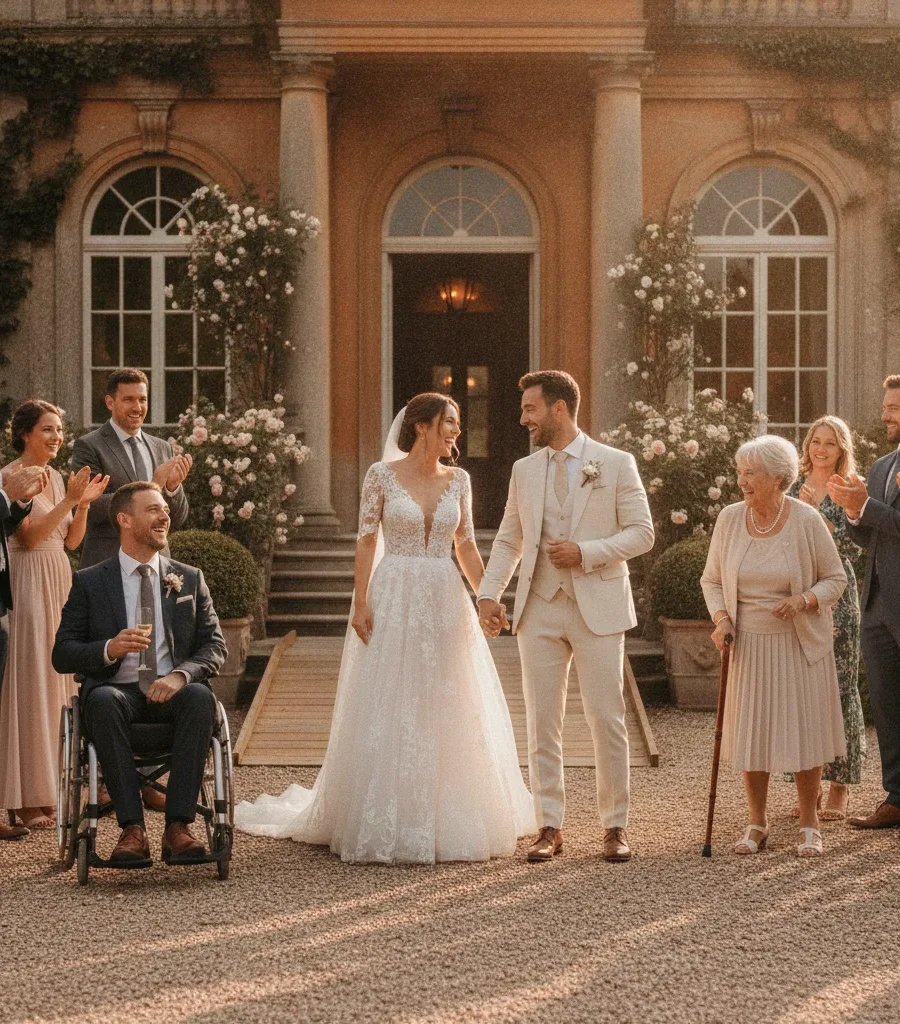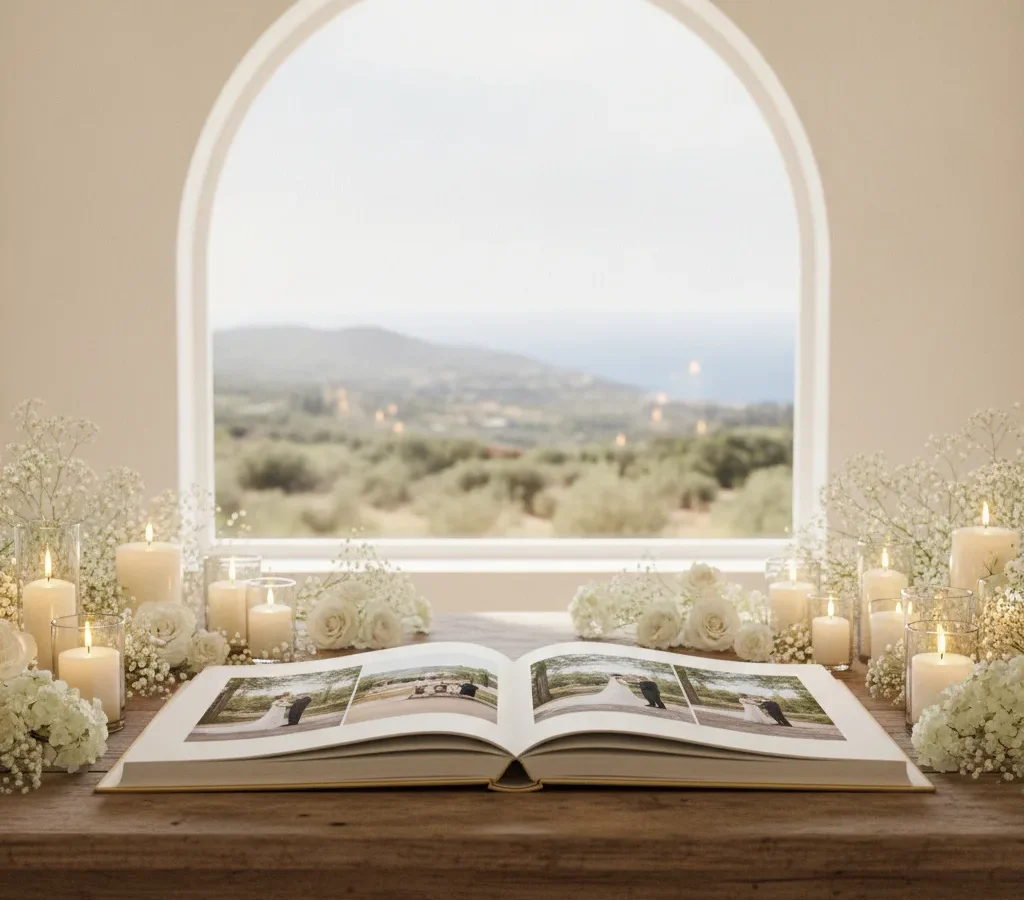
In an era where wedding photographs are delivered as digital galleries and shared on social media within days, a quiet but powerful counter-movement is gaining momentum. More and more couples, especially those who have invested in a destination wedding in France or Italy, are choosing to translate their most meaningful images into something far more lasting: a fine art wedding album.
This is not a simple photo book ordered from a consumer printing platform. It is a handcrafted object, designed with intention, built to endure for generations, and conceived as a genuine family heirloom.
Fine Art Wedding Albums
Fine Art Wedding Albums | A Complete Buyer’s Guide
Reading time: ~8 min
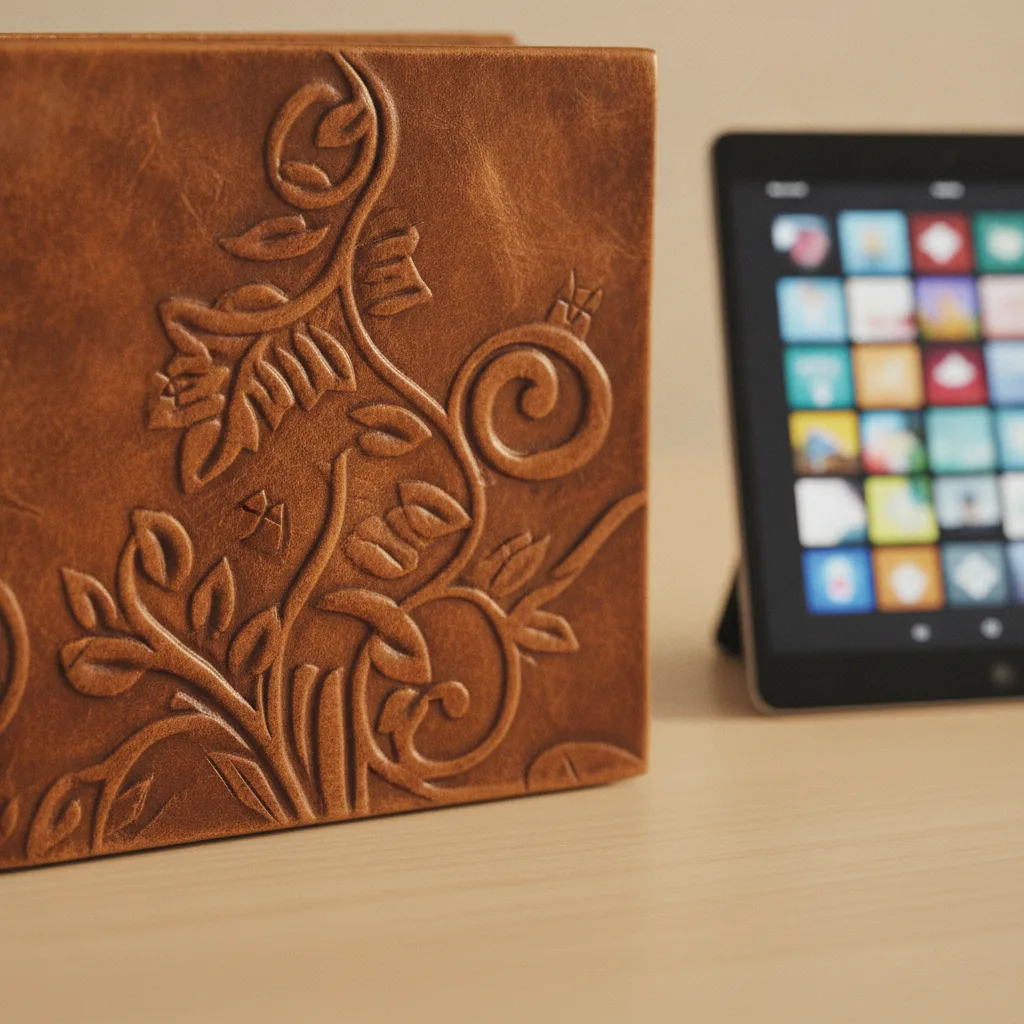
Table of contents
- Fine Art Wedding Albums vs Standard Photo Books
- Materials, Construction, and Archival Standards
- The Design Process: Narrative Storytelling and Image Curation
- Personalization, Keepsakes, and Mixed Media
- Pricing, Production Timelines, and When to Order
- Frequently Asked Questions
- Turning Digital Files into a Family Heirloom
In brief:
- Fine art wedding albums vs standard photo books: understanding the fundamental differences in craftsmanship, materials, and design philosophy.
- Materials and construction: what archival papers, lay-flat binding, and luxury covers actually mean for longevity.
- The design process: how narrative storytelling and image curation shape the final object.
- Personalization and mixed media: adding vows, pressed flowers, and keepsakes to your album.
- Pricing and production timelines: what to expect and when to order.
- Eco-friendly options: sustainable luxury without compromising durability.
Fine Art Wedding Albums vs Standard Photo Books
The distinction between a fine art wedding album and a standard photo book is not merely aesthetic. It is structural, material, and philosophical. A standard photo book is a consumer product: it is printed on lightweight paper using inkjet or laser technology, assembled by an automated process, and typically delivered within a few days. The result is pleasant and functional, but it is not built to last decades.
A fine art wedding album, by contrast, is produced through an entirely different process. The pages are printed using archival pigment printing, a technique that produces exceptional color accuracy and is designed to resist fading for decades when stored correctly. The binding is done by hand, using lay-flat or flush-mount construction, which means the pages open completely flat across the full spread, allowing panoramic spreads to read as a single, uninterrupted image. The covers are made from premium materials such as genuine leather, linen, velvet, or textured eco fabrics, and are often personalized through debossing or foil stamping of the couple’s names and wedding date.
| Criteria | Fine Art Wedding Album | Standard Photo Book |
|---|---|---|
| Printing and binding | Archival pigment printing; hand-binding with lay-flat or flush-mount construction | Inkjet or laser printing; automated, glued spine |
| Paper quality | Archival, ISO-rated, eco-friendly options | Standard photo paper |
| Cover materials | Leather, linen, velvet, textured fabric | Basic hardcover or softcover |
| Personalization | Debossing, foil stamping, bespoke design | Online template, limited options |
| Design service | Curated by photographer or boutique lab | DIY online tool |
| Expected longevity | 30 years and beyond | 5 to 15 years |
| Production time | 4 to 8 weeks | 3 to 7 business days |
| Price range | Premium, heirloom segment | Consumer, accessible segment |
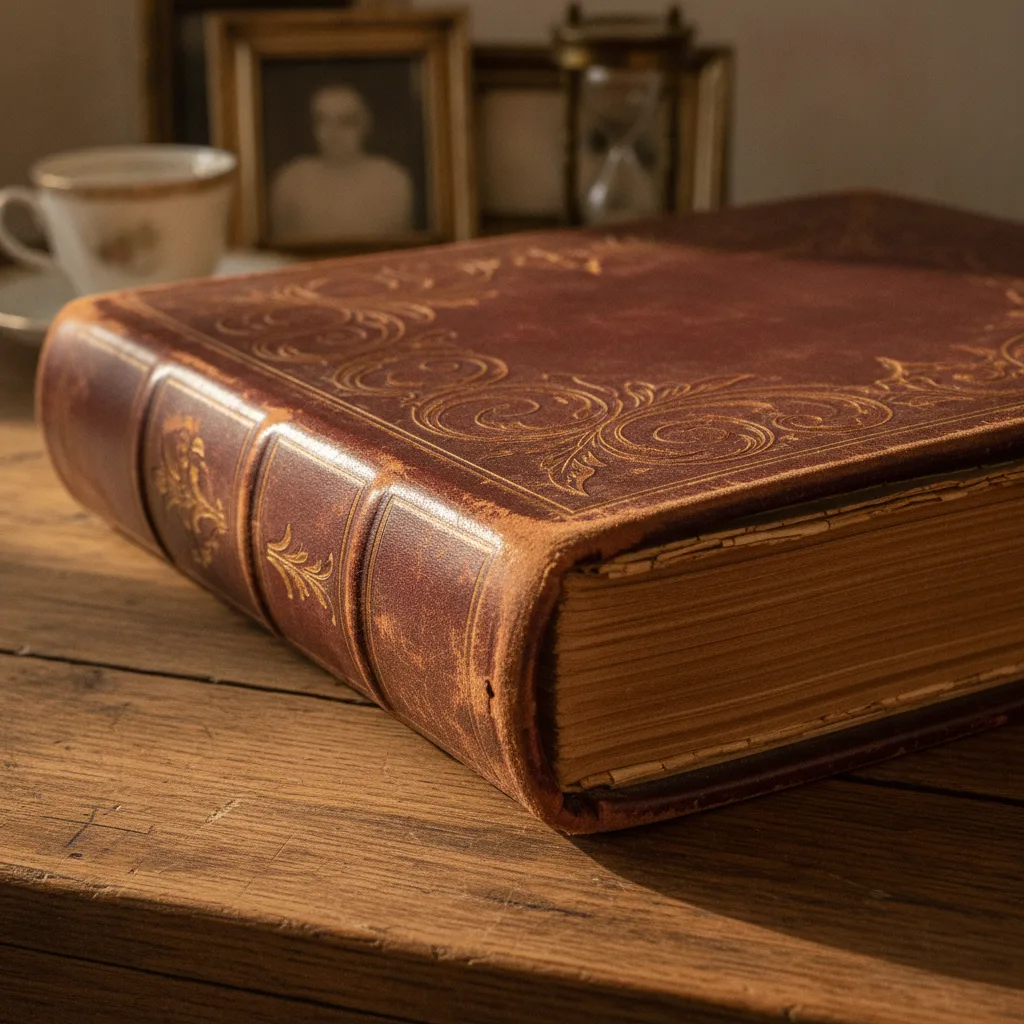
For couples who have invested significantly in a destination wedding, whether at a historic French chateau, along the French Riviera, or at a villa on Lake Como, the album is the one physical artifact that will outlast every other element of the celebration. The flowers are gone. The venue has hosted a hundred other events. The album remains.
Materials, Construction, and Archival Standards
Archival papers and pigment inks
Understanding the materials used in a luxury wedding photo album helps couples make informed decisions and set realistic expectations. The paper used in fine art albums is typically rated according to ISO archival standards for photographic materials, meaning it has been tested for acid content, light resistance, and long-term stability. When combined with archival pigment inks, the resulting prints are designed to remain vibrant and stable for generations, provided the album is kept away from direct sunlight and excessive humidity.
Lay-flat, flush-mount construction
Lay-flat construction, also called flush-mount, is the technical backbone of the finest albums. Each spread is mounted onto a rigid substrate, which prevents the pages from curling and allows the album to open completely flat. This is particularly important for panoramic spreads, where a single image spans the full width of two facing pages. In a standard photo book, the center of such an image would disappear into the gutter. In a flush-mount wedding album, it reads as a seamless whole.
Cover materials and sustainable options
Cover materials are equally significant. Linen covers offer a refined, tactile quality that ages beautifully. Velvet covers convey a sense of intimacy and warmth. Leather covers, whether traditional or vegetable-tanned, are the most durable option and develop a subtle patina over time. Many couples are now also choosing eco-friendly archival paper and sustainable fabric covers, materials that are specifically selected to balance environmental responsibility with the longevity expected of a true heirloom. According to industry research from Folio Albums and Verified Market Research, the demand for sustainable luxury in the premium album segment is growing steadily, driven by eco-conscious couples who refuse to compromise on quality.
Good to know. Eco-friendly fine art wedding albums made with sustainably sourced papers and organic fabric covers meet the same archival durability standards as traditional materials, provided they are produced by a certified professional lab. Sustainability and longevity are not in conflict in the premium segment.
The Design Process: Narrative Storytelling and Image Curation
From collection to cohesive narrative
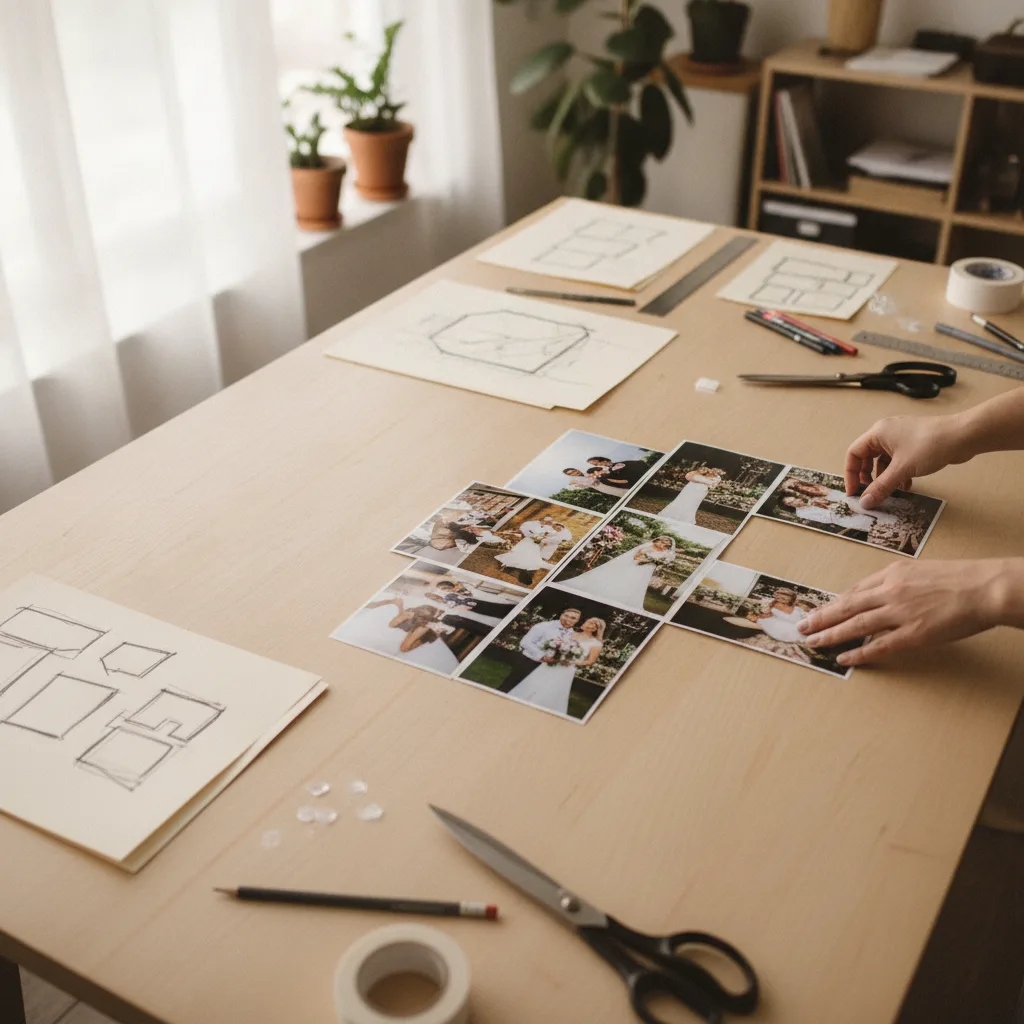
A fine art wedding album is not simply a collection of your favorite photographs. It is a visual narrative, structured with the same care and intention as a well-edited film. The design process begins with image curation: selecting the photographs that, together, tell the full story of the day, from the quiet intimacy of getting ready to the last dance of the reception.
Balancing emotion and structure
Industry research consistently highlights narrative-based design as one of the primary drivers of perceived value in premium albums. Buyers respond not to the quantity of images but to the coherence and emotional arc of the sequence. A well-designed album might include between 60 and 100 images across 30 to 40 spreads, with each layout considered individually and as part of the whole. Some spreads feature a single hero image across the full double page. Others combine two or three complementary photographs in a clean, minimalist composition.
Editorial design for destination weddings
At Lino Ludovic, the design process is guided by the same editorial sensibility that shapes the photography itself. The goal is an album that reads like a story, not a catalog. Each image is placed where it creates the greatest emotional impact, and the pacing of the layouts reflects the rhythm of the day: slower and more intimate during the ceremony, more dynamic and layered during the reception.
Personalization, Keepsakes, and Mixed Media
Mixed media keepsakes
One of the most meaningful developments in fine art wedding album design over the past few years is the integration of mixed media keepsakes. Couples are increasingly choosing to include elements beyond photographs: a scan of the handwritten vows, a pressed flower from the bridal bouquet, a reproduction of the ceremony program, or a fabric swatch from the wedding dress. These additions transform the album from a photo collection into a true memory artifact.
Cover details and typography
Personalization extends to every surface of the object. The cover can be debossed with the couple’s initials or the date of the wedding. Foil stamping in gold, silver, or rose gold adds a layer of refinement. Custom typography choices, from the font used for captions to the style of the title page, allow the album to reflect the couple’s aesthetic precisely. For destination weddings in France or Italy, this level of bespoke album design ensures that the object itself feels as considered and intentional as the celebration it documents.
Parent albums and companion books
Many couples also choose to order companion books or parent albums alongside the main volume. These smaller-format albums, produced with the same materials and care, are designed to be given as gifts to parents or close family members who traveled across the world to be present. According to data from Verified Market Research, the shift toward multi-format life-cycle collections, combining a main album with parent albums and anniversary books, is one of the most significant upsell trends in the premium wedding photography market.
Key takeaway. Ordering parent albums at the same time as the main fine art wedding album is almost always more cost-effective than ordering them separately later. The design files are already prepared, and many professional labs offer companion book pricing when ordered as part of the original package.
For couples who want a bespoke album design that feels as considered as the celebration it documents, the object should be treated as part of the story from the start, not as an afterthought.
Pricing, Production Timelines, and When to Order
The cost of a fine art wedding album varies depending on size, page count, cover material, and the level of design service included. In the premium, heirloom segment, albums are typically included in or added to high-end wedding photography packages rather than sold as standalone consumer products. The handcrafted premium segment is one of the leading growth drivers in the wider market.
The global wedding photo album market was valued at approximately USD 2.1 billion in 2024 and is forecast to reach USD 4.2 billion by 2033, at a 7.2% CAGR, while another industry report estimates USD 3.51 billion in 2025 and USD 5.80 billion by 2033, with a 6.5% CAGR. That growth confirms that the premium, handcrafted segment is not a niche indulgence, but a leading part of the category.
| Stage | What happens | Typical timing |
|---|---|---|
| Curation | Images are selected and sequenced into a story | Ideally within the first 3 months after the wedding |
| Digital proof | The initial layout is shared for review | After the first design pass |
| Approval | The couple reviews and approves the proof | Before production starts |
| Production | Archival printing, hand-binding, and quality control | 4 to 8 weeks after approval |
| Delivery | The finished album is packaged in a protective presentation box | Final step |
Production timelines for handcrafted fine art wedding albums typically range from four to eight weeks from the approval of the digital proof. The process follows a clear sequence: the photographer or designer curates and sequences the images, builds the initial layout, shares a digital proof for the couple’s review and approval, and then sends the approved files to a professional lab for printing, hand-binding, and quality control. The finished album is then delivered in a protective presentation box.
The optimal moment to begin the album design process is within the first three months after the wedding, while the memories are still vivid and the emotional context for each image remains clear. Couples who wait longer often find the selection process more difficult, and production timelines mean that waiting too long can push delivery past the first anniversary, which many couples hope to avoid.
If you are comparing providers, also ask about the reprint or correction policy, colour accuracy disclaimers between screen and print, and archival care instructions: keep the album away from humidity and direct sunlight.
FAQ
How many photos should be included in a fine art wedding album?
There is no fixed rule, but most fine art wedding albums work best with a curated selection of 60 to 100 images across 30 to 40 spreads. The priority is narrative coherence and emotional impact, not volume. A smaller number of carefully chosen images will always produce a more powerful album than a larger collection of inconsistent ones.
What is the difference between a lay-flat album and a matted album?
A lay-flat album, also called a flush-mount album, features pages mounted on a rigid substrate that open completely flat, allowing images to span the full double-page spread without interruption. A matted album presents each photograph within a bordered mat, similar to a framed print, giving a more classic and gallery-like appearance. Both are considered fine art formats; the choice depends on the couple’s aesthetic preference.
How long does a handcrafted wedding album take to produce?
Once the digital proof has been approved by the couple, production at a professional lab typically takes between four and eight weeks. This timeline accounts for archival printing, hand-binding, quality control, and packaging. It is longer than a standard photo book, but the result is an object built to last for generations.
Can I add keepsakes like handwritten vows or pressed flowers to my album?
Yes. Many fine art wedding albums can incorporate mixed media elements such as scanned handwritten vows, pressed flowers, ceremony programs, or fabric swatches. These are integrated into the layout during the design phase and add a deeply personal dimension to the finished object.
Is a fine art wedding album affected by data privacy regulations like CCPA?
When a photographer uses automated tools or cloud-based platforms to design and process album files, the handling of client images and personal data may fall under regulations such as the California Consumer Privacy Act. It is worth asking your photographer how your images and personal information are stored and processed throughout the capture-to-product pipeline, particularly if you are based in California.
When is the best time to order a fine art wedding album after the wedding?
The ideal window is within the first three months after the wedding. At this point, the memories are fresh, the emotional context for image selection is clear, and ordering early ensures delivery well before the first anniversary. Waiting longer than six months can make the curation process feel more distant and may push the timeline past milestones that matter to many couples.
Turning Digital Files into a Family Heirloom
A fine art wedding album is not a luxury add-on. For couples who have invested in a meaningful, beautifully documented celebration, it is the natural conclusion of the entire photographic process: the moment when digital files become a physical object with weight, texture, and permanence.
The wedding photography market is growing precisely because couples understand, increasingly, that screens fade and hard drives fail, but a well-made, archival-quality album endures. At Lino Ludovic, every album is conceived as a chapter in a family’s visual history, crafted with the same rigor and elegance that defines the photography itself.
To explore what a bespoke fine art wedding album could look like for your celebration, visit Lino Ludovic.