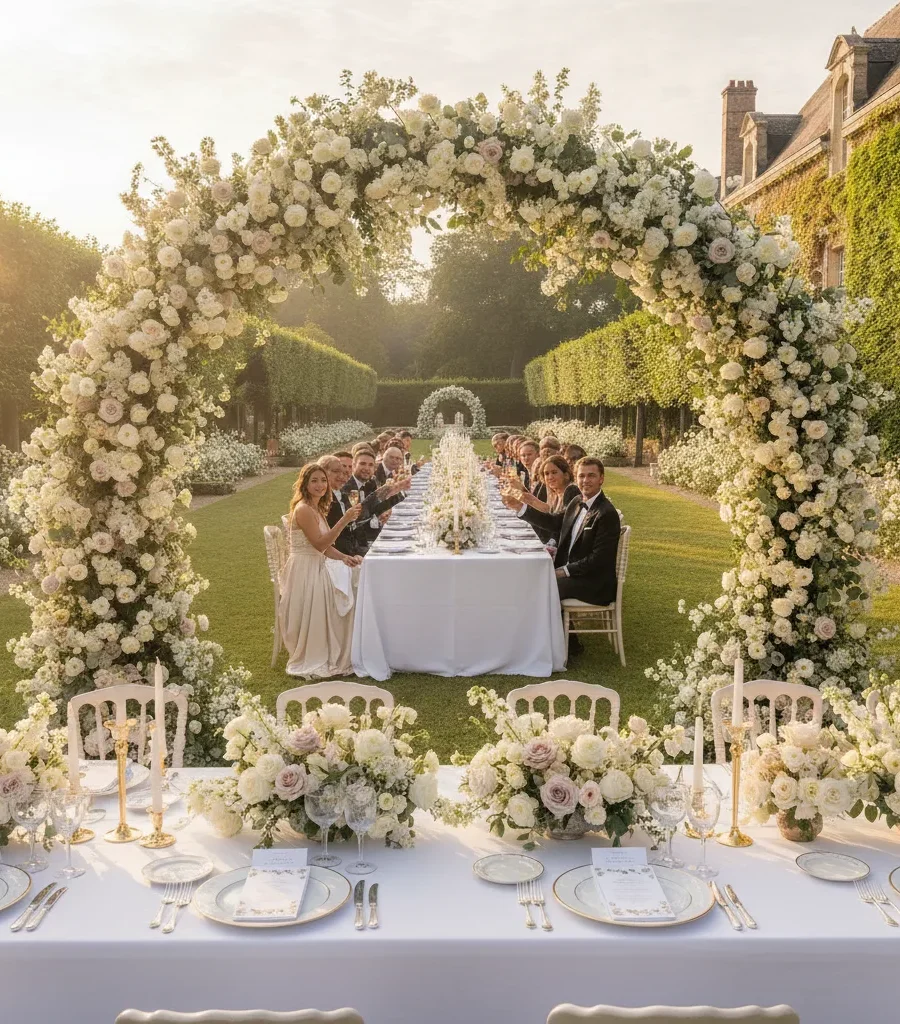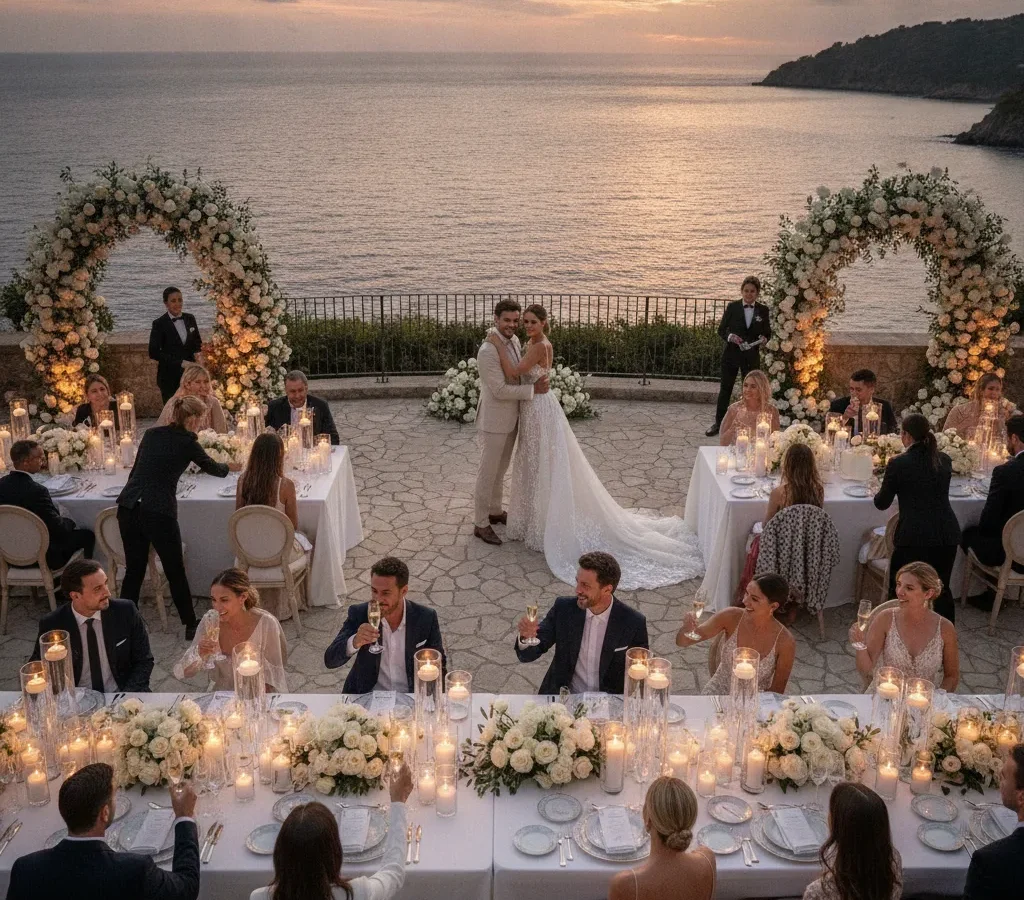
For couples coordinating multiple events destination wedding celebrations in France or Italy, the weekend is rarely a single day. It is a welcome party on a terrace overlooking the sea, a rehearsal dinner in a candlelit cellar, a ceremony at a château and a farewell brunch where everyone finally exhales.
Coordinating multiple events for a destination wedding means treating photography as a production rather than a booking. It requires a master itinerary, scouted locations, synchronized vendors and a team that keeps its energy until the last guest leaves. This guide explains how we approach a multi-day celebration in 2026, from the first planning call to the final gallery.
Temps de lecture : 10 minutes
Coordinating Multiple Events for a Destination Wedding 2026
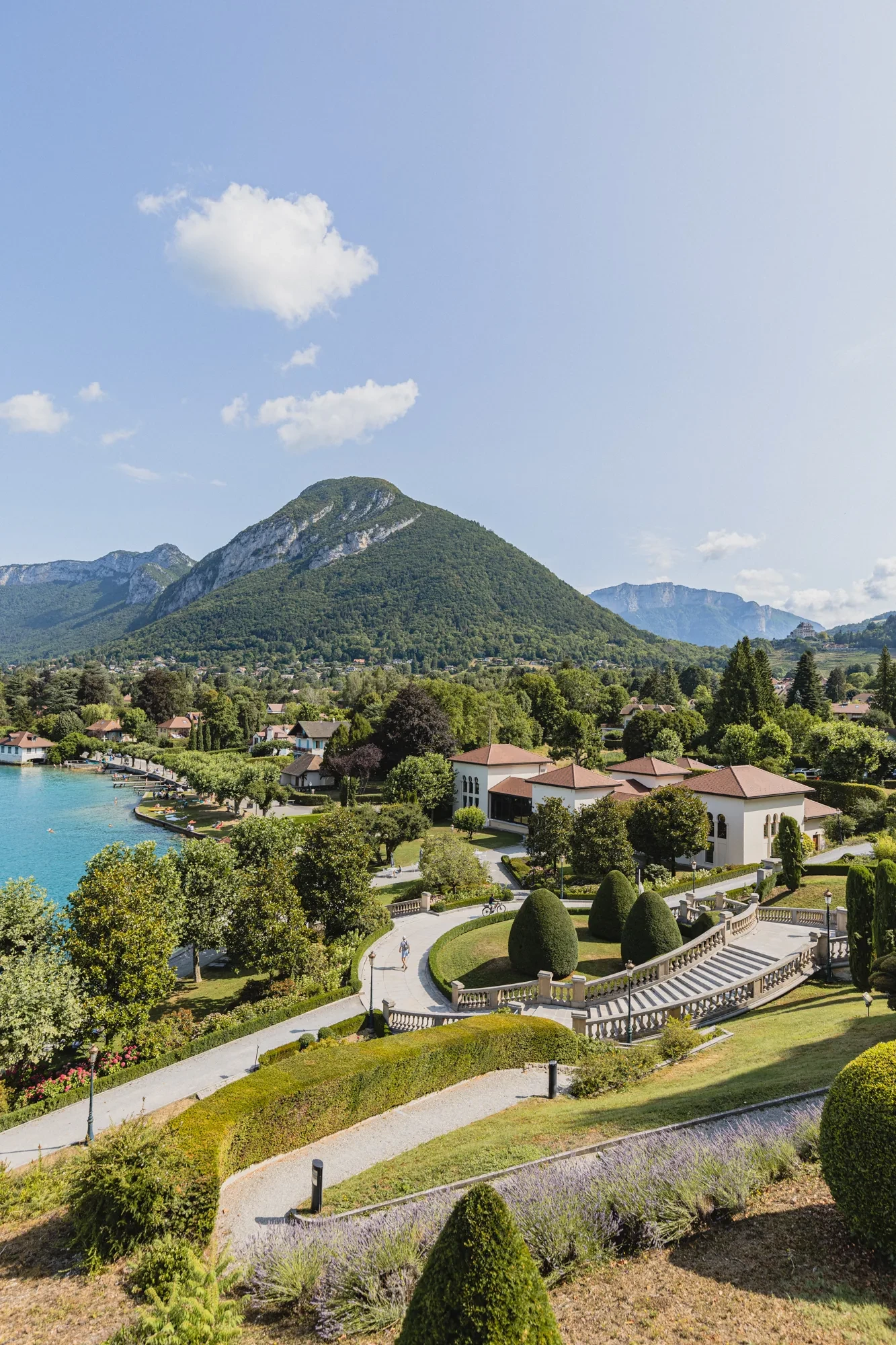
- Why coordinating multiple events for a destination wedding is a production
- Start with one master itinerary
- Fixed points vs. flexible activities in your photography timeline
- A sample three-day wedding weekend photography schedule
- How many photographers and hours you actually need
- Synchronizing with the planner, venue and film team
- Scouting, permits, visas and equipment
- Weather, delays and the backup plan
- Managing energy and images across three days
- What your destination wedding photography contract should include
- When to book your destination photographer
- Plan your multi-day celebration with us
- FAQ
Why coordinating multiple events for a destination wedding is a production
When guests fly across the Atlantic for you, every event carries weight. The welcome party is where families meet for the first time. The rehearsal dinner holds the most personal speeches of the weekend. The wedding day is the main act, and the farewell brunch is the quiet epilogue. Multi-day wedding photography only works when each of these moments has a clear purpose in the overall story, instead of being treated as a shorter copy of the wedding day.
Published multi-day planning guides recommend defining the photographic role of each event before anything else. In practice, this means candid introductions at the welcome party, family interactions and toasts at the rehearsal dinner, full editorial and documentary coverage on the wedding day, and relaxed, informal storytelling at the brunch.
Once those roles are set, the logistics follow naturally, and the final gallery reads as one coherent visual narrative rather than four disconnected sets of images.
Start with one master itinerary
The master itinerary is the single source of truth for the entire weekend. Planning guides suggest that every entry include the event name, date, start and end time, venue, full address, transport plan, coverage hours, key moments, a responsible contact and a backup location. We ask for addresses rather than venue names because travel time between venues in Provence, Tuscany or around Lake Como is often longer than a map suggests, especially with narrow roads, shuttles and guests on foot.
When a wedding planner leads the project, we work directly from their production document and add a dedicated photography timeline on top of it. That photography timeline specifies where the lead photographer and second shooter are at every moment, when the film team needs priority, and where equipment is stored between events.
For couples planning with our photo and film team, photo and film coordination is built into the same document from day one, so nobody competes for the same position during the vows.
Fixed points vs. flexible activities in your photography timeline
The most useful distinction in any destination wedding photography timeline is fixed points vs. flexible activities. Fixed points are the moments that will not move: the ceremony start, sunset, the reception entrance, speeches, the venue curfew and shuttle departures. Flexible activities are everything that can be arranged around them, such as getting ready, the first look, detail photographs, family formals and candid guest interactions.
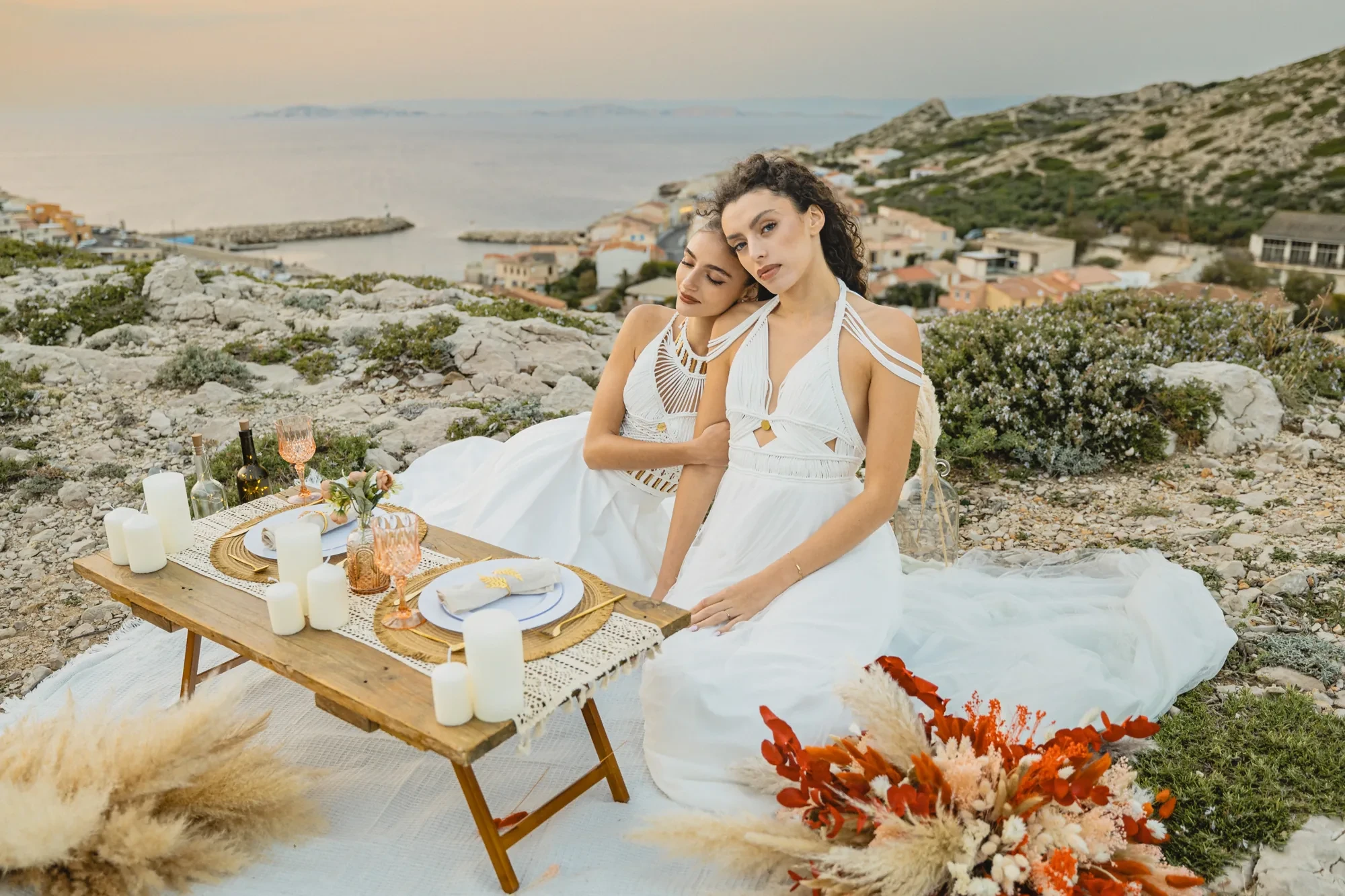
We build the day backward from the fixed points. Golden hour portraits, for example, are anchored to the actual sunset time at the venue nothe wedding date, then everything else is placed before and after.
Timeline guidance from wedding photography educators recommends adding a buffer of 10 to 15 minutes before each important fixed point, plus extra margin for traffic, guest delays and weather. Those time buffers are what allow a timeline to bend without breaking when a toast runs long or a shuttle leaves late.
Good to know
A designated name caller, usually a well-organized friend or family member who knows both sides of the family, can make family formals considerably faster. We share the family photo list with this person a few days before the wedding.
A sample three-day wedding weekend photography schedule
Every celebration is different, but most of the multi-day weddings we document in France follow a similar rhythm. The ranges below come from published multi-day planning models and should be treated as starting points rather than fixed standards. Actual coverage hours per event depend on guest count, distance between venues, cultural ceremonies and whether film is also being produced.
| Day | Event | Typical coverage | Photographic focus |
|---|---|---|---|
| Day 1 | Welcome party | 2 to 4 hours | Guest arrivals, candid introductions, setting and atmosphere |
| Day 1 or 2 | Rehearsal dinner | 2 to 3 hours | Family interactions, speeches, tablescapes |
| Day 2 | Wedding day | 10 to 14 hours | Preparations, first look, ceremony, portraits, reception, party |
| Day 3 | Couple session | 1 to 2 hours | Relaxed editorial portraits in a distinctive local setting |
| Day 3 | Farewell brunch | 2 to 4 hours | Informal goodbyes and documentary coverage |
Welcome party photography and rehearsal dinner photography coverage are where the weekend’s personality often shows most clearly. Guests change outfits between events, and those wardrobe moments deserve to be documented. A burgundy satin evening gown in front of a gilded mirror, a richly embroidered red caftan on the dance floor during a cultural celebration, or a bridal gown with a dramatic train each call for a different light and a different approach.
Farewell brunch wedding photography is lighter, more documentary, and frequently produces some of the most tender images of the weekend because everyone is finally relaxed.
How many photographers and hours you actually need
Structuring coverage across your wedding weekend
The question of how many hours of photography coverage for a destination wedding is really a question about structure. Based on the ranges above, a full three-day weekend typically represents somewhere between roughly 17 and 27 hours of active coverage, before travel and setup. Multi-day wedding photography packages should be built around the events that matter to you rather than a generic block of hours.
Parallel coverage is the second consideration. One photographer can handle sequential events at a single venue. A lead photographer and second shooter become essential when both partners get ready in separate locations, when the guest list is large, or when the planner needs dedicated coverage of tablescapes and floral installations while the couple is in portraits. Each team member receives an explicit assignment and an individual start time in the photography timeline.
Synchronizing with the planner, venue and film team
Working as one coordinated vendor team
For US wedding planners producing in Europe, the photographer must be an integrated part of the vendor team, not a separate act. We work from a shared vendor contact sheet and confirm every change in event times, room locations or transport with the planner and the venue coordinator. Black-tie attire, discreet movement during speeches and respect for the timeline are non-negotiable on our side.
Before the weekend, we review the following shared documents with the planner:
- The master itinerary and the detailed photography timeline
- The family and group shot list, organized by shot list categories (couple, family, details, events)
- Venue rules, curfew and any restrictions on flash, tripods or movement
- The transportation schedule and the weather contingency plan
- The list of design elements the planner wants documented for publication submissions
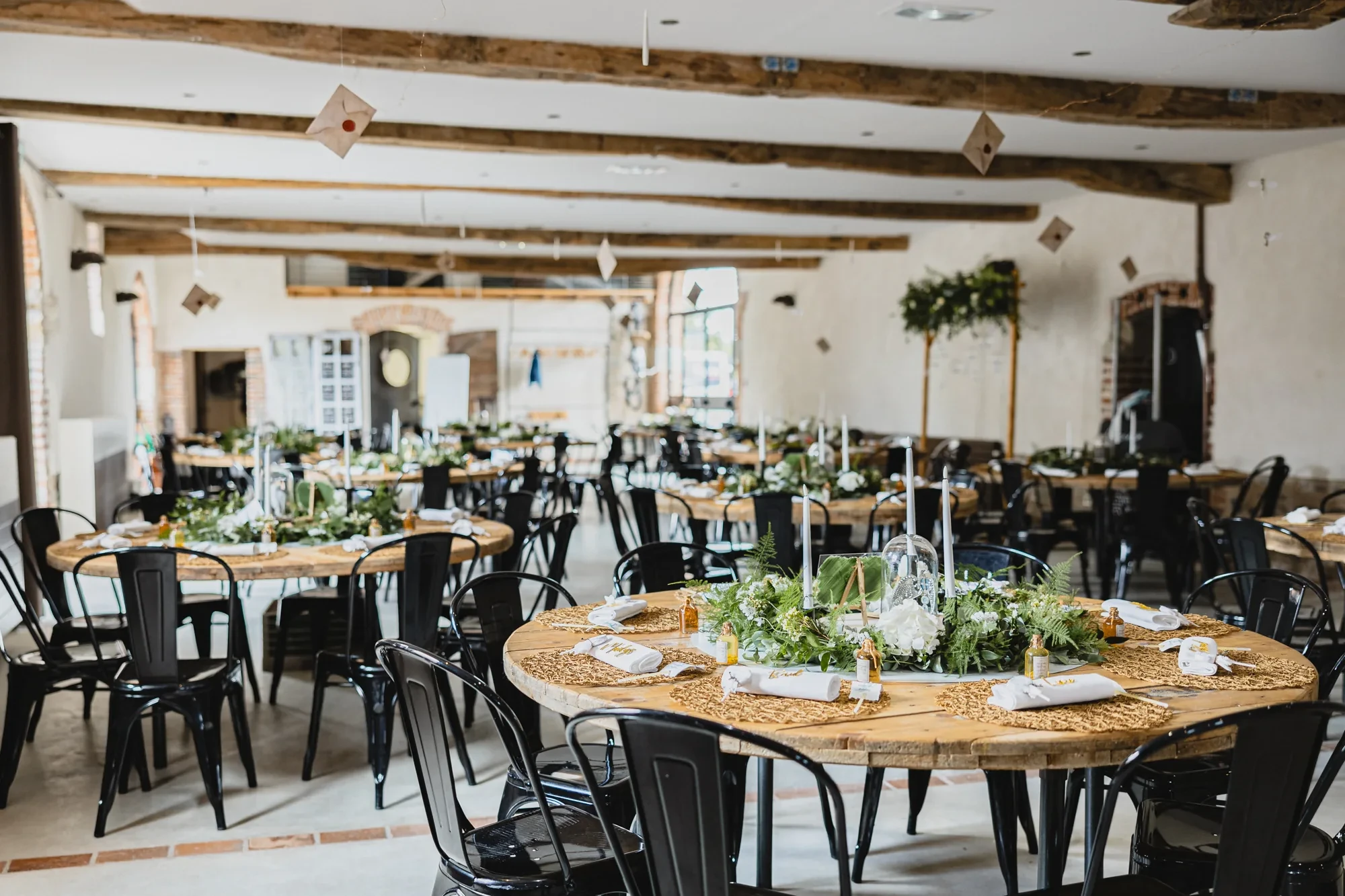
That last point matters. A planner may have spent more than a year conceptualizing a floral installation or a tablescape, and we photograph it before guests enter, in clean light, with the architecture of the château or villa as context.
This is also where sneak peek delivery is agreed in advance, so the planner can share a selection with their PR and social media team according to a schedule set at the planning stage.
Scouting, permits, visas and equipment
Local scouting, regulations and practical logistics
Location scouting is where much of the invisible work happens. Whenever possible, we visit each venue at the same hour as the planned shoot to study the light, identify portrait spots and measure the real walking and driving time between locations. Our past weddings at Château de Matel, in Entrevaux in Provence or by Lake Annecy each required a different scouting plan, from medieval stairways to lakeside docks.
Photography permits for destination weddings deserve early attention. Public squares, historic sites, religious buildings and beaches can all restrict photography, tripods or filming, and destination guides recommend getting venue and officiant rules in writing. Drone regulations add another layer. A drone pilot certification issued under FAA rules in the United States does not automatically authorize flights in France or Italy, where local aviation authorities and site-specific restrictions apply, and some venues prohibit drones entirely.
The work visa for photographers is another point that US couples and planners often overlook. A photographer flying in from the United States may need to check work authorization requirements and travel with an ATA Carnet, a customs document that allows professional equipment to be temporarily imported without paying duties. Because we are based in France, these steps are simply not part of the equation, which removes one layer of risk and some of the destination wedding photographer travel fees that come with international crews.
Equipment redundancy completes the picture. Every camera body, lens category, battery and memory card has a backup, and we plan charging time between events the same way we plan travel time.
Weather, delays and the backup plan
A destination wedding photography backup plan should cover conditions that can affect several events at once: rain, strong wind, extreme summer heat on the Riviera, delayed flights or road closures. The weather contingency plan identifies an indoor alternative for each event, a covered space for the welcome party and a flexible window for portraits, along with a clear decision-maker, usually the planner, who decides when to relocate.
In practice, we keep at least two possible portrait slots on the wedding weekend. If the light fails on Saturday, the couple session on Sunday morning becomes the safety net. Weather-resistant equipment protection and a local network of trusted colleagues also mean that an illness or emergency does not leave the wedding uncovered.
Important
The contract should state what happens if the schedule expands or is delayed. An extra welcome event or a reception that runs past the planned end time may require overtime or a second shooter, and agreeing on overtime rates in advance avoids awkward conversations at midnight.
Managing energy and images across three days
Stamina is part of the craft. A wedding day of 10 to 14 hours, bracketed by two other events, demands real energy management. We schedule meal breaks, rest and travel for the creative team directly into the timeline, as multi-day workflow guides recommend, because a photographer who is exhausted on day three will not see the small gestures that make a farewell brunch memorable.
The same discipline applies to files. Daily file backup and culling is a fixed routine: after each event, every card is copied to at least two separate drives, and a first selection is made that evening. Images are organized by date and event from the start, which allows us to deliver either one unified gallery or separate galleries for each part of the weekend, depending on what was agreed.
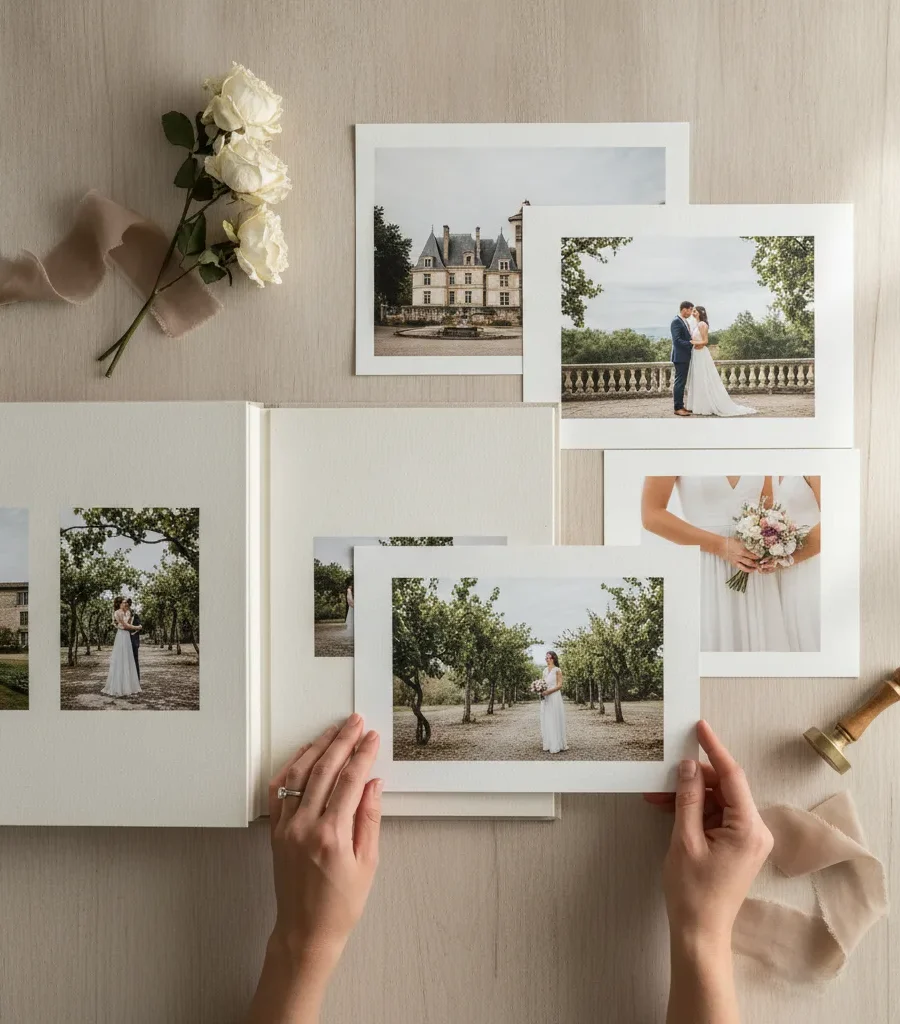
The final stage is often a fine art album, handcrafted in France, that tells the story of the whole weekend in sequence.
What your destination wedding photography contract should include
A destination wedding photography contract checklist protects both the couple and the planner. Contract guidance for destination work consistently highlights the same essentials.
Your contract should clearly cover:
- Exact dates, venues and coverage hours per event
- Number of photographers, assistants and the backup photographer commitment
- Overtime rates, travel days, lodging, transfers and any venue vendor fees
- Force majeure and postponement clauses, including travel disruption
- Delivery schedule for the sneak peek, full gallery and album, plus image usage terms
The force majeure clause deserves a careful read. It should explain what happens to payments and dates if an event outside anyone’s control prevents the wedding from taking place as planned.
When to book your destination photographer
The destination wedding photographer booking timeline starts earlier than for a local wedding. Industry guidance commonly recommends booking 9 to 18 months ahead, with more lead time for peak season and multi-day coverage.
A practical sequence is to book the venue, planner and photography team 12 to 18 months out, finalize the event list around 9 to 12 months out, then send the photography questionnaire and hold the planning call roughly 10 to 12 weeks before the wedding. Permits, transport and the weather plan are confirmed in the final weeks, and the final timeline and family photo list are approved one to two weeks before.
Plan your multi-day celebration with us
Coordinating multiple events for a destination wedding is less about photographing more hours and more about building a system that holds together across three days. A master itinerary, a clear split between fixed points and flexible activities, scouted locations, synchronized vendors and disciplined file management allow us to stay discreet and present at every moment.
If you are planning a weekend in a French château, on the Riviera or in the Alps, we would be glad to discuss your celebration.
FAQ
Should every wedding event have photography coverage?
Not necessarily. Coverage should reflect each event’s emotional and cultural importance. Many couples choose full coverage for the wedding day and shorter documentary coverage for the welcome party and brunch, while some skip a casual pool afternoon entirely.
How do I plan a wedding shot list for a multi-day weekend?
Organize it by event, then by category within each event: couple, family, details and key moments. Keep it concise enough to use in real time, and flag cultural traditions, guests who must be photographed and moments you would prefer to keep private.
Can the same team handle both photography and film?
Yes, and it usually simplifies logistics. A unified team shares one timeline, one shot list and one creative direction, which reduces the risk of missed moments or crews blocking each other during the ceremony.
Is a planning call really necessary if we already have a wedding planner?
Yes. The planning call is where we align the photography timeline with the planner’s production document, review the questionnaire, confirm family dynamics and discuss the visual mood you want for each event.
How are images delivered after a multi-day wedding?
This is agreed in the contract. Couples can receive a single gallery covering the whole weekend or separate galleries per event, followed by album design and a review period before final printing.