Choosing the right destination wedding florist in France is one of the most consequential decisions you will make for your European celebration. When you begin searching for a destination wedding florist France specialists recommend, you are really choosing a creative partner who will interpret and elevate your vision. Florals set the visual tone of every space, from the ceremony arch to the farewell brunch table, and they directly shape the atmosphere your guests will experience and your photographer will capture.
For couples planning from California or New York, navigating the French floral landscape from across the Atlantic adds a layer of complexity that requires careful planning. This guide walks you through every step of the process, from understanding what a French floral designer actually does to knowing exactly what to ask before you sign a contract.
Destination Wedding Florist France | How to Choose
Reading time: ~11 min
- Quick summary
- What a destination wedding florist in France actually does
- How far in advance should you book a destination wedding florist in France?
- What does a wedding florist in France cost?
- The best regions in France for destination wedding florals
- Seasonal flowers in France and how they affect your budget
- Can you hire an English-speaking wedding florist in France?
- Questions to ask before hiring a destination wedding florist in France
- How florals affect wedding photography at a French venue
- How to choose a florist for a château wedding in France
- Bringing your floral vision to life in France
- Frequently asked questions
Quick summary
- What a destination wedding florist in France does: full-service floral designers handle concept, logistics, installation, and breakdown across the entire weekend.
- How early to book: contact a florist 12 to 18 months before your wedding date, especially for high-season venues.
- What it costs: budgets range from approximately €4,000 for a simple celebration to €15,000 and above for large château weddings with elaborate installations.
- Regional differences: Provence, the Loire Valley, the French Riviera, Paris, and Burgundy each offer distinct floral aesthetics and logistical considerations.
- Seasonal flowers: choosing blooms that are naturally in season in France reduces cost and increases quality.
- Questions to ask: cover language, logistics, venue experience, and photo-readiness before committing.
- Florals and photography: your florist and your photographer should be aligned on palette, placement, and timing from the very beginning.
What a destination wedding florist in France actually does
Full-service creative partnership
A luxury wedding florist in France is far more than a flower supplier. The best floral designers working in the destination wedding market operate as full-service creative partners. They begin with a detailed floral brief and mood board consultation, often conducted over video call with couples based in the US.
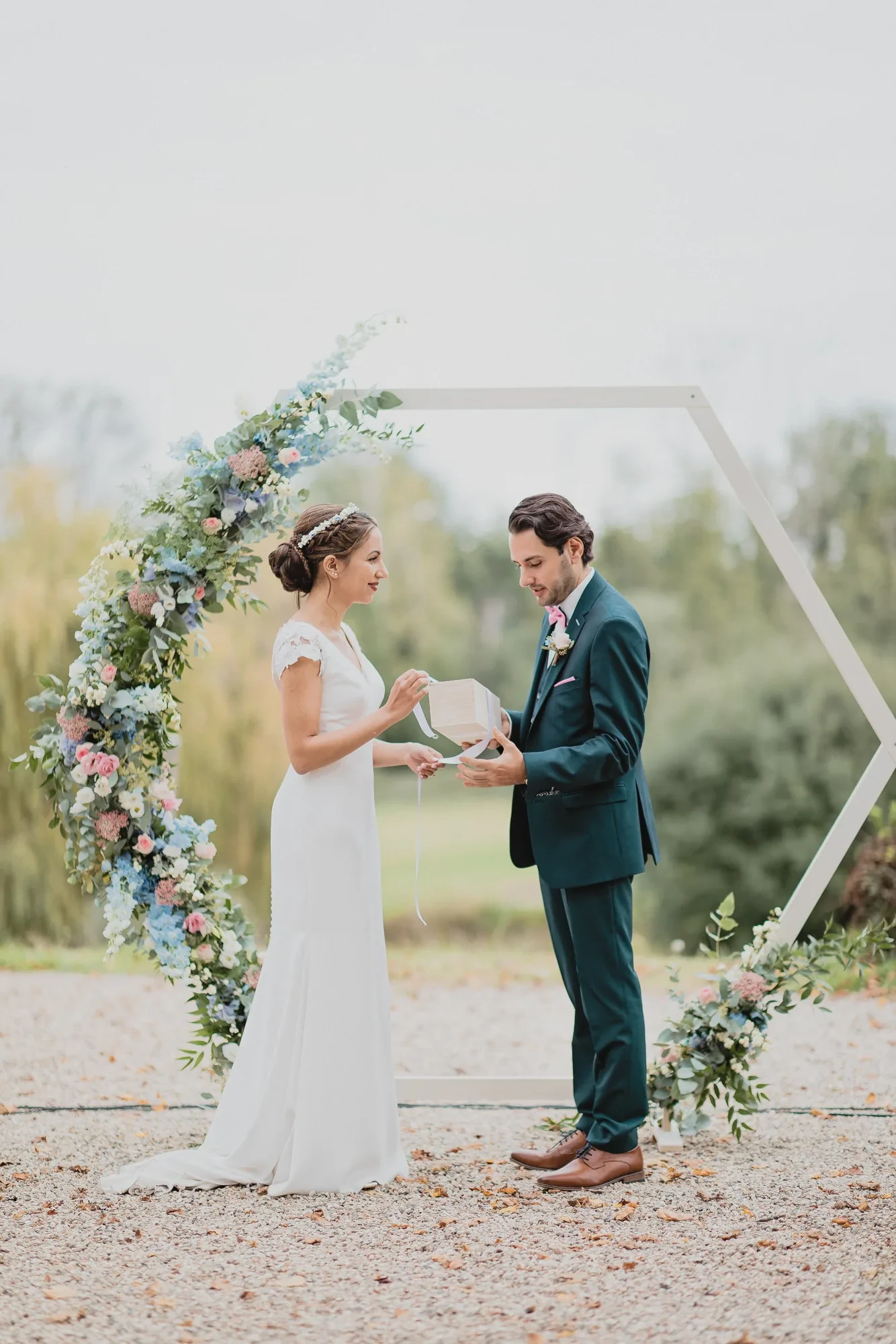
From initial brief to complete floral concept
From there, they develop a complete floral concept that covers every touchpoint of your celebration: the ceremony arch, the bridal bouquet, table centerpieces, floral installations along the reception entrance, and individual detail elements such as bud vases, floral crowns, and cake flowers.
Logistics, sourcing, and coordination
On the logistical side, a full-service florist coordinates directly with your venue, your wedding planner, and your caterer to plan delivery windows, installation schedules, and breakdown timing. Many top-tier French florists source their blooms from the Rungis International Market near Paris, one of the largest fresh-produce markets in the world, which gives them access to an extraordinary range of seasonal and imported flowers. Others prioritize locally sourced flowers from regional growers, which aligns with the growing demand for sustainable floristry and reduces the environmental footprint of your celebration.
How far in advance should you book a destination wedding florist in France?
Ideal booking window for French destination florists
The short answer is: earlier than you think. Venues in France, particularly historic châteaux in the Loire Valley, mas in Provence, and villas on the French Riviera, are often reserved 12 to 24 months in advance. The best floral designers follow a similar booking curve.
Industry guidance consistently points to contacting a destination wedding florist in France at least 12 to 18 months before your wedding date. For peak season dates between May and September, reaching out 18 months ahead is strongly recommended.
Why booking early really matters
This timeline matters for several reasons. First, the most sought-after floral designers in France have limited availability and work with a small number of weddings each season to maintain quality. Second, early engagement allows time for a proper discovery call, a detailed floral brief, a site visit if needed, and a proposal that accurately reflects your vision and venue. Third, some flowers, particularly peonies, are only available for a narrow window in late May and early June. Booking early gives your florist time to source and confirm availability for the specific blooms that anchor your color story.
What does a wedding florist in France cost?
Typical floral budget ranges
Floral budgets vary significantly depending on the scale of your celebration, the complexity of the installations, and the region where your wedding takes place. The figures below reflect general market ranges observed among florists specializing in destination weddings in France. These are indicative ranges and not guarantees, as every wedding is unique.
| Scale of celebration | Estimated floral budget | Typical inclusions |
|---|---|---|
| Intimate celebration (under 50 guests) | €3,000 to €5,000 | Bridal bouquet, ceremony florals, simple centerpieces |
| Mid-size wedding (50 to 100 guests) | €5,000 to €10,000 | Full ceremony design, multiple table arrangements, entrance florals |
| Large château or villa wedding (100+ guests) | €10,000 to €20,000+ | Large-scale installations, floral backdrop, full weekend coverage |
| Multi-day destination wedding | €15,000 to €30,000+ | Welcome dinner, rehearsal dinner, wedding day, farewell brunch florals |
Accounting for labor and logistical expenses
One important detail that many couples overlook: labor, installation, breakdown, floral rental items, and transportation can add 30 to 50 percent on top of the raw cost of the flowers themselves. Always ask your florist for a fully itemized proposal so you understand exactly what is included.
The best regions in France for destination wedding florals
France offers dramatically different floral landscapes depending on where your wedding takes place. Understanding the regional context helps you find a florist who knows the terrain, the venues, and the local suppliers.
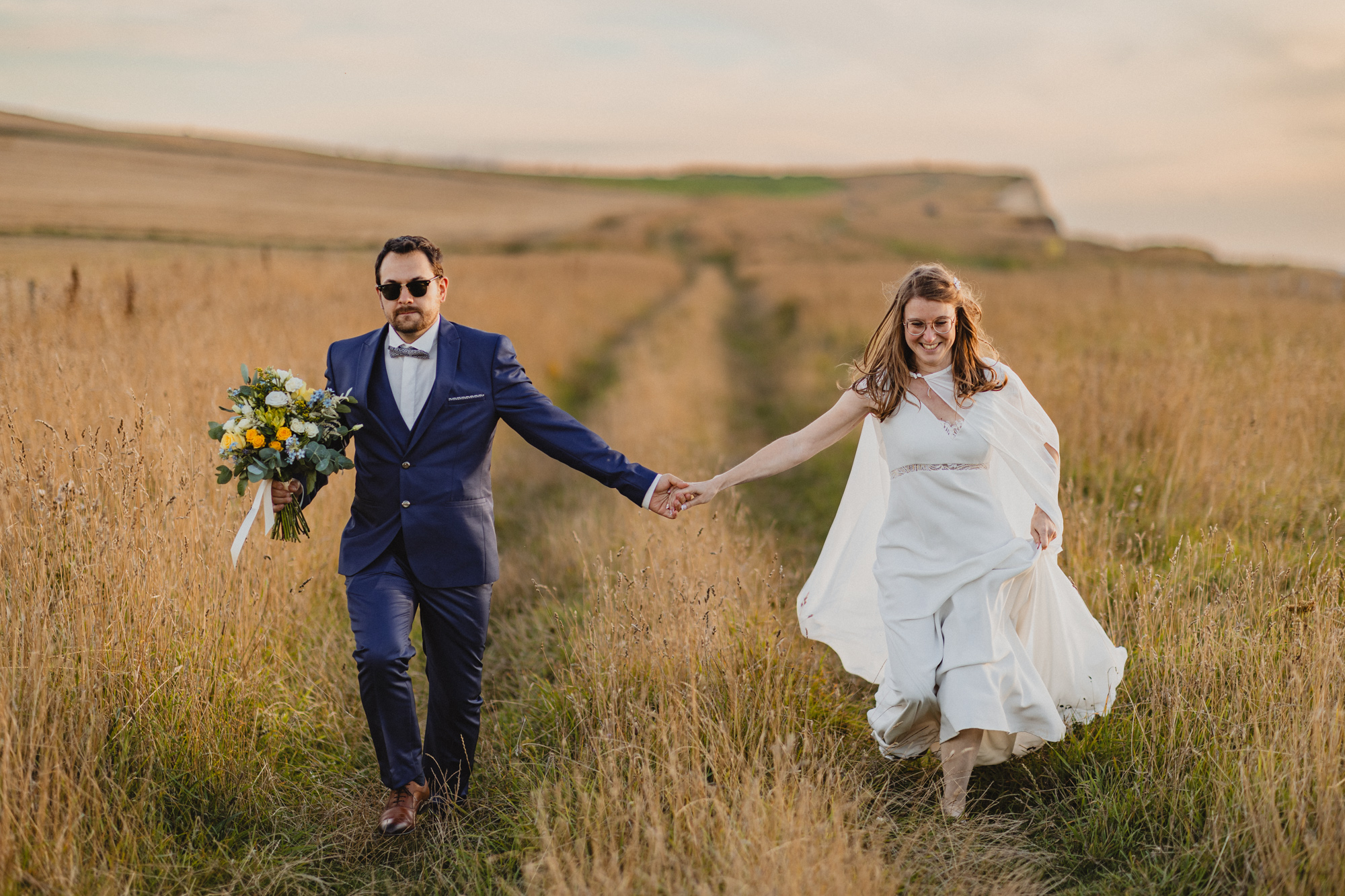
Provence is perhaps the most iconic region for destination wedding flowers in France. Lavender fields, olive groves, and wild herbs create a natural backdrop that influences the entire floral palette. Wedding flowers in Provence tend to lean toward sun-bleached whites, dusty roses, terracotta, and sage, with abundant use of locally grown lavender and dried botanicals. The region attracts many experienced floral designers who specialize in the organic, garden-gathered aesthetic that editorial clients love, as seen in this Provence celebration in Entrevaux.
The Loire Valley, often called the garden of France, is home to some of the most spectacular châteaux in the country. A florist for a château wedding in France in this region will typically have experience working with grand stone architecture and formal French gardens, which calls for structured, elegant arrangements that complement rather than compete with the setting.
The French Riviera, from Nice to Saint-Tropez, demands a different sensibility. Here, florals often incorporate tropical elements, bold colors, and sculptural compositions that match the glamour of the coastline. Paris, meanwhile, offers access to world-class floral designers who frequently travel to venues across France and benefit from proximity to Rungis for sourcing.
Burgundy and the Dordogne are increasingly popular for their wine-country aesthetic, with a preference for rich, moody palettes of burgundy, plum, forest green, and antique gold that photograph beautifully in the golden light of late summer and early autumn.
Seasonal flowers in France and how they affect your budget
Benefits of choosing seasonal French blooms
One of the most practical advantages of marrying in France is the extraordinary quality and variety of seasonal blooms available throughout the year. Choosing flowers that are naturally in season at the time of your wedding reduces cost, improves quality, and supports sustainable floristry practices.
The table below is a general guide to seasonal availability for popular wedding flowers in France. Exact timing varies by year and region, so always confirm with your florist.
| Season | Flowers typically in season |
|---|---|
| Spring (April to May) | Ranunculus, anemones, tulips, lilac, sweet peas, and peony toward late May |
| Early summer (June to July) | Peonies (early June), garden roses, delphiniums, lavender, and dahlias beginning in July |
| Late summer (August to September) | Dahlias in full season, sunflowers, zinnias, cosmos, and late-season roses |
| Autumn (October to November) | Chrysanthemums, amaranth, dried botanicals, and berried branches |
Using out-of-season flowers is possible but typically requires importing from the Netherlands or further afield, which increases both cost and carbon footprint. Your floral designer will advise you on the best alternatives within your chosen palette.
Good to know
Peony season in France is short, with the narrow window typically spanning late May to mid-June. If peonies are central to your floral vision, plan your wedding date accordingly and confirm availability with your florist at least a year in advance.
Can you hire an English-speaking wedding florist in France?
Yes, and for couples based in the US, this should be a non-negotiable requirement. The destination wedding market in France has grown substantially over the past decade, and many of the most experienced floral designers working in this space are either native English speakers or fully fluent. This is particularly true of florists who regularly collaborate with US-based wedding planners and event designers.
When you contact a potential florist, pay attention not only to their language skills but also to their communication style. A florist who responds promptly, asks thoughtful questions, and demonstrates genuine curiosity about your vision is far more valuable than one who simply has an impressive portfolio. Time zone differences between France and the US West Coast are significant, so clarify upfront how and when your florist prefers to communicate, and what their typical response time is during the planning phase.
Questions to ask before hiring a destination wedding florist in France
Before committing to a floral designer, a thorough discovery conversation is essential. The following questions will help you assess whether a florist is the right fit for your celebration.
- Have you worked at our venue before, or are you familiar with the region? Venue knowledge affects installation logistics, delivery access, and timing.
- How do you source your flowers, and what is your approach to seasonal and locally sourced blooms?
- What does your full-service offering include, and what is charged separately? Confirm whether installation, breakdown, floral rental items, and travel are included in your quote.
- How do you handle the floral brief and mood board process for couples based abroad?
- What is your booking and payment timeline, and what is your cancellation policy?
- Can you work within a multi-day celebration structure, covering the welcome dinner, wedding day, and farewell brunch with visual consistency?
- Have you collaborated with a wedding photographer before, and how do you coordinate on placement and timing of key floral elements?
How florals affect wedding photography at a French venue
Florals as a core part of your visual story
This is a dimension of floral planning that is often underestimated by couples, and it is one of the most important. Your floral design is not simply a decorative element. It is a fundamental component of your visual narrative, and it will appear in virtually every photograph taken across your celebration.
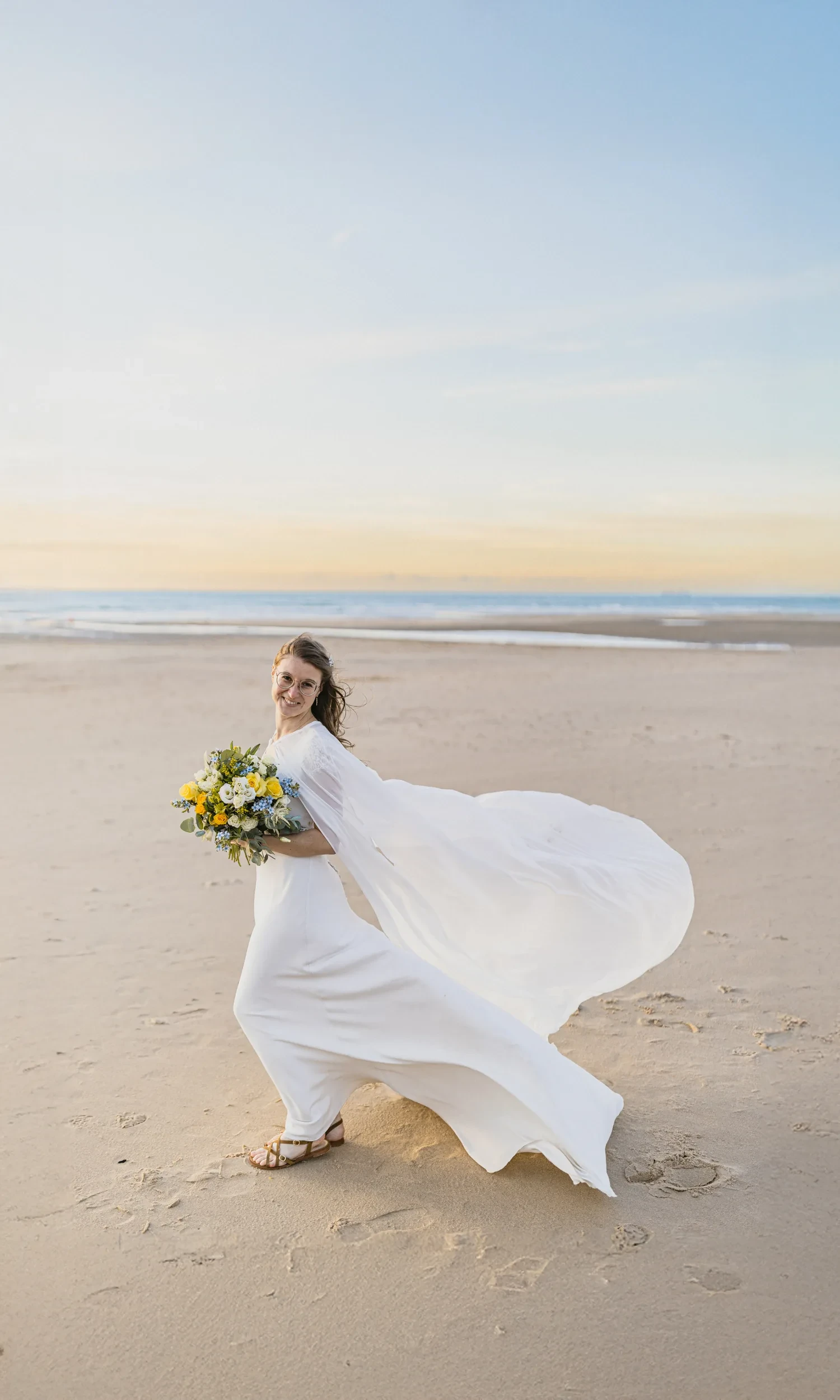
The ceremony arch or floral backdrop defines the most photographed moment of your wedding day. The color palette of your blooms establishes the tonal range of your entire gallery. Table centerpieces create depth and texture in reception images. Detail shots of the bridal bouquet, place cards, and individual blooms are among the most refined images in any fine-art wedding album.
Coordination between florist and photographer
At Lino Ludovic, we work closely with couples planning destination weddings across France and Italy, and we have observed firsthand how a well-considered floral design elevates every aspect of the photographic story. When a florist understands how light behaves at the venue at different hours of the day, and when they place installations with an awareness of the photographic angles available, the results are consistently stronger. We always encourage our clients to introduce their photographer and florist early in the planning process, ideally during the initial venue walkthrough or site visit.
If you are curious about how we approach floral-aware photography at French château and villa weddings, you are welcome to explore our wedding photography portfolio or reach out directly through our contact page.
Important
Share your photographer’s style and your venue’s light conditions with your florist before finalizing your floral concept. A floral palette that looks beautiful in person can read very differently on camera if it clashes with the ambient tones of the space.
How to choose a florist for a château wedding in France
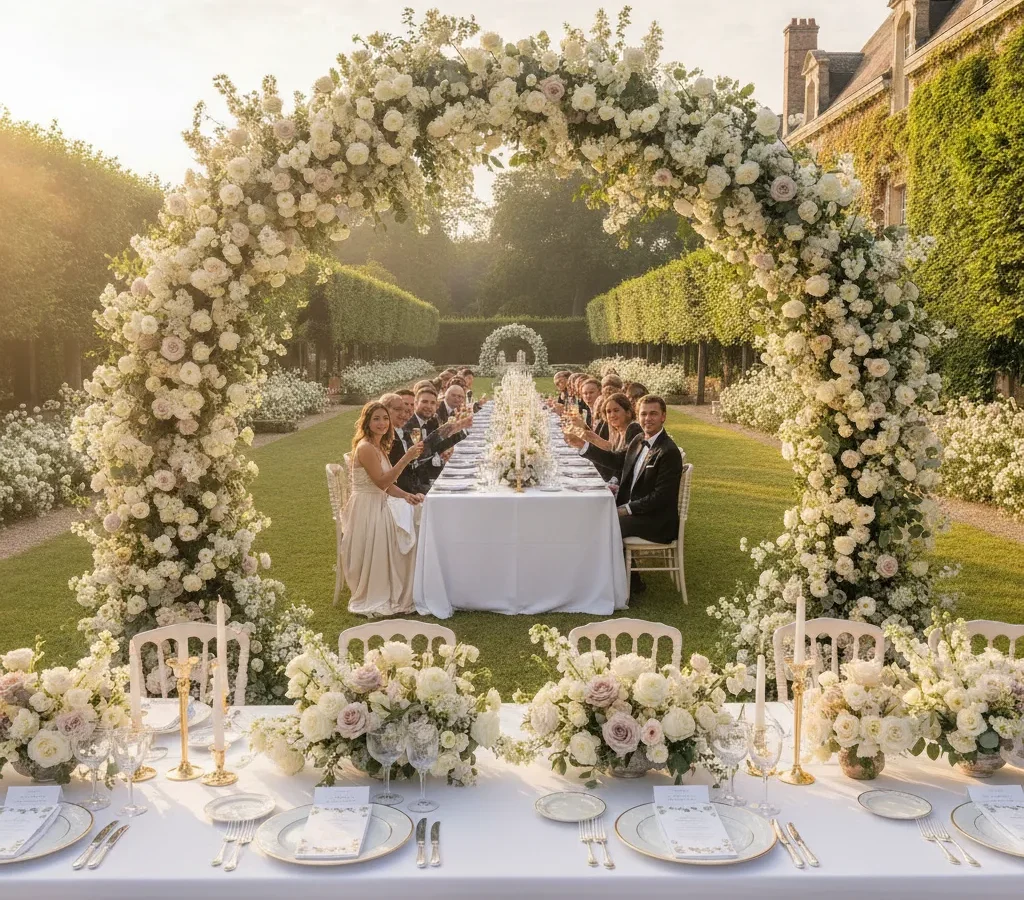
Château weddings in France present specific floral challenges that require an experienced hand. The scale of the architecture demands arrangements that hold their own against soaring stone walls and grand staircases, such as the setting captured at this château d’Ailly wedding. The formal gardens typical of Loire Valley and Burgundy châteaux often require a florist who can work in harmony with the existing landscape rather than imposing a contrasting aesthetic.
Look for a floral designer who has documented experience at historic venues and who can provide references or portfolio images from comparable properties. Ask specifically how they handle installation in protected or heritage spaces, where restrictions on fixings, candles, and certain materials may apply. A florist who is familiar with the administrative and logistical realities of working in classified monuments will save you significant stress on the day.
For multi-day celebrations, which are increasingly the standard for US couples hosting destination weddings in France, look for a florist who can maintain visual consistency across all events. The welcome party, rehearsal dinner, wedding day, and farewell brunch should feel like chapters of the same story, not disconnected events with unrelated aesthetics.
Bringing your floral vision to life in France
Finding the right destination wedding florist in France takes time, research, and clear communication. The most successful floral collaborations happen when couples invest early, ask the right questions, and choose a designer who understands both the creative vision and the logistical realities of a multi-day European celebration.
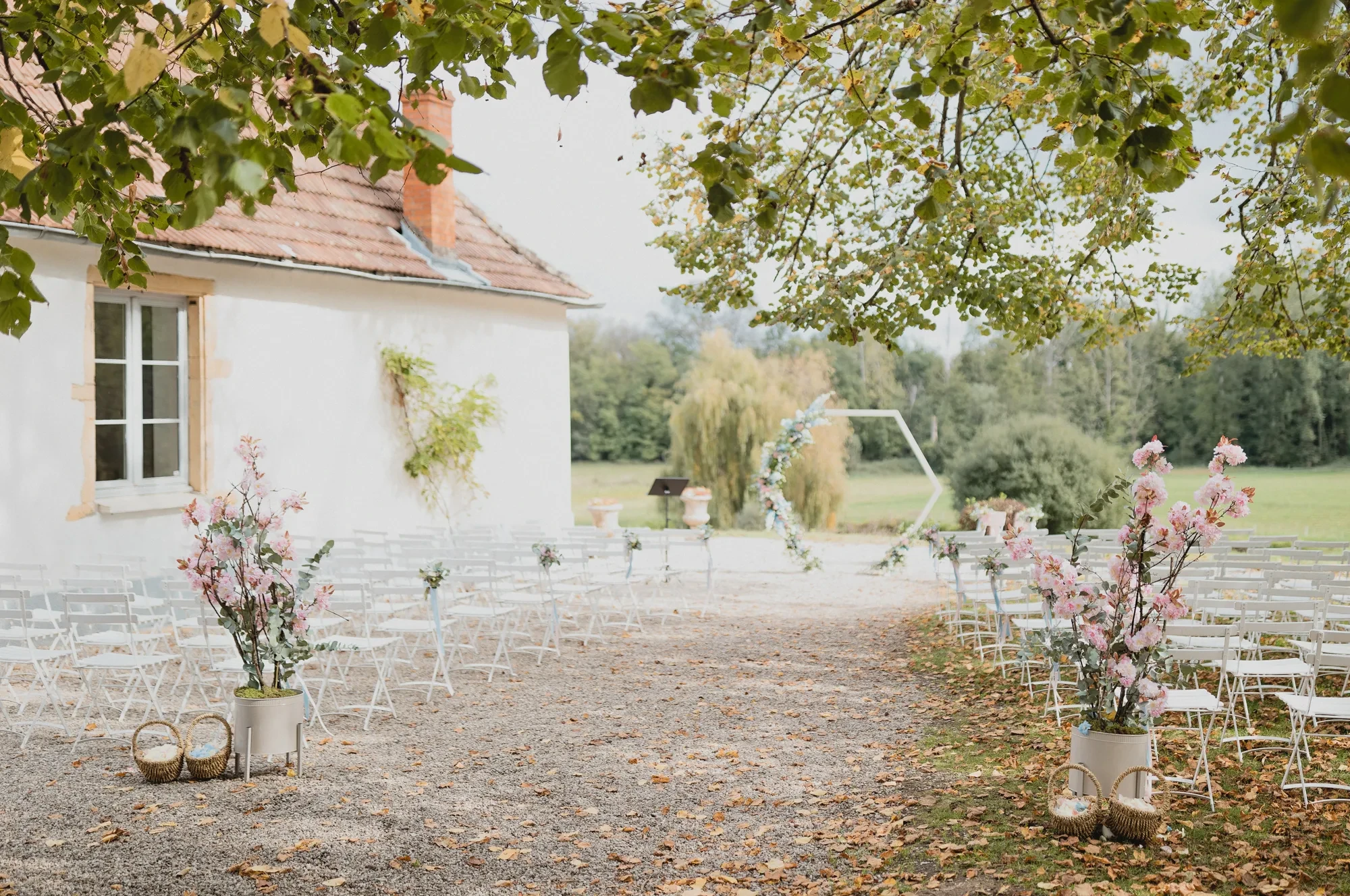
Your florals will shape the atmosphere your guests experience and the images you will treasure for the rest of your lives. Choose with care, book early, and make sure your florist and your photographer are working in the same direction from the very beginning.
To see how floral design and photography come together at some of France’s most beautiful venues, we invite you to explore the Lino Ludovic portfolio or to get in touch.
FAQ
Do French wedding florists travel to other regions for destination weddings?
Yes, many luxury floral designers based in Paris, Provence, or Lyon regularly travel across France and even to neighboring countries such as Italy for destination weddings. Travel and accommodation fees are typically added to the quote, so confirm this upfront.
Is it possible to use a US-based florist for a wedding in France?
It is technically possible but logistically complex. Importing flowers into France involves customs regulations, and a US-based florist will not have established relationships with French venues, suppliers, or local delivery networks. In almost every case, hiring an experienced local or France-based floral designer produces better results at a lower overall cost.
What is the difference between a wedding florist and a floral designer for a destination wedding?
A wedding florist typically handles flower arrangements and delivery. A floral designer or floral stylist takes a broader creative role, developing the full visual concept, coordinating with the venue and other vendors, managing installation and breakdown, and ensuring the floral palette integrates with the overall event design. For destination weddings with significant budgets, a full-service floral designer is almost always the right choice.
Should I bring fabric swatches or dress details to share with my florist?
Absolutely. Sharing your wedding dress silhouette, bridesmaid palette, invitation suite, and any venue imagery you have collected will help your florist build a floral concept that is genuinely cohesive. The more visual reference you can provide, the more precisely your florist can develop a proposal that reflects your vision.
How do I ensure my floral budget stays on track during planning?
Request a fully itemized quote that includes flowers, labor, installation, breakdown, floral rental items, and transportation. Establish a clear change-order policy with your florist so that any additions or modifications during the planning process are priced transparently before they are confirmed.