Two visual artists, one wedding weekend, and a single opportunity to capture it. When your celebration takes place in a French chateau, on the Riviera or beside an Italian lake, hiring a videographer and photographer for a destination wedding becomes a question of chemistry as much as of talent. A mismatched pair produces crossed sightlines, duplicated requests and a couple who feels directed all day. A well matched pair becomes invisible.
This guide explains when to book, what the travel costs really cover, what belongs in the contract, and how we coordinate with film teams so your weekend stays effortless.
Hiring a Videographer and Photographer, Destination Wedding
Reading time: ~9 min
- Why the Photo and Film Relationship Shapes Your Entire Gallery
- When to Start Hiring a Videographer and Photographer for a Destination Wedding
- One Combined Team or Two Separate Vendors
- What the Travel Side Actually Costs
- The Questions to Ask Before You Sign
- What Belongs in the Destination Wedding Photo and Video Contract
- How We Coordinate With Film Teams on the Day
- Before You Travel
- Moving Forward With Your Destination Wedding Visual Team
- Frequently Asked Questions
Why the Photo and Film Relationship Shapes Your Entire Gallery
How the photo and film relationship affects your day
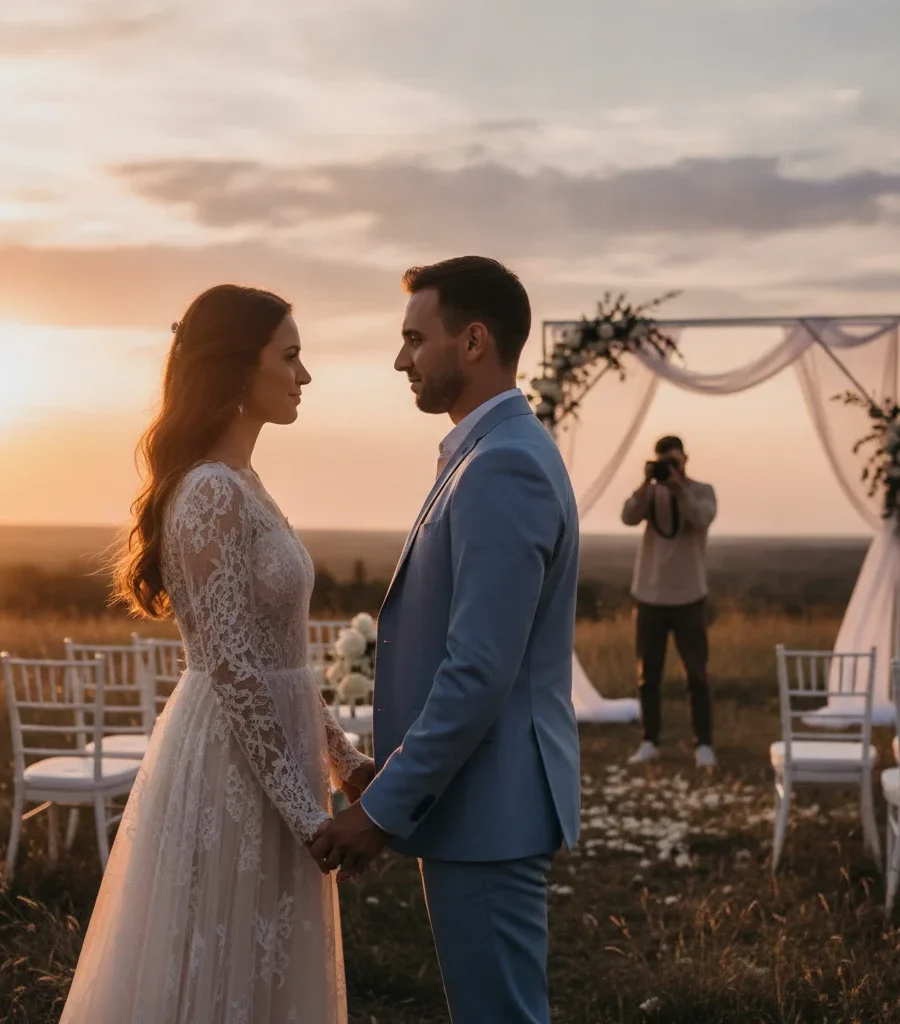
Photography and videography compete for the same three resources: light, position and the couple’s attention. During the ceremony processional there is one perfect angle on the aisle. During the first look there is one quiet moment that cannot be repeated. If both artists improvise, one of them ends up in the other’s frame, or worse, both of them start giving instructions at the same time.
Couples rarely describe this as a technical failure. They describe it as a day that felt busy, managed and slightly stressful. The cure is not more equipment, it is agreement on roles decided weeks before anyone boards a plane.
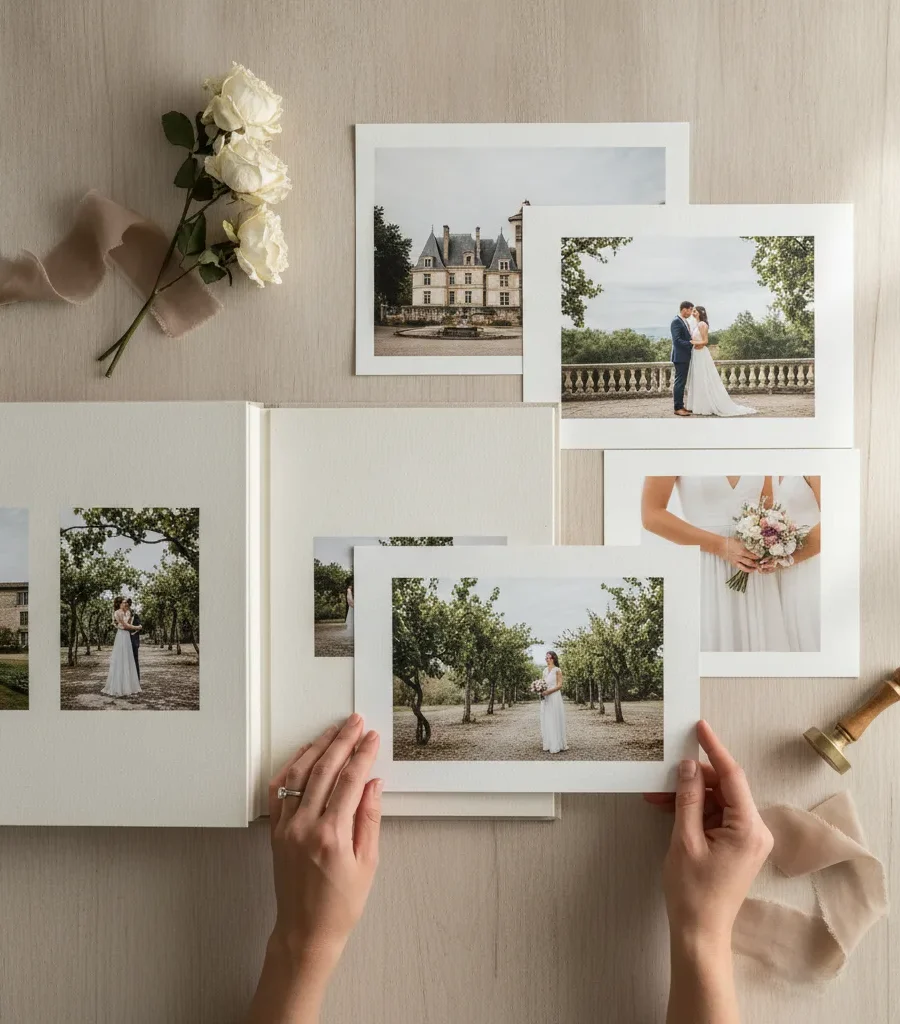
On our side, the approach is documentary first with an editorial eye. We observe, we anticipate, and we step in briefly for portraits with a clear beginning and a clear end. That philosophy makes collaboration straightforward, because a film team working in a cinematic, narrative register needs exactly the same thing: real moments allowed to unfold. You can see how that translates across a full celebration in our wedding portfolio.
When to Start Hiring a Videographer and Photographer for a Destination Wedding
Destination wedding booking timeline for photo and video
Industry planning guidance generally places photography and videography bookings nine to twelve months before the date, with twelve to eighteen months recommended for in demand dates and peak season destinations. Specialist destination resources go further and suggest twelve to twenty four months when the artist has to travel internationally to the venue. In practice, for a Saturday in June, July or September in Provence, the Riviera, Tuscany or Lake Como, the strongest photographers and film directors are committed well over a year out.
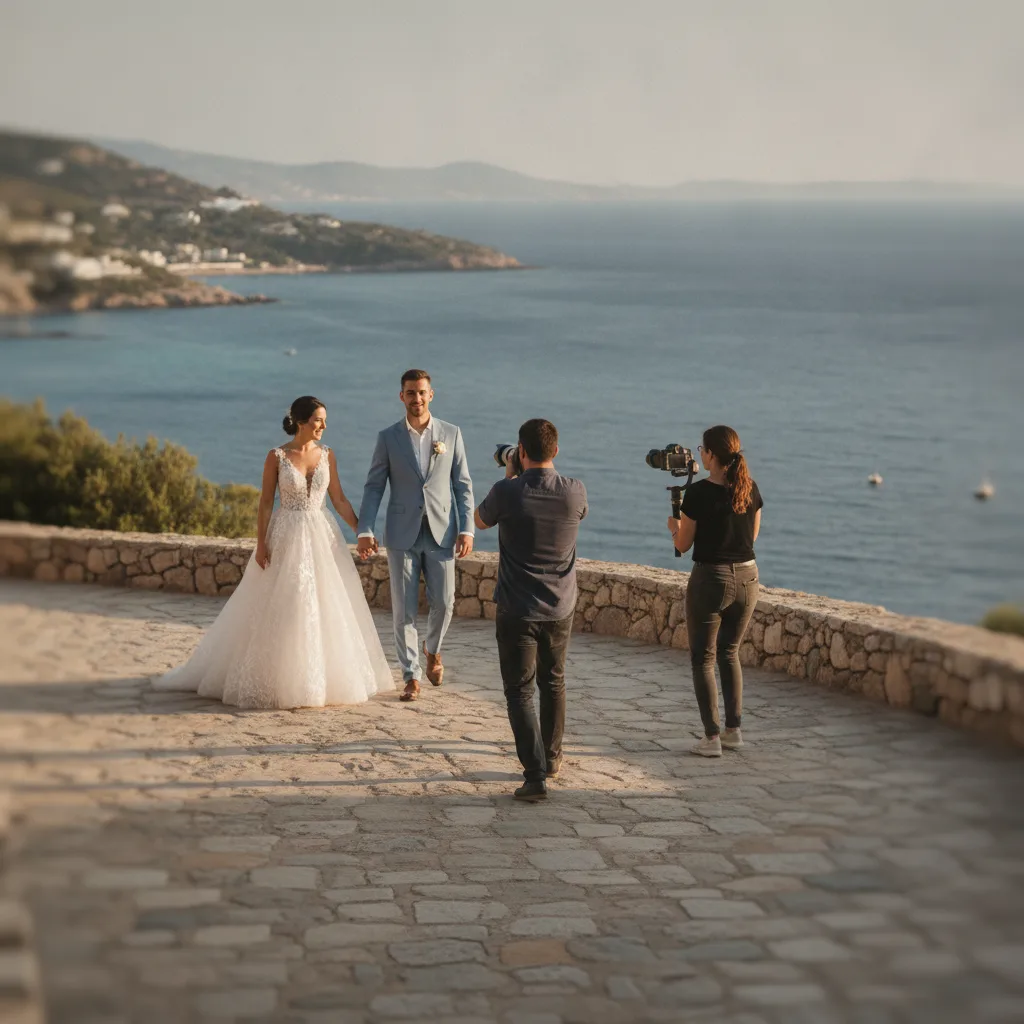
The sequence matters as much as the lead time. Secure the venue, then the destination wedding planner, then the visual team. Booking photography and film within a few weeks of each other is ideal, because it gives both parties months to exchange references, discuss the coordinated timeline and agree on how the couple session will be handled. If you fall in love with a photographer first, ask them which film teams they already trust. A pairing that has worked together before removes an entire category of risk.
Good to know
If your weekend includes a welcome party, a rehearsal dinner, the wedding day and a farewell brunch, the booking window tightens further, because multi-day coverage blocks three or four dates in an artist’s calendar rather than one.
One Combined Team or Two Separate Vendors
Choosing between a combined team and separate vendors
A destination wedding photographer and videographer package from a single studio simplifies almost everything administratively. One contract, one retainer deposit, one set of travel arrangements, one point of contact for your planner and one unified aesthetic in color grading and skin tone rendering. Communication across time zones becomes far lighter, which is why many US planners prefer it.
Hiring separate photographer and videographer vendors gives you more stylistic freedom. You might want editorial photography from one artist and a particular cinematic wedding film signature from another. That freedom is entirely legitimate, provided the coordination work is done properly. Ask both parties directly whether they have collaborated before, who leads during portraits, how they split positions during the ceremony, and whether a second shooter or second camera operator is included. Ask the same questions of both and compare the answers.
We work comfortably in both configurations. We produce film coverage ourselves, detailed on our wedding videographer page, and we also integrate as the photography partner inside a planner’s existing vendor team. In either case, the operating rule is the same: no one on the visual team ever becomes the main character of the day.
What the Travel Side Actually Costs
Typical destination wedding photographer and videographer travel fees
The quoted fee is never the full picture for an international celebration. Destination wedding photography travel fees and destination wedding videographer travel expenses typically cover flights, accommodation, ground transfers, meals, checked equipment and travel days. Published 2026 cost guides place total travel supplements at roughly 500 to 2,500 US dollars for a domestic destination and 2,000 to 5,000 dollars or more for an international one, depending on distance and length of stay.
A specialist videography breakdown itemises flights at 300 to 1,500 dollars, two to three hotel nights at 200 to 600 dollars, meals at 100 to 200 dollars and equipment check in at 50 to 150 dollars. For combined photography and film services, an indicative range of 3,500 to 12,000 dollars is sometimes cited, with significant variation by country, season and level of service.
| Line item | Typical published range | What to clarify |
|---|---|---|
| Round trip flights | 300 to 1,500 USD | Cabin class, number of team members |
| Accommodation, 2 to 3 nights | 200 to 600 USD | On site or nearby, single rooms |
| Meals and per diem | 100 to 200 USD | Vendor meals provided by caterer |
| Checked equipment | 50 to 150 USD | Excess baggage, customs clearance |
| Total domestic travel | 500 to 2,500 USD | Travel day fee included or billed separately |
| Total international travel | 2,000 to 5,000 USD and above | Scouting day, arrival 24 to 48 hours early |
One advantage of commissioning a Europe based artist for a European celebration is structural. The question of local versus traveling wedding photographer for a destination wedding stops being a compromise when the artist already lives between France and Italy, knows the venues, speaks fluent English and handles no transatlantic flights, no jet lag and no equipment customs clearance. Our studio is based in France, which is why the logistics line of a quote looks very different from that of a team flying in from California.
The Questions to Ask Before You Sign
Most disappointments trace back to a conversation that never happened. Before you commit, ask the same set of questions to every candidate and compare the written answers rather than the brochures. These are the ones that genuinely separate professionals.
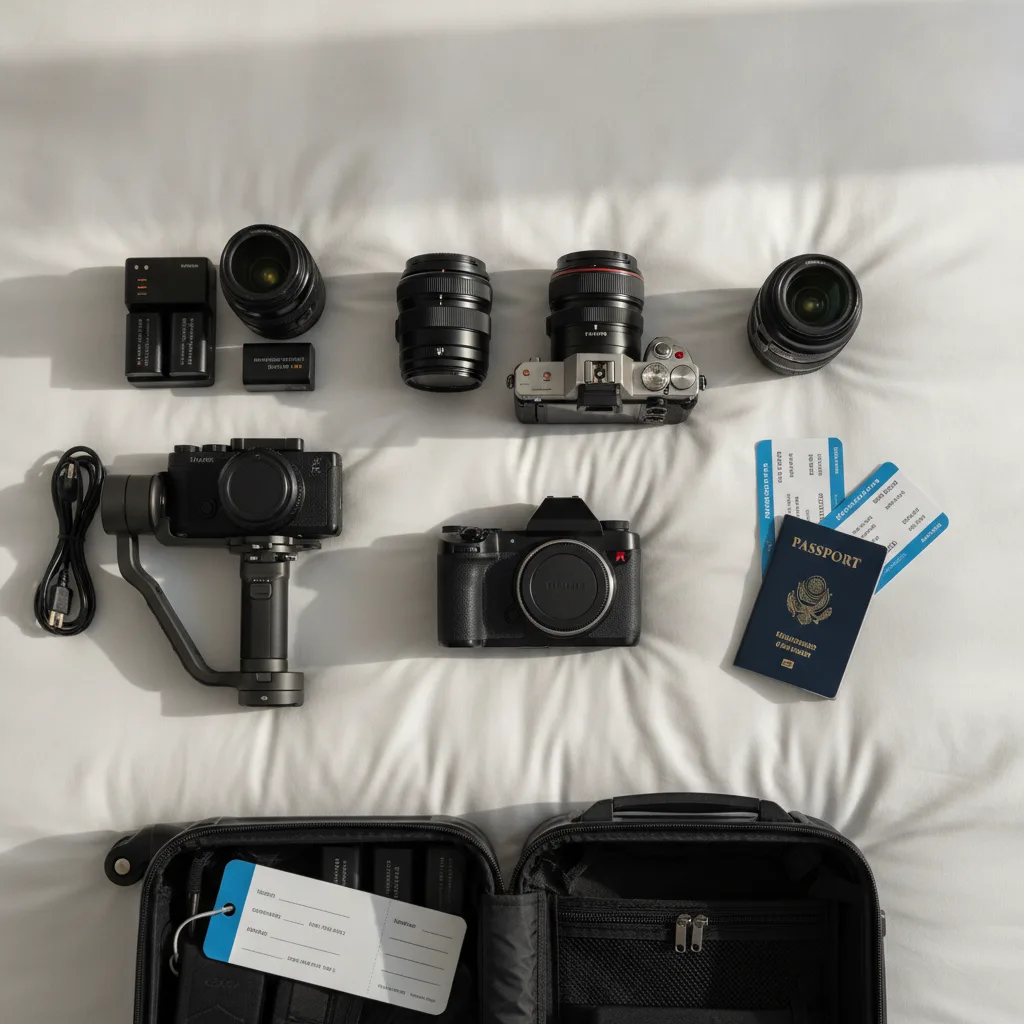
- Who exactly will be on site, and is a second shooter or second operator included in the coverage hours?
- How do you and the film team divide positions during the ceremony, the first dance and the speeches?
- Will vows and speeches be recorded with dedicated audio capture, including a lavalier microphone on the officiant and the groom?
- Is aerial videography planned, and who verifies the venue permit and local drone regulations?
- What is the delivery format, 4K delivery for film, gallery delivery and RAW file policy for photography?
- What happens to our date if illness or a travel disruption prevents you from attending?
For the film side specifically, review at least five complete wedding films rather than a highlight reel on social media, as specialist guidance recommends. Watch for stability, color consistency, documentary style editing and above all clean audio during vows and speeches. For photography, request two or three full galleries shot in comparable conditions: harsh midday sun in Provence, a candlelit dinner in a chateau, a late reception. Examples of full celebrations are available in our wedding photographer gallery.
What Belongs in the Destination Wedding Photo and Video Contract
A serious destination wedding photo and video contract reads like a production document. It should name the exact dates and venues, the coverage hours for each event, the number of artists present, the deliverables, the approximate number of edited images, the film length, whether a trailer is included, and whether speeches appear in full. It should set out the retainer deposit, often fifty percent at signature according to published studio terms, the payment schedule, the cancellation clause, postponement terms, a force majeure provision and a backup vendor commitment should the artist be unable to travel.
It should also settle rights clearly: image usage rights, print rights, publication permission for blog or magazine submissions, archive duration and music licensing for the film. Royalty free and Creative Commons music licensing terms vary widely, and a film scored without proper clearance can be muted on social platforms. Professional affiliations such as the Professional Photographers of America, Wedding and Portrait Photographers International or the Wedding Photography Alliance are useful signals of liability insurance and contractual seriousness.
Important
Ask your planner or DMC to confirm venue permits early. Historic properties and UNESCO listed sites often restrict drone footage, tripods and access hours, and a permit refused on the morning of the wedding cannot be appealed.
How We Coordinate With Film Teams on the Day
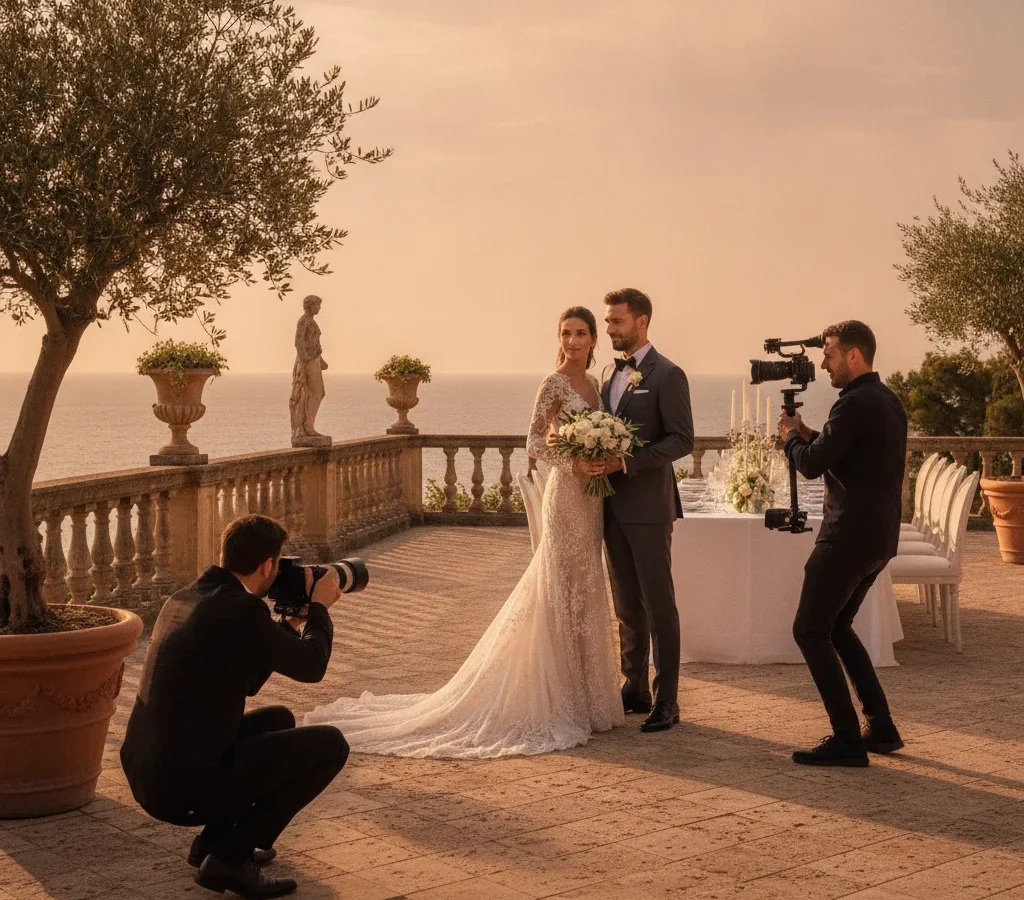
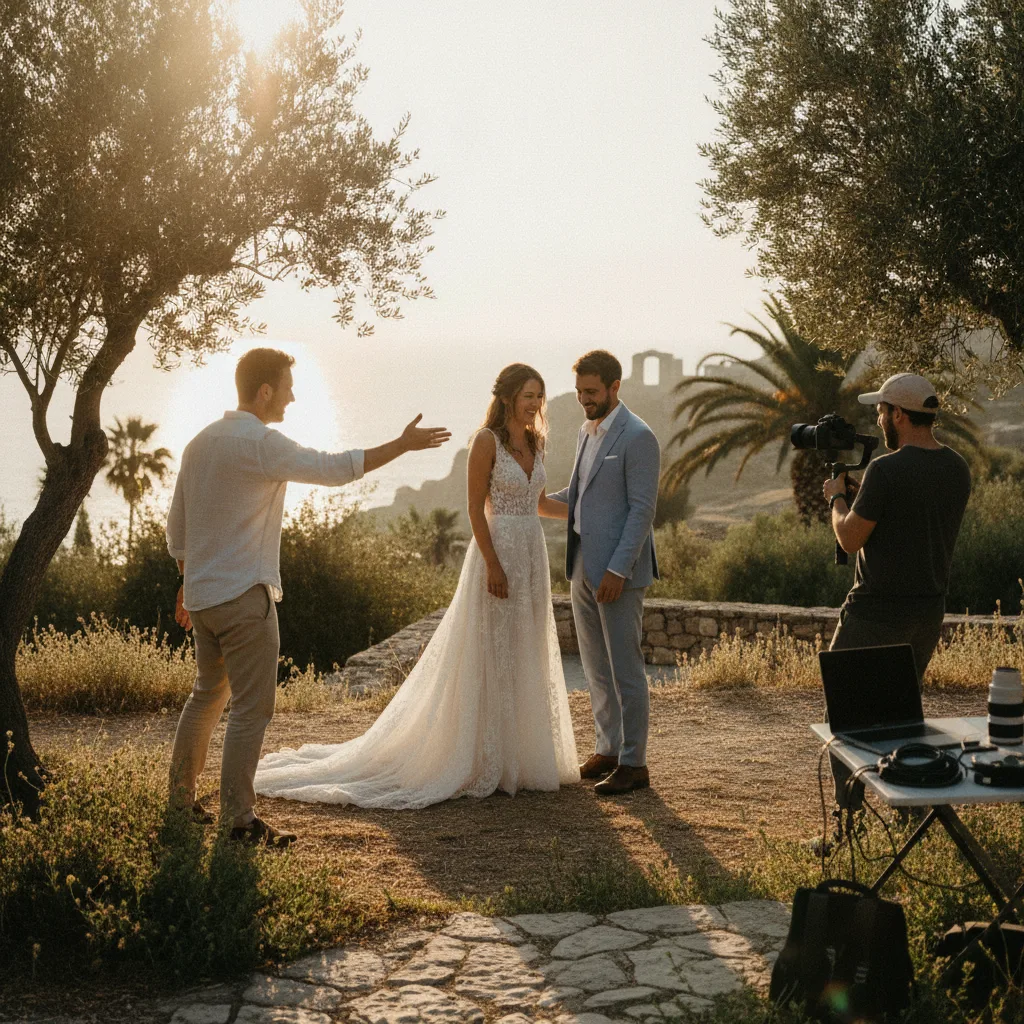
Our method rests on three agreements made before anyone arrives. First, a shared coordinated timeline validated with the planner, including getting ready coverage, the couple session, golden hour and the critical design moments, so that nobody improvises. Second, a position map for the ceremony and the speeches, with one artist on the aisle and one from the side, swapping at an agreed cue. Third, a single voice for direction during portraits, usually the photographer, while the film team captures movement around that direction. The couple receives one instruction at a time, which is the entire point.
We also protect the design work your planner spent a year conceptualising. Tablescapes, floral installations and architecture are photographed before guests enter the room, in a window negotiated in advance with the film team so neither of us blocks the other. Sneak peeks are prepared for your planner’s communication needs, and the full gallery and film follow a stated turnaround time written into the contract. For reference, published guidance places film trailers at four to eight weeks and full films at three to six months, depending on edit complexity.
Before You Travel
Four to eight weeks out, send the final timeline, planner contact details, flight and arrival times, venue access rules and any cultural or religious considerations to both artists at once rather than separately. Confirm the engagement session or pre wedding couple shoot if one is planned, since it is the best rehearsal for how the three of you will work together. A short joint video call between the couple, the planner, the photographer and the film director removes almost every remaining uncertainty.
Moving Forward With Your Destination Wedding Visual Team
Hiring a videographer and photographer for a destination wedding is a production decision as much as an artistic one. Book early, decide deliberately between a single team and two coordinated vendors, read the travel line of every quote carefully, and insist on a contract that covers delivery, rights, music and contingency. Then let the two artists do the quiet work of staying out of each other’s way.
If you are planning a celebration in France or Italy and want a photography partner who already knows the venues, the light and the standards of US luxury planners, we would be glad to talk through your weekend.
FAQ
Should the photographer or the videographer lead the couple session?
One voice should lead, and it is usually the photographer, because still portraits require precise posture and timing. The film team works around that direction, capturing movement, walking sequences and ambient moments without issuing separate instructions.
Do the photographer and videographer need their own hotel rooms?
Yes, each professional should have a private room. They work long days, charge equipment overnight and back up files after the reception. Shared accommodation is a false economy and is rarely accepted by established vendors.
Can one team cover a four day celebration without additional staff?
A welcome party, rehearsal dinner, wedding day and farewell brunch demand stamina and redundancy. A second shooter or additional operator is strongly advised for the wedding day itself, with lighter solo coverage acceptable for the surrounding events.
How is music licensed in a wedding film?
Films use licensed catalogue tracks or Creative Commons cleared music, never commercial releases without permission. Ask for the licence reference in writing if you intend to share the film publicly, since unlicensed audio is routinely blocked on social platforms.
Is drone footage always possible at a historic European venue?
No. Aerial videography depends on local aviation rules, venue permission and proximity to protected or inhabited areas. Historic estates and listed sites frequently prohibit it, so confirm the permit through your planner before including it in the deliverables.