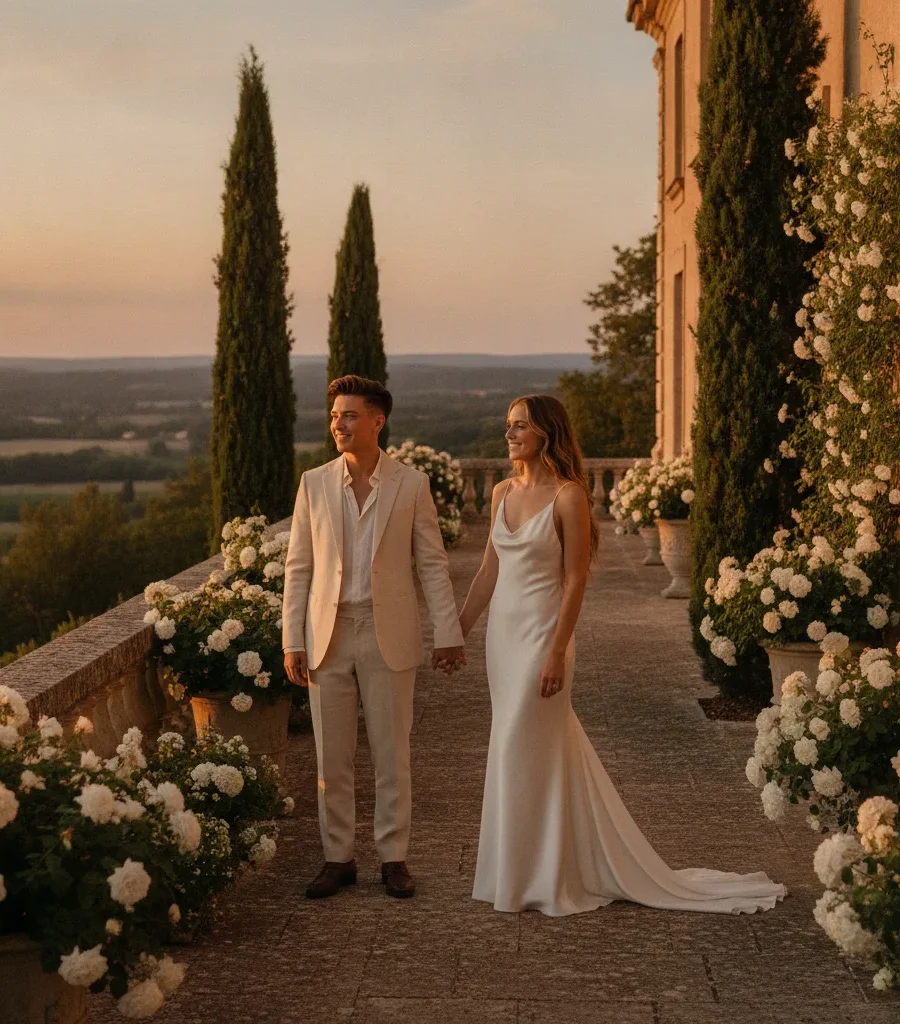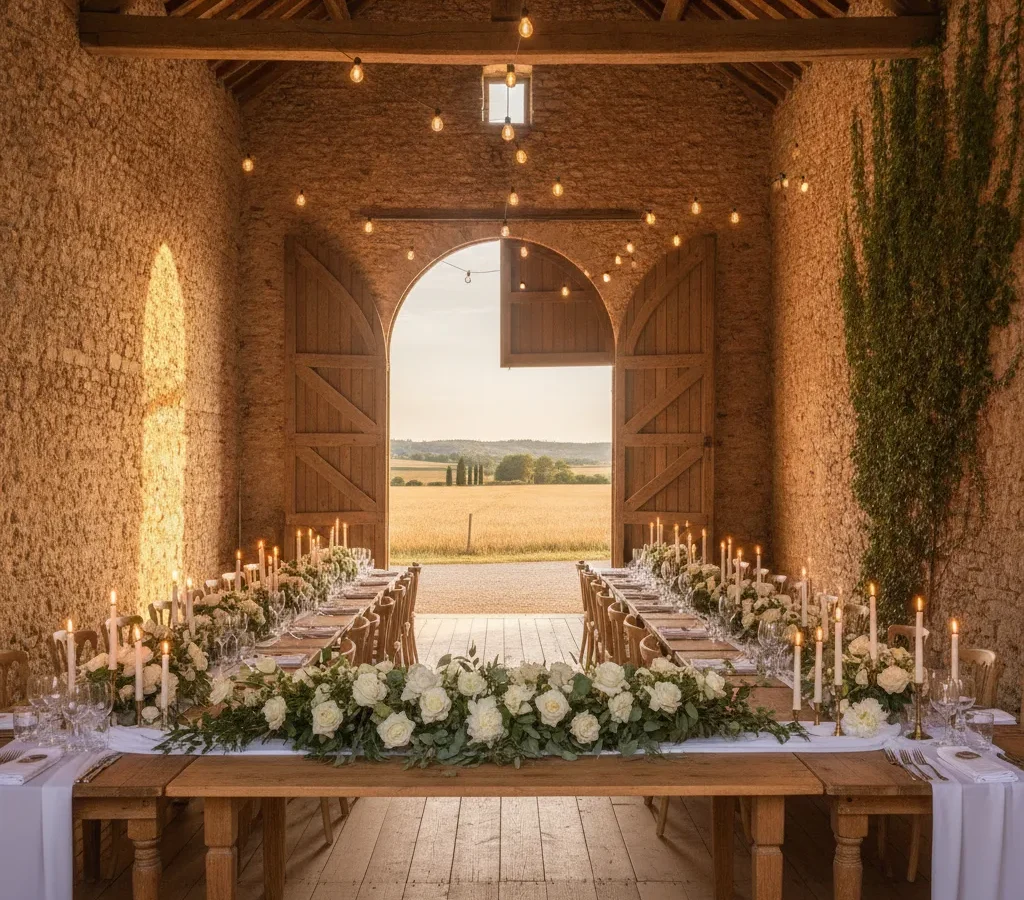
A restored stone barn in the French countryside offers something a ballroom never will: texture. Exposed timber beams, lime washed walls, worn flagstones and wide doors opening onto fields create a setting that photographs beautifully at every hour of the day. For American couples planning a celebration abroad, this is where French countryside barn wedding luxury truly lives, somewhere between agricultural heritage and refined hospitality.
The appeal is not rustic for the sake of rustic, it is the contrast between raw architecture and impeccable production. In this guide, we share what we have learned photographing privatized estates across France, from Provence to Savoie, and how to plan a barn celebration that feels effortless on camera and in real life.
French Countryside Barn Wedding Luxury – 2026 Guide
Reading time: ~10 min
- What Defines French Countryside Barn Wedding Luxury
- Why Renovated Barns Appeal to American Couples
- Best Regions for a Countryside Barn Wedding in France
- How to Choose the Right Luxury Barn Venue
- Legal Wedding or Symbolic Ceremony in France
- Design, Lighting and Photography Inside a Barn
- Our Approach to Editorial Wedding Photography in France
- Planning for Rain and Seasonal Light Variation
- Guest Experience and Destination Wedding Logistics
- When to Book Your Photographer
- Bringing French Countryside Barn Wedding Luxury to Life
- Frequently Asked Questions
What Defines French Countryside Barn Wedding Luxury
Estate layout and multi-day privatization
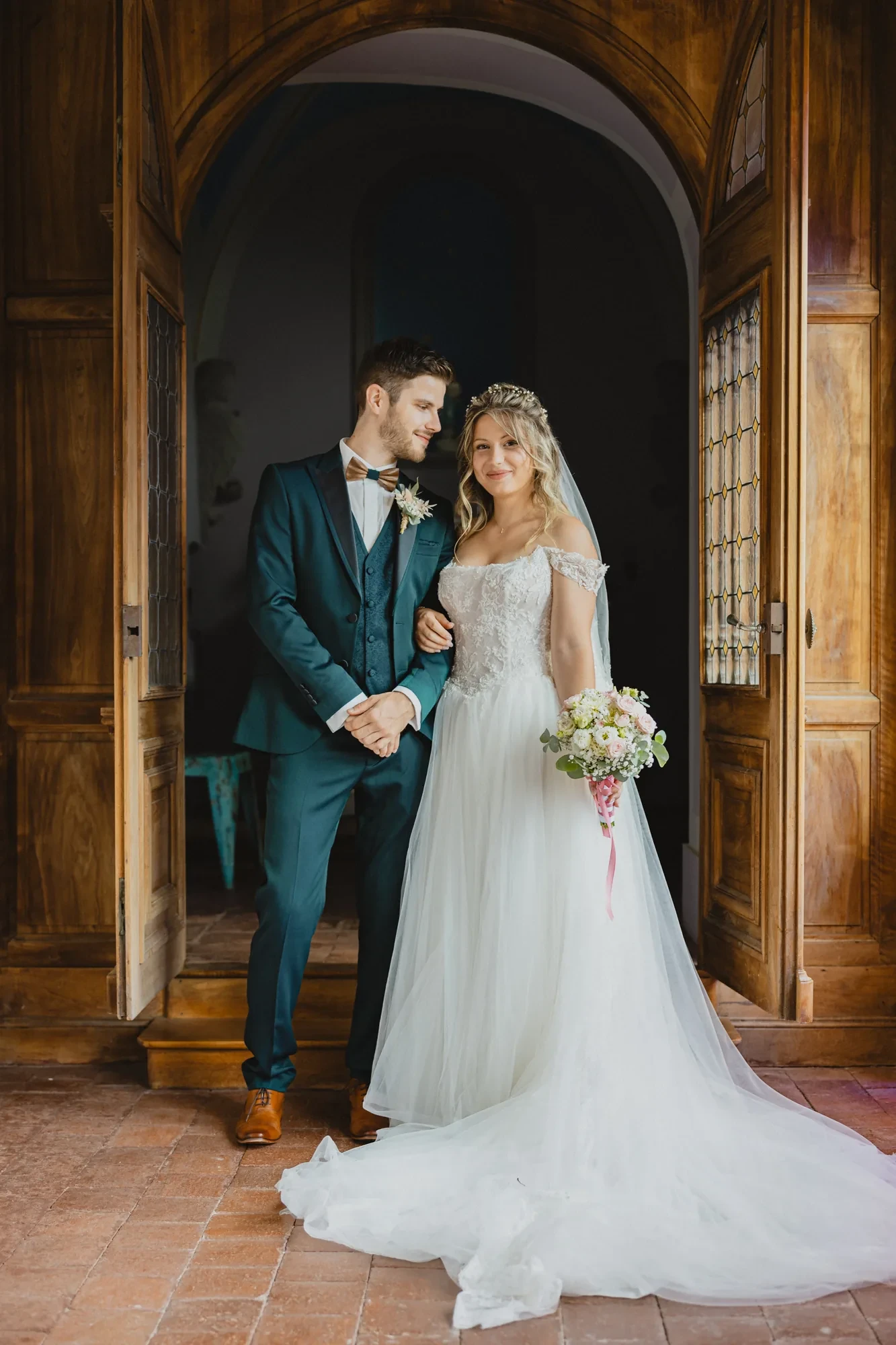
A luxury barn wedding in the French countryside is rarely about a single room. It is almost always built around an exclusive venue buyout, where a whole estate is privatized for two to four days. The property typically combines a renovated barn venue for the reception, a bastide, mas provençal or maison de maître for on site accommodation, gardens for the ceremony, and outbuildings for catering and production. French countryside venues are frequently structured this way, grouping ceremony, dinner and lodging on the same grounds, which is exactly what makes multi day celebrations possible.
Gastronomy, design and production
The luxury layer comes from everything added to that shell. Gastronomic catering with a regional wine selection, bespoke floral installations, designer furniture rentals, custom linens, an ambient candlelight reception and a long table dinner setup under the beams. The stone architecture provides the soul, the production provides the polish. Done well, the result reads as editorial rather than country fair, which is precisely what our Californian clients are looking for when they compare a French château barn wedding to a more conventional hotel ballroom.
Why Renovated Barns Appeal to American Couples
Flexible architecture for design and logistics
Most couples we work with start their search with châteaux, then discover that a domaine viticole or a French farm wedding venue offers more flexibility. Barns are forgiving spaces. Ceilings are high, walls are neutral, and the architecture already carries character, so florals and lighting do not have to fight ornate decor. A barn also solves one of the biggest practical risks of an outdoor celebration, because it doubles as a covered reception space when the weather changes.
Creating an immersive guest experience
There is an emotional argument too. A privatized estate gives your guests permission to slow down. People who flew eight or eleven hours deserve more than a four hour reception. A welcome dinner on the terrace, a ceremony under olive trees or oaks, a dinner that stretches into the evening, and a post wedding brunch the next morning create a rhythm that feels generous. Our portfolio of countryside and château celebrations shows how that rhythm translates visually across an entire weekend.
Best Regions for a Countryside Barn Wedding in France
Choosing the right French region
France has no shortage of rural estates, but regions differ in light, architecture and access. Provence-Alpes-Côte d’Azur delivers warm Mediterranean light and a long outdoor season. The Dordogne offers honey coloured stone barns and rolling, intimate landscapes. The Loire Valley combines historic gardens with estate outbuildings and easy access from Paris. Occitanie and the Southwest bring vineyard scenery, ancient stone and a strong gastronomic culture.
| Region | Architecture and landscape | Access | Best suited for |
|---|---|---|---|
| Provence-Alpes-Côte d’Azur | Mas provençal, bastides, olive groves, vineyards | Marseille and Nice airports, TGV rail network | Warm light, long outdoor season, Mediterranean editorial look |
| Dordogne | Stone barns, valleys, private rural domaines | Bordeaux airport, regional stations | Intimate guest counts, authentic rustic luxury wedding France aesthetic |
| Loire Valley | Châteaux, formal gardens, estate outbuildings | Direct TGV from Paris | Guests arriving via Paris, romantic heritage settings |
| Occitanie and Southwest | Domaines viticoles, renovated farm buildings | Toulouse and Bordeaux airports | Vineyard dinners, regional gastronomy, larger estates |
There is no single best answer. The right region depends on where your guests are flying from, the season you have chosen, and the visual language you want. A South of France countryside wedding venue in late June gives you light until well past nine in the evening, while a Dordogne barn wedding in September offers softer, shorter golden hour portraits.
How to Choose the Right Luxury Barn Venue
Beautiful photos on a venue website rarely tell you whether a property can host a complex, multi day celebration. Before signing, there are technical questions worth confirming directly with the owner and, when relevant, with the local commune. Industry planning guidance consistently points to capacity, utilities and permissions as the areas where surprises happen.
Here is what we recommend verifying before you commit to a venue:
- Guest capacity for a seated long table dinner, not just standing cocktails, along with on site accommodation numbers
- Professional kitchen access, electrical supply for lighting and band, and sufficient restroom facilities
- Music authorization, curfew hours and local noise regulations
- A confirmed covered weather contingency plan that can seat every guest
- Exclusivity terms, buyout duration and vendor access times the day before
- Distance from the nearest airport or TGV station for group airport transfer planning
Good to know
Good to know
Visiting a venue at the exact hour you plan to hold your ceremony is one of the most useful things you can do. It shows you where the shadows fall, how harsh the sun is on your guests, and whether portraits will work in that spot.
Legal Wedding or Symbolic Ceremony in France
This is the question we answer most often on first calls with American couples. In France, only a civil ceremony at the mairie, the town hall civil registry office, has legal value. A religious or symbolic ceremony does not replace it. For foreign couples, organizing a French civil marriage is often complicated because of residency conditions and documentation requirements that vary by commune.
For that reason, most international couples complete their legal paperwork at home, then hold a symbolic ceremony France destination wedding style on the estate itself. A symbolic ceremony has no legal weight, which is exactly what makes it flexible. You choose the location, the officiant, the vows and the timing. That freedom is why so many of our couples exchange vows under a wooden arch dressed with seasonal flowers in a wooded clearing, or in the courtyard of the barn, rather than inside an administrative office. Always confirm current requirements with the specific mairie involved, since practices differ from one commune to another.
Design, Lighting and Photography Inside a Barn
Barns are generous spaces, but they are also demanding ones. Light enters from a few large openings, which creates beautiful directional natural light portraiture near the doors and deep shadow further inside. Our approach is to map the building before the day, identifying where the light falls at each stage of the timeline, then planning portraits, speeches and first dance positions accordingly.
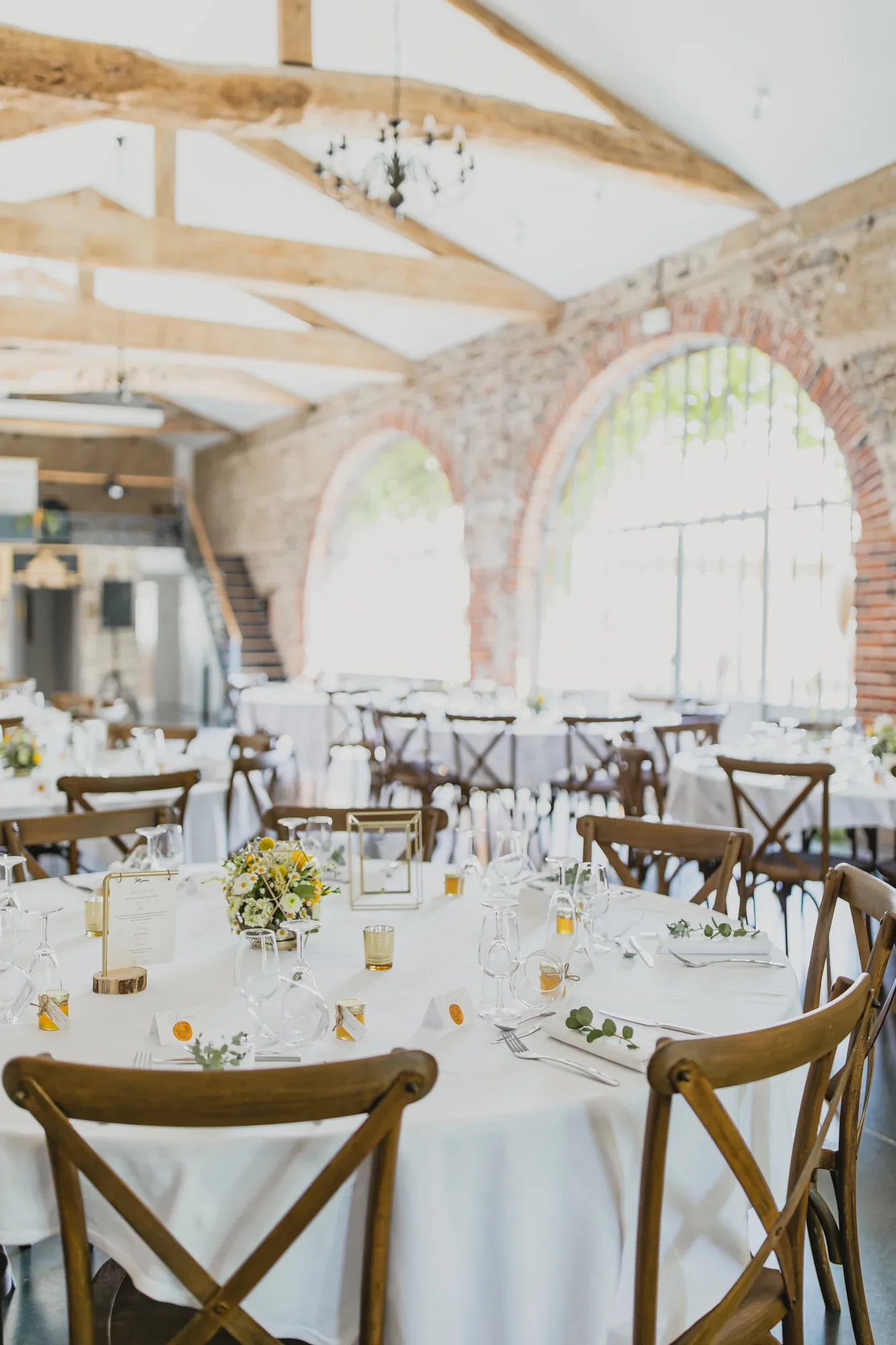
Three design choices make the biggest visual difference. First, lighting the architecture itself, washing the timber beams and stone walls so the room does not disappear into darkness after sunset. Second, building vertical interest, since high ceilings swallow low arrangements. Third, committing to candlelight. An ambient candlelight reception along a long table photographs with a warmth that no overhead lighting can replicate.
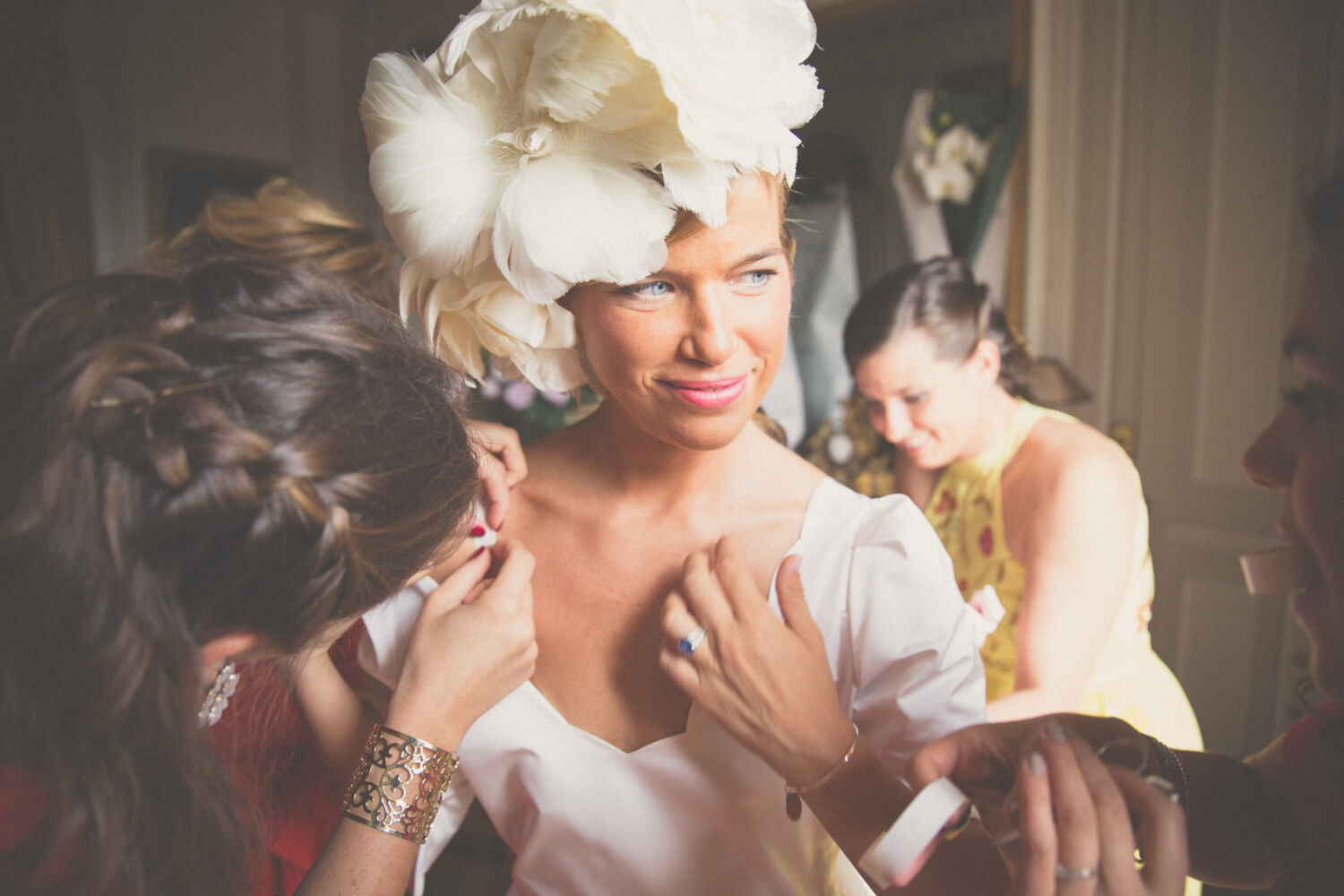
Getting ready spaces matter as much as the reception. A room with good window light, a gilded mirror and period woodwork gives us the raw material for the quiet, editorial frames couples often end up loving most, from the gown hanging before it is worn to the final adjustment before the ceremony.
Important
Important
Ask your venue whether sparklers, open flame candles and drone photography are permitted. Rules vary by property and by commune, and these are elements worth confirming before your designer builds them into the concept.
Our Approach to Editorial Wedding Photography in France
As a French countryside wedding photographer working with US couples and planners, we blend documentary wedding photography with editorial direction. That means we observe rather than interrupt during the ceremony, the toasts and the dancing, then step into an art direction role for a short, intentional portrait session at golden hour. The goal is images that feel like a story, not a staged catalogue.
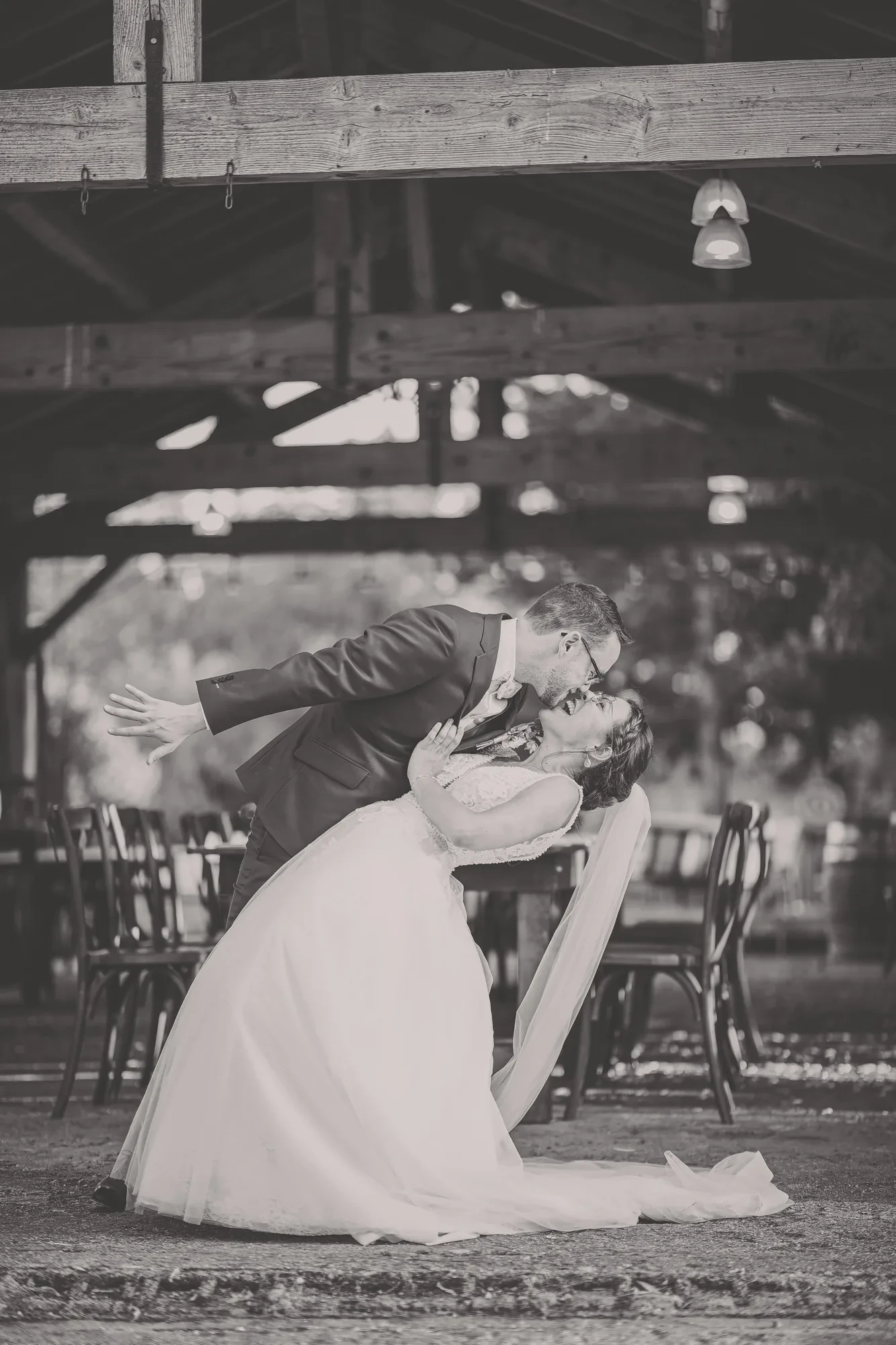
For planners and event designers, we shoot the design elements with the same seriousness as the emotion. Tablescapes before guests enter, floral installations in full light, architectural details of the barn, stationery, and the overall room from the angles that work for prestigious publications. We integrate into vendor teams, dress appropriately for black tie events, respect the timeline, and deliver sneak peeks suited to PR and social needs. Couples and planners can review full celebrations at our wedding photographer page and film coverage at our wedding videographer page.
Planning for Rain and Seasonal Light Variation
Weather in rural France varies by region and season, and every outdoor ceremony needs a confirmed indoor or covered alternative. The practical work is deciding the call time for that decision, confirming who moves the furniture, protecting sound and lighting equipment, and briefing guests on terrain and footwear.
From a photographic perspective, rain is rarely a problem. Overcast skies produce soft, flattering diffused light for portraits, and the interior of a barn becomes more atmospheric, not less. Seasonal light variation matters more than rain. June evenings give you late golden hour portraits after dinner has started, while September and October require scheduling portraits earlier in the timeline.
Guest Experience and Destination Wedding Logistics
Designing a seamless travel journey
A luxury destination barn wedding France weekend is a production. International flights, transfers from the airport or TGV station, guest accommodation on and off site, vendor arrival the day before, delivery windows, translations and local coordination all need sequencing. Group airport transfers are particularly valuable for isolated estates, where guests should not be navigating rural roads after a long flight.
Structuring the wedding weekend
The weekend structure that works best, in our experience, runs as follows. A welcome dinner on arrival evening, a relaxed day with an optional activity, the wedding day itself, and a post wedding brunch before departures. That structure gives photography a genuine narrative arc, from first hellos to the last dance in a red velvet caftan under string lights.
When to Book Your Photographer
For destination wedding photography France, we recommend securing your photographer as soon as the venue and planner are confirmed, which for most of our couples means twelve to eighteen months ahead. Peak dates in Provence and the Loire Valley are reserved early, and multi day coverage requires blocking several days rather than one. If you are working with a US planner, an early booking also means we can join venue walkthroughs and timeline discussions while decisions are still open. You can start a conversation with us at our contact page.
Bringing French Countryside Barn Wedding Luxury to Life
A renovated barn in rural France gives you authenticity that cannot be manufactured and a setting that rewards thoughtful design. Combine stone architecture, exposed timber beams and an exclusive estate buyout with gastronomic catering, considered lighting and a photographer who understands both American luxury standards and French logistics, and you get a weekend that feels personal rather than produced. That is the version of outdoor wedding photography in the French countryside we care about, elegant, unforced and genuinely emotional.
Frequently Asked Questions
Can foreigners legally get married in a French barn venue?
No. Only a civil ceremony at the mairie has legal value in France, and a barn or private estate cannot host it. Most international couples handle the legal marriage in their home country and hold a symbolic ceremony on the estate.
What is the best season for a countryside barn wedding in France?
Late May through early October covers the most reliable outdoor season in the south, while September offers softer light and quieter venues. Shoulder season dates often give you more flexibility on estate availability.
Do we need a second photographer for a multi day celebration?
For celebrations above roughly one hundred guests, or when getting ready happens in two separate locations, a second photographer is strongly recommended. It allows simultaneous coverage of the couple, the guests and the design details.
Can guests stay at the wedding venue?
Many French countryside estates include on site accommodation in the main house and outbuildings, though capacity varies widely. Confirm the number of beds included in the buyout and arrange nearby options for the rest of your guest list.
How do we handle the language barrier with French vendors?
Working with Europe based vendors who speak fluent English solves most of it. We communicate directly with US planners across time zones and liaise with local suppliers in French, which removes translation friction on the day itself.
What should we ask a venue about noise restrictions?
Ask for the exact music curfew, whether amplified sound is allowed outdoors, and whether the party can continue indoors afterwards. These rules are set locally and directly shape your end of night timeline.